
Loading dispatches...
← Return to Newsroomgeneral
As Bengal votes today, why BJP feels it has an advantage
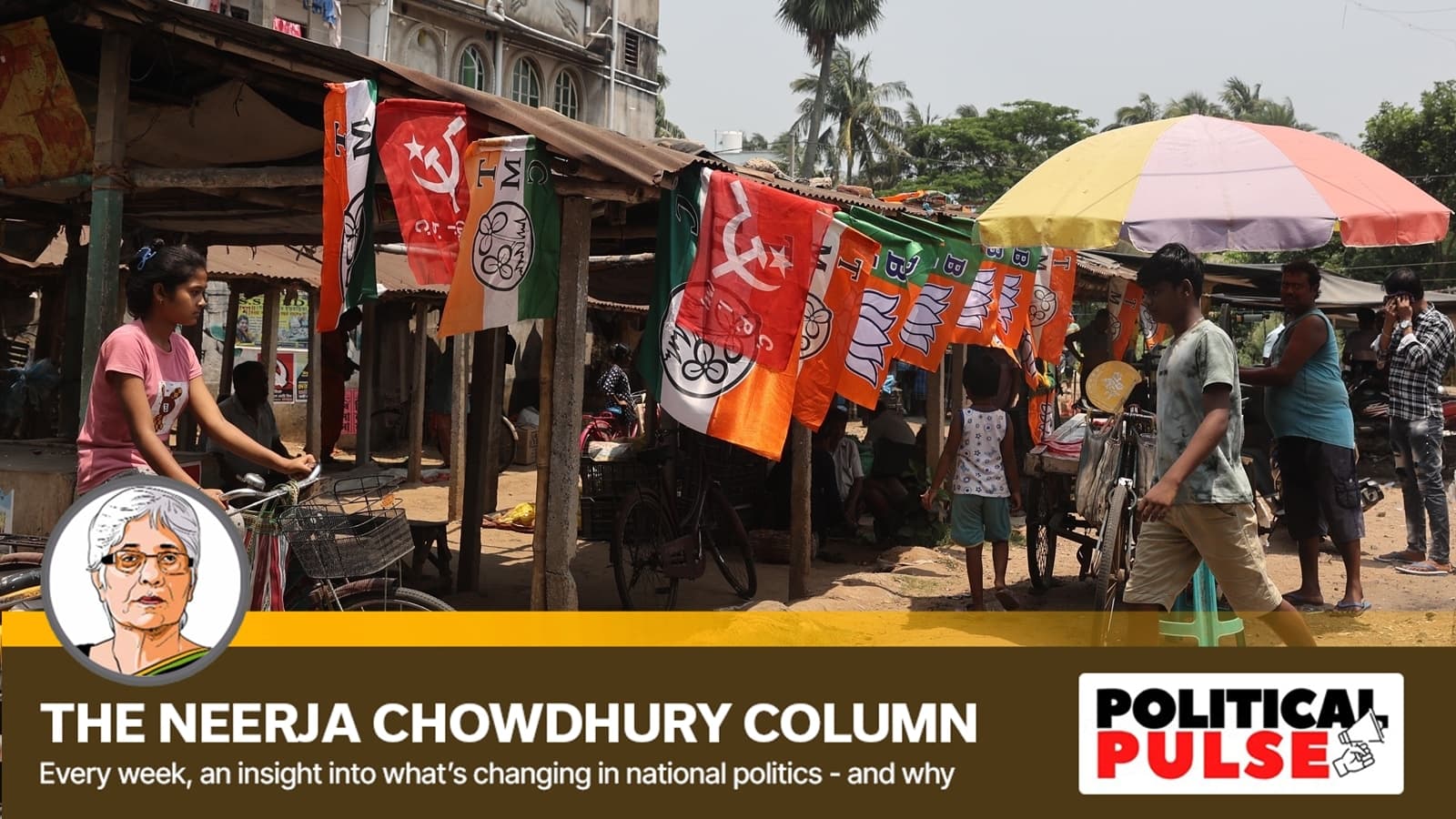
Atal Behari Vajpayee once remarked, wistfully, to colleagues how painful it was for him that the BJP that had made strides in different parts of the country should hardly make any headway in West Bengal.Vajpayee’s words had a poignancy because Bengal was the home state of Dr Syama Prasad Mookerjee, who founded the Bharatiya Jan Sangh, the earlier avatar of the BJP, in 1951. And, what is more, Vajpayee who went on to become the Prime Minister, had cut his teeth in politics by working as a personal assistant of Dr Mookerjee during the formative years of the Jana Sangh.Today, as the cacophony of campaigning has receded and West Bengal votes in the second and final phase on Wednesday, the BJP may be on the cusp of a breakthrough in Bengal. Whether or not it makes it to power this time, it is expected, by friends and foes, to improve on its 2021 performance when it had bagged 77 out of 294 seats, up from 3 in 2016. Will 2026 be a repeat of 2006 or of 2011? The question was being discussed as much at the iconic “Flurys”, a cafe on Kolkata’s upmarket Park Street that has been there since 1927, as at the roadside tea shops. In 2006, Mamata felt she was in with a chance to defeat the Left Front, but then CM Buddhdeb Bhattacharjee, who had replaced Jyoti Basu, managed to lead the Left Front to one of its best-ever performances as its tally rose to 235. However, the script soon changed following the anti-land acquisition movements in Singur and Nandigram, and that provided Mamata with the chance she was waiting for and five years later, the Left was gone. Amit Shah holds a roadshow in Kolkata on Monday. (Image source: X/AmitShah)Anti-incumbency, appeasement politics The BJP has worked hard to put itself in a position that Vajpayee dreamt of, painstakingly putting in place an organisational structure in which five-member Mandal Shakti Kendras help booth-level mobilisation. Some, however, feel it is still not as organisationally strong as the TMC.Story continues below this ad People, across the board, rich and poor, rural and urban, have expressed their dissatisfaction with the job situation in the state and this should help the party. “What use is Rs 1,500 per month? My daughter needs a job which brings her at least Rs 20,000 to be able to live,” said a homemaker, referring to the government’s flagship scheme of direct cash transfer to the accounts of women. It has been lauded by a large number of women, both in the villages and in the slums. It is not just the dissatisfaction about jobs and failure to bring industry and investment in the state that the BJP brass is banking on. They sense an anger against the informal “TMC system” of young men linked to the party, functioning as clubs or as entrepreneurial groups that insist on getting a contract if you want to renovate your house or intervene to get you a bank loan, or prevent people from going to vote. The “system” functioned even during the Left rule and shifted to the TMC when it came to power. Now, the BJP is believed to have breached it, and according to those in the know, “not all the TMC workers are working for the party today.“ Secondly, the party has tried to paint Mamata Banerjee as an appeaser of Muslims in the hope of consolidating Hindus behind it, as it has done in many states of India to its advantage. Its cry against “ghuspaithiyas (infiltrators)” has had an appeal for Hindus in some parts of the state. Many say there is a dormant anti-Muslim sentiment amongst some Bengalis, including the upper-class and upper-caste bhadralok, because of historical factors such as the Partition. But it was not considered politically correct to express it till now. Now the “mould is breaking”, as a political observer put it. In the South 24 Parganas district, a TMC stronghold, Muslim women admitted that “while there was no Hindu-Muslim feeling earlier, now it is gaining ground”.Story continues below this ad However, so far, it has not acquired a scale that was expected or taken the sha


Discussion (0)