
Loading dispatches...
← Return to NewsroomEconomy
How OpenAI’s Sam Altman is redefining AGI with 5 guiding principles — explained
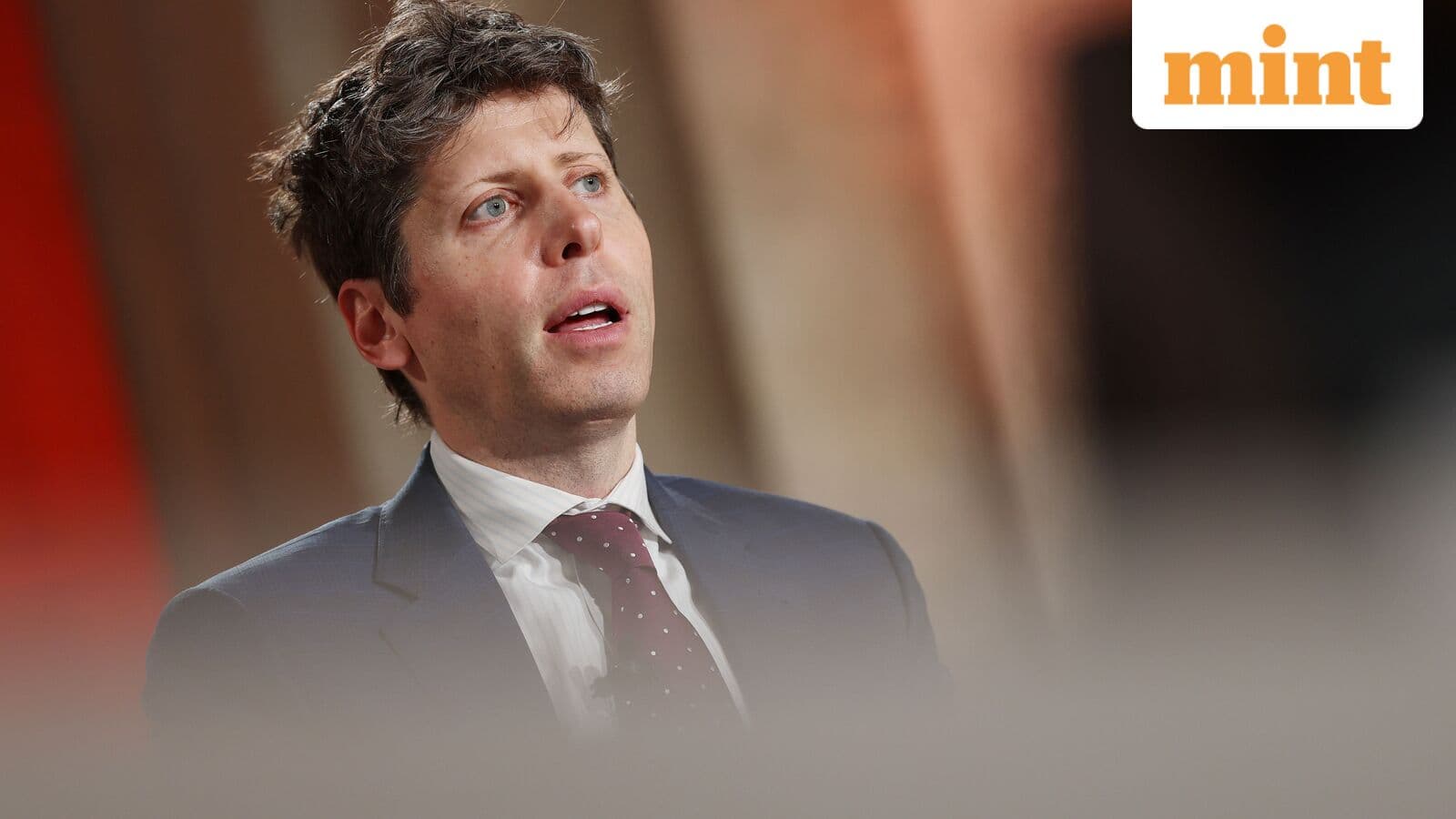
As Sam Altman faces a high-stakes legal battle with Elon Musk, one that could have serious implications for OpenAI’s future, he is also trying to steer the company back to its original purpose of building AI that benefits everyone, not just a select few.In a recent blog post, Altman laid out an ambitious vision. He described a future where artificial intelligence unlocks human potential at a scale hard to imagine today, enabling people to have more agency, more opportunity, and lead more meaningful lives. Ideas that once belonged to science fiction, he suggested, may soon become reality.“We imagine a world marked by widespread flourishing at a scale that is hard to fully grasp today, one where individual potential, agency, and fulfilment rise significantly. Many of the ideas we’ve only explored in science fiction could become real, and most people could lead more meaningful lives than is currently possible,” Altman wrote in a blog post.Today’s large language models (LLMs), including those behind ChatGPT and Grok, remain largely limited to narrower capabilities or depend on different models tailored to specific use cases. Artificial general intelligence, by contrast, is generally understood as AI that can perform a broad range of cognitive tasks at or beyond human-level ability. Although OpenAI has pursued AGI since laying out its 2018 charter, the term's precise definition has become increasingly fluid over time.OpenAI’s guiding principles for AGIOpenAI outlined the following five principles for the company to follow on the path to AGI:– Democratisation: To resist the consolidation of AI in the hands of a few companies, OpenAI said it will work to ensure that key decisions about AI are made via democratic processes and with egalitarian principles, and not just made by AI labs.– Empowerment: OpenAI said it will work to ensure that users can reliably use its AI products and tools for increasingly valuable tasks. It also highlighted the need to build and deploy its AI products in ways that minimise catastrophic and local harm, as well as “potential corrosive societal effects,” even if it means erring on the side of caution and relaxing constraints only after sufficient evidence is gathered.– Universal prosperity: While OpenAI said it wants to put easy-to-use AI systems with significant compute power in the hands of everyone, the company noted that governments need to “consider new economic models to ensure that everyone can participate in the value creation.” It also suggested that its belief in universal prosperity justifies its push to build AI infrastructure and invest heavily in compute despite relatively modest revenue.– Resilience: OpenAI said it will work with other companies, governments, and civil society to address new risks posed by AI, such as systems that could make it easier to create pathogens or those with advanced cybersecurity capabilities. “We expect there will be periods where we need to collaborate with governments, international agencies, and other AGI efforts to ensure that we have sufficiently addressed serious alignment, safety, or societal problems before proceeding further with our work,” the company said.– Adaptability: Vowing to be more transparent about when, how, and why its operating principles change, OpenAI said its initial concerns about releasing the weights of GPT-2 under an open-source licence were misplaced, as this led to the strategy of iterative deployment.Is AGI losing its meaning?It is becoming easier to debate the controversies around AGI than to clearly define what the term actually stands for. OpenAI’s interpretation of AGI, for instance, is at the heart of the allegations Elon Musk brought against the company in his lawsuit. He argues that OpenAI and its leadership have strayed from the organisation’s original nonprofit mission, a vision he says he helped fund to ensure AGI benefits humanity at large.The closely watched trial is now underway, with opening arguments having begun on T



Discussion (0)