
Loading dispatches...
← Return to Newsroomgeneral
Supreme Court restores Congress’s T D Rajegowda as MLA for Karnataka’s Sringeri after recount row
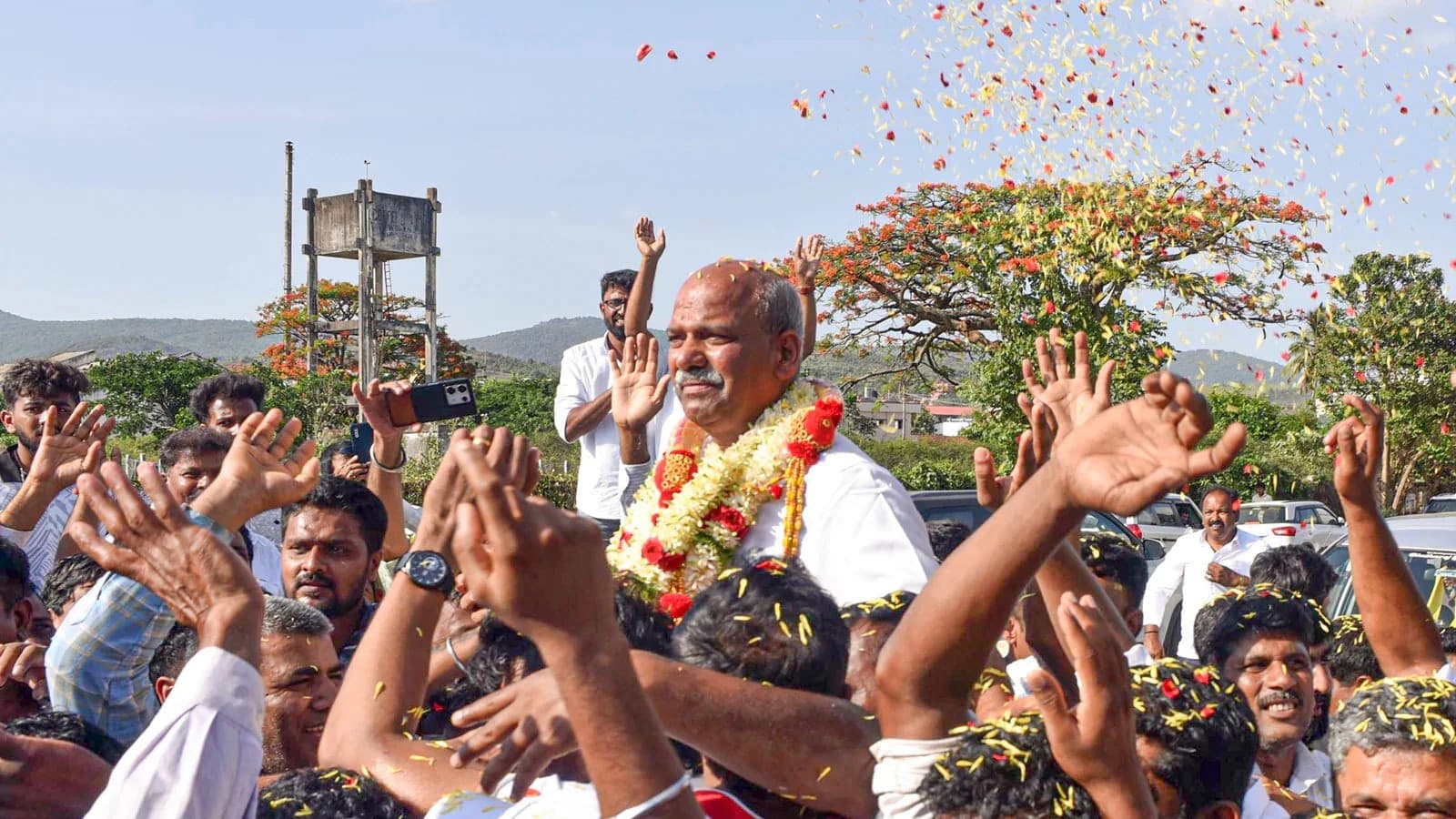
BengaluruUpdated: May 12, 2026 03:58 PM IST Congress candidate T D Rajegowda celebrated in Chikkamagaluru on May 2, claiming that the results were in his favour. (PTI Photo)The Supreme Court on Monday directed Congress leader T D Rajegowda to continue as the MLA for Karnataka’s Sringeri constituency after a recent recount of postal votes polled in the 2023 elections resulted in his defeat by 52 votes. BJP candidate D N Jeevaraj, who was declared the winner, was also sworn in as the MLA. A bench of Justices Sanjay Kumar and K Vinod Chandran said in its order, “All steps taken pursuant to the aforestated exercise by the Returning Officer shall remain in abeyance till the next hearing. If that requires restoration of the status quo ante, steps shall be taken in that regard forthwith.”In 2023, Rajegowda won the polls by a margin of 201 votes, defeating Jeevaraj. In June 2023, Jeevaraj moved the Karnataka High Court challenging the result. His election petition alleged irregularities in the counting process and questioned the rejection of 279 postal ballots. On April 6, the high court partly allowed it and directed reverification of 279 rejected postal ballots and a recount of all postal ballots. Accordingly, the recount took place on May 2. In the 2023 count of 1,822 postal ballots polled, Jeevaraj secured 692 votes while Rajegowda received 569. After the reverification and recount, Jeevaraj’s tally stood at 690, while Rajegowda’s dropped to 314—a reduction of 255 votes. Jeevaraj was thus declared the winner by 52 votes. ‘High court judgment goes beyond scope of rule’ Rajegowda then moved the apex court challenging the declaration. The court said in its order, “The judgment dated 06.04.2026 passed by the High Court of Karnataka at Bengaluru in Election Petition No. 20/2023 goes beyond the scope of Guideline 15.25 of the Handbook for Returning Officers, 2023.” The guideline mandates that where the margin of victory is less than the number of postal ballot papers rejected as invalid at the time of counting, the returning officer must mandatorily reverify all rejected postal ballot papers before declaring the result. Whenever such reverification is done, the entire proceedings should be videographed. Rajegowda’s counsel informed the court about the results being declared after the recount.Story continues below this ad The bench said, “On the strength of this exercise, which went beyond the scope of what was directed by the High Court, we are informed certain further steps have been taken. As such, further steps are, prima facie, without legal foundation, in the light of what we have recorded above, we are of the opinion that the matter requires deeper examination.” The court directed the Election Commission to produce the relevant records pertaining to the exercise undertaken pursuant to the impugned high court judgment on the next date of hearing. Soon after the recount results arrived, the police registered an FIR against Jeevaraj and others based on a complaint filed by Rajegowda’s polling agent, alleging that 255 ballot papers cast for the Congress candidate had been tampered with. The high court last week stayed all further investigation in the case.
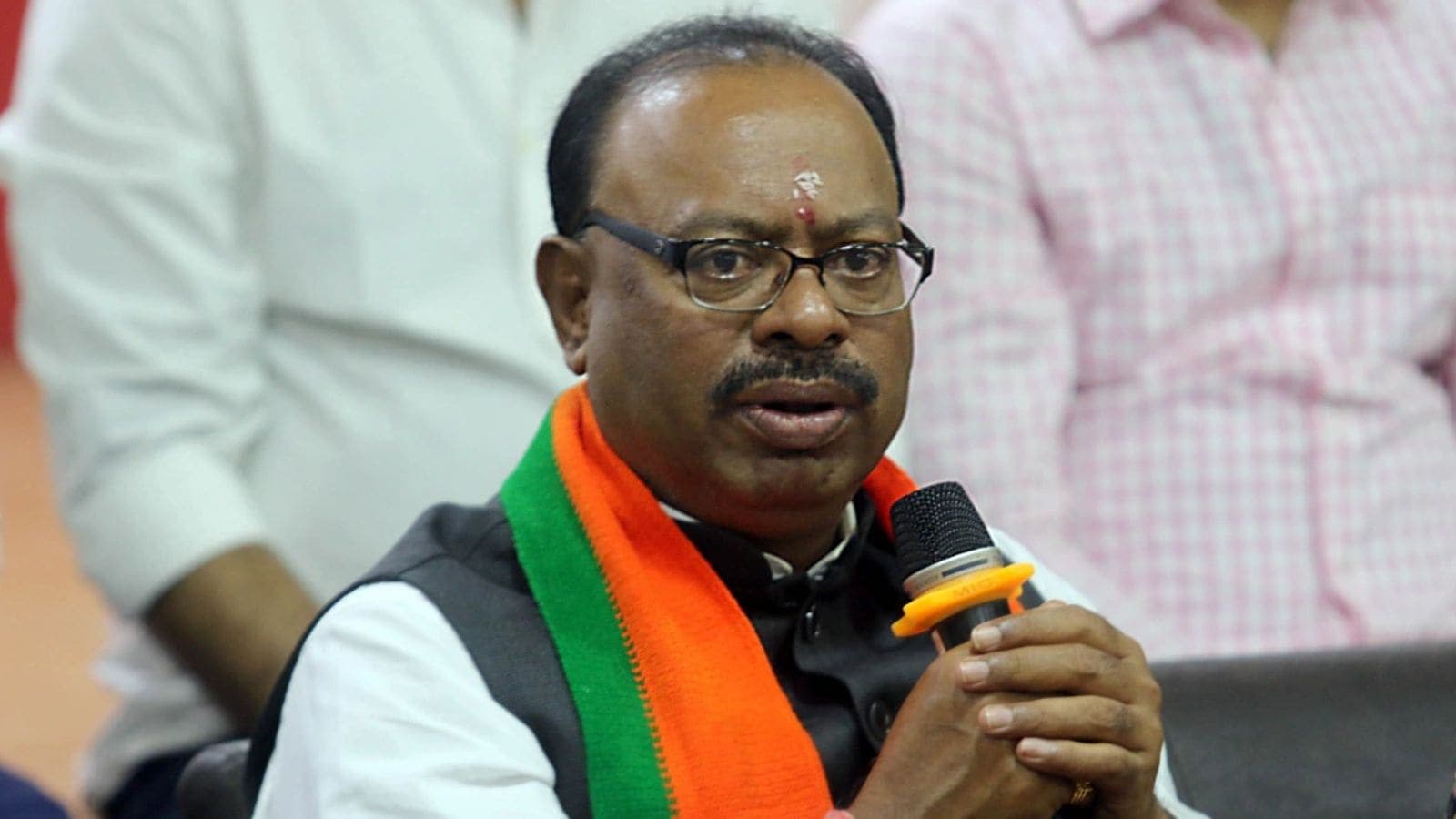
The Bombay High Court order effectively allows transfer of government land to private owners, said Revenue Minister Chandrashekhar Bawankule. (File photo)The Maharashtra government has decided to file a Special Leave Peition (SLP), challenging the Bombay High Court order that granted approximately 254.88 acres of prime land worth hundreds of crores in Mira-Bhayandar to two builders. Revenue Minister Chandrashekhar Bawankule has directed the same. The April 30 order of the Bombay High Court ruled in favour of handing over the land in Mouje Bhayandar area of Mira-Bhayandar to Estate Investment and Mira Real Estate Developers.According to the revenue department, since 1948, unauthorised changes were made in the revenue records without obtaining prior permission from the government. Initially, the names of ‘Estate Investment Company’ and later ‘Mira Salt Works’ were illegally inserted. In 1958, due to its use as salt pans, the name of the Central Government’s Salt Department was added. Subsequently, the matter regarding ownership reached the Supreme Court, which directed that an appeal be filed before the Thane district collector. In 2002, the district collector rejected the claim of Mira Salt Company and ordered that the entire land be vested with the state government, the revenue department said. In 2019, the companies and the Central Government’s Salt Commissioner filed a First Appeal in the Bombay High Court. On April 30, the High Court rejected the Salt Commissioner’s appeal and ruled that the land belongs to Mira Salt Works. Stating that the land belongs to the state government, Bawankule said, “The Bombay High Court order effectively allows transfer of government land to private owners. The Government of Maharashtra will challenge this order in the Supreme Court to protect public property. We will strongly defend the state’s ownership rights over this valuable land.

New DelhiMay 8, 2026 10:18 AM IST The man contended that his wife could earn over Rs 50,000 per month, while he himself earned less and was burdened with family responsibilities, the Allahabad High Court noted. (AI-generated image)Allahabad High Court news: The Allahabad High Court recently held that the entitlement to maintenance must be assessed from the social and economic status of the husband and not merely based on the wife’s past earnings or educational qualifications. Justice Garima Prashad made the observation while dealing with a plea filed by a wife in a matrimonial dispute case seeking enhancement of the maintenance amount awarded to her by a family court.Setting aside the maintenance amount of Rs 15,000 per month by the family court, the Allahabad High Court on April 20 observed, “The entitlement to maintenance must be assessed in light of the social and economic status of the husband and not merely on the basis of the wife’s past earnings or educational qualifications.” The court allowed the revision petition and remanded the matter to the family court for fresh determination of the maintenance amount within six months. Plea for enhanced maintenance The couple married in Ahmedabad in August 2014. The wife alleged that she was expelled from the matrimonial home within a month over dowry demands and had since been residing separately without any financial support from her husband. She claimed that her husband, who ran an overseas education consultancy business, earned nearly Rs 5 crore annually and enjoyed a luxurious lifestyle. It was contended that although the wife is educated, she is presently unemployed, dependent upon her father, and incapable of maintaining herself. Therefore, she sought a maintenance of Rs 25,000 per month.Story continues below this ad On the other hand, the counsel for the husband argued that his wife behaved cruelly and improperly towards him and his family, and that she resided with him only for about 20 days before leaving and residing with her parents without sufficient cause, thereby deserting him. The husband further argued that the wife was highly educated, held an MBA, and had previously worked for three companies. He contended that she could earn over Rs 50,000 per month, while he himself earned only Rs 15,000-20,000 monthly and was burdened with family responsibilities. ‘Husband made no effort to resume cohabitation’ At the outset, the Allahabad High Court observed that the husband did not make any effort to express a willingness to resume cohabitation with his wife at any stage of the proceedings. It added that the absence of any such offer, even during cross-examination, gave credence to the conclusion that the wife was justified in living separately. The court noted that although the wife had worked before marriage and had previously earned around Rs 37,000 per month, she consistently maintained that she was unemployed at the time of filing the maintenance application and was unable to maintain herself. The absence of documentary proof, such as a resume, cannot by itself negate her claim of current inability to maintain herself, particularly in the context of matrimonial breakdown, the Allahabad High Court said. It remarked that the wife’s education or capacity to earn does not entitle her to claim maintenance. It further added that her actual and present ability to maintain herself in a manner commensurate with the standard of living she enjoyed in the matrimonial home needs to be considered. Inconsistencies in financial disclosure The Allahabad High Court also found inconsistencies in the husband’s financial disclosures. It observed that while he claimed to hold only a 25 per cent share in the educational consultancy firm, his income tax returns reflected varying ownership shares over different assessment years. The court further noted that he failed to satisfactorily explain these discrepancies or produce complete financial records, casting serious doubt on
New DelhiApr 29, 2026 06:00 PM IST The petitioners contended that despite submitting representations in 2017 and 2018 seeking payout on par with patta landowners, the authorities failed to take any decision. (Image generated using AI)Telangana High Court news: Emphasising that fairness in land acquisition must go beyond mere issuance of notifications and awards, the Telangana High Court has held that deprivation of property must follow a just, fair and reasonable procedure, including proper consideration of compensation claims, and directed the authorities to revisit long-pending representations of landless assignees. Justice Vakiti Ramakrishna Reddy was hearing a writ petition filed by Yava Narsaiah and other landless assignees seeking a declaration that the action of the authorities in not paying compensation for their acquired lands on par with private patta lands was illegal, arbitrary and unjust. Justice Vakiti Ramakrishna Reddy held that in cases involving economically weaker or illiterate persons, courts may adopt a liberal approach. (AI-enhanced image)“Acquisition of land results in deprivation of property, and though the right to property is no longer a fundamental right, it still continues to be a valuable constitutional right under Article 300A of the Constitution of India. Any deprivation thereof must be in accordance with a just, fair and reasonable procedure,” the Telangana High Court said on April 23. It added, “The concept of fairness in this context is not confined merely to the issuance of notifications or passing of awards, but extends to the entire process, including determination and disbursement of compensation and consideration of claims raised by the affected persons.” Decades-old grievance over LMD project The observations came in a writ petition filed in 2019 by Yava Narsaiah and others, who were assigned agricultural lands in Ganneruvaram village of Karimnagar district. The lands were acquired in the early 1980s for the Lower Manair Dam (LMD) reservoir project, with notifications issued under the Land Acquisition Act, 1894 and an award passed on July 13, 1983. While compensation was paid to the private patta landowners, the petitioners alleged that assigned lands were either excluded or not compensated on par, depriving them of their sole source of livelihood. The petitioners challenged the inaction of officials in failing to consider their representations dated October 25, 2017 and June 27, 2018, and sought directions to grant them compensation in accordance with their entitlement for lands acquired under the Land Acquisition Act, 1894, for the Lower Manair Dam project. The petitioners contended before the Telangana High Court that despite submitting representations on October 25, 2017, and June 27, 2018, seeking compensation on par with patta landowners, authorities failed to take any decision. Their counsel argued that the law is well settled that assignees are entitled to full market value and statutory benefits, and that continued inaction by authorities amounted to a denial of lawful entitlement. State’s defence: Delay, prior disbursement The Telangana government opposed the plea, stating that compensation and ex gratia had already been processed through subsequent awards, including 1985 and 1990–91 proceedings. It said that certain payments were disbursed to beneficiaries. The state submitted that the writ petition, filed decades later, was barred by delay and laches, relying on Supreme Court precedents. Court: Consideration of claims integral to fairness The Telangana High Court, however, held that the petitioners’ grievance was not a challenge to the acquisition itself but to the non-consideration of their compensation claims. It said that fairness under Article 300A is not limited to procedural compliance in acquisition, but extends to ensuring that claims of affected persons are duly examined and decided through reasoned orders. Consideration of a representation is not “an


Discussion (0)