
Loading dispatches...
← Return to Newsroomgeneral
Why creation of new Ladakh districts deepens faultlines, sparks backlash
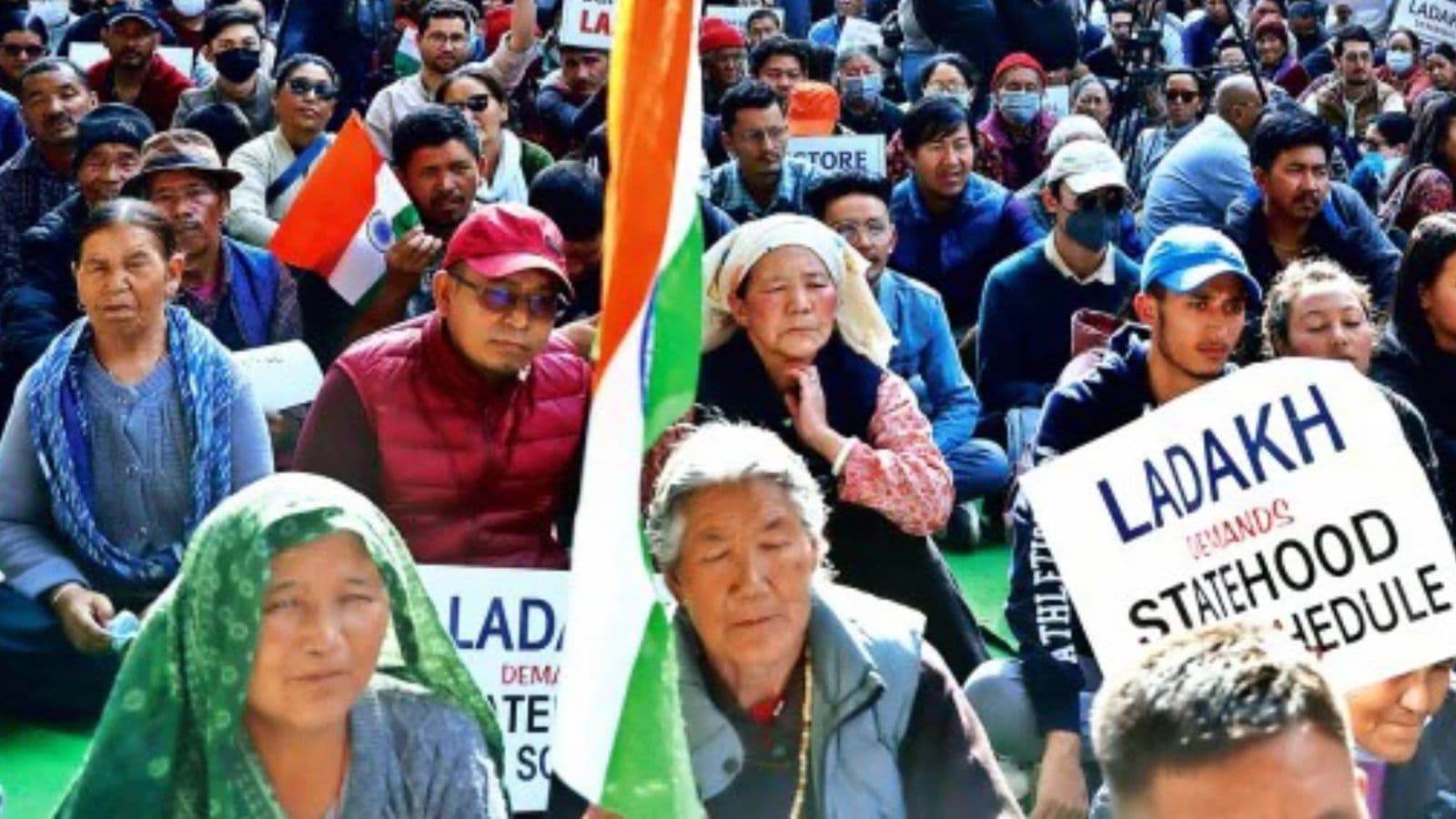
The Centre’s decision to carve out five new districts in the Union Territory of Ladakh — taking its total number of districts from two to seven — has triggered new political faultlines, with leaders from Kargil alleging that the move is aimed at weakening the unity forged between Kargil and Leh on the demands for statehood and constitutional safeguards for Ladakh. Even as the administration pitched the move as a long-pending reform to improve governance in a geographically vast and sparsely populated region, the Kargil Democratic Alliance (KDA) termed it a “calculated attempt” to fragment Ladakh along communal and regional lines.Announcing the decision on Monday, Ladakh Lieutenant Governor Vinai Kumar Saxena described it as a “historic milestone”, saying the creation of Sham, Nubra and Changthang districts out of Leh, and Zanskar and Drass out of Kargil, would “usher in a new era of inclusive development”. The L-G’s office said the move — approved by the Ministry of Home Affairs (MHA) in August 2024 — would decentralise governance, reduce travel distances that often exceed 300 km, and improve service delivery in remote habitations. It also flagged employment generation through new administrative infrastructure as a key benefit. Framing it within a larger political vision, Saxena said the decision aligned with Prime Minister Narendra Modi’s goal of a “developed and prosperous Ladakh”. According to the notification, the reorganisation also redraws administrative boundaries: Leh district will now have 44 revenue villages, Nubra 30, Changthang 24, Kargil 80, Sham 27, Zanskar 26, and Drass 19. ‘Skewed representation’ However, KDA leader Sajjad Kargili sharply contested the government’s rationale, arguing that the reorganisation disregards demographic balance and regional sensitivities. Citing the 2011 Census, he said that while Muslims constitute roughly 46.4% of Ladakh’s population and Buddhists around 39.65%, the new structure results in five Buddhist-majority districts and only two Muslim-majority districts. “This disproportionate distribution reflects a deeply skewed and discriminatory approach,” Kargili said, adding that the “process has clearly ignored regional sensitivities, demographic realities, and principles of equitable representation.” Kargili warned that it risks “deepening divisions” on “communal lines” in a region that had, in recent years, witnessed coordinated political mobilisation across religions. “Ladakh’s strength lies in its unity and diversity—any attempt to divide its people along communal or regional lines must be resisted firmly,” he said. While welcoming district status for areas like Drass and Zanskar — long-standing demands from Kargil — he flagged the exclusion of Sankoo-Suru and Shakar Chiktan, calling their omission “arbitrary and insensitive”. Move before Shah visit The government’s move has come weeks before Union Home Minister Amit Shah’s scheduled visit to Leh on May 30 — which would be his first since violent protests erupted last year in Ladakh over demands for statehood and Sixth Schedule protections. The leaders of the Apex Body, Leh (ABL) and the KDA on Tuesday sought a meeting with Shah, saying direct engagement would help rebuild trust between Ladakh’s political leadership and the Centre. The Centre has already scheduled a meeting with Ladakh representatives on May 22, but ABL co-chairman Chhering Dorje Lakruk downplayed its significance, calling it a sub-committee interaction of “little consequence” and pressing for talks with the minister himself. The High Powered Committee examining Ladakh’s demands has so far been holding its meetings under Union Minister of State for Home Nityanand Rai. ‘Driving a wedge’ The latest accusations echo a pattern of distrust that has marked Centre-Ladakh engagement over the past year. In January, tensions flared after the emergence of a new outfit, Voice of Buddhist Ladakh (VBL), which claimed to represent Buddhist interests in negotiations with the Cent


Discussion (0)