
Loading dispatches...
← Return to Newsroomgeneral
Reach consensus with IIT-Gandhinagar, HC urges student who challenged suspension over indiscipline
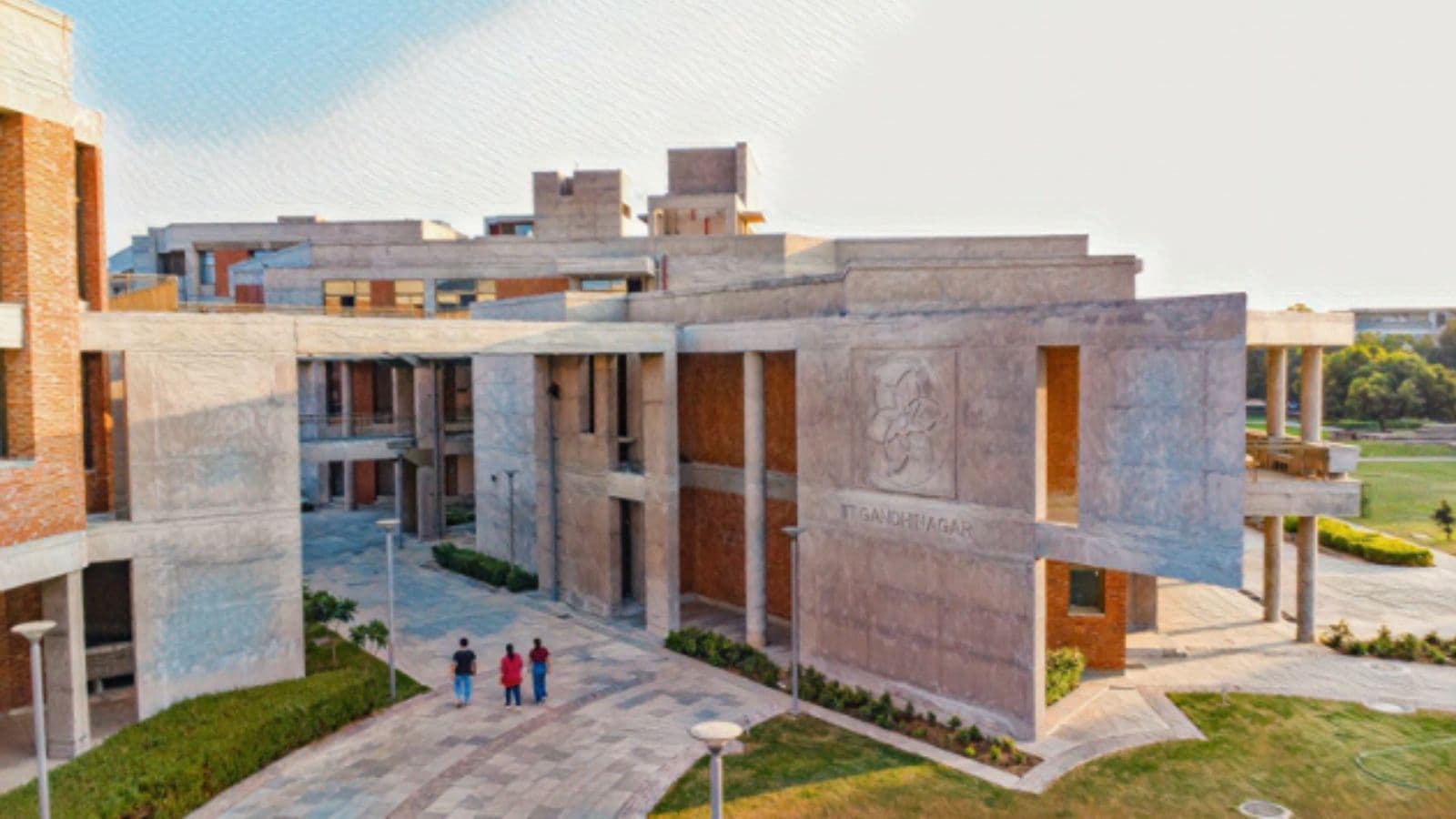
Wednesday's hearing came two days after the court had taken exception to the attire of the petitioner, who was present in the courtroom on Monday, leading to an argument in open court between the senior counsel representing the petitioner and the court. THE GUJARAT High Court on Wednesday advised the Indian Institute of Technology, Gandhinagar (IIT-Gn) and a student, who has challenged the institute’s order suspending her from one semester for alleged indiscipline to “arrive at a consensus” in the matter. Justice Nirzar Desai of the Gujarat High Court was hearing a petition filed by the student, who is pursuing a Masters programme, in which she claimed that her suspension from her final semester had arisen out of alleged previous incidents of “indiscipline” for which the institute had already initiated action against her.On Wednesday, as the advocate representing IIT-Gn requested for time to take instructions from the director of the institution who is the “author of the impugned order” suspending the student, the HC orally advised the institute to “show sympathy” towards the student in her “early 20s”. The court orally remarked, “Sometimes a student, for whatever reason, may have crossed the line. But you being an institution, you know… at the age… a person in his early 20s or he’s a teenager or he or she may not be knowing the consequences of bad behavior…She may have done something wrong, but it is not so grave that she would require suspension…. You have asked her to leave the hostel. She is not living in the hostel. She has done community service… Your entire (impugned) order is based on her past conduct…” The student’s counsel also submitted a draft of an apology to be tendered to the institute by the student to end the stalemate and be able to defend her thesis on May 5, before a panel of professors – which would mark the end of her academic session and course at the institute, the counsel informed the court. The court orally said, “This is always between institution and student. The policy will never come in the way of any student if the action on the part of the student is bona fide and if the apology is genuine and from the heart. But at the same time, a person must not feel that mere formality…” Suggesting that both the sides should arrive at a consensus, the court orally said, “It is always better for both the sides to close this issue by arriving at a consensus without giving orders… because it is not in the interest either of the institution or in the interest of students… I will not encourage the students to do anything which may amount to instigation. But at the same time, the institutions also must not get the upper hand… if this (institution) action is approved, then it may result in an absolute exhibition of power on their part…”Story continues below this ad Wednesday’s hearing came two days after the court had taken exception to the attire of the petitioner, who was present in the courtroom on Monday, leading to an argument in open court between the senior counsel representing the petitioner and the court. The court had said, “Everyone has a choice and can exercise it, but it depends upon the place which she is visiting… This is for the first time in my life, but at the same time, if someone is coming to court, he or she must be in proper attire… I consider this (court) a temple of justice and people must maintain its dignity.” The counsel had submitted that the attire of the petitioner “must not affect the court’s discretion” in the matter. The court will now hear the matter on Friday. Aditi Raja is an Assistant Editor with The Indian Express, stationed in Vadodara, Gujarat, with over 20 years in the field. She has been reporting from the region of Central Gujarat and Narmada district for this newspaper since 2013, which establishes her as a highly Authoritative and Trustworthy source on regional politics, administration, and critical socio-economic and envi


Discussion (0)