
Loading dispatches...
← Return to NewsroomWorld
Shell profits rise as Iran war pushes oil prices higher
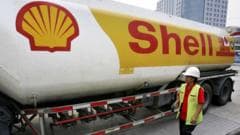
Just nowNick EdserBusiness reporterGetty ImagesProfits at oil giant Shell have risen in the first three months of the year following the sharp increase in oil prices since the beginning of the Iran war.Shell reported profits of $6.92bn (£5.1bn) for the first quarter, which was higher than analysts had expected and up from $5.58bn in the same period a year earlier.The price of oil has seen a big rise since the start of the US-Israel war with Iran as the key Strait of Hormuz, which usually carries about 20% of the global supplies of oil and liquid natural gas, has been effectively closed.Last week, rival energy giant BP said its profits for the first three months of the year had more than doubled."Shell delivered strong results enabled by our relentless focus on operational performance in a quarter marked by unprecedented disruption in global energy markets," said Shell chief executive Wael Sawan."The safety of our people remains our priority as we work closely with governments and customers to address their energy needs."Like BP, one of the factors behind Shell's profits rise was better results from its oil trading business.Before the conflict began, the price of Brent crude, the global benchmark for oil prices, was around $73 a barrel.Since then, oil has seen sharp swings - peaking above $120 at one point, but also falling below $100 on other occasions as speculation has swirled over when the Strait of Hormuz will reopen. Brent currently stands at about $101 a barrel.The big movements in the oil price that have been seen since the Iran war began can widen the gap between buying and selling prices. This typically enables traders to make bigger profits.However, Shell said its oil and gas output had fallen by 4% compared with the final three months of last year due to the conflict, which has led to its Qatari Pearl gas plant being damaged.Last week, Shell announced it was buying Canadian shale producer ARC Resources for $16.4bn, which Sawan said would "deliver value for decades to come".The surge in profits being reported by energy firms has led to criticism from environmental groups.Danny Gross, climate campaigner at Friends of the Earth, said: "Once again, fossil fuel giants are pocketing monstrous profits while drivers are being squeezed at the petrol pump and households are set to pay higher energy bills."The answer is clear: strengthen the windfall tax on these indefensible profits and break our dependence on fossil fuels by powering our economy with homegrown renewables."Energy firms operating in the UK are subject to a windfall tax, called the Energy Profits Levy, that was introduced in 2022 as a response to soaring profits following Russia's full-scale invasion of Ukraine. Labour extended the life of the tax to March 2030.However, the levy only applies to profits made from extracting oil and gas in the UK, whereas the bulk of energy giants' earnings are made overseas.Gas and electricity bills for most households in Britain are protected for the moment by the energy price cap.Until 30 June, the typical annual bill for dual-fuel households who pay by direct debit will be £1,641.However, the jump in wholesale oil and gas prices since the Iran war began means the cap is currently estimated to rise by about £200 when it is revised in July.

2 hours agoOsmond ChiaandMitchell Labiak,Business reportersGetty ImagesOil prices have dropped and global stock markets have risen following reports that the US and Iran are close to a deal to end the war.Brent crude futures, the global benchmark oil price, fell to $97 (£73) a barrel after the reports before rebounding. The price was over $108 earlier in the day.The FTSE 100 index of London's largest public firms and the equivalent German Dax had risen over 2% midway through the trading day while the French Cac 40 was up 3%. Asian stock markets closed up.The market movements come after news outlet Axios reported that the US believes it is getting close to a one-page document which will end the war and set up more detailed nuclear negotiations.Oil prices are still much higher than the $70 a barrel they were hovering around before the start of the US-Israel war with Iran, which has caused caused production and transportation of oil in the region to slump.Central to the conflict is Iran's threat to attack oil ships crossing the Strait of Hormuz, a narrow waterway south of the country, in response to US-Israeli strikes since 28 February.About a fifth of global oil and gas shipments usually cross the strait, which has been effectively closed for weeks. Global gas prices have also soared since the conflict began.As for stock markets, the big European bourses are lower than they were at the end of February, while the S&P 500 is higher.The main Asian markets all rose on Wednesday, with the South Korean Kospi closing up 6.45%, the Hong Kong Hang Seng ending the day up 1.22%, and the Japanese Nikkei finishing 0.38% higher. The Hang Seng is down since the start of war, but the other two are up.On 8 April, the US and Iran agreed a ceasefire, which caused oil prices to slump and stock markets to jump.However, on Sunday, US President Donald Trump said the US military would guide ships through the Strait of Hormuz, dubbing it "Project Freedom", leading to a rise in attacks in the strait from both Iran and the US.Trump then said on social media on Tuesday he would pause the operation "for a short period of time to see whether or not the Agreement can be finalized and signed". He added that "Great Progress has been made toward a Complete and Final Agreement with Representatives of Iran". Trump said the US would continue to block ships transiting to and from Iranian ports, a move designed to put pressure on Iran's economy.On Wednesday, Axios reported that the US believes it is getting close to a one-page memorandum of understanding to end the war, citing two U.S. officials and two other sources briefed on the issue.That would, it is claimed, declare an end to the war in the region and start a 30-day period of negotiations on a deal to re-open the strait, limit Iran's nuclear programme, and lift US sanctions.The reports suggest this is the nearest to agreement that both sides have been since the conflict got under way.The US is believed to be awaiting response from Iran on several key points within the next 48 hours."We would prefer the path of peace. What the president would prefer is a deal," Rubio said.Iran has not responded to Rubio's remarks. The country's parliamentary speaker Mohammad Ghalibaf said earlier: "We know well that the continuation of the status quo is intolerable for America, while we are just getting started."Project Freedom, which Trump said was meant to ease the flow of energy through the channel, had tested the ceasefire between the sides.The US said it struck several Iranian "fast boats" in the channel, while the United Arab Emirates also accused Iran of launching strikes on one of its oil ports - a claim Tehran has denied.
Just nowOsmond ChiaBusiness reporterCostfoto/NurPhoto via Getty ImagesOil prices have jumped to their highest since 2022 after a report that the US military is set to brief President Donald Trump on new plans for potential action in the Iran war.US Central Command has prepared a plan for a wave of "short and powerful" strikes on Iran to try to break the deadlock in negotiations with Tehran, news site Axios reported. The BBC has contacted US Central Command and the White House for comment.Brent crude rose by almost 7% to more than $126 (£94) a barrel at one point, the highest since Russia's full-scale invasion of Ukraine.Energy prices have risen this week as peace talks appear to have stalled, with the key Strait of Hormuz waterway still effectively closed.The Axios report cited anonymous sources, saying the proposed wave of strikes would be likely to include infrastructure targets.Another plan focused on taking over part of the Strait of Hormuz so that it can be reopened for commercial shipping, Axios reported, adding that doing so could involve troops on the ground.US-traded West Texas Intermediate crude oil also rose, up by 2.3% at around $109 a barrel.The current Brent futures contract for June delivery is due to expire on Thursday. The more active July contract was up by about 2% at around $113 in morning trade in Asia.Futures contracts are agreements to buy or sell an asset at a set date.Oil traders have reacted quickly to the possibility of further military action in the Gulf, economics professor Yeow Hwee Chua from the Nanyang Technological University said.Even a small chance of the conflict escalating could have "outsized implications" on global energy supplies, he added.The US said it would blockade Iranian ports for as long as Tehran continues to threaten vessels that try to use the Strait of Hormuz, severely disrupting global energy shipments.Iran retaliated against US-Israeli airstrikes by threatening to attack ships in the waterway, through which about a fifth of the world's energy usually passes."It does seem as though escalation in the war is back on the table, be it in the guise of the US continuing its blockade in Iran, but also reports and rumours that in order to get out of this bind, Iran may start to strike again," said Naveen Das, senior oil analyst at Kpler.He told the BBC's Today programme an oil price approaching $125 is the point where businesses and politicians "start to get a bit more jittery"."We might start seeing maybe more headlines of trying to de-escalate again," he added, because the increase in prices "has a knock-on effect not only on oil, but oil-related products, inflation and basically every factor of our day-to-day lives".The BBC understands that energy executives met Trump on Tuesday to discuss ways to limit the impact of the war on US consumers, fuelling concerns in the market about an extended disruption to energy supplies."The big question in my mind is how long the Trump administration can stand the economic heat," Will Walker-Arnott, investment manager at Raymond James, told the Today programme."People are really beginning to worry about the inflationary impact coming through from the rise in the oil price", he added.Get our flagship newsletter with all the headlines you need to start the day. Sign up here.



Discussion (0)