
Loading dispatches...
← Return to NewsroomTechnology
Encryption, spyware, and now Mythos: History shows why cyber export control doesnt work

Last Friday, citing unspecified national security concerns, the White House ordered Anthropic to restrict the export of its powerful AI models Fable and Mythos to anyone outside of the United States, as well as foreign nationals inside the country. Shortly after, the AI giant hastily pulled the plug on both models, which have now been unavailable to anyone for a week. The episode is the first real test of whether the U.S. government can use export controls to contain frontier AI the way it has tried, with very uneven results, to contain encryption and spyware before it. And dramatic as it may sound, how this standoff gets resolved could shape not just Anthropic’s access to foreign markets but the rulebook that other AI labs will have to build around. Some context first. Ever since Anthropic launched Mythos in April, the company has marketed it as some kind of Doomsday cyber machine that could wreak havoc on the internet if released too widely — which is why, before the ban, only around 150 vetted companies and government organizations had access to it at all. The goal was helping defenders secure their software and services before the bad guys could reach Mythos-like capabilities. So what triggered the ban? Two subsequent events, reportedly. The first: Anthropic gave a South Korean telecom access to Mythos through its limited partner program, and U.S. officials grew alarmed after identifying the company as one they suspected had ties to China. (The company, widely reported to be SK Telecom, has denied any China connection.) Amazon CEO Andy Jassy also reportedly alerted the administration after Amazon’s own researchers, he said, found a way around Fable 5’s safeguards. Anthropic disputes the “jailbreak” label, calling it a narrow, already-patched issue rather than a wholesale defeat of the model’s safety measures. The result was the same: the Commerce Department issued an export control directive, and Anthropic had to scramble to immediately limit access to its products within roughly 90 minutes of being notified, by some accounts. None of this is new, though. Governments have tried to use export controls to limit the proliferation of what they see as dangerous cyber technology for decades, but their track record has been middling at best. The U.S. government was behind what is perhaps history’s most spectacular failure of this approach in the early to mid-1990s. At the time, computer scientists were developing encryption technologies to secure data as it traveled over the internet. One of those encryption products was called Pretty Good Privacy, or PGP, a popular software that could encrypt data and make it virtually impossible to unscramble even if intercepted as it traveled to its intended recipient over the internet. The U.S. government initially saw PGP as a dangerous weapon, fearing it would prevent its intelligence agencies from snooping on emails as they crossed their wires. To stop the distribution of PGP, the U.S. Customs Service opened a criminal investigation against PGP’s creator Phil Zimmermann for allegedly violating arms export controls. He fought back by publishing PGP’s source code as a printed book, igniting what is known today as the “Crypto Wars.” Zimmermann later won a key battle when the investigation was closed, paving the way for crucial end-to-end encryption algorithms such as the one used by billions of Signal and WhatsApp users. Later during the early 2010s, researchers began discovering Western-made spyware used against dissidents in the Middle East. In response, several governments agreed to expand the Wassenaar Arrangement, an international treaty that limits the export of dual-use software and technologies that are used in both civilian and military applications. The idea was to classify surveillance and hacking software as dual-use, thus forcing spyware makers to get export licenses to sell their products abroad. Contact Us Do you have more information about the Mythos ban? From a no

OpenAI is getting serious about courting enterprise users. On Tuesday, the AI lab released a new set of capabilities for Codex, meant to expand the agentic tool’s uses in the workplace. Together with the new tools, the company released an internal report on how Codex is being used for knowledge work, finding its uses go far beyond software engineering. “Codex now has more than 5 million weekly active users, up more than 6x since the launch of the desktop app in February,” reads a blog post introducing the report. “While developers remain the largest user group, knowledge workers now represent about 20 percent of users and are growing more than three times as fast.” To further court those users, OpenAI released a set of six plug-ins aimed at specific jobs: data analytics, creative production, sales, product design, equity investing, and investment banking. Available from within the Codex app, each of the new tools bundles integrations, instructions, and context to allow Codex to approximate a specific job. Like any AI tool, the plug-ins will grow more effective with user customization, but they’re meant to be effective tools out of the box. A Chart from OpenAI’S Knowledge Work ReportImage Credits:OpenAI report The new tools come after a similar push for agentic plugins from Anthropic, which launched its Enterprise Agents program in February. (A more specific set of finance-oriented agents launched in May.) With its traditional consumer focus, OpenAI has been slower to court enterprise customers, only introducing plugin support for Codex in March. Together with the plug-ins, OpenAI introduced a new Sites feature, which allows Codex to output its work product as a hosted interactive website, instead of just a local file. As part of that system, OpenAI is partnering with Wix, Base44, Replit, Lovable, Figma, and Emergent — although the company plans to develop a larger partner ecosystem to support the service. A new Annotations feature will also allow users to designate a specific part of a document or file within Codex, allowing for more specific commands and context operations. The new enterprise features come just three weeks after OpenAI launched a new joint venture for enterprise clients, dubbed the OpenAI Deployment Company. The venture includes more than $4 billion in funding from global investment firms, with the aim of integrating OpenAI tools more deeply into businesses around the world. “AI is becoming capable of doing increasingly meaningful work inside organizations,” OpenAI Chief Revenue Officer Denise Dresser said in a statement at launch. “The challenge now is helping companies integrate these systems into the infrastructure and workflows that power their businesses.” When you purchase through links in our articles, we may earn a small commission. This doesn’t affect our editorial independence. Russell Brandom has been covering the tech industry since 2012, with a focus on platform policy and emerging technologies. He previously worked at The Verge and Rest of World, and has written for Wired, The Awl and MIT’s Technology Review. He can be reached at russell.brandom@techcrunch.com or on Signal at 412-401-5489. View Bio

Image Credits:Noam Galai / Getty Images 7:00 AM PDT · May 28, 2026 Early Bird pricing ends tomorrow, May 29, at 11:59 p.m. PT. After that, prices for TechCrunch Disrupt 2026 go up. Miss this, and you’ll be paying more for the same access to one of the most anticipated tech epicenters of the year. Register now to secure discounts of up to $410 on your pass, or up to 30% on group passes. Disrupt: Your launchpad in the tech ecosystem If you want to raise capital, hire top talent, launch your startup, or discover your next portfolio company, missing Disrupt from October 13–15 at San Francisco’s Moscone West is not an option. Here’s what you’ll gain by attending: Actionable insights from builders, operators, and VCs actively shaping today’s market Direct access to the right investors for your next round, or founders aligned with your portfolio Early visibility into breakthrough innovations before they hit the broader market Connections that drive real impact, from partnerships to funding to career opportunities How Disrupt delivers value Access to 10,000+ founders, operators, and VCs with targeted programming Tactical, real-world on-stage discussions with 250+ of today’s industry leaders, from leaders in AWS, Databricks, Google, and Index Ventures, spanning across multiple industry stages, roundtables, and breakout sessions. Image Credits:Kimberly White/Getty Images for TechCrunch Front-row seat to Startup Battlefield 200 pitch competition with a $100,000 equity-free prize on the line Expo Hall access with 300+ showcasing innovative startups shaping the future of tech 20,000+ curated 1:1 or small-group networking designed for real, actionable results 80+ Side Events across the Bay Area for networking, workshops, and social connections Exclusive programming for founders and investors Founder Pass: Accelerate growth with the right insights, tools, and connections. Meet investors aligned with your startup. Investor Pass: Discover standout startups and expand your portfolio with curated access. Use matchmaking tools to make every conversation count. Don’t miss these Early Bird deals This window to the lowest ticket rates of the year is closing after tomorrow ends. Register now to secure your ticket with up to a $410 discount. Or save up to 30% with community passes of 4+. Image Credits:Eric Slomonson, The Photo Group Topics AI, Biotech & Health, Climate, Crypto, Fintech, Fundraising, Robotics, Startups, TC, TechCrunch Disrupt 2026, Transportation, Venture When you purchase through links in our articles, we may earn a small commission. This doesn’t affect our editorial independence.

During a Y Combinator event on Tuesday night, Sam Altman had what YC partner Tyler Bosmeny called a “mic drop moment.” Altman offered $2 million worth of OpenAI tokens to every startup in the current class in exchange for equity in the startup. In other words, he promised that OpenAI would invest in the whole class, not with cash but with an allotment of AI tokens that startups can use to build their products. i am excited to see what will happen with tokenmaxxing startups, both for how they work internally and the products they can build.openai offered to invest $2M in tokens into every startup in the current yc batch.happy building! https://t.co/YSHYJoutuf— Sam Altman (@sama) May 20, 2026 Y Combinator has about 169 startups in this cohort, according to its directory. As for how much equity each startup can expect to give up, that can’t be determined at the time it signs the deal. It will depend on how much the startup is worth when it raises its first priced round — a funding round in which investors assign the company a formal valuation. Y Combinator Managing Director Jared Friedman tells TechCrunch that the deal will be offered as an “uncapped SAFE,” meaning, “it will convert in the next priced round, which is typically the Series A,” he said. A SAFE is YC’s standard agreement structure for its early-stage companies that raise money before their first “priced” rounds with valuations involved. An uncapped SAFE doesn’t set a ceiling on that valuation, which can benefit founders because the higher the valuation at conversion, the smaller the slice of the company the investor receives. We’ve seen some discussion on X that this deal could amount to OpenAI holding about 2% equity should a startup hit a $100M valuation, though without seeing the actual terms, we can’t verify that. For OpenAI, the deal works on two levels. Obviously, it gains equity in this crop of early-stage companies, meaning it profits if they succeed. But it also encourages them to build their business on and with OpenAI. Whether this locks them in for the long term or not, it does mean that they won’t default to OpenAI’s competitors, like Anthropic’s Claude Code. The tokens themselves may sweeten the deal further: as inference costs continue to fall, what OpenAI is giving away today could cost it very little to produce tomorrow — making the equity it receives in return look increasingly cheap. Unsurprisingly, there’s already plenty of commentary on X on why this is, and isn’t a good deal for startups. The pro-deal folks believe the deal helps startups eliminate one of their biggest costs — AI infrastructure bills, which can spiral fast and consume a disproportionate share of an early-stage startup’s budget at a time when money, typically, is already scarce. The buyer-beware folks have other warnings. Seed investor Jason Calacanis — who has his own competing accelerator and fund — went for the be-afraid-of-Big-Tech warning. “If you take these tokens, there’s a non-zero chance that OpenAI will study exactly what your startup is doing, copy your idea and put your app into their free offering. This is the classic platform playbook — be careful, founders!” he posted. The fear that OpenAI and Anthropic could swallow every good AI startup idea is real. The truth is, should OpenAI want to do that, it can, even when startups simply pay OpenAI for the tokens. By taking an equity stake, OpenAI may have more incentive for the startup’s success, not less. Plus, as the former head of Y Combinator and a recurring guest speaker, Altman has as much access to every cohort and its ideas as he wants, deal or not. The bigger question for this YC batch is whether a budget of tokens from a single AI player is worth giving up additional equity. Y Combinator already takes a 7% stake for a $500,000 cash investment in its standard deal. In exchange, startups get access to YC’s powerful Silicon Valley network of VCs, potential customers, and other founders. But equity

OpenAI claims its new reasoning model has produced an original mathematical proof disproving a famous unsolved conjecture in geometry, which was first posed by Paul Erdős in 1946. If this sounds familiar to you, it’s because this isn’t the first time OpenAI has made such a bold claim. Seven months ago, the AI giant’s former VP Kevil Weil posted on X: “GPT-5 found solutions to 10 (!) previously unsolved Erdős problems and made progress on 11 others.” It turns out, GPT-5 didn’t actually solve those problems; it just found existing solutions that already existed in the literature. Taunts from rivals like Yann LeCun and Google DeepMind CEO Demis Hassabis followed, and Weil promptly took down his premature post. Today, at least, it seems OpenAI didn’t make the same mistake twice. Alongside the announcement, OpenAI published companion remarks in support of the disproof from mathematicians like Noga Alon, Melanie Wood, and Thomas Bloom, who maintains the Erdos Problems website, and previously called Weil’s post “a dramatic misrepresentation.” “For nearly 80 years, mathematicians believed the best possible solutions looked roughly like square grids,” OpenAI posted on X. “An OpenAI model has now disproved that belief, discovering an entirely new family of constructions that performs better.” The company said this marks “the first time AI has autonomously solved a prominent open problem central to a field of mathematics.” The proof, per OpenAI, came from a new general-purpose reasoning model, not a system specifically designed to solve math problems or even this problem in particular. OpenAI says this is significant because it means AI systems are now more capable of holding together long, difficult chains of reasoning and connecting ideas across fields in ways researchers may not have previously explored. That has implications for biology, physics, engineering, and medicine. “AI is helping us to more fully explore the cathedral of mathematics we have built over the centuries,” Bloom said in a statement. “What other unseen wonders are waiting in the wings?” When you purchase through links in our articles, we may earn a small commission. This doesn’t affect our editorial independence. Rebecca Bellan is a senior reporter at TechCrunch where she covers the business, policy, and emerging trends shaping artificial intelligence. Her work has also appeared in Forbes, Bloomberg, The Atlantic, The Daily Beast, and other publications. You can contact or verify outreach from Rebecca by emailing rebecca.bellan@techcrunch.com or via encrypted message at rebeccabellan.491 on Signal. View Bio

Anthropic announced Monday it has acquired Stainless, a startup founded by former Stripe engineer Alex Rattray whose software is widely used by rival AI labs, including OpenAI and Google. Anthropic didn’t disclose terms of the deal. However, The Information reported last week that Anthropic was in talks to acquire Stainless, which is backed by Sequoia Capital and Andreessen Horowitz, for more than $300 million. The acquisition will take a key infrastructure supplier out of the hands of Anthropic’s competitors. The company told TechCrunch it will wind down all hosted Stainless products, including its SDK generator. An Anthropic spokesperson said Stainless customers will still own the SDKs they’ve generated to date, and have full rights to modify and extend them however they wish. The New York-based startup, founded in 2022, rose to prominence in the emerging AI industry for automating the creation and maintenance of software development kits, or SDKs — the libraries developers use to interact with APIs. Rattray developed software that could take API specifications and turn them into production-ready SDKs across multiple programming languages, including Python, TypeScript, Kotlin, Go, and Java. It became a popular tool because the platform automatically updates the SDKs as APIs change and eliminated the time-consuming process of manually maintaining them. The technology is particularly valuable to companies like Anthropic, OpenAI, Google, Replicate, Runway, and Cloudflare that are building AI agents that can connect to external software and complete tasks on behalf of users. Stainless’s SDK tools are an easy way to build and maintain those connections — but going forward, the tools will only be available to Anthropic, not its competitors. According to Anthropic, Stainless software has powered the generation of every official Anthropic SDK since the earliest days of its API. “I started Stainless because SDKs deserve as much care as the APIs they wrap,” Rattray said in a press release posted Monday. “Anthropic was one of the first teams to bet on this with us. We have been watching what developers have built on Claude over the last few years, which made bringing our teams together an easy decision. The team gets to keep doing the work we love, on the platform where it matters most.” When you purchase through links in our articles, we may earn a small commission. This doesn’t affect our editorial independence. Kirsten Korosec is a reporter and editor who has covered the future of transportation from EVs and autonomous vehicles to urban air mobility and in-car tech for more than a decade. She is currently the transportation editor at TechCrunch and co-host of TechCrunch’s Equity podcast. She is also co-founder and co-host of the podcast, “The Autonocast.” She previously wrote for Fortune, The Verge, Bloomberg, MIT Technology Review and CBS Interactive. You can contact or verify outreach from Kirsten by emailing kirsten.korosec@techcrunch.com or via encrypted message at kkorosec.07 on Signal. View Bio
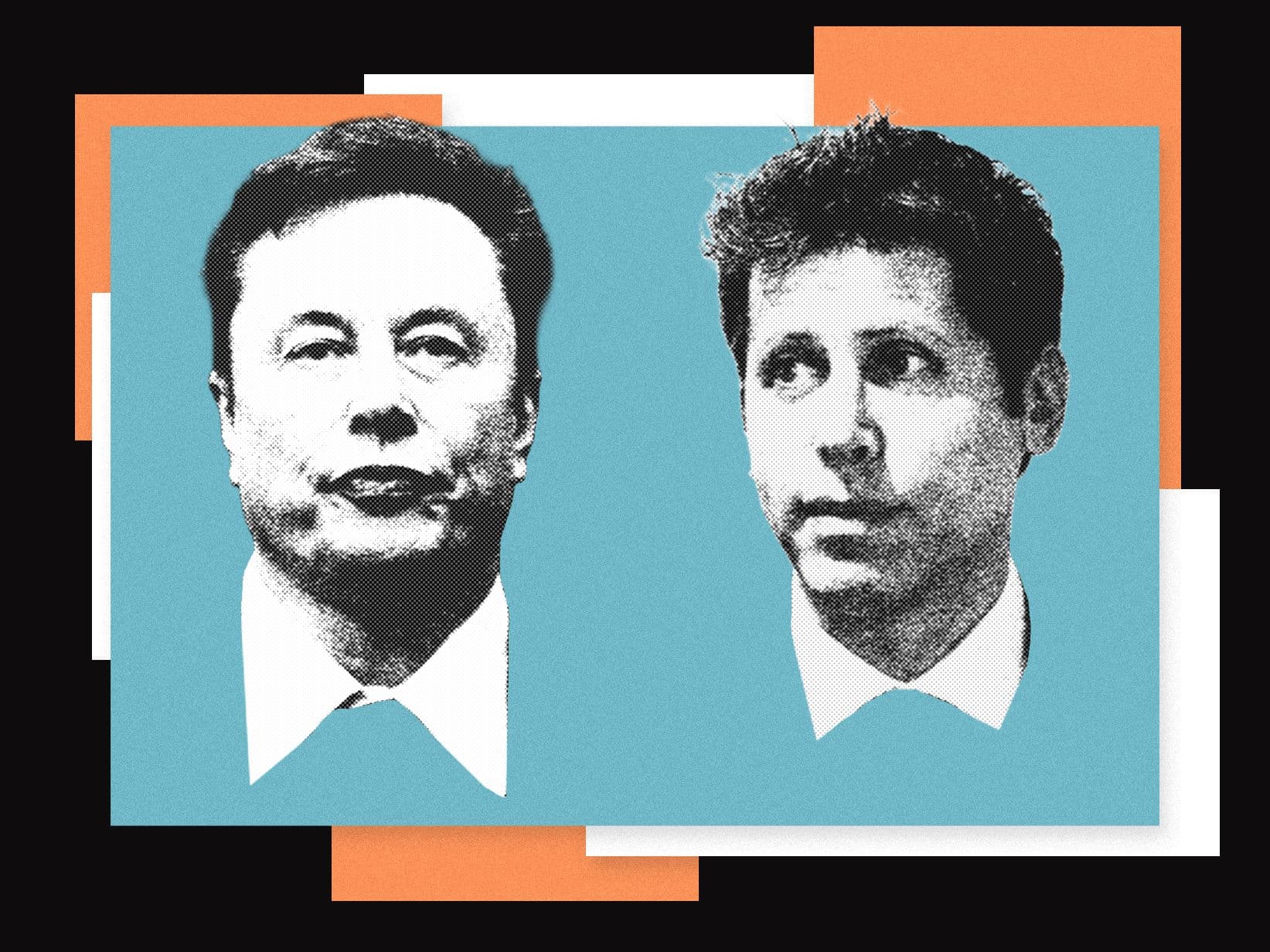
Attorneys delivered closing arguments in the Musk v. Altman trial on Thursday in a final attempt to convince a judge and jury that their respective clients, Elon Musk and Sam Altman, are the most well-intentioned, truth-telling stewards of OpenAI’s founding nonprofit mission. A judgement could be delivered as soon as next week, ending a decade-long battle between two of the technology industry’s most influential entrepreneurs.But regardless of the outcome, there is a wide set of losers in this case. Based on ample amounts of evidence, it appears that the people worst off are the employees, policy makers, and members of the public who believed in the mission of a nonprofit research lab—and supported OpenAI because of it. What seemed to take precedent for Musk and OpenAI’s other cofounders at almost every turn was building the world’s leading AI lab—even if that meant creating a multibillion dollar for-profit company in the process.“It's hard to see how the public interest is being protected by either of these parties, and that is really what is ultimately at stake in a case about a nonprofit,” says Jill Horwitz, a Northwestern University law professor with expertise in nonprofits and innovation, who listened to the closing arguments. “The public interest in the nonprofit is at risk no matter who wins.”OpenAI's stated mission is to ensure artificial general intelligence (AGI) benefits humanity, but humanity is not a party in this case. In practice, OpenAI has spent the last decade attempting to rival multitrillion dollar companies like Google, and build AGI first. Additionally, Musk and Altman have fought tooth and nail to be the ones who control OpenAI.“Musk and Altman are basically locked in a race to be the first to build superintelligence, and they both rightly fear what the other will do if they win. The rest of us should fear them both,” says Daniel Kokotajlo, a former OpenAI researcher who joined in 2022 and has raised concerns over the company’s safety culture. He was part of a group of former OpenAI researchers that filed an amicus brief in this case against OpenAI’s for-profit conversion, arguing that the nonprofit structure was critical in their decision to join the company.Got a Tip?Are you a current or former OpenAI or Tesla employee who wants to talk about what's happening? We'd like to hear from you. Using a nonwork phone or computer, contact the reporters securely on Signal at Mzeff.88 and Peard33.24.At trial, OpenAI’s nonprofit was discussed as if it were yet another corporate investor. OpenAI’s lawyers argued that giving the nonprofit a $200 billion stake in the for-profit company is proof that OpenAI is fulfilling its mission. Public advocacy groups disagree that funding alone is sufficient.“I am among the many people who are glad to see how many philanthropic resources the OpenAI foundation has at its disposal to do good work,” says Nathan Calvin, VP of state affairs for the AI safety nonprofit Encode, which filed an amicus brief opposing OpenAI’s restructuring earlier in this case. “But it’s worth remembering that the nonprofit also has a governance role, and that the mission of the nonprofit is not that of a typical foundation, it is specifically to ensure that AGI benefits all of humanity. Money is important for that goal and is useful all else equal, but it is not the goal in and of itself.”Origin StoryEvidence revealed in this case suggests Altman and Musk were in agreement about OpenAI launching as a nonprofit and operating much like a typical startup. They shared the goal of beating Google DeepMind in the race to AGI. But creating OpenAI as a nonprofit turned out to be a horribly inconvenient means to winning that race.Musk has accused Altman, OpenAI’s CEO, and Greg Brockman, its cofounder and president, of straying from the nonprofit’s founding mission. He claims the founders used his $38 million investment to turn OpenAI into an $850 billion company and make several of its cofounders billionaires.To

Nine California jurors are now deliberating over the future of OpenAI, the world-leading artificial intelligence lab. While the trial exploring Elon Musk’s case against OpenAI’s other cofounders and Microsoft has covered territory ranging from the breakup of the founders in 2018 to Altman’s firing and rehiring in 2023, the jurors will be considering a set of fairly narrow questions. Breach of charitable trust — essentially, did OpenAI and cofounders Sam Altman and Greg Brockman violate a specific agreement with Musk to use his donations to OpenAI for a specific, charitable purpose and not general use by the non-profit? Unjust enrichment — did the defendants use Musk’s donations to enrich themselves through OpenAI’s for-profit arm, instead of for charitable purposes? Aiding and abetting breach of charitable trust — Did Microsoft, through its interactions with OpenAI, know that Musk had specific conditions on its donations, and play a significant role in causing harm to Musk? OpenAI has also made three arguments in its defense that the jury will weigh: Statute of limitations — a legal deadline by which a lawsuit must be filed. Here, if OpenAI can prove that any harms to Musk happened before August 5, 2021 for the first count; August 5, 2022 for the second count; and November 14, 2021 for the first count, then his claims will be moot. Unreasonable delay — Musk, by filing his lawsuit in 2024, delayed his claim in a way that made his request for damages unreasonable. Unclean hands — a legal doctrine holding that Musk’s conduct related to his claims against OpenAI was unconscionable and renders them invalid. If Musk wins out, it could mean the end of OpenAI as a for-profit company, but it’s not entirely clear what will result. Next week, the judge will begin a set of new hearings where lawyers from both sides will debate what the consequences of a verdict in favor of the plaintiffs might be. That process could be rendered moot by a negative verdict, however. Breach of charitable trust Musk’s attorneys say the defendants clearly understood that Musk wanted to support a non-profit that would ensure the benefits of AI to the world, and prevent it from being controlled by any one organization. In particular, they say a $10 billion investment from Microsoft in 2023 into OpenAI’s for-profit affiliate—the first to happen after the statute of limitations—was the event that turned Musk’s concern into conviction. That deal, Musk’s lawyers say, was different from previous investments and led to OpenAI’s investors being enriched by the company’s commercial products, at the expense of the charitable mission of AI safety that Musk promoted. OpenAI’s attorneys have asked every witness to describe specific restrictions put on Musk’s donations, and none have, including his financial adviser Jared Birchall, his chief of staff Sam Teller, or his special adviser Shivon Zilis. They say everyone involved agreed that private fundraising would be required to achieve its goals, and note that Musk himself attempted to launch an OpenAI-affiliated for-profit he would personally control, and later to merge OpenAI into his company Tesla. They also note the organization’s other donors haven’t said their charitable trust was violated. Importantly, a forensic accountant hired by OpenAI testified that all of Musk's donations had been used by OpenAI well before the key date of August 5, 2021. That is evidence that Musk's donations were already used for their purpose well before he brought his lawsuit, invalidating any charitable trust that may have existed. Mainly, they insist that the for-profit affiliate that conducts most of OpenAI's actual activity continues to fulfill the organization's mission, and has generated nearly $200 billion in equity value to support the non-profit foundation. Notably, Sam Altman argued that providing ChatGPT for free helps fulfill the mission of sharing the benefits of AI with the world. Unjust enrichment The plaintiff

In Brief Posted: 1:58 PM PDT · May 14, 2026 Image Credits:OpenAI Codex is going mobile. The coding tool — which OpenAI launched approximately a year ago — has now been integrated into the ChatGPT app, allowing users to monitor and manage their development workflows remotely. The new function allows users to see their Codex live environments in any devices where it is running. The company announced the changes Thursday; the update, which is currently in preview, is now available to all plans on iOS and Android. “This is more than the ability to remotely control a single task or dispatch new tasks to your computer,” OpenAI said in a statement. “From your phone, you can work across all of your threads, review outputs, approve commands, change models, or start something new.” Last month, OpenAI also gave Codex the ability to run in the background in desktop environments — empowering the tool to take care of various tasks autonomously. Earlier this month, the company also introduced a Chrome extension that allows the agent to work in live browser sessions. In February, Anthropic released a similar feature — Remote Control — which allows users to remotely monitor Claude Code’s work from afar. The flurry of feature releases from both OpenAI and Anthropic speaks to the tense competition between the two over whose agentic coding tool will become the most widely used. Over the past year, Anthropic’s Claude Code has gained in popularity among businesses and tech professionals alike, although both tools continue to be widely used. Topics Subscribe for the industry’s biggest tech news Latest in AI

With the tech industry singularly focused on AI models, Anthropic is having an exceptionally good year. The company may soon pull ahead of its main competitor, as it looks to raise tens of billions of dollars in a funding round that would put its valuation at some $950 billion (OpenAI was valued at $854 billion in its March round), and business customers increasingly express a prefererence for Claude over ChatGPT. A recent report showed Anthropic recently outpaced OpenAI among business customers, quadrupling its market share since May 2025. Cat Wu, Anthropic’s head of product for Claude Code and Cowork, has been a key figure in that success. Since joining the company in August 2024, Wu has helped shepherd Claude through a critical phase, leveling it up from a purely informational chatbot to a coding tool and beyond. Wu, who oversees the development of new features, is frequently paired with Boris Cherny, a core member of Anthropic’s technical staff and the creator of Claude Code, leading the pair to be characterized as Anthropic’s “Batman and Robin.” Wu sat down with me at last’s week’s second annual Code with Claude conference in San Francisco, where she discussed how she thinks about product strategy, and how she hopes the experience of using Claude will change in the future. This interview has been edited for length and clarity. When you’re looking at product strategy, how much of it is reactive to your peers or your competitors? Do you think about that at all? The main thing that we design for is staying on the exponential, so I think, across our team, we instill in everyone the lesson that AI will just continue to get better. For us, we just need to stay at this frontier. We don’t think about competitors. I think if you do think about competitors, you end up being, like, perpetually two weeks, or like, a month behind how fast you can execute. And so it’s normally not the best way to stay at the frontier. Anthropic released at least six models last year and has already released almost as many this year. Do you expect this pace of development to continue? Our hope is that it continues (laughing). I think the models are still improving at a very steady pace, and so we should be able to keep sharing those with our users. I think the deployments might look a bit different—like how we handled Glasswing, but as much as possible, we want this intelligence to benefit as many people as possible, and it has to be handled in a very safe way, which is why we handled Glasswing [in the way that we did]. [Glasswing is an initiative that Anthropic launched in April that invited a small consortium of partner organizations — including companies like Amazon, Apple, CrowdStrike, and Microsoft — to gain access to its new cybersecurity model, Mythos. Unlike many of Anthropic's other AI models, Mythos is not being given a general public release. The company has claimed that it fears the model — which is designed to scan codebases for software vulnerabilities — is too powerful, and could be weaponized by bad actors.] You said in a previous interview that the future of work is basically staff managing fleets of agents. It seems like that could eventually lead to a situation where the agents are better at the job, or know the job, better than the human. I think it is extremely hard to manage agents if you can't do the job yourself. I think the managers still need to be experts in their domain. It's a new skill set that a lot of people are going to have to learn, but managing agents is actually very similar to being a manager of people, in the sense that you have to understand, like, why did the agent make this mistake? Did it misinterpret my instruction? Was my request under-specified? You have to have the ability to debug it. It does seem like the long term goal is to cut down on team size, though. Because if you have agents doing a job, then you don't need an intern, right? Ideally, I think the idea is that everyone can get a lot mor



Discussion (0)