
Loading dispatches...
← Return to NewsroomTechnology
Why trust is a big question at the Elon Musk-OpenAI trial

Lawyers for Elon Musk and OpenAI made their closing arguments this week, and now it’s up to jurors to decide whether OpenAI did anything wrong as it’s transformed into a slightly-more-for-profit organization. But as Kirsten Korosec, Sean O’Kane, and I noted on the latest episode of TechCrunch’s Equity podcast, a big theme in the trial’s final days was whether OpenAI CEO Sam Altman is trustworthy — for example, Musk’s attorney Steve Molo grilled Altman about whether statements he’d made during congressional testimony were truthful. Kirsten noted that Musk has made plenty of misleading statements of his own, and that trust isn’t just an issue for Altman. “This is a fundamental question [for] a lot of tech journalists, policymakers, and more and more consumers, about all the AI labs,” she said. “It’s really come down to trust, because we don’t have the insight, necessarily — these are all privately held companies, there’s a lot behind the veil still.” Keep reading for a preview of our conversation, edited for length and clarity. Anthony Ha: [The end of the trial] led to this really provocative headline from one of our writers, Tim Fernholz, [that] just says, “Who trusts Sam Altman?” Does anyone want to take a stab at answering this? Kirsten Korosec: Yeah, Anthony, I’m going to throw it right back to you. Do you trust Sam Altman? Anthony: It's an interesting question because it feels like something that's kind of a wild question to discuss in a journalistic context, but actually that's the core of the trial, in a lot of ways. Sean O’Kane: That’s not a yes. Anthony: And it actually seems to be [at the] core of understanding so much of what's happened at OpenAI, especially this big executive power struggle that they now call The Blip. It just seems like a lot of people who've worked with Altman don't trust him. And he's acknowledged this a little bit, because he'll talk about the fact that he recognizes he's been conflict averse, telling people what they want to hear, and he's trying to work on that. I mean, it sounds plausible, and I can understand how that can lead to misunderstandings in some situations. [But] I'm also a very conflict-averse person and I'd like to think that if any of this stuff went to trial, that people would not be asking, “Is Anthony Ha trustworthy?” Sean: Still not a yes! Kirsten: I think that people would say that you are trustworthy. I will say that question, while provocative, doesn't just encapsulate what this trial was about. I would zoom out even more and say this is a fundamental question [for] a lot of tech journalists, policymakers, and more and more consumers, about all the AI labs. It's really come down to trust, because we don't have the insight, necessarily — these are all privately held companies, there's a lot behind the veil still. Maybe when they all IPO, we can get a peek, but it is fundamentally about trust and misuse, and do we believe the intent? And what I would throw back is, sometimes the intent can be worthy, noble, and still misused. It can still end up as a bit of a shit show. I think it's more than who trusts Sam Altman — although that was very interesting in this trial — but more of that bigger question that we can apply to the entire industry. Sean: I'll say it: I don't trust him. But you know, I don't trust most people, so I guess that's just the baseline. We’ll see where this goes. The trial wraps up today. I've been very curious to hear how the jury decides this all. I think at the start of this, a big motivator of this was Elon Musk trying to sling mud, at a perceived rival and someone who he feels slighted him. And I don't know if we know enough yet to say that that was completely accomplished, and whether or not he has a shot at winning. But I think all these people came out of this looking a little bit worse. Anthony: And just to get specific, why this is coming up this week is that [Altman] was on the stand and he was basically getting grilled about some

com

On Thursday OpenAI announced a new feature called Trusted Contact, designed to alert a trusted third party if mentions of self-harm are expressed within a conversation. The feature allows an adult ChatGPT user to designate another person as a trusted contact within their account, such as a friend or family member. In cases where a conversation may turn to self-harm, OpenAI will now encourage the user to reach out to that contact. It also sends an automated alert to the contact, encouraging them to check in with the user. OpenAI has faced a wave of lawsuits from the families of people who have committed suicide after talking with its chatbot. In a number of cases, the families say ChatGPT encouraged their loved one to kill themselves—or even helped them plan it out. OpenAI currently uses a combination of automation and human review to handle potentially harmful incidents. Certain conversational triggers alert the company’s system to suicidal ideations, which then relay the information to a human safety team. The company claims that every time it receives this kind of notification, the incident is reviewed by a human. “We strive to review these safety notifications in under one hour,” the company says. If OpenAI’s internal team decides that the situation represents a serious safety risk, ChatGPT proceeds to send the trusted contact an alert—either by email, text message, or an in-app notification. The alert is designed to be brief and to encourage the contact to check in with the person in question. It does not include detailed information about what was being discussed, as a means of protecting the user’s privacy, the company says. Image Credits:OpenAI The Trusted Contact feature follows the safeguards the company introduced last September that gave parents the power to have some oversight of their teens’ accounts, including receiving safety notifications designed to alert the parent if OpenAI’s system believes their child is facing a “serious safety risk.” For some time now, ChatGPT has also included automated alerts to seek professional health services, should a conversation trend toward the topic of self-harm. Crucially, Trust Contact is optional and, even if the protection is activated on a particular account, any user can have multiple ChatGPT accounts. OpenAI’s parental controls are also optional, presenting a similar limitation. “Trusted Contact is part of OpenAI’s broader effort to build AI systems that help people during difficult moments,” the company wrote in the announcement post. “We will continue to work with clinicians, researchers, and policymakers to improve how AI systems respond when people may be experiencing distress.” Techcrunch event San Francisco, CA | October 13-15, 2026 When you purchase through links in our articles, we may earn a small commission. This doesn’t affect our editorial independence. Lucas is a senior writer at TechCrunch, where he covers artificial intelligence, consumer tech, and startups. He previously covered AI and cybersecurity at Gizmodo. You can contact Lucas by emailing lucas.ropek@techcrunch.com. View Bio
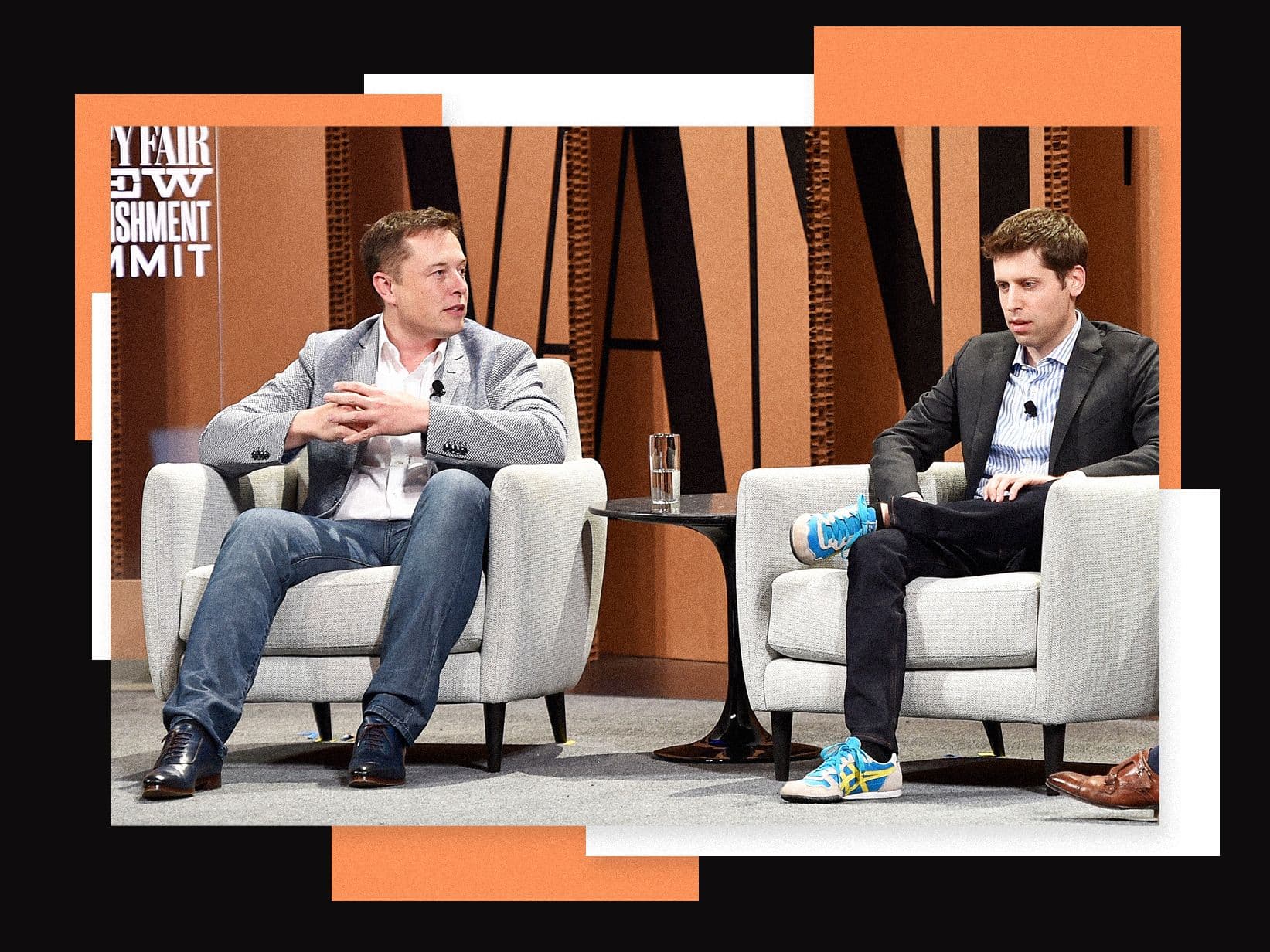
A few months before Elon Musk left OpenAI’s board of directors in February 2018, he tried to recruit Sam Altman to join a “world-class AI lab” within Tesla. Musk went as far as offering the OpenAI CEO a Tesla board seat, according to emails and testimony presented in federal court on Wednesday during the Musk v. Altman trial. The emails were shown to a jury during the cross examination of Shivon Zilis, a former OpenAI adviser and board member who is also the mother of four of Musk’s children.Musk’s core claim in this lawsuit is that Altman and OpenAI president Greg Brockman effectively stole a nonprofit, using the $38 million Musk invested to create a private company worth more than $800 billion today. On Wednesday, lawyers for Musk showed video depositions of former OpenAI CTO Mira Murati and former OpenAI board member Helen Toner, to raise concerns over Altman’s alleged history of deceit.OpenAI’s legal team has responded to Musk’s claims by questioning his true motives, arguing that the Tesla CEO has had “sour grapes” ever since he failed to assume control of OpenAI in 2017. He has since started a rival, for-profit AI lab. OpenAI’s lawyers used Zilis’ cross-examination on Wednesday to bring up evidence about Musk’s alleged plans to subvert OpenAI, and tried to suggest Zilis was privy to those plans. As it pertains to this case, one of Zilis’ most important roles at OpenAI was acting as a conduit between Musk and Altman.In a text from February 2018 presented as evidence, Zilis—then an OpenAI adviser, as well as a Neuralink and Tesla executive—asked Altman, “Did you think through a B Corp subsidiary of Tesla?”“There was documentary evidence that, at several points, Mr. Musk had contemplated seeking to join Sam Altman to the board and offered that option,” said OpenAI lawyer William Savitt outside the courthouse on Wednesday. “It was part of Mr. Musk’s effort to corrupt OpenAI and absorb it into Tesla … he was trying to get Altman to abandon the mission and be part of Tesla.”Got a Tip?Are you a current or former OpenAI or Tesla employee who wants to talk about what's happening? We'd like to hear from you. Using a nonwork phone or computer, contact the reporters securely on Signal at Mzeff.88 and Peard33.24.In an email to Tesla’s VP of communications, Sarah O'Brien, from November 2017, Zilis shared a draft of an FAQ page about an event Tesla was planning to hold at the NeurIPS AI conference. “The purpose of this event is to share that Tesla is building a world leading AI lab(?) which will rival the likes of Google / DeepMind and Facebook AI Research,” the drafted FAQ read. The document continues, “One major issue for Tesla is when people think of Elon and AI, they think of OpenAI.”Another part of the FAQ labeled “Who?” lists several Tesla executives who were planned to lead the unit, including Musk and Andrej Karpathy, a former OpenAI researcher. Altman’s name is listed next to Musk’s with two question marks beside it.The FAQ is marked up with notes including that Altman could be a moderator for the NeurIPS event, which "could be a forcing function for Sam to commit to TeslaAI.” Another note reads that Tesla AI's "strategy had yet to be defined and some of it may be deeply proprietary.”Zilis testified on Wednesday that Altman never ended up joining Tesla, and the AI lab and the NeurIPS launch event never came to fruition. She also testified that Musk reached out to Karpathy about recruiting him to Tesla. Savitt told reporters that Zilis’ testimony on Karpathy is “directly contrary to what Mr. Musk told the jury just a few days ago.” Earlier in this trial, Musk testified that Karpathy left OpenAI of his own volition.In text messages from June 2017, Zilis responded “Fuck yeahhhhhhh” when told by Tesla colleagues that Karpathy had signed an official offer. Another employee asked if OpenAI would be mad about Karpathy’s hire, followed by a smiley face emoticon. Zilis said it was a good question, but said she had “talked to Greg [Broc

When do we take AI doomers seriously? That’s a key subtext of Elon Musk’s attempt to shut down OpenAI’s for-profit AI business. His attorneys argue that the organization was set up as a charity focused on AI safety, and lost its way in pursuit of lucre. To prove that, they cite old emails and statements from the organization’s founders about the need for a public-spirited counterweight to Google DeepMind. Today, they called their only expert witness: Peter Russell, a University of California, Berkeley computer science professor who has studied AI for decades. His job was to offer background on AI, and establish that this technology is dangerous enough to worry about. Russell co-signed an open letter in March 2023 calling for a six-month pause in AI research. In a sign of the contradictions here, Musk also signed the same letter, even as he was launching xAI, his own for-profit AI lab. Russell told jurors and Judge Yvonne Gonzalez Rodgers that there were a variety of risks associated with the development of AI, ranging from cybersecurity threats to problems with misalignment and the winner-take-all nature of developing Artificial General Intelligence (AGI). Ultimately, he said that there was a tension between the pursuit of AGI and safety. Russell’s larger concerns about the existential threats of unconstrained AI didn’t get aired in open court after objections from OpenAI’s attorneys led the judge to limit Russell’s testimony. But Russell has long been a critic of the arms-race dynamic created by frontier labs around the globe competing to reach AGI first, and called for governments to regulate the field more tightly. OpenAI’s attorneys spent their cross-examination establishing that Russell wasn’t directly evaluating the organization’s corporate structure or its specific safety policies. Techcrunch event San Francisco, CA | October 13-15, 2026 But this reporter (as well as the judge and the jurors) will be weighing how much value to put on the relationship between corporate greed and AI safety concerns. Virtually every one of the OpenAI founders have strenuously warned about the risks of AI, while also emphasizing the benefits, attempting to build AI as fast as possible — and hatching plans for AI-focused for-profit enterprises they would control. From the outside, a clear issue here is the growing realization inside OpenAI after its founding that the organization simply needed more compute spend if it was to succeed. That money could only come from for-profit investors. The founding team’s fear of AGI in the hands of a single organization pushed them to seek the capital that ultimately tore the team apart, creating the arms race we know today—and bringing us to this lawsuit. The same dynamic is already playing out at a national level: Senator Bernie Sanders’ push for a law imposing a moratorium on data center construction cites AI fears enunciated by Musk, Sam Altman, Geoffrey Hinton and others. Hoden Omar, who works at the trade organization the Center for Data Innovation, objected to Sanders citing their fears without their hopes, telling TechCrunch that “it is unclear why the public should discount everything tech billionaires say except when their words can be recruited to fill gaps in a precarious argument.” Now, both sides of the case are asking the court to do just that: take part of Altman and Musk’s arguments seriously, but discount the parts that are less useful for their legal argument. When you purchase through links in our articles, we may earn a small commission. This doesn’t affect our editorial independence. Tim Fernholz is a journalist who writes about technology, finance and public policy. He has closely covered the rise of the private space industry and is the author of Rocket Billionaires: Elon Musk, Jeff Bezos and the New Space Race. Formerly, he was a senior reporter at Quartz, the global business news site, for more than a decade, and began his career as a political reporter in Washing
.jpg&w=3840&q=75)
OpenAI is ready to target free users of its services with advertisements around the web, based on what it knows about them.On Thursday, OpenAI sent an email to users laying out major changes to the AI company’s privacy policy in the US. “We’ll now use cookies to promote OpenAI products and services on other websites,” reads the email sent on April 30. “This does not impact your conversations in ChatGPT. Your conversations with ChatGPT are private and are not shared with marketing partners.” Cookies store information in users’ browsers as they explore the web.Chats with the bot aren’t shared with third parties. Even so, details OpenAI collects as users interact with its services may soon be used to market those same services, like ChatGPT, outside the platform. This appears to be targeted at converting free users (WIRED found that marketing settings were “on” by default) and seeing how effective its ads are at conversions.The move comes as OpenAI looks to expand its own advertising network inside ChatGPT. The company started rolling out ads at the bottom of ChatGPT outputs this February for US users. Competitors like Google are exploring how ads can be woven into the user experience of generative AI tools and features."Nothing about our policy of not sharing people’s conversations or other private user content with advertisers has changed,” says OpenAI spokesperson Taya Christianson. “Like many companies, OpenAI works with select marketing partners to help people learn about our products on third-party websites and apps, and we updated our privacy policy to clarify how this works. We do not share your conversations with these marketing partners. To make OpenAI marketing efforts more relevant and measure their effectiveness, we may share limited identifiers, such as cookie IDs or device IDs, and users can opt out at any time in settings."To help you better understand what recently changed, WIRED compared the new privacy policy to a previous version saved from OpenAI’s website earlier this month. The biggest change revolves around how your data is shared for marketing purposes.Courtesy of Reece RogersData Usage Now Includes Third-Party PromotionsIn the “Disclosure of Personal Data” section, OpenAI expanded the paragraph detailing how it discloses personal data. OpenAI now says it may share “limited information” with partners to promote services like ChatGPT and Codex off of OpenAI’s platforms.The company details this change in a new help page. It says it might send identifiers, such as users’ email addresses or cookie IDs, to advertising platforms. That way, OpenAI can check whether users have taken specific actions—like signing up for its Codex tool after they get shown an ad for it on Instagram.Users can opt out of this kind of tracking by going to “Settings > Data Controls > Marketing Privacy” in the ChatGPT app. WIRED tested two free accounts and found that those settings were on by default. The two paying accounts WIRED checked, one Plus and the other Enterprise, did not have it on by default.Old Privacy PolicyWe disclose your Personal Data in the following circumstances:Vendors and Service Providers: To assist us in meeting business operations needs and to perform certain services and functions, we disclose Personal Data to vendors and service providers, including providers of hosting services, customer service vendors, cloud services, content delivery services, support and safety services, email communication software, web analytics services, payment and transaction processors, search and shopping providers, marketing service providers, and information technology providers. We also work with service providers who help us with age and identity verification, and you can learn more here. Based on our instructions, these parties will access, process, or store Personal Data only in the course of performing their duties to us.New Privacy PolicyWe disclose your Personal Data in the following circumstances:Vendors, Service Provid
As the first week of trial in Musk v. Altman comes to a close, one person has emerged as a critical behind-the-scenes manager of communications and egos in OpenAI’s early years: Shivon Zilis.A longtime employee of Musk and the mother to four of his children, Zilis first joined OpenAI as an advisor in 2016. She later served as a director of its nonprofit board from 2020 until 2023 and has also worked as an executive at Musk’s other companies, Neuralink and Tesla.When asked about the nature of his relationship with Zilis in court, Musk offered several answers. At one point, he called her a “chief of staff.” Later, a “close advisor.” At another point, he said “we live together and she’s the mother of four of my children,” though Zilis said in a deposition that Musk is more of a regular guest and maintains his own residence. Last September, Zilis told OpenAI’s attorneys that she became romantic with Musk around 2016 after she had become an informal advisor to OpenAI. They had their first two children in 2021, she said.But OpenAI’s lawyers have shown in witness testimonies and evidence that her most important role, as it pertains to this case, is being a covert liaison between OpenAI and Musk, even years after he left the nonprofit’s board in February 2018.“Do you prefer I stay close and friendly to OpenAI to keep info flowing or begin to disassociate? Trust game is about to get tricky so any guidance for how to do right by you is appreciated,” Zilis wrote in a text message to Musk on February 16, 2018, days before OpenAI announced he was leaving the board. Musk responded, “Close and friendly, but we are going to actively try to move three or four people from OpenAI to Tesla. More than that will join over time, but we won’t actively recruit them.”When asked about this exchange on the witness stand, Musk said he “wanted to know what’s going on.”In the same text thread, Musk said “there is little chance of OpenAI being a serious force if I focus on Tesla AI.” Zilis reaffirmed him, saying: “There is very low probability of a good future if someone doesn’t slow Demis down,” referring to the leader of Google DeepMind, who Musk has said he didn’t trust to control a superintelligent AI system. “You don’t realize how much you have an ability to influence him directly or otherwise slow him down. I think you know I’m not a malicious person but in this case it feels fundamentally irresponsible to not find a way to slow or alter his path.”Roughly two months later, in an email from April 23, 2018, Zilis updated Musk on OpenAI’s fundraising efforts and progress on a project to develop an AI that could play video games. In the same message, she said she had reallocated most of her time away from OpenAI to his other companies, Neuralink and Tesla, but told him, “if you’d prefer I pull more hours back to OpenAI oversight please let me know.”Almost a year earlier, in the summer of 2017, OpenAI’s cofounders had started negotiating changes to the organization’s corporate structure—Musk wanted control of the company to start out. In an email from August 28, 2017, Zilis wrote to Musk that she had met with Greg Brockman and Ilya Sutskever to discuss how equity would be divided up in the new company. She summarized points from the meeting, including that Brockman and Sutskever thought one person shouldn’t have unilateral power over AGI, should they develop it. Musk wrote back to Zilis, “This is very annoying. Please encourage them to go start a company. I’ve had enough.”The negotiations continued into the fall, and Zilis continued acting as a trusted confidant for both sides. In a September 20, 2017 email thread in which Sutskever told Altman and Musk his reservations about allowing Musk to control OpenAI, Zilis is copied.Two days later, Zilis wrote to Musk that she had talked with Altman, Brockman, and Sutskever about their commitment to maintaining OpenAI’s nonprofit structure and recapped their perspectives on the matter. Around that time, Zilis also h



Discussion (0)