
Loading dispatches...
← Return to Newsroomgeneral
Indian Art walks the red carpet: How celebrities showcased their heritage at the Met Gala 2026
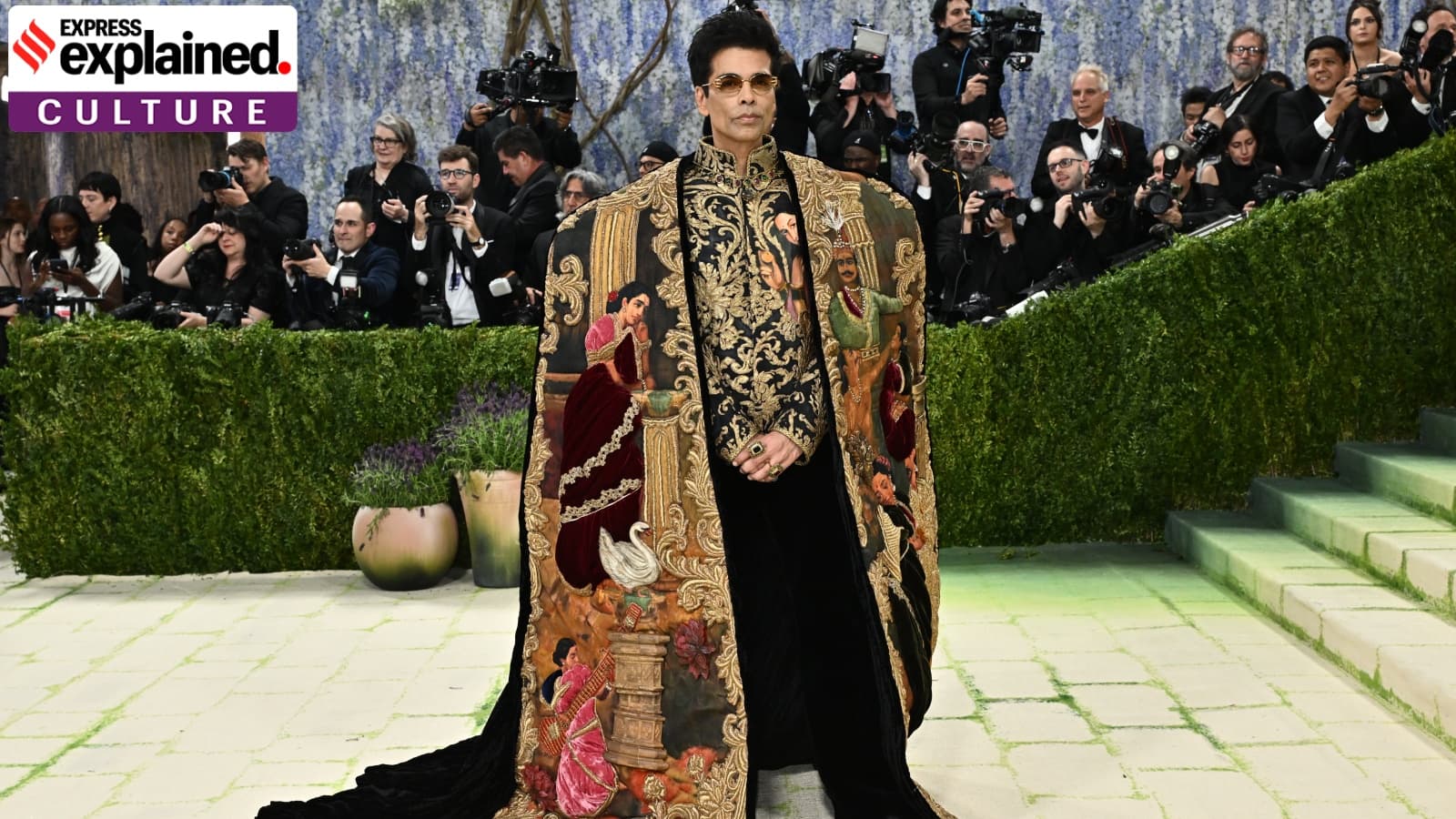
Coupling the theme “Costume Art” with the dress code “Fashion is Art”, the 2026 Met Gala witnessed Indian celebrities introducing a touch of ethnic culture and tradition to the Metropolitan Museum of Art at Fifth Avenue in Manhattan, New York.Adorning herself in a gold saree conceived by Gaurav Gupta and styled by Anaita Shroff Adajania, Isha Ambani’s saree fabric was woven using real gold by the artisans of Swadesh collective. This team comprised over 25 artisans dedicated upwards of 1200 hours during the creation of the fabric. This saree’s border shows hand painted pichwai motifs that are symbolic of nature. The border also featured ancient rock-cut murals like those seen in the Ajanta caves. Utilizing zardosi, a Persian embroidery technique, this entails using fine metal wires to create a heavy, opulent look. Additionally, a crochet needle was used to create a sharp and fine chain stitch known as aari. The mural’s finish also creates a 3D sculpted effect on the fabric termed relief embroidery. Artist Trilok Soni, along with six artisans, spent 150 hours hand-painting the border. Pichwai is a 400-year-old traditional art form from Nathdwara, Rajasthan, featuring intricate, hand-painted scenes on cloth dedicated to Lord Krishna. Her blouse was adorned with over 1,000 diamonds including old-mine solitaires, emeralds, polki, and rose and table-cut diamonds in kundan, all of which comes from her mother Nita Ambani’s private collection. She also carried a hand-painted bronze mango by artist Subodh Gupta nestled in a custom crochet 3.10 by Guggi. The look was completed with a jasmine-inspired hair sculpture by Brooklyn-based artist Sourabh Gupta – a reinterpretation of the traditional gajra. Karan Johar Karan Johar made his Met Gala Debut in a bandhgala paired with tailored trousers and a dramatic embroidered cape seemingly inspired by the 19th Century artist Raja Ravi Varma. Titled “Framed in Eternity,” his look was designed by Manish Malhotra and styled by Eka Lakhani. The design drew inspiration from iconic works like Hamsa Damayanti, specifically the swan motif, Lady with a Lemon. It is the centrepiece of the design, Kadambari, Arjuna and Subhadra and There Comes Papa. Every motif has been entirely hand painted, with the artisans having spent over 5,600 hours on it. For the textile to boast the same finishing touch as an actual painting, the embroidery has been treated with acrylic and oil finishes followed by a varnishing. The borders are built on rubberised bases layered with zardozi. To give them a sculptural, raised quality like paint thickly laid onto canvas, the borders have been built on rubberised bases layered with zardozi.Story continues below this ad Raja Ravi Varma is called the “father of modern Indian art” for his oil painting which merged European academic realism with Indian mythological themes. His importance comes from humanising deities, creating iconic, emotive depictions of figures like Saraswati, Shakuntala, and Damayanti that defined Indian visual culture. Manish Malhotra For his second consecutive outing at the Met Gala, Manish Malhotra framed it as a heartfelt letter to Mumbai and the people behind his label. He paired an Indian bandhgala with a cape embroidered with the names and signatures of its makers, many of whom have worked with Malhotra over the decades. Across the surface of the cape are references to the Taj Mahal Palace Hotel, the Gateway of India and Chhatrapati Shivaji Terminus, alongside trains, taxis and scenes from everyday city life including the miniature of a master embroiderer mid-stitch, a tailor bent over a cutting table. Demanding more than 960 hours to create the garment, the labour process involved 50 artisans across Mumbai and Delhi. Dori work, zardozi, chikankari and kasab are worked across the cape in white and ivory. The signatures of embroiderers, tailors, and karigars appear within the embroidery. Gauravi Kumari and Swamai Padmanabh Singh (Pacho Jaipur) Princess Gaur
New DelhiUpdated: May 1, 2026 09:25 PM IST The founder described how the informal setup reflects the spirit of inclusivity (Representational image/Pexels)An Indian entrepreneur is making waves by introducing an unconventional workplace ritual to bring the entire team together. Kavya Karnatac, founder of KK Create, shared on LinkedIn that every afternoon at 2.00 pm sharp, work comes to a complete halt as all 40 team members gather to eat together. The idea, she explained, is to create a sense of connection across teams, regardless of roles or deadlines.“Every day we have a 1-hour picnic at the office! And it is non-negotiable. We are a team of 40 people across different verticals, deadlines, and chaos. But suddenly, as the clock hits 2 PM, all of that disappears, and everyone gathers in the hall,” Karnatac wrote on LinkedIn. She described how the informal setup reflects the spirit of inclusivity, like chairs are pulled in from different corners, people squeeze in wherever they can, and no one is left to eat alone. The gathering cuts across hierarchy, with managers and freshers sharing the same space and meal. Karnatac also noted that team leads often take the initiative to step away from work and encourage others to join in. “It goes for an hour, sometimes even more: Someone sharing homemade food. Someone cracking the worst (but funniest) jokes. Someone starting a mafia game mid-meal. It feels like party every day,” she said. Reflecting on the impact of the ‘picnic’, she added, “This culture is rare and honestly? Some days, it doesn’t even feel like an office. It feels like a family sitting down for a meal. These 60 minutes remind me connection beyond work truly builds a team.” See the post here: The post resonated with several users, with one commenting, “For some people, that hour might be their only deep work window or quiet reset. The best cultures create connection and leave room for individual rhythms.” Another user wrote, “Honestly, this feels less like a “perk” and more like a mindset. When people are comfortable enough to laugh, share food, and just be themselves, work stops feeling transactional.”Story continues below this ad “That’s culture done right. Shared moments like this don’t just build teams, they build trust, which shows up when it matters most,” another user reacted. “That kind of shared daily ritual does more for team cohesion than most formal “culture initiatives.” Regular, informal time together builds trust in a way meetings rarely do,” a third user said. DISCLAIMER: This story reflects a specific organisational practice and is intended for informational and entertainment purposes rather than as professional management or psychological advice

Discussion (0)