
Loading dispatches...
← Return to NewsroomWorld
US to send 5,000 more troops to Poland, Trump says

Just nowYang TianLuke Sharrett via Getty ImagePresident Donald Trump has said the US will be sending an additional 5,000 troops to Poland, a week after the Pentagon cancelled a planned deployment of 4,000 troops to the country.Writing on Truth Social, Trump said the decision was based on the US's relationship with Polish President Karol Nawrocki, whom he backed during presidential elections last year.The US president did not provide further details on whether the additional troops were part of the previous planned deployment or a different operation.The White House has signalled in recent weeks that it intends to reduce its overall troop levels in Europe as part of its "America First" agenda.Earlier this month, the US also announced it would withdraw 5,000 troops from Germany after a row between Trump and German Chancellor Friedrich Merz over the war with Iran.Trump previously criticised Merz over his suggestion that the US had been "humiliated" by Iranian negotiators.It is unclear whether the additional troops for Poland were part of those withdrawing from Germany or a separate group.He has also been critical of Washington's Nato allies for their unwillingness to join the US in pressuring Iran over the Strait of Hormuz.Foreign ministers from Nato countries will meet in Sweden on Friday at a summit that includes US Secretary of State Marco Rubio.Rubio is expected to call for increased burden sharing from Washington's Nato partners.Ahead of the meeting, the BBC asked him about unconfirmed reports that the US could shrink its total troop numbers available in the event of an attack on a Nato country.Rubio said "some of those issues" will be discussed at the summit, adding that Trump remained very upset and disappointed with Nato allies.Trump's announcement on Thursday comes a week after the defence department abruptly said it was cancelling the deployment of 4,000 troops to Poland.US Defence Secretary Pete Hegseth later said the cancellation was "a temporary delay" of the planned deployment and the US will continue to ensure it "retains a strong military presence" in Poland.Nawrocki has long been a staunch Trump supporter and earned his endorsement before winning Poland's presidential election.Speaking to the BBC's Radio 4 Today programme in January, the Polish president said Trump is the only world leader capable of stopping Vladimir Putin and ending the war in Ukraine.Despite Trump's previous criticism of the Nato alliance and his European counterparts, Nawrocki insisted the US was still the guarantor of security in Europe. Several Republican lawmakers have previously criticised Trump's decision to withdraw troops from Germany, saying it risked sending the wrong message to Russia.The US military deployment in Germany is by far its biggest in Europe, currently at more than 36,000 active duty troops compared to about 12,000 troops in Italy and a further 10,000 in the UK.

Vote to advance War Powers Resolution seen as rare rebuke of the president as pressure grows to end US attacks on Iran.The United States Senate has advanced a War Powers Resolution that could prevent President Donald Trump from using military force against Iran without congressional authorisation amid widening fallout from the conflict.The vote on a procedural measure to advance the resolution was passed on Tuesday by a margin of 50 to 47, with a handful of Republicans joining Democratic colleagues to pass the measure in a rare rebuke of the president.Recommended Stories list of 3 itemslist 1 of 3In rare push, US lawmakers demand transparency on Israel nuclear capabilitylist 2 of 3Senators press US military on Israel’s displacement campaign in Lebanonlist 3 of 3Three Republicans break ranks, but Senate fails to curb Trump’s war powersend of listThe vote showed that a small but growing number of Republicans are increasingly uneasy with a war that shows no signs of ending, amid a fragile ceasefire, and are willing to challenge the president.“This president is like a toddler playing with a loaded gun,” Democratic Senate Minority Leader Chuck Schumer said before the vote.“If there was ever a time to support our war powers resolution to withdraw troops from hostilities with Iran, it’s now,” he said.The result was also a victory for lawmakers who have been arguing that Congress, not the president, should have the power to send troops to war, as spelled out in the US Constitution.However, it was only a procedural vote, and the resolution faces steep hurdles if it is ever to go into effect. Three Republicans were absent during the vote on Tuesday, and their votes would be enough to defeat the measure if they maintain their stance in favour of the war.But even if the resolution is eventually passed by a vote of the 100-member Senate, it must also pass the Republican-led House of Representatives and garner two-thirds majorities in both the House and Senate to survive an expected Trump veto.Trump’s Republicans have blocked seven previous attempts to advance similar resolutions in the Senate this year. They have also stopped three war powers resolutions by narrow votes in the House this year.Yet, the vote on Tuesday underscores growing pressure on the president, as the war on Iran, launched by the US and Israel in late February, continues to wreak havoc on the global energy market and the cost of living at home.Democrats and a few Republicans have called on Trump to come before Congress and seek authorisation for his war, with some expressing concerns that the president may have entered the US into a long conflict without setting out a clear exit strategy.The Trump administration say the president’s actions are legal and within his rights as commander in chief, as well as his responsibility to protect the US by ordering limited military operations.Under a 1973 US war powers law passed in response to the Vietnam War, a US president can wage military action for only 60 days before they must end it, ask Congress for authorisation, or seek a 30-day extension, due to the “unavoidable military necessity regarding the safety of United States Armed Forces” while withdrawing forces.Trump declared on May 1 that a ceasefire with Tehran had “terminated” hostilities, meaning he had not waged more than 60 days of war on Iran.Despite the president’s assertion that the conflict has ceased, US troops continue to blockade Iranian ports and attack Iranian shipping, while Tehran’s forces are blocking access to the Strait of Hormuz and have attacked US vessels.Opinion polls suggest that US voters are opposed to the war, which legal experts widely consider to be a violation of international law.

19 minutes agoRobert GreenallReutersRussians have been told to expect internet outages during the holiday celebrationsDonald Trump has announced a three day ceasefire between Russia and Ukraine, after both countries accused each other of violating separate ceasefires declared by each side to cover the celebrations of the Soviet Union's victory over Nazi Germany."This ceasefire will include a suspension of all kinetic activity, and also a prison swap of 1,000 prisoners from each country," the US president said.Shortly afterwards Ukraine's President Volodymyr Zelensky confirmed Ukraine's participation.Earlier, Russia and Ukraine each said the other side had continued to attack their positions and Moscow's mayor said the city had been targeted by drones overnight.In his post Trump said he had personally requested the three-day truce and "I very much appreciate its agreement by President Vladimir Putin and President Volodymyr Zelenskyy".Earlier, Putin had announced a ceasefire for 8-9 May ahead of Victory Day celebrations on Saturday. Kyiv had earlier called for an indefinite truce, starting 6 May.Russia has warned Ukraine not to try to attack the Victory Day parade in Red Square.Its defence ministry has threatened to launch a "retaliatory, massive missile strike" on the centre of Kyiv if Moscow is attacked. It has warned foreign diplomats to leave the Ukrainian capital ahead of 9 May.Residents of Moscow and St Petersburg have also been warned their mobile internet access will be limited for security reasons.The celebrations used to bring large numbers of foreign guests to Moscow, but this time only the leaders of Belarus, Malaysia and Laos, and a few other dignitaries, will attend.Getty ImagesThere will be no military hardware at the parade, only soldiersOn Friday both sides accused the other of battlefield ceasefire violations. The Russian defence ministry said Ukraine was also striking civilian targets in border areas of the Kursk and Belgorod regions, close to the conflict zone. Russian armed forces provided a "mirror response" to the violations, the ministry added.Meanwhile Moscow Mayor Sergey Sobyanin said some 20 drones had been downed near the city in just the first two hours of the ceasefire. Ukrainian strikes were also reported on industrial sites in the Perm and Yaroslavl regions, as well as sites in the Rostov region and the Chechen capital Grozny. Thirteen airports in southern Russia also suspended operations after a drone attack.Meanwhile Zelensky posted on Telegram that there had been more than 140 attacks on Ukrainian positions in the first few hours of the truce, and more than 850 drone strikes. The Ukrainian leader said his country would "act in kind".ReutersUkraine said Russia had ignored its proposal of a ceasefire starting 6 MayThe war of words over ceasefires came after European Council President António Costa said he thought there was "potential" for the EU to negotiate with Russia over ending the war, and said they had Zelensky's backing to do so."I'm talking with the [EU's] 27 national leaders to see the best way to organise ourselves and to identify what we need effectively to discuss with Russia when it comes to the right moment to do this," he said in an interview with the Financial Times on Thursday."We cannot change the geography. We are in Europe, we are neighbours of Russia, and of course we need to talk with them about the future of the security architecture of Europe," he added.Kremlin spokesman Dmitry Peskov responded that Russia was ready for dialogue but "will not initiate such contacts ourselves".The US has mediated several rounds of talks between Russia and Ukraine but so far without any breakthrough, and there are concerns that Washington is now distracted by the war in the Middle East.Speaking on a visit to Italy on Friday, Secretary of State Marco Rubio said the US was still prepared to mediate but did not want to waste time if progress was not being made.Zelensky said he expected US envo
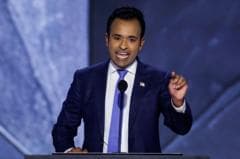
Just nowKayla EpsteinGetty ImagesVivek Ramaswamy won the Republican nomination for Ohio governor on Tuesday, putting the staunch ally of Donald Trump on a path to running the Rust Belt state.In unofficial results, he defeated Casey Putsch, a car designer with an automotive-themed YouTube channel, for a place in the general election, according to US media reports.Ramaswamy, a health-technology entrepreneur, gained national recognition during his unsuccessful run against Trump for president in 2024. He later threw his support behind Trump.In the Ohio primary, even as he ran against Republicans, he focused on Democratic nominee Amy Acton, the former Ohio public health director who guided the state's response to the Covid pandemic and ran unopposed.During a victory speech, Ramaswamy thanked Ohio voters "for getting us to this point", adding, "The real destination is in November."Acton, who will face Ramaswamy in the general election, said during her own victory speech that she is running for governor to make Ohio more affordable again. "It shouldn't be this hard," she said. "It is time to put working families first."Ohio's current governor, Republican Mike DeWine, cannot run for re-election because of term limits.Trump boosted Ramaswamy in a social media post on Tuesday: "I know Vivek well, competed against him, and he is something SPECIAL. He is Young, Strong, and Smart!"Vice President JD Vance, who previously represented Ohio in the US Senate, travelled to Cincinnati on Tuesday to cast his ballot for Ramaswamy and others. The state has shifted towards Republicans in recent years, and Ramaswamy benefitted from name recognition and shuffling in the top ranks of the state's Republican Party caused by the ascension of Vance to the vice presidency.Ramaswamy burst onto the national political scene in 2023 as a neophyte with a knack for using social media and podcast appearances to bolster his image. His mile-a-minute cadence and brash attacks resulted in viral moments during the 2024 Republican presidential debates, but he dropped out early due to lackluster support from voters.Ramaswamy went on to serve as a top Trump surrogate during the 2024 presidential race and was involved in the effort to start Trump's Department of Government Efficiency, before ceding control of the project to Elon Musk.When he announced his run for Ohio governor, Ramaswamy cleared the Republican primary field of most competitors. He has drawn on his personal fortune to help fund his campaign; The Columbus Dispatch reported he loaned his operation $25m (£18.4m).His victory sets up a general election campaign focused on the lingering fallout from the Covid-19 pandemic.Acton had a highly visible role as the state's public health director during the height of the crisis. Under DeWine's leadership, Ohio took a more moderate approach to the pandemic response than other Republican-controlled states. Still, Ohio suspended in-person dining and postponed its presidential primary in 2020 as the virus spread.But ongoing political backlash to Covid-19 restrictions, including masking and school closures, has opened up a path for Republicans to attack Acton six years later.Ramaswamy recently released an ad claiming that Acton "called off Ohio's election at the last minute, defying a judge's order and abusing her power."DeWine – who has endorsed Ramaswamy – took the unusual step of defending Acton from the ad's claims."I told her to issue the health order," DeWine told NBC4 news station. "The decision was mine."The race promises to get more intense and expensive heading into the general election in November.Meanwhile, seven Republican senators in Indiana who voted against Trump's redistricting plan faced challengers in Tuesday's primary election.Five of the Trump-backed challengers have beat the incumbents, while one has lost. Results for the seventh race have not yet been determined.The Indiana Republicans defied intense pressure from Trump last December by rejecting his de
19 minutes agoRobert GreenallBBC NewsGetty ImagesTwo senior US Republican lawmakers have criticised a decision by the Pentagon to cut 5,000 US troops stationed in Germany, saying it risked undermining deterrence and would send the wrong signal to Russia.Roger Wicker and Mike Rogers, who chair the Senate and House armed services committees respectively, said that rather than being withdrawn, those troops should be moved further east.Pentagon spokesperson Sean Parnell on Friday said the move followed a thorough review and recognised "theater requirements and conditions on the ground".On Saturday, President Donald Trump said further cuts could take place, without providing details. The US has more than 36,000 active duty troops in Germany.Speaking to the DPA news agency, Boris Pistorius also stressed "the presence of American soldiers in Europe, and particularly in Germany, is in our interest and in the interest of the US".The Nato military alliance said it was seeking clarification from Washington.In a joint statement, Wicker and Rogers said they were "very concerned by the decision to withdraw a US brigade from Germany" as European allies move towards spending more of their economic output (GDP) on defence."Prematurely reducing America's forward presence in Europe before those capabilities are fully realised risks undermining deterrence and sending the wrong signal to Vladimir Putin," the statement said."Rather than withdrawing forces from the continent altogether, it is in America's interest to maintain a strong deterrent in Europe by moving these 5,000 U.S. forces to the east."The senior Democrat on the House armed services committee, Adam Smith, said the decision was "not grounded in any coherent US national security policy, strategy, or even analysis" but based on "the hurt feelings of a president who is seeking political vengeance".However, Clay Higgins, a Republican on the same committee, appeared to support the administration's move while taking a dig at perceived time-wasting by the upper chamber of Congress."Pulling 5K American troops from the arrogant Germans. Maybe we should send them the Senate," he said on X. "Better match, and western Europe would be so well protected by the League of the Royal Filibuster."Watch: Trump gives update on Iran and answers question about further troop cutsWashington's move comes after Trump criticised German Chancellor Friedrich Merz for saying the US had been "humiliated" by Iranian negotiators in the ongoing war.The US military deployment in Germany is by far its biggest in Europe, compared with about 12,000 in Italy and 10,000 in the UK.When asked on Saturday about the withdrawal of troops, Trump said: "We're going to cut way down, and we're cutting a lot further than 5,000." Trump has also suggested pulling US troops from Italy and Spain.Last year, Washington decided to reduce its troop presence in Romania, as part of Trump's plan to shift the focus of US military commitment from Europe to the Indo-Pacific region.There are now growing concerns within the 32-member Nato alliance that the latest US decision could weaken the organisation. "The greatest threat to the transatlantic community is not its external enemies, but the ongoing disintegration of our alliance," Polish Prime Minister Donald Tusk warned on Saturday. "We must all do what it takes to reverse this disastrous trend," he added.Trump has previously accused Germany of being "delinquent" because its military spending was well below Nato's target of 2% of its GDP. That has changed under the governments of former Chancellor Olaf Scholz and Merz, with Germany now projected to spend €105.8bn (£91bn) on defence in 2027. Overall, Germany's defence expenditure is set to reach 3.1% of GDP, taking into account other defence funds including Berlin's aid to Ukraine as it continues to fight against invading Russian troops.In a post on X on Saturday, Nato spokesperson Allison Hart said the alliance was working with the US to understan



Discussion (0)