
Loading dispatches...
← Return to NewsroomEconomy
Quote of the Day by Malcolm X: ‘Education is our passport to the future, for tomorrow belongs to the people who….’
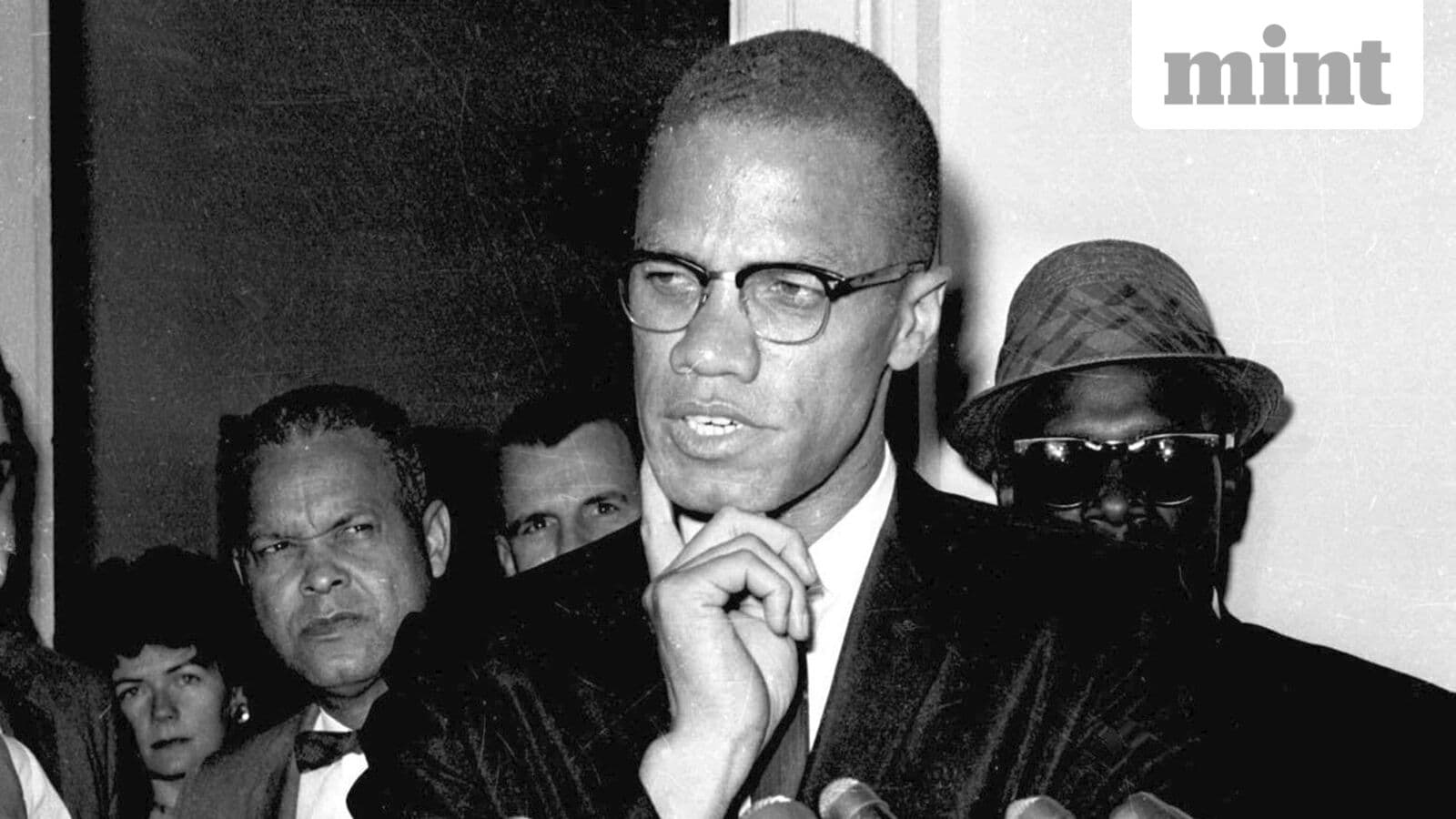
Malcolm X’s quote on education shows why learning, preparation and self-respect are essential for building a better future.Malcolm X's quote suggests that education enables one to prepare for a future by making them capable of taking rational and wise decisions.(AP)Quote of the Day by Malcolm X: "Education is our passport to the future, for tomorrow belongs to the people who prepare for it today.”1. Early life of Malcolm XBorn in Omaha, Nebraska, in 1925, Malcolm X was given the birth name Malcolm Little. Considered as one of the most powerful voices of Black liberation, self-respect and human rights in 20th-century America. From foster care and imprisonment to securing education behind the bars, Malcolm X spent a difficult early life.He emerged as a major minister and organiser in the Nation of Islam. Founder of Organization of Afro-American Unity, he broke with the Nation of Islam in 1964 and embraced Sunni Islam after the Hajj. The renowned global human-rights thinker was assassinated in 1965. according to Britannica, he became an ideological hero after the posthumous publication of The Autobiography of Malcolm X.2. Diving deep into Malcolm X's quoteThe origin of this quote can be traced to Malcolm X’s speech at the founding rally of the Organization of Afro-American Unity on June 28, 1964. He made this statement as he called education “an important element in the struggle for human rights” and a means for children and people to rediscover identity and self-respect.3. What does this quote mean?The deeper lesson behind this quote is that education not a certificate but acts as access. Malcolm X regarded it as a passport allows movement across borders; education allows movement across mental, social, economic and political boundaries. It gives people the ability to question, interpret, decide and prepare for a future that would otherwise be shaped for them by others.This quote teaches the deeper lesson about preparation. According to Malcolm, tomorrow belongs to those who do the intellectual work today: reading, learning history, building skills, understanding power, developing self-respect and preparing to act with clarity.Malcolm X’s life was a true reflection of his words as education supported his liberation. Although he had limited formal schooling, but prison became a place of self-education, reading and debate. It advocates a philosophy of self-transformation: knowledge can help a person reclaim identity, dignity and direction.4. How this quote connects with today’s contextThis quote feels highly relevant today because the future of work is changing faster than many education systems and workers can adapt. The World Economic Forum’s Future of Jobs Report 2025 says employers expect major workforce transformation from 2025 to 2030, driven by technological change, the green transition, economic pressure and demographic shifts.This quote resonates with the young because access to education remains unequal. Education is not only about marks, degrees or jobs. It is about whether people have the tools to understand the world they are entering. As per UNESCO’s 2026 Global Education Monitoring Report, 273 million children and youth are still out of school as the 2030 deadline for global education goals approaches.5. Another inspirational quote by Malcolm X“Education is an important element in the struggle for human rights.”This line comes from the same OAAU education passage as mentioned above but gives clarity about the meaning of the “passport” quote. Hence, Education is not just about personal advancement, it is a collective power that helps people understand history, recognise injustice, build self-respect and participate more fully in public life.Together, both quotes create a rounded lesson — while the first suggests that education prepares people for the future, the second focuses on the role of education in the fight for dignity and rights. In other words, learning is not passive, it is preparation for freedom, opportun

Quote of the Day: Banksy's lines on death and memories establishes. It talks about why remembrance is its own form of immortality.Quote of the Day by Banksy. Check out its meaning, relevancy and more.(Pexel)Quote of the Day: "I mean, they say you die twice. One time when you stop breathing and a second time, a bit later on, when somebody says your name for the last time."-- BanksyThe above lines by Banksy is on the themes of death, loss, memory, and the idea that people live on through the memories and their work.What does it meanThe quote suggests that death isn't just an one time phenomenon. Although most physical, death can also be symbolic when one person is forgotten completely.The idea refers that death for an individual takes place physically when that person stops breathing. As a result, their life comes to an end. But Banksy argues that human existence is deeper than the physical body alone. A person might not be living and breathing on earth, still may continue to live through the memories they leave behind. They will be remembered for the relationships they built, the work they have work and the impact they had on others.The “second death” mentioned in the quote is purely emotional. It happens when a person is forgotten completely. In such case when their name is spoken for the last time, their memories slowly fade away with time. This part of the quote captures the fear of being erased not just from life, but from history, family, and human connection itself.The quote highlights how memory can give meaning to a person’s existence even after they are no more. It suggests that love and remembrance keep people alive long after their physical absence. Every story shared, every memory recalled, and every time someone speaks their name becomes a way of preserving their existence.How it is relevantThe quote can be relevant today because people nowadays leave behind digital footprint that continue to exist long after they are gone. Photographs, videos, messages, posts, and conversations on social media preserve a person’s presence in ways previous generations could not. Even after death, people are remembered through anniversaries, shared memories, and archived memories online, making the idea of a “second death” more emotional and complex in the modern world.It is also relevant in a time when human connections often feel temporary and fast-moving. The quote reminds people of the importance of relationships, memory, and emotional impact over material success. In a world focused on trends and constant change, it highlights a universal fear often seen in human, not just dying, but being forgotten. The lines resonate because they speak to the human desire to leave behind meaning impact and contribute towards their loved ones, family, friends and society.At the same time, Banksy's line talk about how societies continue to remember influential figures, artists, leaders, and ordinary people through stories and collective memory. People may physically pass away, but their ideas, words, and influence continue to shape generations. It captures the popular belief that remembrance is its own form of immortality.The quote can be used while talking why one should contribute towards the society.About the AuthorSneha BiswasSneha Biswas specialises in covering entertainment and pop culture, with a specialisation on Bollywood, Hollywood, OTT platforms, K-pop, K-dramas, and major developments in the US entertainment industry. She believes in telling stories that balance speed with substance, and in making entertainment journalism contextual, culturally aware, and reader-first rather than purely reactive. With over six years of experience in digital media, Sneha currently serves as a Deputy Chief Content Producer at Live Mint. She has spent more than three and a half years with the HT Group and returned to the organisation in February 2025, joining Live Mint to uplift the entertainment section. Over the past year, she has been closel
Quote of the Day: “If you want to reach your goals and dreams, you cannot do it without discipline.” — Lee Kuan YewThis quote reminds us that dreams alone are not enough; they must be supported by discipline and daily effort. Lee Kuan Yew’s life further strengthens this message, showing how discipline at both personal and national levels can lead to extraordinary success and transformation.What does Lee Kuan Yew's quote mean?This quote emphasises that discipline is essential for turning dreams into reality. It conveys the idea that having ambitions or setting goals is not enough on its own; what truly matters is the consistent effort required to achieve them.Discipline refers to the ability to stay focused, follow a routine, and remain committed even when motivation fades. It is about making the right choices repeatedly, especially when those choices are difficult or require sacrifice. Success rarely comes from sudden inspiration, it is usually the result of steady and disciplined action over time.The quote also highlights the gap between intention and execution. Many people dream big, but only a few manage to achieve those dreams because they are willing to put in the structured effort needed every day. Discipline helps bridge this gap by ensuring that a person continues working toward their goals regardless of distractions, failures, or delays.In practical life, discipline can be seen in many forms—students sticking to study schedules, athletes following strict training routines, professionals managing their time effectively, or entrepreneurs working consistently despite setbacks. In all these cases, discipline acts as the driving force that keeps progress moving forward.Another important message of the quote is that discipline builds character. It not only helps achieve external success but also strengthens patience, resilience, and self-control. Over time, disciplined habits shape a person’s mindset, making them more reliable and goal-oriented.The quote suggests that discipline is not optional—it is the foundation of achievement. Without it, even the most talented individuals may struggle to reach their full potential.Who was Lee Kuan Yew?Lee Kuan Yew was the founding leader and first Prime Minister of Singapore, serving from 1959 to 1990. He is widely regarded as one of the most influential political figures of the 20th century for transforming Singapore from a small developing island into a highly developed global economy.Born in 1923 in Singapore, Lee Kuan Yew studied law at the University of Cambridge and later became a lawyer before entering politics. He co-founded the People’s Action Party (PAP), which played a central role in Singapore’s independence and governance.As Prime Minister, he focused on building a strong, stable, and corruption-free government. His leadership was marked by strict policies, long-term planning, and a strong emphasis on economic development, education, and infrastructure. Under his rule, Singapore experienced rapid industrialisation and became one of the most prosperous countries in Asia.Lee Kuan Yew strongly believed in discipline, efficiency, and accountability, both at the individual and national levels. He often stressed that progress requires sacrifice, order, and consistent effort—values reflected in his famous quote about discipline and dreams.He also promoted meritocracy, ensuring that people were rewarded based on ability and performance rather than background. His governance style, though sometimes considered strict, is credited with creating stability and transforming Singapore into a global financial and trade hub.Lee Kuan Yew passed away in 2015, but his ideas and leadership philosophy continue to influence leaders, policymakers, and students around the world.About the AuthorGarvit BhiraniGarvit Bhirani is a journalist based in Gurugram. He is a Deputy Chief Content Producer at LiveMint, where he covers national and international news stories, focusing on accuracy and compelling
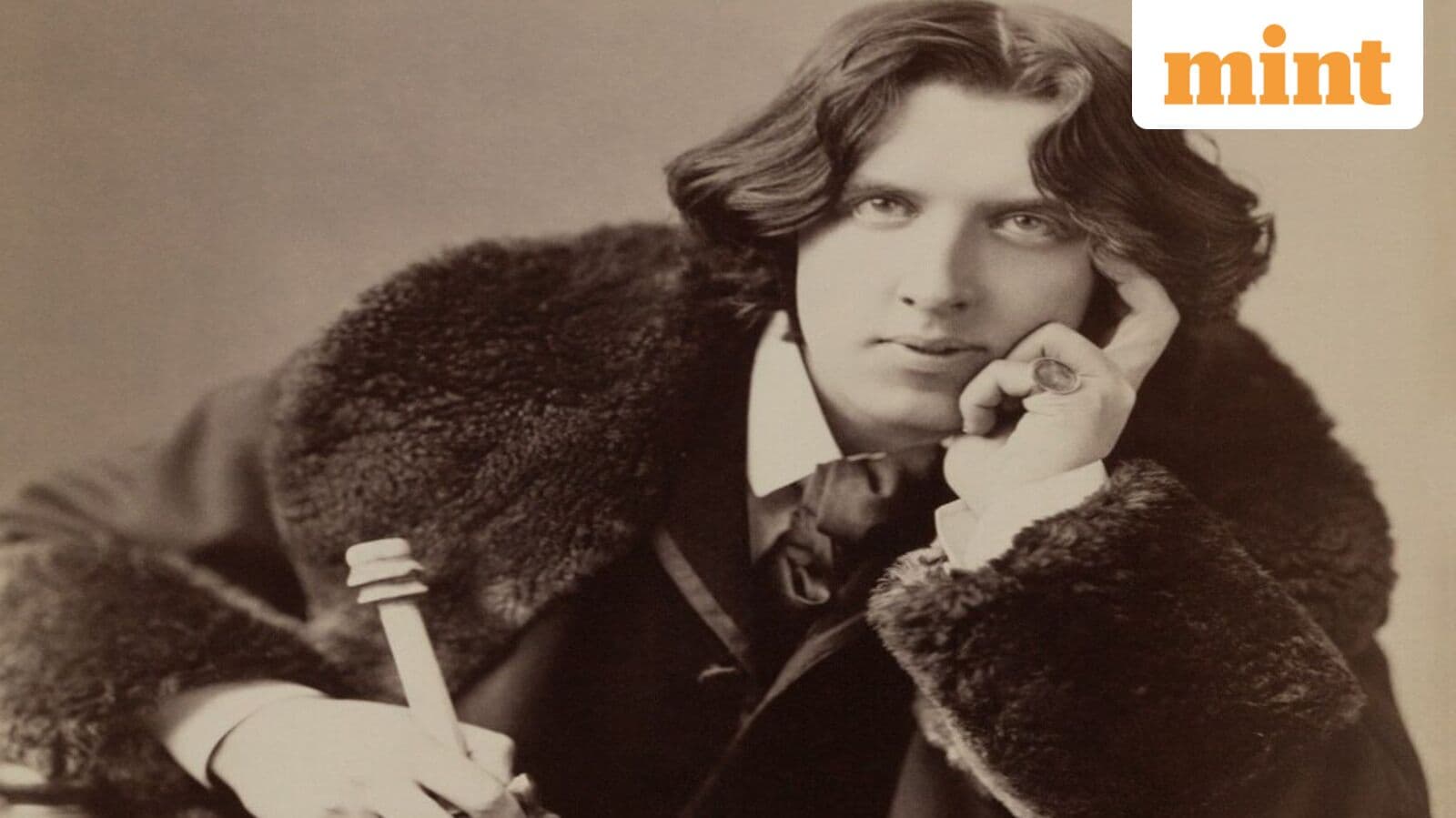
The statement comes from Wildeappears in his comedy play Lady Windermere's Fan. Wilde’s plays often mocked the customs and attitudes of upper-class Victorian society in England.Oscar Wilde born in 1854, in Dublin, Ireland, became one of the leading writers of the late nineteenth century. The quotation by Oscar Wilde — “Men marry because they are tired; women, because they are curious: both are disappointed” — reflects his sharp wit, social criticism, and understanding of human relationships. Wilde was famous for writing epigrams, which are short, clever statements that reveal deeper truths about society. This quote is one of his best-known observations on marriage and human expectations.Context of the quoteThe statement comes from Wildeappears in his comedy play Lady Windermere's Fan. Wilde’s plays often mocked the customs and attitudes of upper-class Victorian society in England. During the Victorian period, marriage was considered a social duty rather than purely a matter of love. Men were expected to marry for stability and respectability, while women often viewed marriage as a path to security, social status, and emotional fulfillment.Wilde used humor and irony to expose the weaknesses and contradictions of these social expectations. His audience enjoyed the cleverness of his dialogue, but beneath the humor was serious criticism of society’s shallow values and unrealistic ideas about romance.Meaning of the quoteThe quote suggests that men and women may enter marriage for different reasons, but both often fail to find what they expected. According to Wilde, men marry because they are “tired,” meaning they may seek comfort, routine, or stability after a life of freedom or adventure. Women marry because they are “curious,” suggesting a desire to explore love, relationships, or social life. However, Wilde concludes that “both are disappointed,” implying that marriage frequently fails to satisfy these expectations.The statement should not be understood as a literal truth about all marriages. Instead, it is an example of Wilde’s ironic style. He exaggerates human behavior to reveal the gap between romantic dreams and reality. The quote also reflects Wilde’s belief that society often treats marriage as a social institution rather than a genuine emotional partnership.Even today, the quotation remains popular because it humorously captures the idea that people sometimes enter relationships with unrealistic expectations. Readers continue to appreciate Wilde’s ability to combine humor with insight into human nature.Biography of Oscar WildeOscar Wilde was born on October 16, 1854, in Dublin, Ireland. His full name was Oscar Fingal O’Flahertie Wills Wilde. His father, Sir William Wilde, was a respected surgeon, and his mother, Jane Wilde, was a poet and supporter of Irish nationalism. Wilde was highly educated and studied at Trinity College Dublin and later at University of Oxford, where he became known for his intelligence and love of literature.Wilde became one of the leading writers of the late nineteenth century. He was associated with the Aesthetic Movement, which promoted the idea of “art for art’s sake.” He believed beauty and artistic expression were important in life. His works include the novel The Picture of Dorian Gray and successful plays such as The Importance of Being Earnest, An Ideal Husband, and Lady Windermere's Fan.Wilde was admired for his wit, fashionable lifestyle, and brilliant conversation. He spent his final years in poverty in Paris, where he died on November 30, 1900.Despite his tragic end, Wilde remains one of the most celebrated literary figures in English literature. His works continue to be studied worldwide for their humor, satire, and deep understanding of society and human behavior.Stay updated with the latest Trending, India , World and US news. HomeNewsTrendsQuote of the day by Oscar Wilde on marriage: ‘Men marry because they are tired; women, because they are curious: both…’More
Martin Luther King Jr once shared why standing against injustice in the society is important. He explained how watching others suffer can curb their own rights.Quote of the day by Martin Luther King Jr.(Getty Images)Quote of the day: “Injustice anywhere is a threat to justice everywhere.” — Martin Luther King Jr.He also said, “We are caught in an inescapable network of mutuality, tied in a single garment of destiny. Whatever affects one directly, affects all indirectly.”What it meansThis quote by Martin Luther King Jr is about social responsibility and justice for society. With this, King pointed out that one cannot isolate injustice to one community and ignore it. Similarly, if injustice exists elsewhere, it weakens the entire justice system of the society. Hence, citizens have a moral duty to stand up against wrongs, even if they are not affected by it directly.His words emphasise how people are connected in society. Hence, mistreatment or an act of injustice can impact everyone collectively over time.In simple words, King believed that when you ignore someone's suffering, your own rights become vulnerable.King also warned that tolerating injustice anywhere puts others at risk. This is how such behaviour and practices spread, causing an environment where the protection of rights becomes difficult.How to use itCalling for collection action against injustice, his advice remains relevant even today. It is widely attributed to Martin Luther King Jr in debates, discussions and writings on human rights, equality, civic responsibility and social order.The popular quote was written by Martin Luther King Jr in his 1963 'Letter from Birmingham Jail'. He penned down the thoughts after being detained for taking part in protests against segregation in Birmingham, Alabama.In his letter, King wrote to the clergymen who had called his actions “unwise and untimely." He explained why he participated in the non-violent protest by saying, "Injustice anywhere is a threat to justice everywhere."He reasoned that he believes in the connection between people in a society across the region. He noted that he could no long remain silent about Birmingham just because he was in Atlanta. Hence, he rejected the idea that only those who were affected by the situation has the right to protest. It was his responsibility, he argued.Check more popular quotes by Martin Luther King Jr:-"Darkness cannot drive out darkness: only light can do that. Hate cannot drive out hate: only love can do that.”-“I have decided to stick to love...Hate is too great a burden to bear.”-“Our lives begin to end the day we become silent about things that matter.”-“In the end, we will remember not the words of our enemies, but the silence of our friends.”-“Faith is taking the first step even when you can't see the whole staircase.”-“If you can't fly then run, if you can't run then walk, if you can't walk then crawl, but whatever you do you have to keep moving forward.”-"But I know, somehow, that only when it is dark enough can you see the stars.”-“Let no man pull you so low as to hate him.”-“There comes a time when one must take a position that is neither safe, nor politic, nor popular, but he must take it because conscience tells him it is right.”-“Nothing in the world is more dangerous than sincere ignorance and conscientious stupidity.”About the AuthorSneha BiswasSneha Biswas specialises in covering entertainment and pop culture, with a specialisation on Bollywood, Hollywood, OTT platforms, K-pop, K-dramas, and major developments in the US entertainment industry. She believes in telling stories that balance speed with substance, and in making entertainment journalism contextual, culturally aware, and reader-first rather than purely reactive. With over six years of experience in digital media, Sneha currently serves as a Deputy Chief Content Producer at Live Mint. She has spent more than three and a half years with the HT Group and returned to the organisation in February 202


Discussion (0)