
Loading dispatches...
← Return to NewsroomWorld
Trump administration drops $1.8bn 'anti-weaponisation' fund
Trump administration drops $1.8bn 'anti-weaponisation' fund13 minutes agoNardine SaadReutersThe Trump administration has abandoned plans to create a $1.8bn (£1.3bn) fund to compensate individuals who claim they were unfairly targeted or investigated by the government, Acting Attorney General Todd Blanche said."We're not moving forward with the fund, period," Blanche told lawmakers on Tuesday.The proposed "anti-weaponisation" fund was announced to settle a lawsuit by President Donald Trump against the Internal Revenue Service over the leak of his tax returns.The plan drew strong criticism from Democrats and some Republicans, who argued it could result in payment to people prosecuted over the US Capitol riot on 6 January 2021, including those convicted of assaulting police officers.Brinkema barred the Department of Justice (DOJ) department from taking any steps to stand up or operate the fund - including processing or dispersing claims - until a preliminary hearing on 12 June.Blanche's comments in a tense congressional hearing comes a day after the Justice Department said it "disagrees strongly" with the judge's order but it would abide by the ruling.While Blanche gave the assurance to abandon the fund in oral testimony, he suggested the justice department may not release a formal statement."I'm not committing to putting anything in writing," Blanche said after Congresswoman Grace Meng, a Democrat, suggested that such a statement would help instill trust in the plan. "I don't know what the purpose is of putting something in writing. I'm telling you what we are doing."The DOJ defended the fund's establishment on Monday, saying in a statement on X that it was created "to make up for the tremendous abuse, harm, and hate unfairly shown to so many people".The fund was "open to anybody who was so weaponized, targeted, or persecuted, whether they were Democrat, Republican, Conservative, Independent, or otherwise", the DOJ said.The White House directed comments about the decision to the justice department. The fund had been set aside for "victims of lawfare" to seek compensation, and eligibility for it appeared broad. Responding to the judge's two-page order last week, a DOJ spokesperson said they were "extremely confident" in the legality of the scheme.The order came down after two men who alleged the fund was discriminatory filed a lawsuit in Virginia. The plaintiffs said they had been targeted for political retribution by the Trump administration but believed they would not be allowed to file claims for compensation.Several Republican lawmakers, as well as Democrats, have voiced opposition to the fund since it was announced last month by Blanche - Trump's former personal lawyer who stepped in as the country's top prosecutor after the ouster of Pam Bondi from that role in April.Senate Majority leader John Thune, the top Republican in the US Senate, has come out forcefully against the fund.He reiterated his stance on Capitol Hill on Monday by saying that he preferred that the White House shut down the proposed fund if Congress was to pass a $72bn (53.5bn) budget reconciliation package to fund immigration agencies."I made my views very clear on the issue," Thune said, adding that "the best way to handle it is if the administration decides to shut it down themselves".Earlier on Monday, Senate Democratic Leader Chuck Schumer, the top Democrat in the Senate, signalled that his party would push to eliminate the fund."Senate Democrats will push legislation to ban Trump's corrupt MAGA slush fund and ensure that no president can ever do this again, " Schumer added on X. "We will make sure that it's dead and can't be revived—just like we did with Trump's ballroom."Over the weekend, former US Vice-President Mike Pence, who served as second in command during Trump's first term, sharply criticised the fund, saying it was a "bad idea from the start" and should be dropped.

Acting U.S. Attorney General Todd Blanche testifies during a Senate appropriations hearing on May 19, 2026 in Washington, D.C. Win McNamee/Getty Images hide caption toggle caption Win McNamee/Getty Images The Justice Department on Monday said it will abide by a federal court ruling that puts the Trump administration's controversial $1.776 billion anti-weaponization fund on hold while a legal challenge plays out in court. The Trump administration had said the fund would be available to those who alleged the federal government had been weaponized against them, a refrain popularized by some Trump supporters particularly during the Biden administration. Democratic lawmakers had called it a "slush fund" for Trump supporters, and even some Republican lawmakers were reluctant to support it. A federal judge in the Eastern District of Virginia last week temporarily blocked the creation of the anti-weaponization fund after a lawsuit from Democracy Forward and others. "The Department of Justice disagrees strongly with the decision on the Anti-Weaponization Fund put forth by the United States District Court Judge in the Eastern District of Virginia, wherein the Court stated that, under no circumstances, may the Department of Justice proceed with the Anti-Weaponization Fund recently established in order to make up for the tremendous abuse, harm, and hate unfairly shown to so many people," the Justice Department posted on X. "This Fund was open to anybody who was so weaponized, targeted, or persecuted, whether they were Democrat, Republican, Conservative, Independent, or otherwise. The Department will abide by the Court's ruling." The fund was to be created as part of a settlement between President Trump and his own Justice Department as a result of a $10 billion lawsuit Trump filed against the IRS for his previously leaked tax returns. The judge is weighing whether to make her pause more permanent, and plans to hold a hearing on the issue on June 12. Separately, a judge in Florida who oversaw Trump's initial lawsuit against the IRS is also weighing whether to reopen that matter after the government announced a settlement and both parties said they were dropping the case. That judge, Kathleen Williams of the U.S. District Court for the Southern District of Florida, had questioned whether the case was legitimate because the president was on both sides of the dispute. Williams, an Obama administration appointee, said she wanted to weigh whether the case amounted to deception and the court was itself "the victim of a fraud." She gave Trump's lawyers until June 12 to respond.

Pentagon chief Pete Hegseth says US ‘more than capable’ of restarting war if satisfactory deal not reached.Iran has reasserted its control over the Strait of Hormuz, warning that foreign commercial and military vessels will be targeted, if they do not comply with regulations governing passage through the strategic waterway.The announcement on Saturday came after the United States signalled that President Donald Trump was close to a decision on a potential deal with Iran, but Tehran denied an agreement had been reached.Recommended Stories list of 3 itemslist 1 of 3US-Iran 60-day proposal: What we knowlist 2 of 3Vance says US, Iran have made “a lot of progress” towards deallist 3 of 3Trump says ‘final determination’ to be made on possible Iran dealend of list“The management of the Strait of Hormuz is exercised with full authority by the Armed Forces of the Islamic Republic of Iran,” the operational headquarters of Iran’s armed forces, Khatam al-Anbiya Central Headquarters, said in a statement reported by Iranian media on Saturday.“All ships, commercial vessels, and tankers are only required to travel through the designated routes and obtain permission from the Islamic Revolutionary Guard Corps [IRGC] Navy. Any violation of these regulations will seriously jeopardise the security of their traffic,” it added.Iran also issued a warning to foreign military forces operating in the area, saying any attempt to interfere with maritime management or shipping movements would trigger a response.On Friday, Trump met with advisers in the White House Situation Room and said a “final determination” on a possible deal with Iran would soon be made. But no statement followed the meeting.US sources had told the AFP news agency the deal was waiting on Trump’s sign-off, but he made no decision after Friday’s meeting.Iran’s Foreign Ministry spokesperson, Esmaeil Baghaei, said on Friday that while messages continue to be exchanged “no final agreement has been reached” on a deal with the US.US ‘more than capable’ of restarting warWhile attending a defence summit in Singapore on Saturday, Pentagon chief Pete Hegseth said that Washington was “more than capable” of restarting the war if a satisfactory deal is not reached.US Central Command (CENTCOM) posted on social media that American forces “remain present and vigilant across the region”.The efforts to reach a deal were thrown into question this week by US strikes on the Iranian port of Bandar Abbas, countered by retaliatory Iranian fire.Iran’s IRNA state news agency said air defences shot down a drone “belonging to the US-Zionist aggressor enemy” on Saturday, citing a statement from the army.Trump said his priorities in any deal include Iran agreeing to never develop nuclear weapons, and the reopening of the blockaded Strait of Hormuz.“President Trump will only make a deal that is good for America and satisfies his red lines,” a White House official told AFP, adding: “Iran can never possess a nuclear weapon.”Trump ‘betraying diplomacy’Also on Saturday, Mohsen Rezaei, an adviser to Iran’s Supreme Leader, Mojtaba Khamenei, said in a social media post that Trump was “betraying diplomacy for the third time” by continuing the US naval blockade in the strait, and making what he described as “excessive demands in negotiations”.In a social media post on Friday, Trump said Tehran would remove mines from the strait and end its closure of the waterway with “no tolls”, while the US would lift its blockade.Both countries would coordinate on removing and destroying Iran’s enriched uranium, he said, adding that “no money will be exchanged, until further notice”.Iran’s Fars news agency, however, cited sources as saying Tehran was demanding “the immediate release of $12bn” in frozen assets before moving to the next phase of negotiations.On the toll-free reopening of Hormuz, the sources said “no such clause appears in the text of the agreement”, while Trump’s comment on destroying Iran’s nuclear material “is fund

17 minutes agoMax MatzaandBernd Debusmann Jr,White House reporterGetty ImagesA deal to definitively end the war has so far proved elusive, despite more than a month of on-off talksNegotiators for the US and Iran have agreed a framework of a deal that would extend their ceasefire for 60 days and launch negotiations on the future of Iran's nuclear programme, US officials say. The agreement is yet to be approved by President Donald Trump or the leadership in Iran, the officials told the BBC.But there were conflicting reports from Tehran, with Iran's semi-official Tasnim news agency quoting a source close to talks who said it had not been finalised or confirmed. Both Iran and the US have accused each other of violating the fragile ceasefire in the past few days.Iran's Islamic Revolutionary Guard Corps (IRGC) said it targeted a US base in the region on Thursday, after fresh US strikes on southern Iran overnight.On Wednesday, Iranian state media reported elements of what they described as an unofficial draft of a 14-point memorandum of understanding (MOU) between the two countries. The report included the lifting of Washington's naval blockade of Iranian ports, the withdrawal of US forces from the "vicinity of Iran", and the restoration of non-military traffic through the Strait of Hormuz with Iran and Oman in control of the management and routing of vessels.The White House called the purported MOU draft a "complete fabrication". One-fifth of the world's liquefied natural gas and oil normally pass through the Strait of Hormuz, and its closure has impacted global fuel trade.Since the initial ceasefire between the US and Iran came into effect on 8 April, Trump has suggested - repeatedly - that the two sides are close to a deal and that negotiations are progressing, but so far there have been no substantive results. Talks that took place in Islamabad just days after the ceasefire took hold, for example, ended without any substantive agreement.In nearly every case, and as recently as Wednesday, Trump and other officials have warned that "option B" - a return to combat operations - remains on the table.Just last week, Trump told reporters that he had been an hour from ordering renewed strikes on Iran but ultimately held off at the request of US allies.In a cabinet meeting on Wednesday, Trump said that talks were progressing but insisted that the Iranian proposal was "not there yet" and that work remained.It is unclear what took place in the subsequent 24 hours, or when - or even if - Trump will give his final approval for the agreement to extend the ceasefire.Doing so, however, would allow US and Iranian teams to discuss the far more complicated and technical issues at play, particularly about Iran's nuclear programme and its remaining stockpile of highly enriched uranium. Trump had suggested that US could take it, or, together with Iran, dilute it in place or in a third location.Axios, which first reported the tentative agreement on Thursday, said that Trump had been briefed on the proposal but did not immediately sign off on it and would take a couple of days to consider it.The confirmation from US sources of anonymously sourced Axios reporting on the contours of the agreement is rare, suggesting that the two sides may be closer to a deal than they were at any previous point during the more than six-week-old ceasefire.Reports say the deal could allow "unrestricted" passage through the Strait of Hormuz, and that Iran would have 30 days to remove mines from the narrow shipping passageway.The US would also lift its blockade, and issue sanction waivers to allow Iran to resume selling oil.Answering a question by the BBC's Daniel Bush on Thursday, Vice-President JD Vance said, "the Iranians want a deal", but that it was too early to say "when or if" a deal would be reached.Negotiators are "going back and forth on a couple of language points", Vance said on Thursday, adding that sticking points include the "question of enrichment.""We do thin

A United States judge has declined to immediately block President Donald Trump’s executive order tightening rules on mail-in voting.But the judge — Carl Nichols in the District of Columbia — has left open the possibility for Democrats to challenge the measure again as the administration moves to implement it.Recommended Stories list of 3 itemslist 1 of 3Trump-backed Paxton topples Senator Cornyn in Texas primary run-offlist 2 of 3Two dozen Democrat-led states sue Trump over mail-in ballot limitslist 3 of 3Could Trump curb voters’ rights before 2026 US midterms?end of listNichols, a Trump appointee, ruled on Thursday against a request by Democrats and civil rights groups seeking to halt the executive order. The challengers argued the measure would likely be unconstitutional because the authority to set election rules rests with states and Congress, not the president.In his ruling, Nichols, however, agreed with the Trump administration’s argument that the case was premature because the order has not yet been enforced.He added that the administration is still developing the rules and procedures needed to enforce the measure, making any potential harms too speculative for immediate court intervention.While the judge acknowledged that future actions by federal agencies could still face legal challenges, he concluded that the case was not yet ready for judicial review.“The Court recognizes that the Postal Service may ultimately issue a final rule that directly affects Plaintiffs or their members, or that the Government may develop State Citizenship Lists that omit specific individuals due to particularized flaws,” Nichols wrote.“Plaintiffs may, of course, renew their motions if and when those future actions occur. Until then, however, Plaintiffs cannot show that preliminary injunctive relief is warranted.”The ruling comes as Trump’s Republican Party faces a tight battle to maintain control of both chambers of Congress in the November midterm elections.Trump’s executive order calls on the Department of Homeland Security (DHS) to compile and transmit lists of confirmed US citizens eligible to vote in each state. It also requires the United States Postal Service (USPS) to send mail-in ballots only to voters included on state-specific absentee and mail-in voting lists.Voting rights groups have warned that the measures could rely on outdated or inaccurate federal citizenship databases and place excessive responsibility on the USPS, which does not directly administer elections.Democrats challenge Trump’s voting orderMail-in voting has expanded across the US, in states that lean both Republican and Democratic.The adoption of vote-by-mail services has grown since the COVID-19 pandemic, when many US voters isolated to avoid spreading the virus, and it remains a popular form of voting.In the 2024 election, roughly one-third of all ballots were cast by mail. Eight states currently conduct elections almost entirely by post and report some of the country’s strongest election-integrity metrics.Trump, however, has sought to frame mail-in voting as a system that perpetuates electoral fraud, though there is little evidence to back up this assertion.By issuing an executive order to restrict mail-in ballots, Democrats and civil rights groups argued that Trump violated the US Constitution, which gives states the authority to determine the “times, places and manner” of elections.They also maintain that only Congress can impose new federal restrictions on how elections are conducted.Their lawsuit, filed in the Washington, DC, district court system, has also raised questions about Trump’s motives for issuing the executive order.Changes so close to the November elections could create confusion and disruption, they warn.The directive to use DHS and Social Security Administration data to create “state citizenship lists” could also improperly exclude legally registered voters because the databases may contain errors or outdated information, according to the l
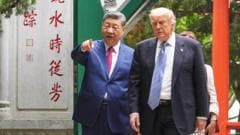
9 minutes agoSuranjana TewariAsia business correspondentWatch: What did we learn from Trump's visit to China?US President Donald Trump left Beijing after a two-day summit saying he had struck "fantastic trade deals, great for both countries", but few details have emerged on what the two superpowers agreed.Trump arrived for a high-stakes summit with Chinese leader Xi Jinping on Wednesday, accompanied by several CEOs: a high-profile business delegation spanning agriculture, aviation, electric vehicles and artificial intelligence (AI) chips. Trade was near the top of the agenda despite recent tensions over the Iran war, and businesses hoped for key deals as well as an extension of the tariff truce that is due to expire in November. The visit was defined by warm rhetoric and symbolism. Trump was wooed with a packed itinerary that included an honour guard, a state banquet, and an invitation to the exclusive compound where China's Communist Party leaders live and work. The US president seemed impressed and invited Xi to the White House in September. He said talks had been "very successful", while Xi called it a "historic and landmark" visit.China's Foreign Minister Wang Yi confirmed on Friday that Xi would visit the White House in the autumn.But neither side has announced trade breakthroughs or significant business deals. President Trump, however, spoke to reporters aboard Air Force One and said China had agreed to buy 200 Boeing jets, with a potential commitment to buy an additional 750 planes. The aerospace giant confirmed the deal.Trump also said American farmers will be happy with his trade deals because China would be buying "billions of dollars" of soybeans.There has been no confirmation of any deals or purchases from the Chinese. If the Boeing orders are finalised, this would be the plane-maker's first major Chinese deal in nearly a decade. It was largely shut out of the world's second-largest aviation market because of trade tensions between Beijing and Washington.Trump touts potential Boeing deal with ChinaAsked about Trump's earlier comments to Fox News in which he said deals had been made, Chinese foreign ministry spokesperson Guo Jiakun only said that the "essence of China-US economic and trade relations is mutual benefit and win-win co-operation".He added that both sides should work to implement the "important consensus" reached by the two leaders and bring greater stability to bilateral trade ties and the global economy.There are still questions over the trade truce agreed in October, when Washington suspended steep tariff increases on Chinese goods while Beijing eased back from restricting rare earth exports critical for manufacturing. Suprisingly Trump told reporters on Air Force One that he and Xi did not discuss tariffs at all.The White House however said both leaders agreed to establish a "Board of Trade" to manage the relationship without having to reopen tariff negotiations.US Treasury Secretary Scott Bessent, who had been leading trade talks for Washington, said in a pre-recorded interview with CNBC that he expected progress on a mechanism to support future investment. US officials have cautioned, however, that there is a lot of work to be done before these announcements can go into effect. Tech and tradeGetty ImagesThe visit was defined more by warm rhetoric and symbolism than concrete announcementsOne of the most closely watched moments came as Air Force One touched down in Beijing on Wednesday night. Tesla CEO Elon Musk stepped off the plane ahead of senior officials including Pete Hegseth, Marco Rubio and Greer - a sign of the crucial economic agenda that lay ahead. And Musk and US chipmaker Nvidia's boss Jensen Huang stayed close to Trump during the welcome ceremony, and were prominent during the banquet. Huang's appearance was notable because he was not meant to be part of the delegation originally - but when he joined the trip, it fuelled speculation that AI and access to chips was a bigger part of the
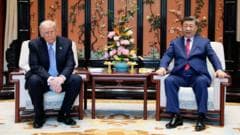
"I'm not looking to have somebody go independent," the US president told Fox News on Friday, at the end of his two-day summit with his Chinese counterpart Xi Jinping in Beijing.Trump earlier said he had "made no commitment either way" about the self-governing island - which China claims as part of its territory and has not ruled out taking by force.The US has long supported Taiwan, including being bound by law to provide it with a means of self-defence, but has frequently had to square this alliance with maintaining a diplomatic relationship with China.Washington's established position is that it does not support Taiwanese independence, with continued ties with Beijing being contingent on its acceptance that there is only one Chinese government.Many Taiwanese consider themselves to be part of a separate nation - though most are in favour of maintaining the status quo in which Taiwan neither declares independence from China nor unites with it.In his interview with Fox News, Trump reiterated that US policy on the matter had not changed."You know, we're supposed to travel 9,500 miles (15,289km) to fight a war. I'm not looking for that. I want them to cool down. I want China to cool down."On the flight back to Washington, the US president had told reporters that he and Xi had spoken "a lot" about the island, but said he had declined to discuss whether the US would defend it.Xi "feels very strongly" about the island and "doesn't want to see a movement for independence", Trump said."The Taiwan question is the most important issue in China-US relations," Xi warned during the talks, according to Chinese state media, adding: "If mishandled, the two nations could collide or even come into conflict."Asked if he foresaw a conflict with China over Taiwan, Trump had said: "No, I don't think so. I think we'll be fine. [Xi] doesn't want to see a war."BBC asks Trump if China will help open the Strait of HormuzChina has ramped up military drills around the island in recent years, raising tensions in the region and testing the balance that Washington has struck.Trump said he would soon decide whether that sale could go ahead, adding that he and Xi had discussed it "in great detail". He added: "I'm going to say I have to speak to the person that right now is, you know, you know who he is, that's running Taiwan."The US does not have formal relations with Taiwan, though it maintains substantial unofficial relations. No US president has spoken directly to Taiwan's leader for decades, and to do so would be likely to cause significant tensions with Beijing, which considers Taiwan's President Lai Ching-te a separatist.Trump told Fox News: "We're not looking to have wars, and if you kept it the way it is, I think China's going to be OK with that. But we're not looking to have somebody say, 'Let's go independent because the United States is backing us.'"Its State Department dropped a statement from its website reiterating Washington's opposition to Taiwanese independence in February 2025 - something Beijing said "sends a wrong... signal to separatist forces".US officials in Taiwan said at the time: "We have long stated that we oppose any unilateral changes to the status quo from either side."Watch: What did we learn from Trump's visit to China?Taiwan's Foreign Minister Lin Chia-lung said his team had been monitoring the US-China summit, and had maintained good communication with the US and other countries "to ensure the stable deepening of Taiwan-US relations and safeguard Taiwan's interests".He said Taiwan had always been a "guardian of peace and stability" in the region and accused China of escalating risk with its "aggressive military actions and authoritarian oppr

Just nowSareen HabeshianandMax MatzaGetty ImagesA judge has declared a mistrial in the rape case against Harvey Weinstein, after the jury in New York said it was deadlocked and unable to reach a verdict.It marks the third time a New York jury has considered the case against the 74-year-old disgraced film mogul, who remains jailed on other charges.The month-long trial was centred around whether Weinstein raped aspiring actress Jessica Mann in a hotel room more than a decade ago. He was initially convicted of raping her, before the verdict was overturned. A judge declared a mistrial after a second trial last year.Dozens of women have come forward with allegations of sexual misconduct, including rape, against Weinstein since October 2017. He has consistently denied wrongdoing.Manhattan District Attorney Alvin Bragg said in a statement that prosecutors are currently determining whether to try again in court."While we are disappointed that the proceedings ended with a mistrial, we deeply respect the jury system and sincerely thank all of the jurors for their time and dedication," he said.He thanked Mann for bringing her allegation against Weinstein, adding: "We will consider our next steps in consultation with Ms Mann, and in consideration of Harvey Weinstein's pending sentencing" in a separate sexual assault case."As always, we will continue to prosecute crimes of sexual violence – no matter who the defendant is – in a survivor-centered manner that uplifts their voices in the pursuit of justice."Lawyers for Weinstein said the outcome shows "how deeply public perception and prejudice surrounding Harvey Weinstein have become embedded in society"."For some people, regardless of the evidence presented, saying 'not guilty' has become emotionally or socially impossible," they argued."The Manhattan District Attorney's Office should stop retrying the same case and focus its time and resources on the actual violent crime, chaos, and public safety issues impacting New Yorkers every day," the statement from his lawyers continued.The decision on Friday by the majority-male jury in Manhattan came on the third day of deliberations.On Friday morning, the jury passed the judge a note saying they "have concluded that they cannot reach" a unanimous verdict. The judge then ordered them to continue deliberating before later declaring a mistrial, saying it was "quite clear," that they were "hopelessly deadlocked"."I see no reason to go any further," said Judge Curtis Farber as he thanked and dismissed the jury.This marks the third rape prosecution against Weinsten in New York.An appeals court in 2024 overturned Weinstein's conviction for sex crimes in New York, finding he did not receive a fair trial in 2020 because a judge allowed testimony from women who made allegations against him beyond the charges at hand.Weinstein was then indicted on new sexual assault charges in the state.A second trial took place last year, but the judge ordered a new trial after the jury was deadlocked on the rape count.The first trial was based on the testimony of three women - former television production assistant Miriam Haley, actress Jessica Mann, and model Kaja Sokola. All three accused Weinstein of using his power in the entertainment industry to sexually abuse them.The second retrial in New York centred on two women who brought allegations against Weinstein during his 2020 trial, Mann and Haley.During the third trial, Mann testified that she willingly had some sexual encounters with Weinstein but that he forced her to have unwanted sex in a hotel room in March 2013, despite her repeatedly saying no.The mogul's defense team maintained that the encounter was consensual.In total, Weinstein has been accused of sexual misconduct, assault and rape by more than 100 women. While not all reports resulted in criminal charges, his conviction in California means he is likely to spend the rest of his life in prison.The decision by his accusers to come forward, and his subsequent
Stakes of Trump's China Trip, Inflation Report Shows War Impact, Hantavirus Science Download Embed Good morning. You're reading the Up First newsletter. Subscribe here to get it delivered to your inbox, and listen to the Up First podcast for all the news you need to start your day. Today's top stories President Trump leaves for a state visit to China today. It will be his first visit to Beijing during his second term. Trade will be a major focus, as well as the ongoing conflict with Iran. China and Iran are close allies and trading partners, and there are questions about whether China has assisted Iran. The U.S. has spent weeks bombing Iran and is now blockading all ships connected to the country. U.S. President Donald Trump and Chinese President Xi Jinping shake hands as they depart following a bilateral meeting at Gimhae Air Base on October 30, 2025 in Busan, South Korea. Andrew Harnik/Getty Images AsiaPac hide caption toggle caption Andrew Harnik/Getty Images AsiaPac 🎧 Observers expect China to announce additional purchases of soybeans and other agricultural products, and possibly even Boeing airplanes, during the trip. Announcing significant purchase agreements has become a trademark of Trump's foreign trips, but these deals often turn out to be less substantial than they initially appear, NPR's Tamara Keith tells Up First. Experts tell Keith that the U.S. and China want to stabilize their relationship. While previous presidents have criticized Xi over human rights and warned him about Taiwan, Trump has focused more publicly on deals and expressed admiration for Xi's power in China. Keith says it is important to note that this is just the first of potentially four meetings between the leaders this year, depending on how their talks go.➡️ A recent NPR/Chicago Council on Global Affairs/Ipsos poll reveals that many Americans see China as an economic rival seeking global dominance. A new inflation report released this morning will show how much the war with Iran is affecting consumer prices. Higher gasoline prices are the most noticeable fallout from the conflict in the U.S. As the war enters its 11th week, the president has said he wants to temporarily suspend the gas tax — a decision that would require an act of Congress. Currently, the tax is 18.4 cents per gallon of gas and 24.4 cents per gallon of diesel. But gas isn't the only area where American consumers are feeling the pinch. 🎧 One of the most obvious side effects of the conflict is the rising cost of airline tickets and baggage fees, NPR's Scott Horsley says. Airlines are facing significantly higher jet fuel costs and are beginning to pass those costs on to customers. Ultimately, the high cost of diesel fuel could raise the prices of everything delivered by truck or train. Horsley says today's report is also expected to show an increase in housing costs, which are a major component of the government's cost-of-living index. Trump wants the Federal Reserve to lower interest rates, but that's looking less likely, according to Horsley. He adds that the Fed would ordinarily raise interest rates to fight inflation, but doing so wouldn't free up tanker traffic in the Strait of Hormuz or boost jet fuel supplies. The Supreme Court yesterday gave itself more time to consider a national ban on telemedicine access to the abortion pill mifepristone. Justice Samuel Alito extended an earlier order by three more days, which means the rules for prescribing mifepristone online or by mail will remain in effect through at least Thursday. A May 1 appeals court ruling reinstated pre-pandemic regulations requiring patients to receive mifepristone in person at a doctor's office or clinic. The Food and Drug Administration declared in 2021 that this requirement was medically unnecessary. Last fall, the state

The Late Show with Stephen Colbert and guests Jimmy Kimmel, Jimmy Fallon, John Oliver, and Seth Meyers during Monday's May 11, 2026 show. Scott Kowalchyk/CBS Broadcasting Inc. hide caption toggle caption Scott Kowalchyk/CBS Broadcasting Inc. Stephen Colbert invited his "best television friends," fellow late night hosts John Oliver, Seth Meyers and the two Jimmies— Kimmel and Fallon— to join him as his show on CBS/ Paramount Plus winds down. One of Colbert's final episodes was a reunion of the Strike Force Five, which is what the hosts have called themselves and the name of the podcast they hosted together three years ago. "Late night is in a bit of a weird spot right now — spoiler alert," Colbert said. "The five of us being here right now, obviously, it's dangerous because we represent so much of late night. Jon Stewart is designated survivor. Someone has to survive for the president to be mad at," referencing the frequent host of Comedy Central's The Daily Show. Colbert's final show will air on May 21; CBS canceled him months ago, citing financial reasons. But many fans think the reason is political, as Colbert has continuously skewered President Trump. He spent most of his monologue last night making fun of Trump. During last night's show, Kimmel called out fans for not reacting to Colbert's cancellation by ditching their subscriptions to Paramount Plus. "When I got knocked off the air for a few days, people canceled Disney+," quipped Kimmel, who was temporarily taken off the air by Disney and ABC amidst conservative backlash over comments he made in the aftermath of the assassination of Turning Point USA co-founder Charlie Kirk. During his monologue, soon after, Kimmel said the "MAGA gang" was trying to score political points from the Kirk killing. More recently, President Trump called for Kimmel to be canceled after the host made what Kimmel described as a "light roast" about first lady Melania Trump. Colbert asked the group to make the case for late night shows to still exist. He asked them, "when you were starting out in comedy, did it ever occur to you that you'd be doing a job that the president of the United States would have strong feelings about?" "You know what's even weirder?" Kimmel responded. "Doing a job that his wife has strong feelings about." During the discussion about the president's attention to late night shows, Meyers joked, "The thing I like is that he always posts when the show actually airs. And I do wanna say I appreciate that he is watching linear television." The Late Show with Stephen Colbert and guests Jimmy Kimmel, Jimmy Fallon, John Oliver, and Seth Meyers during Monday's May 11, 2026 show. Scott Kowalchyk/CBS Broadcasting Inc. hide caption toggle caption Scott Kowalchyk/CBS Broadcasting Inc. Last night's episode had a bit of the kibbitzing flavor of Strike Force Five, the podcast they created while on strike with the Writers Guild of America against major studios in 2023. It went on for 12 episodes, with proceeds going to the staffers of Colbert's show, as well as Jimmy Kimmel Live!, The Tonight Show Starring Jimmy Fallon, Late Night with Seth Meyers and Last Week Tonight with John Oliver. At the end of his show, Colbert announced Strike Force Five will be together again for an "emergency" podcast — on video — May 13.


Discussion (0)