
Loading dispatches...
← Return to NewsroomTechnology
For Eclipse, the $2.5B Cerebras win is just the start of realizing its physical-world thesis

When Lior Susan started Eclipse Ventures in 2015, the firm’s thesis of digitizing the physical world wasn’t particularly popular in Silicon Valley. “It was the era of enterprise software and SaaS, and it felt fairly lonely the first couple of years,” Susan said on stage at a recent StrictlyVC event in San Francisco. More than a decade later, Eclipse finds itself at the center of the tech world’s action. The firm’s $6.5 million Series A investment in Cerebras Systems in 2016 paved the way for a total return of $2.5 billion when the semiconductor company went public this week. The firm invested a total of $147 million in Cerebras over time, a bet that generated a 17-fold return at the IPO price of $185 per share, according to Eclipse. For Susan, the windfall from Cerebras is only the beginning of reaping big rewards from a longstanding belief that because 85% of global GDP is tied to the physical world, investing in companies beyond pure software could be immensely lucrative. Public markets and startup founders seem to be recognizing the value of physical-world tech now, too. Susan noted that shares of TSMC and Micron recently hit all-time highs, while a growing cohort of elite founders are eager to build startups at the intersection of hardware and software. “I think people understand that the real moat in software is gone. You can vibe code pretty much whatever you want,” he said. Susan echoed public market sentiment that earlier this year sent many SaaS stocks tumbling on the belief that enterprises may use Anthropic’s Claude Code or OpenAI’s latest models to create their own bespoke software tools instead. “What you cannot do with ‘vibe code’ is manufacture wafers, because you need machines and silicon, and they need clean rooms, and a bunch of other things,” Susan said. When it comes to the tech that touches the physical world, it’s not just semiconductors that are suddenly catching the attention of investors and founders. Eclipse’s portfolio companies spanning sectors like robotics, energy and defense, raised nearly $15 billion from outside backers last year, and that late-stage momentum reached $4.5 billion in Q1 2026 alone, Susan said. That investor excitement stands in stark contrast to the firm's early track record: in its first eight years, its portfolio companies raised less than $4 billion in total. Indeed, the recent follow-on rounds across Eclipse’s portfolio show a track record that any venture firm would envy. Driven by a string of massive late-stage deals this year, the haul includes $1.2 billion for Wayve, $650 million for True Anomaly, $270 million for Bedrock Robotics, and $200 million for Oxide Computer. What’s more, Eclipse was the Series A investor for all four companies. At first glance, it may seem that investor enthusiasm for physical-world tech is driven purely by AI, whether as an infrastructure input like chips and data centers, or through AI’s power to finally make robotics viable. However, Susan argues that there are other powerful tailwinds driving the momentum. Besides technology — in this case, AI — what’s important for this market to thrive is capital, customer demand, talent, and policy. Susan means that along with investors and engineers moving away from SaaS to sectors like robotics, semiconductors, space, and mining, the U.S. government is also encouraging these industries through subsidies and favorable regulation. “This is the first time I believe in America ever, from Henry Ford and Carnegie, those five forces are aligned,” Susan said. “For builders like us, this is the best time to build those companies.” When you purchase through links in our articles, we may earn a small commission. This doesn’t affect our editorial independence. Marina Temkin is a venture capital and startups reporter at TechCrunch. Prior to joining TechCrunch, she wrote about VC for PitchBook and Venture Capital Journal. Earlier in her career, Marina was a financial analyst and earned a CFA charterhol

Today, Cerebras Systems is a public company that sells AI chips for inference to giants like OpenAI and AWS. It held a blockbuster IPO on Thursday, with both of its co-founders billionaires, and ended the week worth about $60 billion. But in 2019, when it was three years old, it came dangerously close to failure – incinerating a shocking amount of money. It was trying to solve a technical problem no one in the semiconductor industry thought could be done. “We were spending about $8 million a month,” founder CEO Andrew Feldman told TechCrunch of that period. “At this point, we had incinerated nearly $200 million trying to solve one technical problem.” Every few weeks, Feldman was forced to make the painful walk of shame to the board meeting to report another failure and more money burned. But he had no choice. Without a solution, Cerebras was dead anyway. It was founded with an idea that was simple on paper. The microprocessor industry had spent its entire 50+ years making CPUs faster and cheaper by cramming more transistors onto a silicon wafer and dicing wafers into ever tinier pieces. But AI required so much compute power, many chips had to be strung together and then forced to communicate with each other. Cerebras’ founders believed turning a whole, even bigger wafer into one giant, powerful chip, would work faster. The problem was, no one had ever successfully done this before, for any reason, AI or not. Orchestrating that many microscopic electronic components onto a larger, but still thin, surface introduced compounding engineering problems. Once Cerebras crossed the first threshold of designing the mega chip and then manufacturing it with TSMC, the team hit the real roadblock. They couldn’t solve “packaging.” This involves everything after manufacturing the silicon itself: adhering it to a motherboard, getting power to it, dealing with heating and cooling as well as the pipes that would deliver and return data, Feldman said. Cerebras’ chips “were 58 times larger. We were using 40 times as much power as anybody had ever used,” he said. There were no premade heat sinks. No vendors. No manufacturing partners. The brightest minds in microprocessor engineering had tried for decades to build such big, yet more dense chips, and failed. The Cerebras team was left with trial and error in which “we destroyed an enormous number of chips” and an enormous amount of cash. But without functional packaging, the chip was useless. After exhaustive analysis of each failure, the team finally solved enough problems: how to cool it and move data around. In one instance, they had to invent their own machine that could bolt-in 40 screws simultaneously to secure the wafer to a board without cracking it. Feldman still remembers the day in July 2019 when it all, miraculously, worked. They installed the packaged chip into a computer, turned it on and the entire founding team (pictured below) “just stood in the lab and stared at it,” he said. “Watching a computer run is about as exciting as watching paint dry. But there we were watching lights flashing on the computer, stunned that we'd solved this.” “That was one of the greatest moments of my life,” he said. That's significant, because this same founding team had previously built and sold a pioneering cloud server startup, SeaMicro, to AMD for $334 million in 2012. Cerebras Systems founding team in 2015: Andrew Feldman, Gary Lauterbach, Michael James, Sean Lie and Jean-Philippe FrickerImage Credits:Cerebras Systems The day the chip finally worked was also about two years after OpenAI had talked to Cerebras acquiring it, which Feldman confirmed to TechCrunch occurred like the publicly revealed emails said it did. Those talks fell through amidst growing squabbling among the OpenAI founders, several of whom are angel investors in Cerebras. Today OpenAI is a customer and a partner, having loaned Cerebras $1 billion secured by warrants. Those warrants conditionally grant OpenAI about

The Cerebras Systems IPO was a smash hit on Thursday, generating billions for itself, its founders, and its major investors. Among the big winners is major shareholder Benchmark, which owns 9.5% of the company. One of the firm’s general partners, Eric Vishria, has been a Cerebras board member since 2016, the year the AI chip maker was founded, having co-led its $25 million Series A round. But these billions only happened for Benchmark because Vishria met with the startup almost against his will, he told TechCrunch. “It was five founders and a deck, and it was our first hardware investment in 10 years,” Vishria told TechCrunch about that first meeting. “I had been a venture capitalist for like, 18 months.” (Prior to being a VC, Vishria sold the social browser startup he co-founded, RockMelt, to Yahoo for a reported $60-$70 million in 2013.) Benchmark is famously selective in the companies it chooses, and backs hardware companies so rarely that Vishria was kicking himself for giving time to Cerebras. “Why did I take this meeting?” he kept muttering. At one point, he even messaged his assistant, who manages his calendar, and bugged her: “Why did you let me take this meeting?” Vishria recalls. But his grumpy attitude vanished by the third slide, as co-founder and CEO Andrew Feldman laid out Cerebras’ grand plans. “The first deck is the title slide. The second deck is the team. And I was like, ‘Oh, that team is really good.’ And the third slide is something along the lines of ‘GPUs actually suck for deep learning. They just happen to be 100 times better than CPUs.’ And as soon as he said it, a light bulb went off,” Vishria recalled. “I was like, 'Oh, my God, of course. Like, why would a graphics processor be the right thing for AI?'” Still, this was years before Google’s famous Transformer paper — the 2017 research that laid the groundwork for modern AI — which eventually led to ChatGPT. Cerebras was pitching a new kind of giant-sized chip, designed for AI training, one the processor world was not prepared to manufacture. Vishria was intrigued enough to discuss it with some Benchmark partners, who quickly told him that they also didn’t know enough hardware. They said if he wanted this deal, he would have to bring in one of the original Benchmark founders from the 1990s, who did understand. Undeterred, Vishria scheduled a meeting to have Feldman pitch to founding partner Bruce Dunlevie, who grilled the founder about chip packaging and cooling and more. “Most of that meeting was like a dog watching TV for me,” Vishria joked, because he understood so little. After the pitch, Dunlevie warned that what Cerebras was attempting would be hard. Others have tried and failed. But he thought this team had a shot. He, however, worried there'd be no market for the chip. Although Vishria didn’t fully understand the tech, he was convinced that if Cerebras “could make AI faster” there would be a market for it, and this team had the chops to succeed, he said. They had previously sold a startup, SeaMicro, to AMD. "The advantage of having had a successful exit previously, is it erases some of the uncertainty in the venture capitalists' minds," Cerebras CEO Andrew Feldman tells TechCrunch. "We hadn't just fallen off the back of a turnip truck. We were an experienced team." Hardware is hard What followed was 8.5 years of grind as Cerebras dealt with struggle after struggle to build its product. Feldman and his Cerebras co-founder and CTO Sean Lie had to invent new cooling methods to prevent a chip of that size from burning when drawing power. They had to invent a machine that could drill 40 screws into the wafer simultaneously without cracking it. And so on. The Benchmark investor repeatedly thought to himself, “What are we doing?” Plus, hardware is expensive. At the point where the company raised half a billion dollars from a long list of investors, its chips were still being developed. It had to raise again in the 2022 VC bear market

Four days. That’s all that’s left to lock in one of the smartest advantages you can give yourself as a founder, investor, or operator right now. For the next four days only, you can buy one pass to TechCrunch Disrupt 2026 and get 50% off a second of the same ticket type. That window closes May 8 at 11:59 p.m. PT. After that, prices go up, and you’ll pay more to bring a partner or colleague. Register here to get your plus-one pass at 50% off. Winning as a startup isn’t just about pitching Advancing from idea to IPO takes time, and how you spend that time can make a difference in whether you stall or scale. Many think it’s the pitch that slows things down. But in reality, it’s access. Fundraising is a long game of chasing proximity. Cold outreach. Missed intros. Weeks waiting for replies that never come. You spend as much time trying to get in front of the right investors as you do refining your story. Without access, capital is moving. Deals are getting done. Just not with you. When Disrupt comes to Moscone West in San Francisco on October 13–15, access isn’t accidental, because it’s built into the experience. Those who attend are able to access: Startup Battlefield 200: Pitch in front of top-tier VCs and compete for a $100,000 equity-free prize. Deal Flow Café: A dedicated space for real investor-founder conversations. Curated matchmaking: Targeted 1:1 and small-group meetings with aligned investors. Expo Hall proximity: Turn cold outreach into live demos and real conversations. Image Credits:Kimberly White / Getty Images You shift from chasing attention to securing influence Your Disrupt ticket gives you access to candid, tactical, and unfiltered insights from active founders, top-tier investors, and operators scaling real companies like: Nina Achadjian, Partner, Index Ventures Puneet Agarwal, Partner, True Ventures Karl Alomar, Managing Partner, M13 Rajeev Dham, Partner, Sapphire Ventures Aklil Ibssa, Corporate Development, Coinbase Mo Jomaa, Partner, CapitalG Grant Lee, CEO and Co-founder, Gamma Dean Leitersdorf, CEO and Co-founder, Decart Lindsey Mignano, Founder and Attorney, Mignano Law Group Josh Reeves, CEO and Co-founder, Gusto Shailendra Singh, Managing Director, Peak XV Lotti Siniscalco, Partner, Emergence Capital Arsalan Tavakoli-Shiraji, Co-founder and CEO, Databricks Michel Tricot, CEO and Co-founder, Airbyte Rob Toews, Partner, Radical Ventures Image Credits:Kimberly White / Getty Images Learn more about each speaker who’ll be sharing their insights on the growing speaker page. And keep an eye on the Disrupt 2026 event page to see when the agenda drops. Techcrunch event San Francisco, CA | October 13-15, 2026 Register now to get 50% off a second Disrupt pass of the same type — and show up with more coverage and more opportunities to connect. This is where fundraising cycles compress When Disrupt hits San Francisco, more than 10,000 founders, investors, and operators, along with 300+ startups, will gather with one goal: to advance deals. That changes the pace of doing business immediately. Instead of months of back-and-forth, conversations start — and move faster. You’re engaging across: Industry stages and keynotes. Roundtables and breakouts. Speaker Q&A sessions. Curated 1:1 and small group networking. Investor-founder networking sessions. StrictlyVC sessions and investor receptions. You’re not burning through resources trying to get into a meeting — you’re already in one. Disrupt is a premier global startup event where the ecosystem converges to move ideas, deals, and companies forward. And when you buy a pass by May 8, you can get a second one for 50% off and accelerate that momentum even further. Register before this limited-time offer ends. From inbox to in-person: Proximity changes everything At Disrupt, you’re face-to-face with investors who can ask questions on the spot, understand how you think beyond your deck, and evaluate your vision directly. You can re
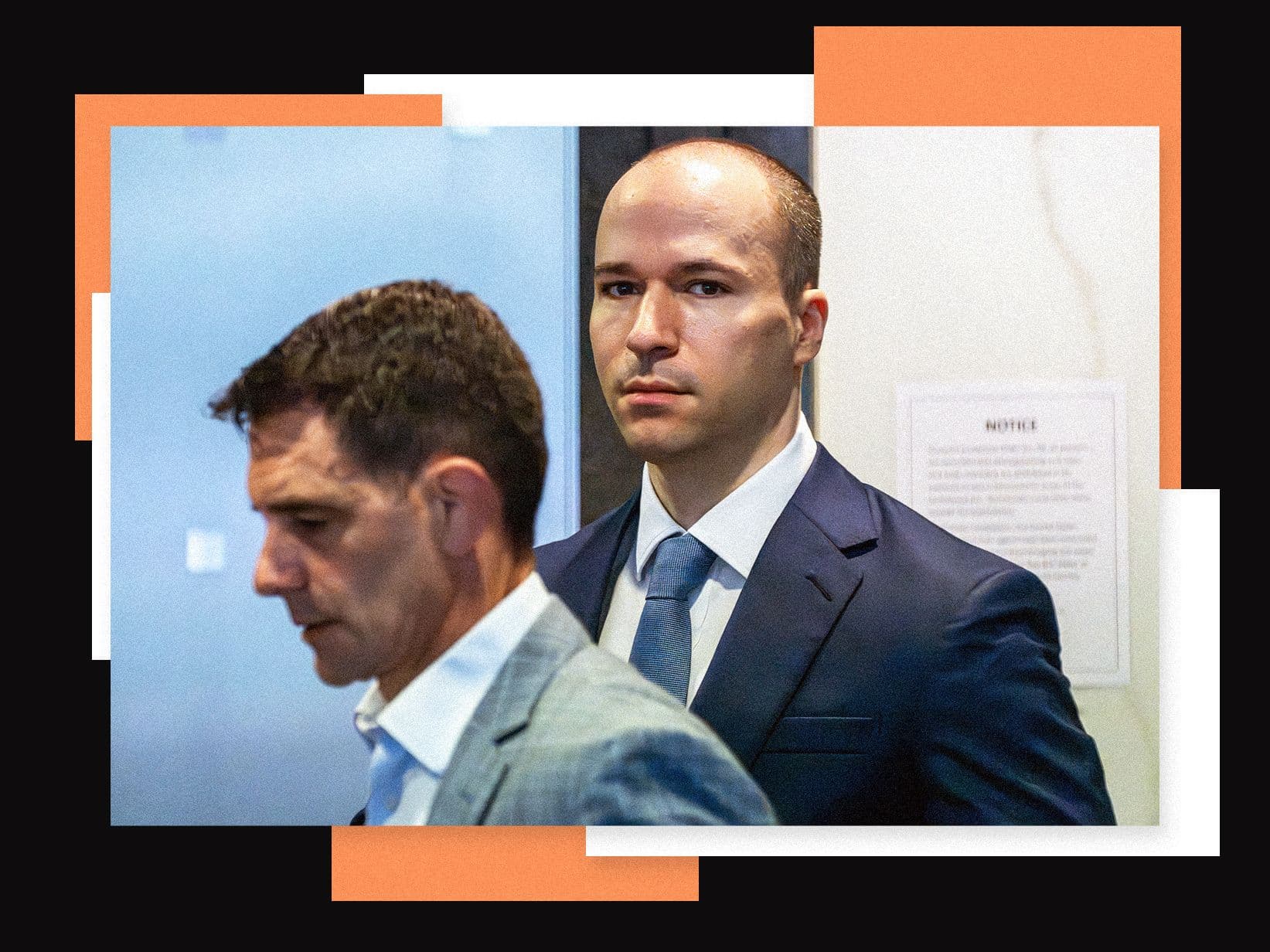
Two days before the Musk v. Altman trial began, Elon Musk asked OpenAI cofounder and president Greg Brockman about reaching a settlement. When Brockman suggested both sides drop their claims, Musk responded, “By the end of this week, you and Sam [Altman] will be the most hated men in America. If you insist, so be it.”The message—which OpenAI’s lawyers made public on Sunday, and which Judge Yvonne Gonzalez Rogers subsequently refused to let the jury hear about—underscores what may be Musk’s larger goal in this trial. He appears to be trying to not only win over the jurors to potentially remove Brockman and CEO Sam Altman from power, but also stir up dirt on the two men and damage OpenAI’s public image.As Brockman took the stand on Monday, Musk’s attorney Steven Molo quickly started questioning him about his compensation at OpenAI. Brockman revealed that his equity stake at OpenAI is currently worth more than $20 billion, and perhaps up to $30 billion. While Brockman initially promised to donate $100,000 to OpenAI when it was being set up, he said he ultimately never followed through.Got a Tip?Are you a current or former tech worker who wants to talk about what's happening? We'd like to hear from you. Using a nonwork phone or computer, contact the reporter securely on Signal at mzeff.88.Brockman has held a number of instrumental roles at OpenAI since he cofounded the company in 2015. In the startup’s early days, it operated out of his apartment in the Mission District of San Francisco. Today, he’s deeply involved with refocusing OpenAI on a few key products, such as Codex. In the past year, Brockman has also given millions to super PACs promoting AI and President Trump, and has previously said this increased political spending is related to OpenAI’s founding mission to create artificial general intelligence that benefits all of humanity.In court on Monday, Molo tried to make the case that Brockman and Altman had essentially looted OpenAI’s original nonprofit, which Musk funded and helped create.In its early days, OpenAI told investors and employees that its nonprofit mission took precedence over generating profit. Brockman testified that his financial interests are still, to this day, second to OpenAI’s nonprofit mission.When OpenAI created its for-profit arm in 2019, which received assets from the nonprofit, Brockman testified that he was given a significant stake in the new entity. Early in OpenAI’s history, Brockman had referenced wanting to be a billionaire, writing in his personal journal, “Financially what will take me to $1B?”On Monday, Molo pressed Brockman for several minutes about the vast wealth he had accumulated beyond his initial goal.“Why not donate that $29 billion to the OpenAI nonprofit? Why didn’t you do that?” Molo asked. Brockman responded that he and others had poured “blood, sweat, and tears” into building OpenAI in the years since Musk left the company.OpenAI’s foundation holds a stake of over $150 billion in the company, making it one of the richest nonprofits in history, Brockman said. That’s roughly five times Brockman’s ownership interest. Altogether, OpenAI employees hold about 25 percent of shares. The foundation has 27 percent. Brockman testified that OpenAI’s nonprofit had received less than $150 million from donors, implying Musk had been incidental to the company’s success and that the real drivers were those who stuck around to build out OpenAI.Of course, Brockman’s stake in OpenAI could be worth much more than $30 billion if the company successfully goes public in the next two years. When asked whether OpenAI was exploring a potential IPO, Brockman said he believes so.Brockman testified that he thought OpenAI’s nonprofit mission had given it “moral high ground” over competitors like Google DeepMind. Molo asked Brockman several times whether he thought his actions, such as not donating $100,000 to OpenAI and then obtaining a stake worth nearly $30 billion, made him “morally bankrupt.” Brockman
In the long-running saga that is Cerebras Systems’s IPO, the finish line is finally in sight. The AI chipmaker said on Monday that it is preparing to sell 28 million shares at $115 to $125 a share. This would raise $3.5 billion and give it a $26.6 billion market cap at the high end. That would be a nice bump in just a couple of months for the late investors who piled into its $1 billion Series H at a $23 billion valuation in February. It would also be a boon to OpenAI and a few of its executives. Should Cerebras pull off an initial public offering at or above the high end, this will be the largest tech IPO of 2026 so far. It could also prove the appetite for even bigger blockbuster offerings in the wings, like SpaceX and possibly OpenAI and Anthropic. Cerebras offers an AI-specific chip called the Wafer-Scale Engine 3 that challenges GPU-based AI chips. Cerebras says its chip is faster for inference while using less power than such competitors. Inference is the compute needed to process user prompts. A long list of top-name investors stands to gain from a healthy IPO. Rick Gerson’s Alpha Wave; Benchmark (via partner Eric Vishria); Lior Susan’s Eclipse; Fidelity; and Foundation Capital (via partner Steve Vassallo) are its largest shareholders with more than a 5% stake, according to the company’s SEC filing. The company says its list of investors also includes 1789 Capital, Abu Dhabi Growth Fund, Abu Dhabi’s G42, Alpha Wave Global, Altimeter, AMD, Atreides Management, Coatue, Moore Strategic Ventures, Tiger Global, Valor Equity Partners, and VY Capital. Plus, Cerebras names on its website a long list of angel investors, too. These include OpenAI founder and CEO Sam Altman, OpenAI founder and president Greg Brockman, former OpenAI chief scientist (now founder of his own AI startup) Ilya Sutskever, OpenAI board member and Quora CEO Adam D’Angelo, Sun Microsystems and Arista co-founder Andy Bechtolsheim, Intel CEO Lip-Bu Tan, and several other tech luminaries. Techcrunch event San Francisco, CA | October 13-15, 2026 While Sam Altman’s stake wasn’t large enough to disclose in the SEC filings, he was quoted in its S-1. That’s because Cerebras’ relationship with OpenAI is even more noteworthy than its angel investors. This relationship was even presented as evidence by Elon Musk in his lawsuit with OpenAI. OpenAI had at one point considered acquiring Cerebras, according to legal filings by Musk’s attorneys that claim he was unaware of all of the OpenAI execs’ personal investments in the company. That deal never happened, but OpenAI did become one of Cerebras’ largest customers. In fact, in December, OpenAI loaned Cerebras $1 billion, secured by warrants that allow OpenAI to buy over 33 million shares, the S-1 discloses. So while OpenAI is not a large shareholder now, it could become one. Cerebras had hoped to go public in 2024 but was delayed due to a federal review of an investment from Abu Dhabi-based cloud provider G42, which was (and still is, the chip company says) a major customer. That IPO attempt was ultimately shelved. A year later, Cerebras sought to raise more cash. In September, it raised $1.1 billion at an $8.1 billion post-money valuation led by Fidelity and Atreides. A few months later, Cerebras signed its new multi-year agreement worth more than $10 billion with OpenAI that included the loan and warrants. In February, it raised the $1 billion Series H, its last mega round. Should investors eat up the IPO, then OpenAI and its executives stand to gain in more ways than one. That seems likely. Banks are already fielding $10 billion worth of orders for the $3.5 billion worth of shares on offer, Bloomberg reports. That kind of demand indicates that the company will likely price its shares even higher than this announced range, raising even more cash for itself and more value for its investors. When you purchase through links in our articles, we may earn a small commission. This doesn’t affect our editorial


Discussion (0)