
Loading dispatches...
← Return to NewsroomPolitics
Take east: On the BJP government in West Bengal

The Bharatiya Janata Party’s victory in West Bengal has long been in the making. In power for three consecutive five-year terms, the Trinamool Congress (TMC) had been degenerating by the day while the BJP built itself up, vote by vote, aided by all the levers of power that it could exercise as the ruling party at the Centre. The party won 207 of the 294 Assembly seats; in 2021 it had 77. Suvendu Adhikari, Leader of the Opposition in the outgoing Assembly, will be the new Chief Minister. He defeated Chief Minister Mamata Banerjee in her own constituency, Bhabanipur — marking the second time that he has prevailed over her, after Nandigram in 2021. Popular dissatisfaction over jobs, corruption, governance and law and order undermined the TMC, which increasingly relied on violence and coercion to keep the State under its thumb. The West Bengal teacher recruitment scam eroded public trust in the TMC, and the R.G. Kar rape and murder case was a major inflection point. Ms. Banerjee first lost control of governance — which was never complete even at the beginning — and then lost control of the narrative. In 2021, her claim to be the protector of Bengali identity against a BJP perceived as the promoter of a Hindi heartland project had worked in her favour. That regional identity politics weakened as its principal champion sank into chaos and degeneration.The BJP’s strategy has been evolving over the years under the direct supervision of Union Home Minister Amit Shah, who spent several weeks in the State through the campaign. The party expanded its capacity at the booth level across rural Bengal through a decade of sustained work, building on its strong performance in the 2019 general election and its 2021 Assembly showing. The party had its own identity politics capable of countering the TMC’s Bengali identity politics. BJP politics in the State was constructed on intense, contentious debates around citizenship, migration and Hindu consolidation — all tied to controversial administrative measures such as the tailored Special Intensive Revision of electoral rolls and changes to the Citizenship Amendment Act (CAA). The CAA was deployed as a mobilisation tool, particularly among Matua and other refugee communities. The BJP’s gains flowed from a consolidation of Hindu votes alongside a decisive split in the TMC’s Muslim support base. Now that the party has created history in West Bengal, the governance challenges before it cannot be overstated. The targeted assassination of a key aide of Mr. Adhikari and violence that has gripped many parts of the State, are instructive. The State needs a new vision for development and progress, but the restoration of law and order is the most urgent priority of all. Published - May 09, 2026 12:20 am IST

A poster projecting Congress leader V. D. Satheesan as the next Chief Minister of Kerala seen near Cliff House road in Nanthancode, in Thiruvananthapuram on Wednesday, May 6, 2026. | At Indira Bhavan, the headquarters of the Kerala Pradesh Congress Committee (KPCC), All India Congress Committee (AICC) observers Mukul Wasnik and Ajay Maken as well as AICC general secretary and Kerala in-charge Deepa Dasmunsi held one-on-one meetings with the 63 legislators of the Congress to know about their choice for the Chief Minister’s post.After the Congress-led United Democratic Front’s (UDF) victory in the Assembly elections, a three-way fight had begun for the Chief Minister’s post, with outgoing Leader of Opposition V.D. Satheesan, AICC general secretary (organisation) and Alappuzha MP K.C. Venugopal, and senior leader Ramesh Chennithala in contention.The underlying tensions within the party, which threatened to take some of the sheen away from the UDF’s massive victory, spilled on to the streets. Congress workers held protests in support of Mr. Satheesan in Nettoor in Ernakulam district as well as at Peravoor in Kannur, the constituency of KPCC president Sunny Joseph.Flex boards appeared in various parts of the State in support of and against the three leaders. While boards indicating support to Mr. Venugopal were visible on the road leading the KPCC headquarters, banners appeared in front of the District Congress Committee office in Alappuzha asking Mr. Venugopal to not force byelections. The banners in Alappuzha were later removed by Congress workers.MLAs who walked out after the meeting with the observers remained tight-lipped about their choices.Former KPCC president K. Sudhakaran, who is understood to be batting for Mr. Venugopal, said, “We have not only Satheesan, but a bulk of good leaders.”Mr. Sudhakaran, who had initially rebelled against the denial of candidature ahead of the Assembly elections, has been unhappy regarding the Kerala leadership’s stand to not allow MPs to contest the elections.Majority of the UDF alliance partners, including the Indian Union Muslim League, who met the AICC observers on Thursday afternoon, are understood to be favouring Mr. Satheesan. IUML general secretary P. K. Kunhalikutty said that the party has conveyed its choice to the observers.Congress leader Mathew Kuzhalnadan had earlier in the day said that allies need not state their stand regarding the Congress Legislative Party leader. “Does the Congress make any opinion on who should become the legislative party leader of the Muslim League or RSP,” he asked.Kerala Congress (Joseph) chairperson P. J. Joseph said that a decision should be made considering the “public sentiment” and also that a sitting MLA should become the Chief Minister, indicating that their support is for Mr. Satheesan.Revolutionary Socialist Party State secretary Shibu Baby John, who expressed hope that the new government will be sworn in without much delay, said that the party did not specify any name.Ahead of the meeting with the observers, Mr. Satheesan’s supporters are learnt to have raised a demand to not allow Ms. Dasmunsi to be part of the meeting. However, this demand was not considered. The observers will convey the opinions of the MLAs, MPs and alliance partners to the high command, which is expected to take a final call after talks with the three leaders in contention.Mr. Venugopal claims the support of a majority of Congress MLAs, but according to Congress sources Mr. Satheesan has stuck adamantly to the stand that he would choose to not become a part of the Ministry unless he is given the Chief Minister’s post. He is of the view that more than
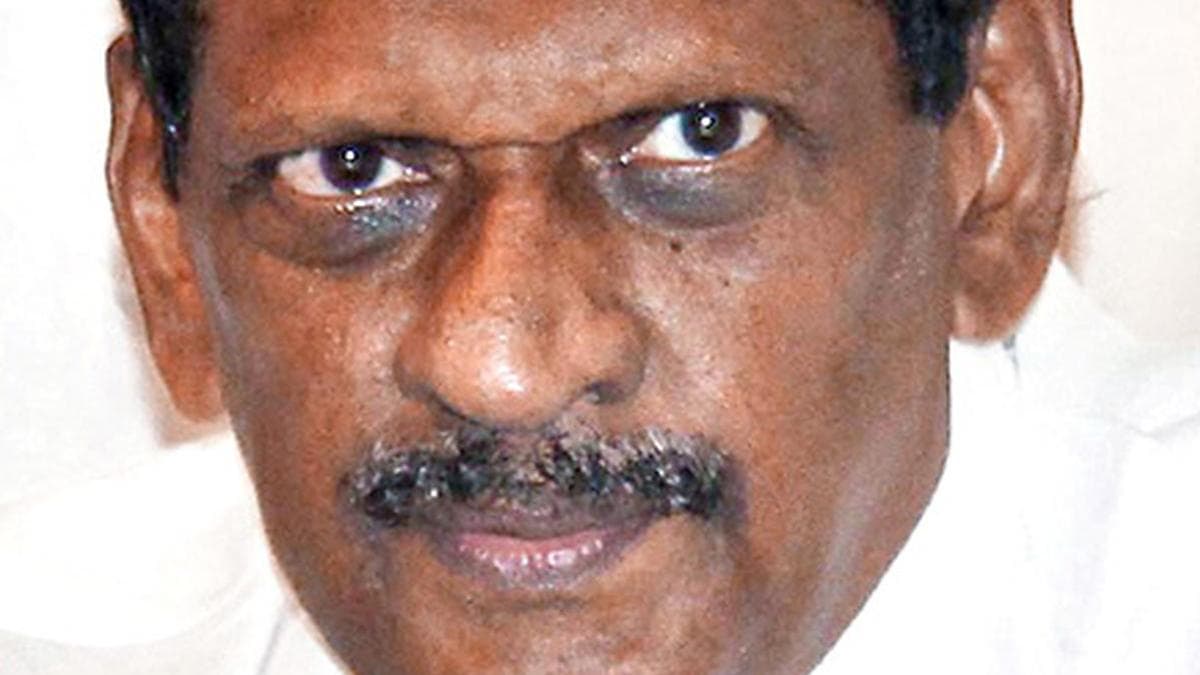
Kerala Congress (Joseph) chairman P.J. Joseph on Thursday (May 7, 2026) said the party desires at least two ministerial berths in the new UDF government in Kerala.The Kerala Congress (Joseph) faction had contested in eight Assembly constituencies and won seven of them in the 2026 State election.Although Mr. Joseph did not contest the Assembly polls, his son Apu John Joseph won from the party stronghold of Thodupuzha in Idukki district with a margin of nearly 85,000 votes.Speaking to reporters at Thodupuzha before leaving for Thiruvananthapuram, Mr. Joseph said “the issue of ministerial representation” for the party would be settled amicably through discussions. “Our desire is to get at least two Ministers,” he said.When asked whether the party would get a <inister from Idukki district, Mr. Joseph said it could not be decided at present.On the chief ministerial candidate, he said the party would express its opinion only if sought by the alliance leadership.“We will not say anything now. We have not been asked about it till now. If asked, we will give our opinion,” he said.Mr. Joseph said he was travelling to Thiruvananthapuram as the presence of party leaders was essential there following the election results.The Chief Minister would be from the Congress party, and discussions regarding the post have already begun within the party leadership.Senior Congress leaders V D Satheesan, Ramesh Chennithala and K C Venugopal are among the names being discussed for the post.The UDF registered a major victory in the 2026 Kerala Assembly election, winning 102 out of the 140 seats. Published - May 07, 2026 10:38 am IST
Among major parties, the TMC MLAs have average assets of ₹5.36 crore, followed by BJP legislators at ₹2.97 crore. Representational file image. | The report, which analysed affidavits of all 292 winning candidates in the 2026 Assembly polls, found that 190 MLAs (65%) have declared criminal cases, up from 142 (49%) in 2021. Of these, 170 legislators (58%) face serious criminal charges, compared to 113 (39%) in the previous Assembly.Among serious offences, 14 winning candidates have declared cases related to murder (IPC Section 302), while 54 face charges of attempt to murder. Cases related to crimes against women were declared by 63 winners, including two candidates who have disclosed rape charges.A party-wise analysis showed that 152 of 206 winning candidates (74%) from the Bharatiya Janata Party have declared criminal cases, followed by 34 out of 80 (43%) from the All India Trinamool Congress.All winning candidates from smaller parties like the Aam Janata Unnayan Party, the Communist Party of India (Marxist), and the All India Secular Front have declared criminal cases. In contrast, both winning candidates from the Indian National Congress have no criminal cases.The trend is similar for serious criminal cases, with 68% of BJP winners and 31% of Trinamool Congress winners facing such cases.The ADR report also highlighted the growing wealth among elected representatives. Of the 292 winners, 178 (61%) are crorepatis, up from 54% in 2021. The total declared assets of all winning candidates stand at ₹1,091 crore, with an average asset of Rs 3.73 crore per MLA, significantly higher than ₹2.53 crore recorded in the previous Assembly.Among major parties, the TMC MLAs have average assets of ₹5.36 crore, followed by BJP legislators at ₹2.97 crore. The two Congress MLAs reported the highest average assets overall at ₹17.92 crore.On educational qualifications, 63% of the winning candidates are graduates or above, while 32% have studied between Class 5 and Class 12. A small number of legislators reported minimal formal education, including one candidate who declared himself illiterate.The age profile shows that the majority of MLAs (63%) fall in the 41-60 age group, while only 16% are between 25 and 40 years. Around 20% of the legislators are aged between 61 and 80, with three candidates above 80 years.Women remain under-represented, with only 37 out of 292 MLAs (13%) being female, a slight decline from 14% in 2021, the report noted.The ADR report underscored persistent concerns about the criminalisation of politics and the rising concentration of wealth among elected representatives in one of India’s key states. Published - May 07, 2026 06:44 am IST
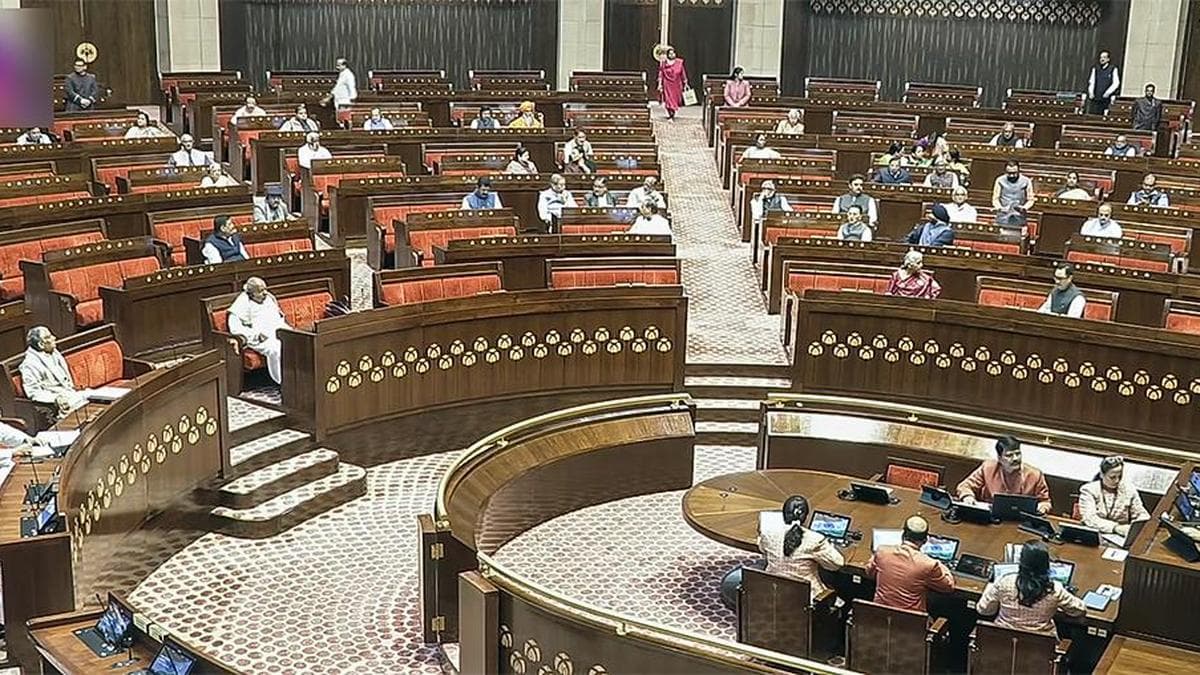
Rajya Sabha. | If AIADMK MP C. Ve. Shanmugam, who won from the Mailam Assembly constituency in Tamil Nadu, resigns from his Rajya Sabha seat, then TVK could enter Parliament earlier than anticipated. Mr. Shanmugam told The Hindu that he will take a decision on the matter in the next couple of days. If he choses to resign from the Upper House, then the election for his seat could be held along with 22 other seats from eight States that are due to go to the polls in June. Considering the TVK’s strength in Tamil Nadu Assembly, it should be able to win the seat.Left setbackThe biggest setback will be for the Left parties. In April 2027, three Kerala MPs are retiring: the IUML’s Abdul Wahab, and the CPI(M)’s John Brittas and V. Sivadasan. The Left Democratic Front’s collective strength of 35 seats in the Kerala Assembly is one short of the required number to elect a Rajya Sabha MP. In April 2028, their strength in the Upper House is set to dip further when another three Kerala seats go to the polls, with the CPI(M)’s A.A. Rahim and CPI’s P. Sandosh Kumar among those retiring. Again, the Left is unlikely to have the numbers to get any of its candidates elected. CPI MP P.P. Suneer, who is scheduled to retire in 2030, will then be the last remaining Left MP in the Upper House.The DMK benches will feel the impact in June 2028 when six MPs from Tamil Nadu are set to retire. Of these, three are from the DMK, two from the AIADMK, and one from the Congress. Considering the present Assembly elected on May 4, and the subsequent Congress pledge to support the TVK, the DMK is likely to return only one MP to the Rajya Sabha.Delayed impact for TMCFor the Trinamool Congress, the first hit will be slightly delayed, coming in August 2029, when the next round of Rajya Sabha elections is held for West Bengal. Six members from the State, five from the TMC and one from the BJP, are set to retire, including the TMC’s Rajya Sabha leader Derek O’Brien. Based on its present strength in the State Assembly, the TMC will only be able to get one member elected to the Upper House.The next round of attrition from the TMC’s benches is expected in April 2030, when four of its MPs will retire, reducing its strength to six until the next round of Assembly polls in the State. A senior TMC leader cautioned that these calculations would hold only if none of its sitting MPs switched sides. “Considering the political atmosphere, one can’t entirely rule out such a scenario,” the leader said.Good news for CongressBetween the two rounds of Rajya Sabha elections this year, scheduled for June and November, the Congress will pick up three extra berths. In June, four MPs from Karnataka are retiring, including Congress president Mallikarjun Kharge and JD(S) supremo H.D. Deve Gowda. The Congress is in a position to win three of these four seats, gaining two additional berths. This gain, however, will be neutralised by its loss in Gujarat.The Congress is hoping that its ally in Jharkhand will concede the sole Rajya Sabha seat from the State that goes to the polls in June, and that it will gain another seat from Himachal Pradesh in the November elections. By the November, the Congress’s tally will go up from 30 to 33. The Congress will also increase its strength at the cost of the Left members in the Rajya Sabha in April 2027 and 2028. Published - May 06, 2026 10:55 pm IST
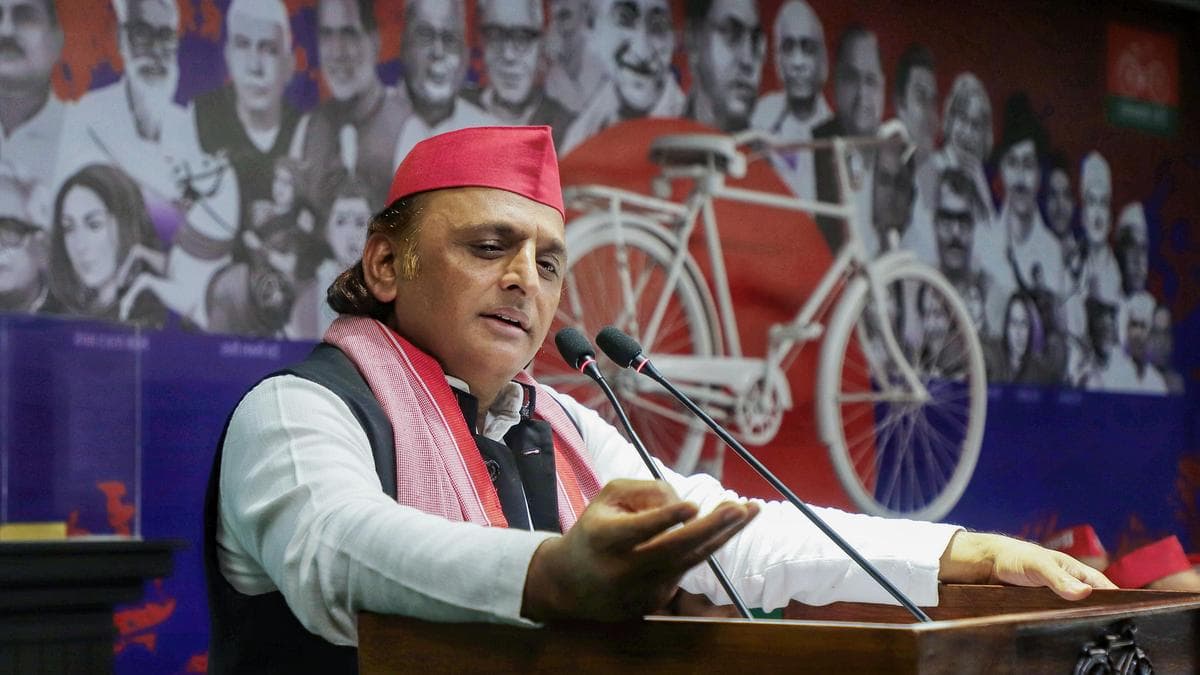
Samajwadi Party chief Akhilesh Yadav addresses a press conference at party office in Lucknow on May 6, 2026. | He dismissed speculations that the termination of contract was because of recent election results.Addressing a press conference, Mr. Yadav said the party had engaged I-PAC for a brief period ahead of the 2027 Uttar Pradesh Assembly elections but could not continue the arrangement."Yes, we had an association. They worked with us for a few months, but we are not able to continue because we do not have that kind of funding," he said.The I-PAC is a political consultancy firm known for managing major election campaigns across the country.Election strategist-turned-politician Prashant Kishor has also been associated with the organisation in the past and has worked with multiple parties, including the BJP and the Congress.In a lighter vein, Mr. Yadav took a swipe at the ecosystem of political consultancies. "We thought that if we have to work with a 'winning agency', then there are several big companies."He said that some people suggested conducting surveys, hiring another firm, keeping a social media company, and even engaging agencies for negative campaigning against other parties. "There are one or two more companies whose names are not yet known. I can get those for you as well," Mr. Yadav said.He rejected the suggestion that the decision to end the deal was influenced by recent election outcomes in States such as West Bengal. "There is no such thing. Do not ask questions based on baseless reports. That is not true," he said."This is not the reason for ending the agreement. We simply do not have enough funds. If you (the media) give us funds, we can hire another company," the former Uttar Pradesh chief minister said. Published - May 06, 2026 05:36 pm IST


Discussion (0)