
Loading dispatches...
← Return to NewsroomTechnology
Ilya Sutskever Stands by His Role in Sam Altman’s OpenAI Ouster: ‘I Didn’t Want It to Be Destroyed’
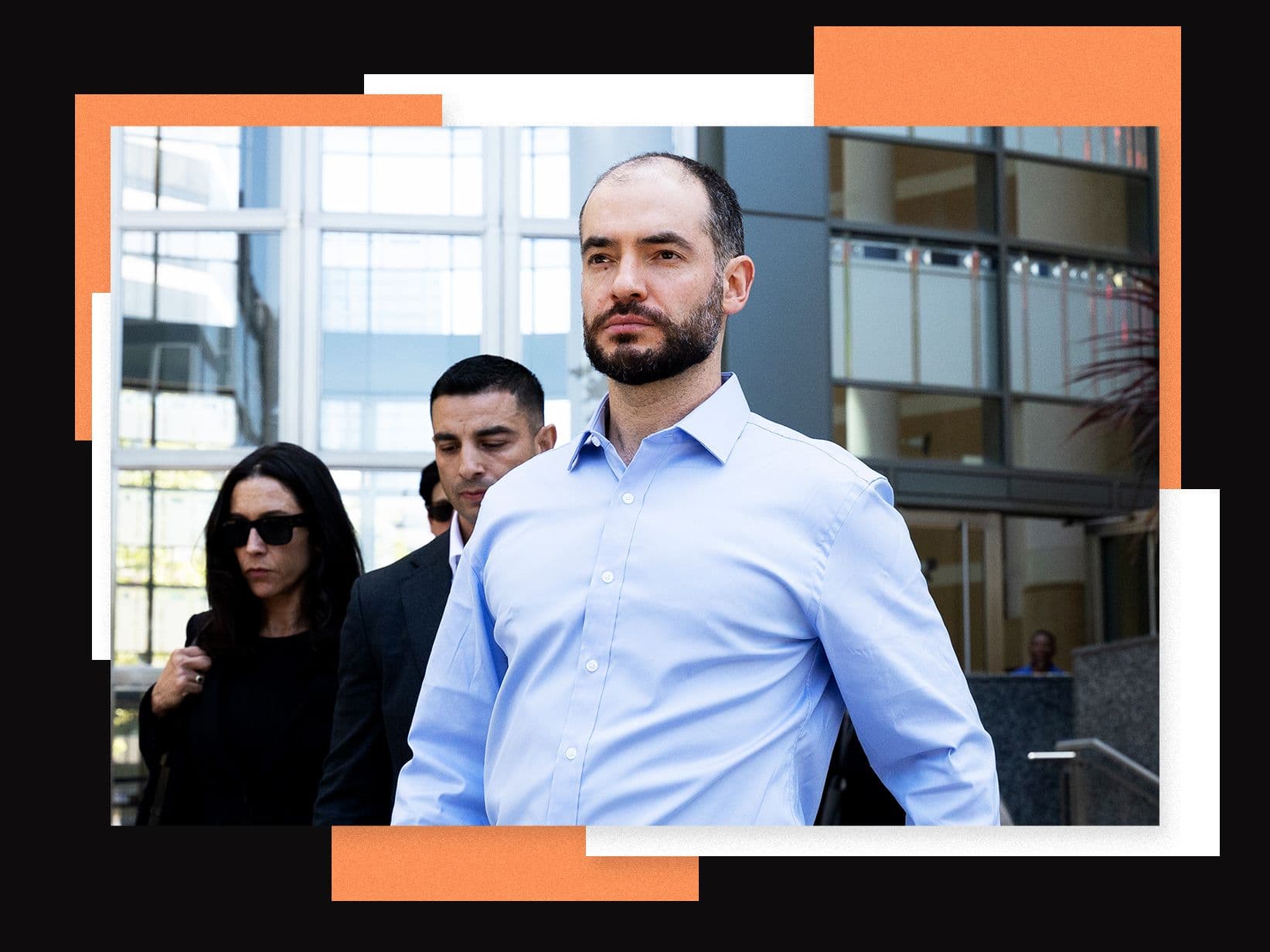
Elon Musk’s trial against OpenAI and Microsoft entered its final stretch on Monday, with testimony from Microsoft CEO Satya Nadella, former OpenAI chief scientist Ilya Sutskever, and current OpenAI chairman Bret Taylor.Sutskever drew the spotlight, revealing an ownership stake in OpenAI’s $850-billion for-profit arm that is currently worth about $7 billion. That makes him one of the largest known individual shareholders of OpenAI. Earlier in the trial, OpenAI president Greg Brockman acknowledged for the first time that he has around $30 billion worth of OpenAI shares.Brockman was one of the research lab’s original cofounders, and Sutskever joined shortly afterward, turning down a $6 million annual compensation offer from Google. Brockman said he and Sutskever were “joined at the hip,” until Sutskever helped lead Sam Altman’s brief removal as OpenAI CEO in 2023. Sutskever had helped collect evidence to show Altman’s alleged history of deception, and even assisted in drafting a memo to the board. Though they tried to repair the relationship, Sutskever has been estranged from Brockman and Altman ever since, a lawyer for OpenAI said on Monday.Sutskever, who arrived in the courtroom wearing a dress shirt and slacks, the first male witness to testify without a suit jacket, appeared to be dejected about no longer being involved with OpenAI. (He left and formed a competing AI lab in 2024.) “I felt a great deal of ownership of OpenAI,” he said at one point Monday. “I felt like I put my life into it, and I simply cared for it, and I didn’t want it to be destroyed.”Got a Tip?Are you a current or former OpenAI employee who wants to talk about what's happening? We'd like to hear from you. Using a nonwork phone or computer, contact the reporters securely on Signal at mzeff.88 and peard33.24.Sutskever’s testimony bolstered Musk’s contention that Altman is not the right person to lead an AI lab that could create artificial general intelligence. In addition, Sutskever mentioned how the superalignment team he helped lead, which focused on the safety of future models, was doing the most important work at OpenAI “for the long term.” The team was disbanded in May 2024, shortly after Sutskever left the company.But Sutskever also added to OpenAI’s defense that Musk never negotiated any special promises when funding the OpenAI nonprofit. Musk’s allegation that such commitments existed and that Altman and Brockman violated them by pursuing a lucrative for-profit arm are the core of his claims in the lawsuit. Sutskever said OpenAI needed “a lot of dollars” to build a computer as big as the human brain, and while seeking donations had some “reasonable success,” becoming a for-profit was the consensus way forward.“I would describe it as the difference between an ant and a cat,” Sutskever said in response to a question from US district judge Yvonne Gonzalez Rogers about how more computing helped OpenAI level up. “If there’s no funding, there is no big computer.”In the end, Sutskever, a prominent AI scientist who paints in his spare time, testified for about an hour, barely making eye contact with anyone during his time on the witness stand.Musk’s legal team had unsuccessfully sought to treat Sutskever as a hostile witness because of his financial stake in OpenAI. But Gonzalez Rogers agreed to give attorneys for both Musk and OpenAI extra leeway in their questioning of Sutskever due to what she described as his “unique position” in the case.The BlipMuch of Monday’s testimony centered around the well-covered events of Altman’s ouster and reinstatement as CEO in November 2023. Nadella described Sutskever and other board members firing Altman as “amateur city” and reiterated that he “never got clarity” about the lack of candor that led to their decision. Nadella also acknowledged during his testimony that he and colleagues discussed 14 potential board members who would join OpenAI if Altman returned, including at least two whom the Microsoft group vetoed and

Billionaire media mogul Barry Diller doesn’t think OpenAI CEO Sam Altman is untrustworthy, despite recent reporting to the contrary. On stage at The Wall Street Journal’s “Future of Everything” conference this week, Diller vouched for the AI exec, who has been accused by some former colleagues and board members of being manipulative and deceptive at times. Diller, who is friendly with Altman, was responding to a question about whether or not people should put their faith in Altman to ensure that artificial intelligence benefits humanity. In particular, he was asked about the theoretical form of AI known as Artificial General Intelligence, or AGI, which could one day outperform humans on any task. The media exec, a co-founder of Fox Broadcasting and chairman of IAC and Expedia Group, said that while he believes Altman is sincere in his pursuits, that’s not really the area of concern people should be focused on. Rather, it’s the unknown consequences that will result from AI. “One of the big issues with AI is it goes way beyond trust,” Diller said. “It may be that trust is irrelevant because the things that are happening are a surprise to the people who are making those things happen. And I’ve spent a lot of time with various people who’ve been in the creation mode of AI, and they have a sense of wonder themselves. So…it’s the great unknown. We don’t know. They don’t know,” he explained. “We have embarked on something that is going to change almost everything. It is not under-reported. Now, whether these huge investments are going to come through — I couldn’t care less. I’m not invested in it, but progress is going to be made,” Diller added. Still, the media mogul said he believes that most of the people leading the charge are good stewards, saying he believes that Altman is sincere and “a decent person with good values.” (Diller wouldn’t say which of the AI leaders he thinks is insincere, we should note.) Techcrunch event San Francisco, CA | October 13-15, 2026 “But the issue is not their stewardship. The issue is … it’s dealing truly with the unknown. They don’t know what can happen once you get AGI, and we’re close to it. We’re not there yet, but we’re getting closer and closer, quicker and quicker. And we must think about guardrails,” Diller noted. Plus, he warned, if humans don’t think about guardrails, then the alternative is that “another force, an AGI force, will do it themselves. And once that happens, once you unleash that, there’s no going back,” Diller said. When you purchase through links in our articles, we may earn a small commission. This doesn’t affect our editorial independence. Sarah has worked as a reporter for TechCrunch since August 2011. She joined the company after having previously spent over three years at ReadWriteWeb. Prior to her work as a reporter, Sarah worked in I.T. across a number of industries, including banking, retail and software. You can contact or verify outreach from Sarah by emailing sarahp@techcrunch.com or via encrypted message at sarahperez.01 on Signal. View Bio
In August 2017, Greg Brockman and Ilya Sutskever gathered at Elon Musk’s self-described “haunted mansion,” a 47-acre, $23 million estate in Hillsborough, south of San Francisco, to discuss the future of OpenAI. Actor Amber Heard, Musk’s then-girlfriend, had served the group whiskey and then dashed off with a friend, Brockman, OpenAI’s cofounder and president, testified in federal court during the trial for Musk v. Altman on Tuesday.Ahead of the meeting, Musk gifted Brockman and Sutskever, OpenAI’s cofounder and former chief scientist, new Tesla Model 3 cars. “It felt like he was buttering us up,” Brockman said on the stand. “He wanted us to feel indebted to him in some way.” Sutskever tried to reciprocate for the occasion. The amateur artist presented Musk with a painting of a Tesla. Musk and the other cofounders wanted to establish a for-profit arm to entice investors to give them billions of dollars to pay for compute. But Musk also wanted control of the company, and Sutskever and Brockman objected to granting the Tesla CEO what they believed would be a “dictatorship” over the future of AI development. They proposed having shared control.After several minutes of deliberation, Musk rejected their offer. “He stood up and stormed around the table,” Brockman recalled. “I actually thought he was going to hit me, physically attack me.” Musk grabbed the painting, said he would cut off his funding of the nonprofit until Brockman and Sutskever quit, and left the room, according to Brockman’s testimony. But that night, Musk’s so-called chief of staff Shivon Zilis called Brockman and Sutskever “to say it’s not over,” Brockman testified. “There were discussions of futures that included us.”The story of the heated negotiations emerged as Brockman wrapped up his testimony on Tuesday. To OpenAI, the events at the mansion are representative of repeated instances of erratic behavior by Musk that they believe undermine his arguments about the company. Musk contends his roughly $38 million in donations to OpenAI were abused by Brockman and others on the path to creating the $852 billion for-profit venture now known for services such as ChatGPT and Codex. Brockman, OpenAI CEO Sam Altman, and OpenAI deny any wrongdoing, and the jury in Musk v. Altman could begin deliberating on an advisory ruling as soon as next week.After Tuesday’s testimony, William Savitt, an attorney for OpenAI, told reporters that what Brockman had learned in 2017 was how tough it can be to meet one’s heroes. Brockman admired and respected Musk’s business acumen, but his desire for control was absolute and concerning, Savitt said. Marc Toberoff, an attorney for Musk, told reporters that the true concern was Brockman’s motivations for sharing control, with his desire for wealth having faced scrutiny in court a day earlier.For his part, Brockman offered another story on Tuesday to underscore why he thought Musk was not up to the task of controlling an AI company. Brockman recalled then-OpenAI researcher Alec Radford showing Musk an early version of an AI chatbot that didn’t generate responses that he liked. Musk “kept saying this system is so stupid, that a kid on the internet could do better,” Brockman said. Radford “was absolutely crushed” and “demoralized” to the point that he almost quit the AI research field altogether, Brockman said. Brockman and Sutskever “spent a lot of time” rebuilding his confidence. Musk’s inability to see the potential in the early technology—which eventually became the basis for ChatGPT—made him unfit to control OpenAI, in Brockman’s view. “You needed to dream a little bit,” Brockman said. And Musk hadn’t shown that he could.Boardroom FightsBrockman said Tuesday that he, Sutskever, and Altman considered voting Musk off the OpenAI nonprofit board as negotiations with him about a for-profit sibling company dragged on for months. They would meet again over whiskey at Musk’s mansion to discuss alternative funding options. There was agreement over wha


Discussion (0)