
Loading dispatches...
← Return to NewsroomPolitics
Kerala’s battle with water-borne diseases

Image for representation only. | The irony is stark, for Kerala has demonstrated the responsiveness and resilience of its health system by having a firm grip on a disease as unpredictable and complex as Nipah.Now, rapid urbanisation and social development on the one side and inadequate attention paid to environmental health, water quality measures, poor sewage and sanitation infrastructure on the other, is threatening to undo the State’s reputation as a beacon of good public health. The explosion of water-borne diseases and zoonotic diseases in the State points to the system’s failure to pay attention to the social and environmental determinants of health.Between four to five lakh cases of ADD are reported every year in the State. Since the past two decades, Kerala has also been experiencing several large and small Hepatitis A outbreaks. In 2025, the State reported 31,536 cases and 82 deaths due to Hep A. This year too, as of June 15, close to 9,000 cases and 25 confirmed deaths have been reported.Amoebic meningoencephalitis, which has also emerged as a significant public health problem in Kerala, is being linked to the faecal contamination in domestic wells, in which free-living amoeba thrive. This infection has claimed the highest number of lives in the State, with 134 cases and 34 deaths reported as of June 15 this year.Various studies have reported that groundwater resources in the State have been under increasing stress, with 62% of the population depending on ground water from close to 7 million wells. The CAG’s 2025 report stated that at the closure of the AMRUT Mission, a Central initiative aimed at ensuring universal access to safe water and reliable sewerage connections across urban areas, Kerala’s overall achievement was just 11.25% and only 0.13% households got sewerage connections.While Kerala does have high sanitation coverage with a significant proportion of households relying on septic tanks or on-site sanitation systems, these septic tanks are poorly designed and located close to domestic wells which lead to groundwater contamination. The fact that Kerala is one of the most densely populated States with small landholdings and houses situated close to each other aggravates the issue. High levels of faecal contamination have been reported in over 70% of the open wells in the State by agencies such as the Centre for Water Resources Development and Management. A study in the urban areas of Thiruvananthapuram in 2018 had reported that coliform contamination was prevalent in 73% of wells and that well chlorination and cleaning practices were inadequate.Recurring outbreaks of Hepatitis A and shigellosis in the State showed that almost all outbreaks had been in rural areas and were linked to the local source of drinking water. Epidemiological investigations have revealed that water for regional supply systems is often pumped into supply lines without adequate chlorination or filtration, and that these lines often run close to sewage drains — any breaks in the pipeline can lead to major contamination.It is also true that most of the interventions to provide safe drinking water to people lie outsi

The World Health Organisation had recently declared the ongoing Ebola outbreak in Uganda and the Democratic Republic of Congo a PHEIC. | Bengaluru District Surgeon and Medical Superintendent of the hospital, Anil Kumar Banagar, said the woman had recently travelled from Uganda to Ahmedabad and had later arrived in Bengaluru.Although she did not show symptoms during airport screening, health authorities continued to monitor her because of her travel history from an Ebola-affected region.“The District Surveillance team and airport health officials were tracking her condition. She developed a mild body ache nearly 24 hours later, following which samples were collected and sent to the National Institute of Virology (NIV), Pune,” Dr. Banagar told The Hindu.He said the woman was stable and had not developed any additional symptoms so far.Test reports“The test reports are expected in a day or two. Even if the result is negative, as per protocol, a repeat test will be conducted after 48 hours of observation. She will be discharged only after testing negative twice,” he said.Amid the Ebola alert, Karnataka’s Health Department has designated specialised isolation, quarantine and treatment facilities at government hospitals in Bengaluru and Mangaluru as part of precautionary preparedness measures.In Bengaluru, Rajiv Gandhi Institute of Chest Diseases has been identified as the isolation centre, while Epidemic Diseases Hospital has been designated as the quarantine and treatment facility.In Mangaluru, Srinivas Port Hospital under the New Mangalore Port Authority has been identified as the quarantine centre, while Wenlock District Hospital has been designated as the isolation and treatment centre.The preparedness measures follow directions issued by the Union Health Ministry asking all States and Union Territories to strengthen surveillance, hospital preparedness, and rapid response systems.The World Health Organisation had recently declared the ongoing Ebola outbreak in Uganda and the Democratic Republic of Congo a “Public Health Emergency of International Concern” (PHEIC). Published - May 26, 2026 10:41 pm IST
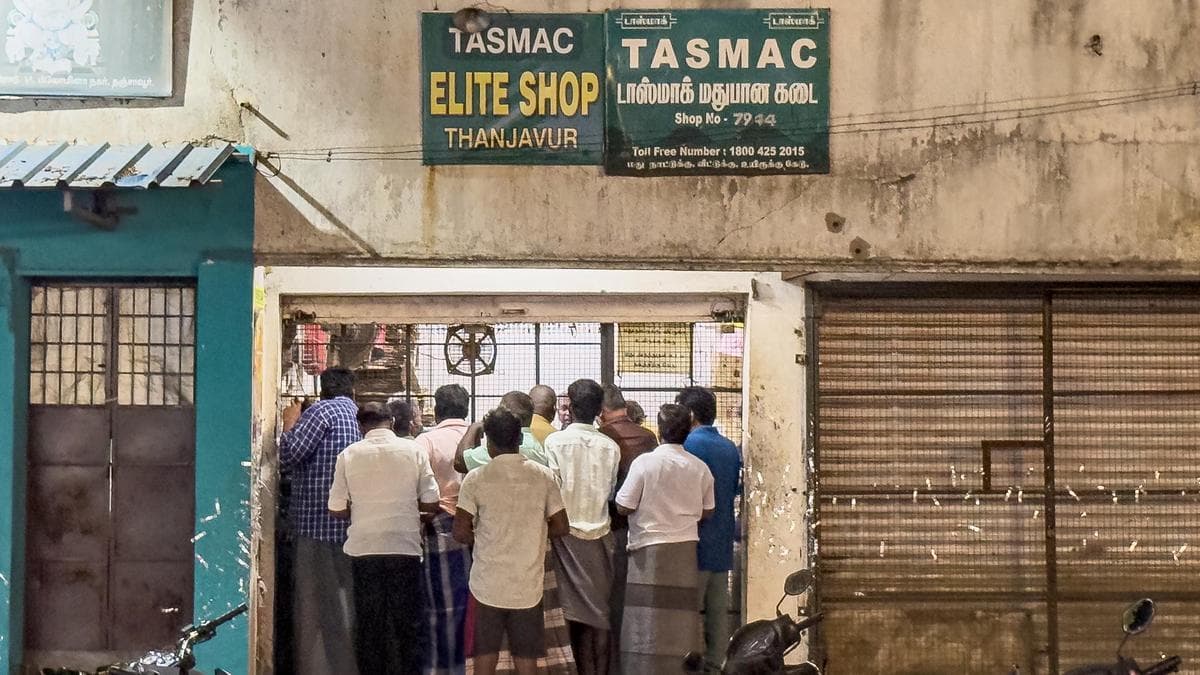
S. Vijayabaskar has spent 23 years behind a TASMAC counter in Pudukkottai. He has absorbed the ordinary indignities of the trade — the abusive drunk, the 10-hour shift, an occupation nobody mentions at a wedding. But nothing in two decades prepared him for the question his Class 8 son asked recently, after a fortnight of watching television: could his father quit and drive an auto-rickshaw instead?The boy had seen the media coverage: the FIRs, the social media vigilantes filming through shop windows, and the new Tamilaga Vettri Kazhagam (TVK) government moving against TASMAC employees for charging ₹10 above the maximum retail price (MRP). He had imbibed how these men were being spoken about.“They are showing us as though we are the ones looting the money,” Mr. Vijayabaskar told The Hindu. A trade union member in the Viduthalai Chiruthaigal Katchi’s (VCK) Labour Liberation Front (LLF) of two decades’ standing, he was practised in articulating grievance. But when his son asked the question, he said, he could not give a straight answer.The ₹10 overchargeDuring a campaign in 2025, TVK leader C. Joseph Vijay — now Chief Minister — sang an impromptu number at a Karur rally: “Bottle ku 10 ruba.” The line went viral and the ₹10 overcharge had entered the lexicon. Now, his government is acting on the slogan.Customers see little cause to object. R. Anand, a regular at a Tiruchi outlet, pays at least ₹20 above the MRP per purchase — ₹10 as a bottle buy-back deposit and a further ₹10 in what he calls, plainly, commission. K. Prabhu, who drinks three beers a sitting at a Pudukkottai shop, calculates that it costs him ₹60 extra every visit. “It is nothing but loot,” he said. Last week in Mayiladuthurai, FIRs were registered against employees at three separate outlets. A half-day bandh followed, dissolving only after a peace meeting at the collectorate.Mr. Vijayabaskar does not dispute the overcharging. “Customers have every right to ask for the MRP,” he said. “But the irregularities in TASMAC shops have made it impossible.”The irregularities, he describes, are not aberrations. They are the operating model.Structural issueTASMAC reimburses shops up to ₹9,000 monthly in electricity costs. In summer, bills routinely climb ₹4,000 above that ceiling. The excess falls on the employees. The department pays landlords ₹11,000 to ₹12,000 a month for city outlets; market rents in most locations run to ₹30,000. The gap is settled through unofficial revenue. Each week, new stock arrives four times. Unloading costs approximately ₹5 per box, 250 boxes per consignment — ₹1,250 per delivery, unreimbursed. Breakage during unloading also falls on the employee. Cleaning staff are not provided; shops hire locally and pay privately. The buy-back scheme, introduced in 2025 to encourage bottle returns, requires additional staff that TASMAC has not sanctioned — paid ₹800 to ₹1,500 a month out of workers’ pockets.R. Arul, a supervisor in Perambalur, said the unloading arithmetic was identical at his outlet. “Not a rupee is reimbursed. You absorb it or you recover it somewhere.” Bala K., a salesman in Nagapattinam, added that damaged bottles during delivery — an inevitability, not an exception — also fell entirely on the employee.Mr. Vijayabaskar claims to have spent ₹30,000 of his own money on a freezer box. TASMAC’s had broken years earlier and was never repaired. And he is not alone.P. Jeevanantham, a 23-year salesman and district union secretary with AITUC in Pudukkottai, described the penalty structure with barely concealed disbelief. Under TASMAC’s own departmental guidelines, an employee who charges between ₹1 and ₹9 above MRP faces a ₹9,000 fine — a financial punishment. Charge ₹10 or more, the consequence is merely a transfer to another shop. “Effectively,” he said, “almost no punishment.”No room for welfareMr. Jeevanantham listed what long service leaves behind — varicose veins, haemorrhoids, alcohol-related complications — none covered under any department

Mahesh Tenginakai, BJP MLA of Hubballi Dharwad Central Assembly constituency. | “He made hundreds of workers, who were travelling to other cities, including in West Bengal, sit on the floor and interrogated them in an inhumane manner at a bus stand in Hubballi on May 23.“The elected representative behaved rudely with poor workers and suspected their nationality. It is a matter of shame for the whole society,” he told reporters on May 24.Mr. Ullagaddimath criticised police officers, who were present, accusing them of failing to follow the rule of law . “Instead of taking action as per the law, the police officers present at the scene of the incident completely succumbed to the pressure of the MLA and allowed him to continue the inhumane act. The fact that the police went to great lengths to pacify and appease just one MLA is a reflection of the complete degradation of today’s administrative system,” he said.“If this is how we treat labourers, who will come to work on Hubballi’s infrastructure projects and industries? Indian workers should not be treated this way in India. Will the MLA and his followers do such hard work?” Published - May 25, 2026 09:53 am IST
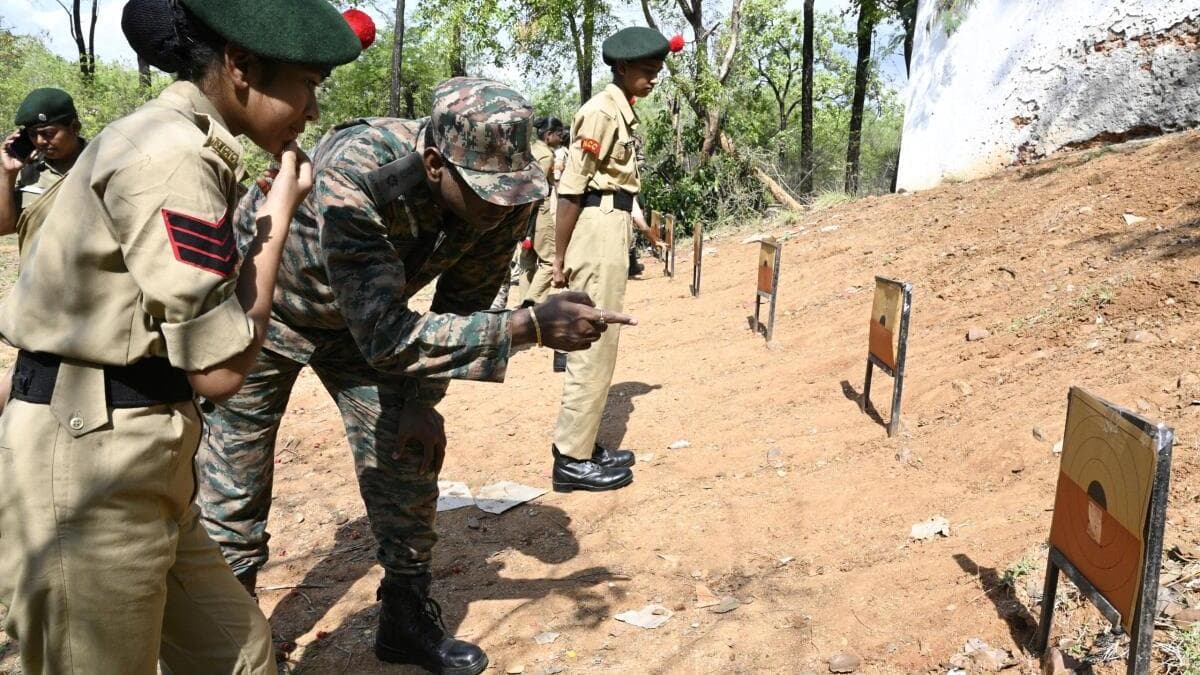
An Army instructor explains target placement to NCC cadets at the firing range during the Combined Annual Training Camp-1 in Alipiri, Tirupati, on Friday. | V. Poornachandra Kumar The 565 NCC girl cadets undergoing training at the ongoing Combined Annual Training Camp-1 (CATC) tested their skills in shooting at the firing range.The camp, which began on May 5 and is scheduled to end on May 14, has a range of activities including drill, firing, obstacle course, debate, quiz, sports, group tasks, map reading, field craft and battle craft, yoga, cultural programmes and social service activities.As the event coincided with the first anniversary of Operation Sindoor, an Indian Air Force (IAF) video on the operation was played. NCC cadets take aim at the firing range during the Combined Annual Training Camp-1 in Alipiri, Tirupati, on Friday. | V. Poornachandra Kumar Group Captain R.J. Atre, the Commandant for the camp, spoke on the importance of patriotism, preparedness and national service, and said a close observation of Operation Sindoor could become a source of inspiration in a cadet’s life.The day’s training included lectures on aeromodelling, health and hygiene, along with specialist sessions on the introduction and types of propellers. The day also marked the first day of selection of cadets for the Inter Directorate Sports Shooting Competition (IDSSC), and the shortlisting of cadets for competitions such as essay writing, debate and painting. NCC cadets handle their rifles under the supervision of instructors at the Combined Annual Training Camp-1 firing range in Alipiri, Tirupati, on Friday. | V. Poornachandra Kumar After taking aim at the firing range in Alipiri during the shooting session, the cadets will compete in multiple events for awards, including the ‘Best Cadet’. Published - May 08, 2026 03:40 pm IST
The Employees’ State Insurance Corporation (ESIC) on Thursday launched a free annual health check-up programme for insured persons above 40 years of age in Visakhapatnam as part of a nationwide initiative under the new Labour Codes.The programme commenced at the ESIS Hospital in Malkapuram in the presence of Joint Director in-charge K.R. Ravi Kumar, Dr. C. Sunitha and other doctors.Medical superintendent Phanender Ketha said that the programme would be conducted from Monday to Friday from 8 a.m. The health screening includes blood tests, ECG and chest X-ray for early detection of non-communicable diseases. Further treatment would be provided if abnormalities are detected, officials said. Published - May 07, 2026 10:58 pm IST

Discussion (0)