
Loading dispatches...
← Return to NewsroomEconomy
India needs to cut reliance on foreign funds: Uday Kotak says ‘strongly urge companies to not be…’
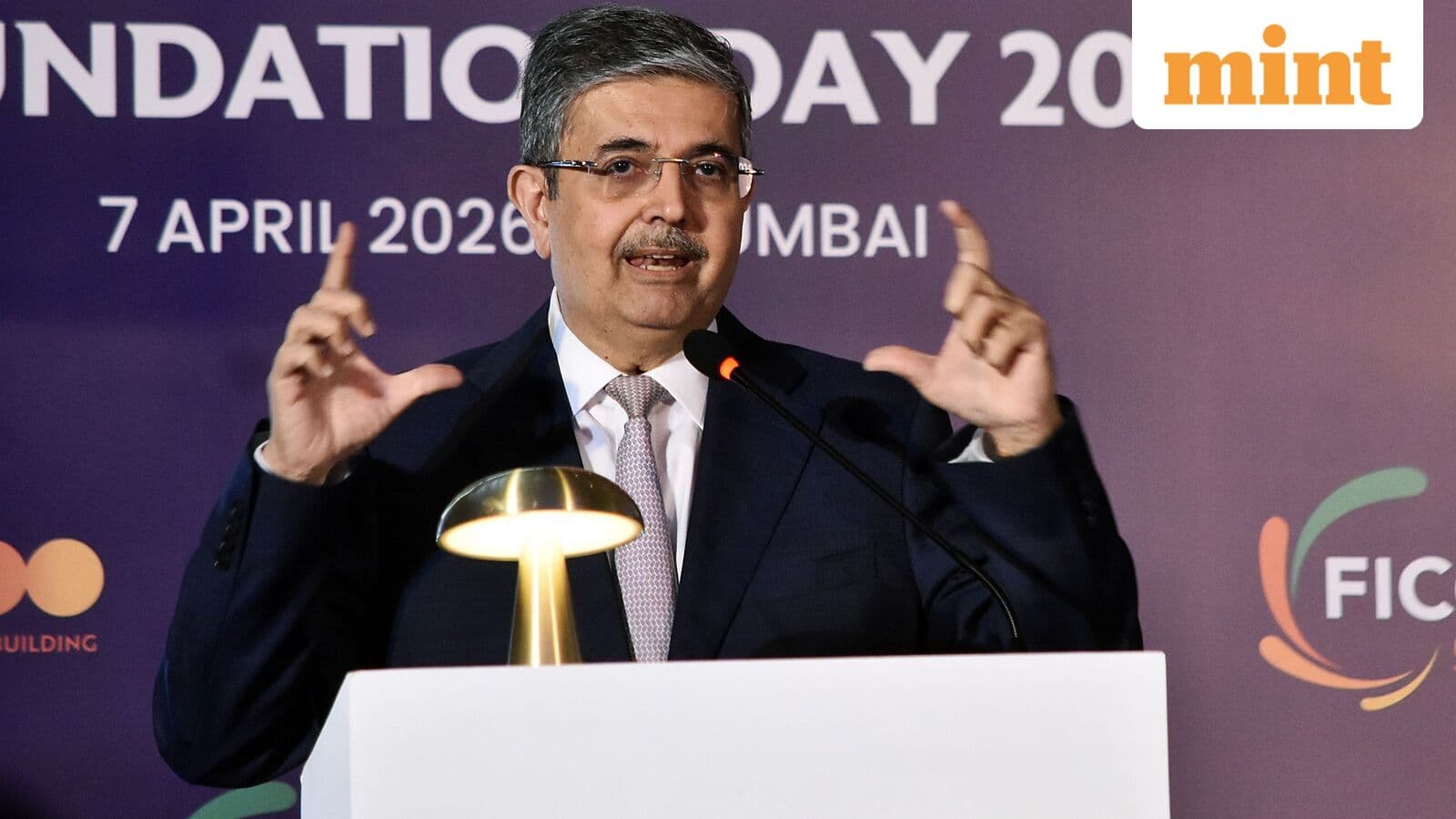
Finance industry veteran Uday Kotak said on Tuesday that India must reduce its reliance on foreign investment and prioritise building a robust domestic base of long-term risk capital to become truly economically self-sufficient, as reported by PTI.Addressing a Confederation of Indian Industry (CII) event, Kotak remarked that a truly self-reliant nation is one that “does not need to depend on somebody else's money or power.”Referring to Prime Minister Narendra Modi's call to celebrate weddings in India rather than overseas, Kotak said the message had a deeper significance. "A true, truly Aatmanirbhar, self-reliant country is the one which does not need to depend on somebody else's money or power," he said.People also askAI powered insights from this story•5 QUESTIONSUday Kotak is concerned that India relies too heavily on foreign investment and urges companies to prioritize building a robust domestic base of long-term risk capital for true economic self-sufficiency.Kotak suggests India has financialised too early because many companies are excessively focused on short-term gains like quarterly earnings and stock prices, rather than building businesses with a longer-term perspective of three to five years.Uday Kotak advocates for strengthening India's economic balance sheet and P&L by boosting domestic production, increasing exports, and reducing dependence on imports.Domestic investors and the increasing role of mutual funds are helping India rely less on foreign investments. Greater participation by retail investors in mutual funds fosters a stronger domestic equity culture and creates a dependable source of long-term risk capital.Sunil Bharti Mittal supports Prime Minister Modi's appeal and believes it's the right time for India to "double down" on investing within the country, rather than being obsessed with importing items like gold.Against the backdrop of global economic uncertainty triggered by the West Asia conflict, Modi had appealed to people to avoid destination weddings abroad, limit foreign travel and opt for work-from-home, a pandemic-era practice, wherever possible.Kotak, who is the founder of private sector lender Kotak Mahindra Bank, said the global environment is becoming increasingly fragmented, with countries prioritising their own strategic interests, making it imperative for India to strengthen its domestic economic foundations.Calling it a "provocative" statement for a finance professional, Kotak said, “India has financialised too early.”He said many companies have become excessively focused on quarterly earnings, stock prices, and employee stock option gains, rather than building businesses with a three- to five-year perspective."I would strongly urge companies to not be excessively focused on the short-term stock price... but think about building a company three to five years," he said.Kotak said India had relied heavily on foreign portfolio investment (FPIs) for many years and only after the pandemic did domestic investors begin to play a larger role in capital markets.He urged companies to reinvest profits rather than simply managing large treasury portfolios."Corporate India has got a phenomenal tax rate. What have you done with it? Are we reinvesting or running corporate treasuries?" he asked.Kotak said governments are generally poor allocators of capital and suggested that policy support should focus on encouraging fresh investments through additional investment allowances rather than relying solely on existing tax incentives.He also stressed the need for India to strengthen its economic "balance sheet and P&L" by boosting domestic production, increasing exports and reducing import dependence."We need our balance sheet and P&L to be able to produce, or there will come a time when we will find it difficult to buy," he said.While acknowledging that India’s overall economic position has strengthened considerably, with a reduced current account deficit and healthier foreign exchange reserves, Uday Kotak

The Ministry of Petroleum and Natural Gas assured that India has sufficient crude oil stocks and functioning refineries, ensuring no fuel shortages.Amid disruptions in the global energy supply chain, the Ministry of Petroleum and Natural Gas on Monday assured the public that the country has adequate crude oil stocks, refineries are functioning efficiently, and there is no shortage of fuel nationwide.Speaking at an inter-ministerial briefing in New Delhi, Sujata Sharma said the government has implemented several effective steps to maintain an uninterrupted fuel supply for consumers.Sujata Sharma noted, “There have been disruptions in the global energy supply chain across the world. Significant price volatility is being observed in the international market. However, the Government of India has taken several effective measures and has strived to ensure that fuel supplies are maintained for the common consumer with minimal inconvenience. As a result of all these steps taken, our crude oil inventory remains well-maintained.”“Over the past three days, 1 crore 26 lakh LPG cylinders have been delivered to households against 1 crore 14 lakh bookings. Similarly, sales of commercial LPG have exceeded 17,000 tonnes over the last three days. Sales of Auto LPG have also surpassed 762 tonnes,” she added.(This is a developing story; check back later for updates)(With inputs from agencies)About the AuthorMausam JhaMausam Jha is a journalist who focuses on world affairs and politics. She provides clear, informative reporting with a good understanding of both global events and their local impact. Her clear, accessible reporting on political and international issues makes her a trusted source of news and analysis. For the past three years, Mausam has worked with Mint, covering national politics, IR—including elections—and global affairs. Before joining her current role, she gained experience working with The Statesman, ANI, and Financial Express, where she honed her skills in political and international news. She has consistently tracked key electoral battles, including US elections, Japan elections, policy debates, and strategic affairs, explaining how global currents, from great power competition to regional conflicts Beyond journalism, Mausam has a deep engagement with international relations, diplomacy, war studies, terrorism, political history, and political theory. She is particularly interested in the intersection of statecraft and society on how governance, ideology, and institutions shape lived realities, and how politics shape today's world order. An avid reader of classical literature and political thought, she constantly explores the connections between historical ideas and contemporary policy challenges. Get Latest real-time updatesStay updated with the latest Trending, India , World and US news. HomeNewsIndia‘No dry-outs at any retail outlets’: Petroleum Ministry says petrol and diesel, LPG stocks ‘adequate’ amid global crisisMore

Passenger groups and crew members departed a cruise ship affected by a hantavirus outbreak on Sunday, beginning an evacuation to their home nations coordinated by international health authorities and scheduled through Monday.The travelers, all currently asymptomatic, were transported to Tenerife airport via military transport for departure on government aircraft, with officials stressing that these individuals will remain completely isolated from the general public.The World Health Organization (WHO) has advised a mandatory 42-day quarantine for every passenger starting Sunday.People also askAI powered insights from this story•5 QUESTIONSHantavirus is typically spread through contact with infected rodent droppings or inhaling contaminated dust. While rare, the Andes strain can spread between people, and authorities suggest transmission may have occurred onboard the MV Hondius after passengers potentially contracted it in Argentina and Chile.The World Health Organization (WHO) has advised a mandatory 42-day quarantine for every passenger, starting from the day of their departure from the affected cruise ship.Twelve countries have been officially or indirectly linked to the hantavirus outbreak response. These include Canada, Denmark, Germany, the Netherlands, New Zealand, Saint Kitts and Nevis, Singapore, Sweden, Switzerland, Turkiye, the United Kingdom, and the United States, with passengers and crew from 23 nations initially on board.Hantavirus can be severe, with fatality rates reaching as high as 50% in the Americas when it progresses to respiratory failure. However, the WHO has stated that the public health risk from this specific outbreak remains low.Passengers are being evacuated via military transport to airports for departure on government aircraft, coordinated by international health authorities. They are kept isolated from the general public and some are undergoing a mandatory 42-day quarantine.Flights for Spanish and French citizens had taken off by 1130 GMT. Health Minister Monica Garcia identified Canada, the Netherlands, the UK, Turkey, Ireland, and the United States as the next nations set to retrieve their residents, noting that the Dutch flight would also accommodate Germans, Belgians, and Greeks.An Australian aircraft intended for its citizens, New Zealanders, and other Asian nationals is expected to arrive Monday and leave by that afternoon, Garcia noted.Hantavirus, typically rodent-borne but capable of rare human-to-human transmission, was identified on May 2—three weeks after the initial fatality—when South African medics tested a British patient in critical care. Two subsequent deaths among former travelers have occurred.The vessel sailed for Spain on Wednesday from Cape Verde after the WHO and EU requested the country oversee the evacuation following the outbreak's detection.Authorities suggest the index case likely contracted the virus before embarkation, potentially while traveling through Argentina and Chile, with subsequent transmission happening onboard.A WHO update on Friday confirmed eight individuals off the ship had fallen ill, including the three deceased: a German national and a Dutch couple. Six of those eight cases are laboratory-confirmed.WHO Director-General Tedros Adhanom Ghebreyesus, present in Tenerife for the operation, stated Sunday that experts are collaborating with Spanish medics to conduct passenger testing.One Spanish woman, previously considered a suspected case after flying with a deceased patient, received a negative test result late Saturday.The British military has deployed a specialized medical team via parachute to the isolated island of Tristan da Cunha to assist a second suspected case—a British man who was a passenger and resides on the South Atlantic territory.Four patients are currently receiving hospital care in South Africa, the Netherlands, and Switzerland, while a suspected case in Germany was cleared.Europe’s public health agency labeled all MV Hondius passengers
SummaryThe ministry is monitoring the situation in close coordination with the National Centre for Disease Control (NCDC), the Integrated Disease Surveillance Programme (IDSP), and the World Health Organization (WHO).India’s health ministry has initiated comprehensive precautionary surveillance measures in response to reported cases of hantavirus infection occurring onboard the cruise ship MV Hondius, according to the two officials familiar with the matter.The ministry is monitoring the situation in close coordination with the National Centre for Disease Control (NCDC), the Integrated Disease Surveillance Programme (IDSP), and the World Health Organization (WHO).The officials cited above confirmed that two Indian nationals are currently onboard the MV Hondius. “Both individuals are presently asymptomatic and are under observation in accordance with established international health protocols,” one of the officials said.“The Union health ministry remains vigilant and is maintaining close coordination with WHO and other international partners,” the official said, adding that necessary public health measures are also being undertaken proactively to safeguard the health and wellbeing of Indian citizens.As per preliminary data shared via the WHO under the International Health Regulations (IHR) framework, health officials have identified a total of eight probable cases of hantavirus infection among those on the vessel. Of these cases, five have been laboratory-confirmed. The situation has grown increasingly serious with the reporting of three deaths associated with the outbreak.According to WHO, the virus involved is the Andes strain of hantavirus, which is known to have limited capability of human-to-human transmission and generally requires close and prolonged contact for spread. WHO has assessed the current public health risk as low, while indicating that additional cases may be reported due to the relatively long incubation period associated with the infection.India’s preparedness and responseIn light of the evolving situation, the Public Health Emergency Operations Centre (PHEOC) under the NCDC recently convened a high-level review meeting. The session involved senior officials from the IDSP and IHR-National Focal Point (NFP) India to assess the situation and review the country's preparedness measures.International response measures are currently being coordinated by the WHO to manage the crisis. These efforts include strengthening diagnostic support for those onboard, facilitating comprehensive epidemiological assessments and ensuring safe disembarkation and onward travel arrangements for all passengers and crew.Queries sent to the health ministry spokesperson were not immediately answered.


Discussion (0)