
Loading dispatches...
← Return to Newsroomgeneral
UPSC Mains Answer Practice GS 1: Gandhi–Tagore Ideological Differences and India’s AI Innovation Challenge Week 153
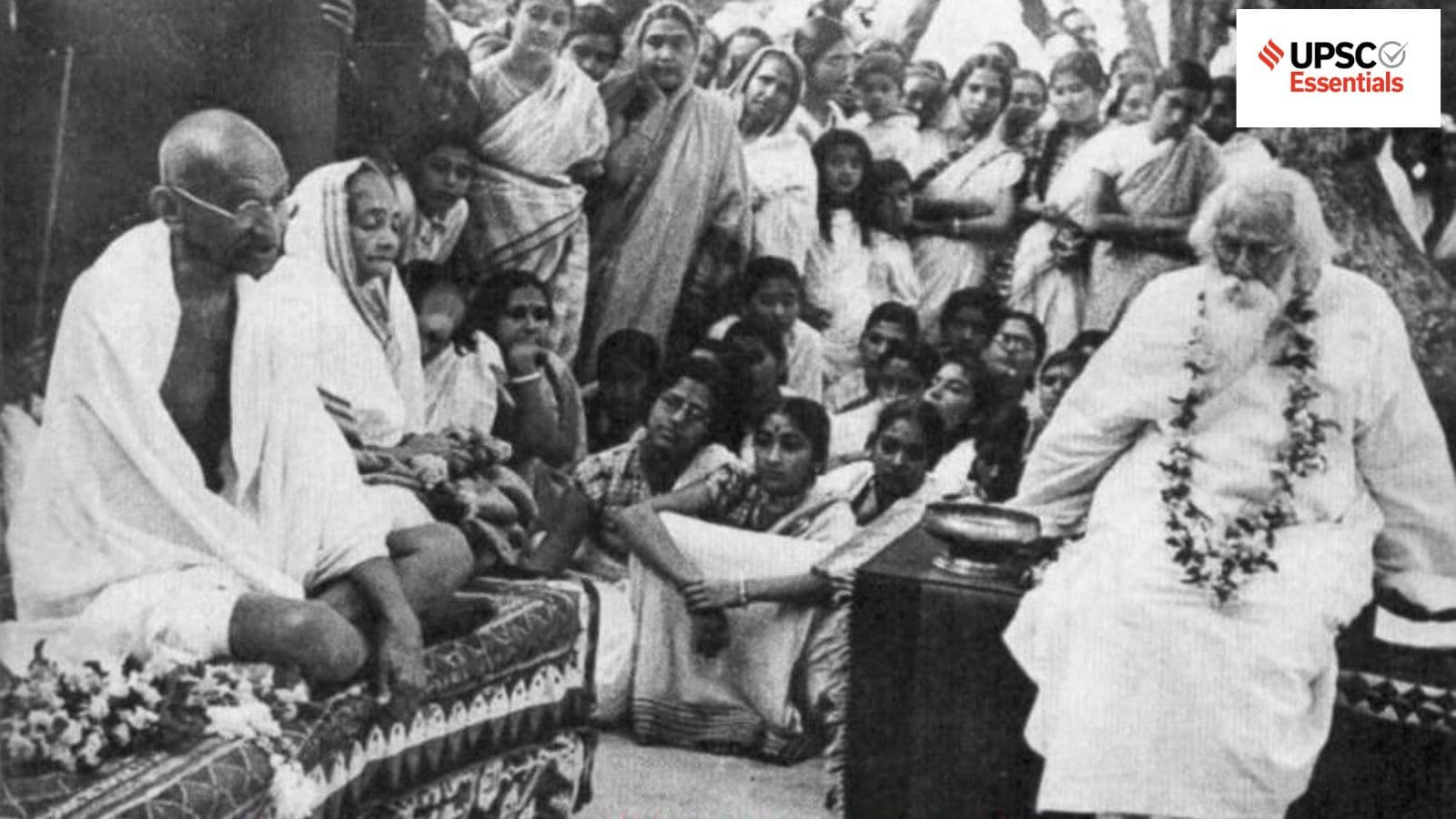
UPSC Essentials brings to you its initiative for the practice of Mains answer writing. It covers the essential topics of static and dynamic parts of the UPSC Civil Services syllabus covered under various GS papers. This answer-writing practice is designed to help you as a value addition to your UPSC CSE Mains. Attempt today’s answer writing on questions related to topics of GS-1 to check your progress.Gear up for UPSC Prelims 2026—Practice smarter, revise faster, and succeed with our Special Quiz Magazine. (Click Here)What were the ideological differences between Mahatma Gandhi and Rabindranath Tagore regarding nationalism, modernity, and the path of India’s development. QUESTION 2 “Globalisation in the age of Artificial Intelligence is increasingly creating a divide between technology producers and technology consumers.” In this context, discuss the challenges before India in becoming an AI innovation hub rather than merely a market and infrastructure provider. QUESTION 1: What were the ideological differences between Mahatma Gandhi and Rabindranath Tagore regarding nationalism, modernity, and the path of India’s development. Relevance: The Gandhi–Tagore ideological engagement is important for understanding diverse strands of Indian nationalism, debates on modernity, and competing visions of development during the freedom struggle. It is relevant for GS-1 topics related to modern Indian history, socio-cultural reform movements, and intellectual currents in colonial India. Note: This is not a model UPSC answer. It only provides you with a thought process which you may incorporate into the answers. Introduction:Story continues below this ad — Gandhi and Tagore shared an enduring friendship that lasted from 1914-15 till the latter’s death in 1941. But they also shared profound disagreements about political, social and economic matters. — No object symbolised their deepest philosophical differences more than the charkha. Tagore recoiled from Gandhi’s insistence that every true Indian must spin, while Gandhi remained unwavering in his belief that spinning carried deep moral and symbolic significance. Body: You may incorporate some of the following points in your answer: — The conflict between them, despite a deep friendship rooted in respect, was probably inevitable. The first signs appeared in 1915, when Gandhi visited Shantiniketan after returning from South Africa. They disagreed on a range of topics — from nationalism to education and politics.Story continues below this ad — The gap grew after the Amritsar Massacre, when Gandhi initiated movements such as Non-Cooperation. Tagore worried these movements would lead to blind nationalism. Instead, he renounced his knighthood in protest. — In the aftermath of a devastating earthquake in Bihar in 1934, Gandhi called the calamity a “divine chastisement for the great sin we [upper castes] have committed against… Harijans”. Tagore did not agree. — “They had differences on fundamental philosophical questions, which led to disputation about many political, social, and economic matters,” wrote historian Sabyasachi Bhattacharya in his 1997 book The Mahatma and The Poet: Letters and Debates between Gandhi and Tagore 1915-1941. — As Gangeya Mukherji notes in Gandhi and Tagore: Politics, Truth and Conscience (2016), many biographers see Tagore as more outspoken and willing to take risks than Gandhi, since he issued public statements even when he risked punishment under the Defence of India Act during a period of strong state repression. By mid-1921, their disagreements were being openly expressed through speeches, essays and letters. Conclusion: — Tagore was not opposed to the charkha as a means of meeting a basic human need. What troubled him was the excessive importance it had acquired in Gandhi’s political and moral programme.Story continues below this ad — Yet Tagore approached this disagreement with visible reluctance. He openly acknowledged, “It is extremely distasteful to me to have


Discussion (0)