
Loading dispatches...
← Return to NewsroomWorld
DR Congo cancels World Cup training camp over Ebola outbreak
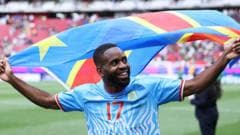
Just nowWedaeli ChibelushiGetty ImagesDR Congo have qualified for the Fifa World Cup for the first time since 1974The Democratic Republic of Congo has cancelled its pre-World Cup training camp in the capital, Kinshasa, because of an Ebola outbreak in the east of the country.Preparations have been moved to Belgium amid the upsurge, which is thought to have killed more than 130 people.The World Health Organization (WHO) has called the outbreak a "public health emergency of international concern", but said it was not at pandemic level.Jerry Kalemo, a spokesperson for the national football team, told international media that pre-tournament games in Europe would go ahead as planned, as the squad gears up for their first World Cup since 1974.DR Congo are due to play friendly matches against Denmark, on 3 June in Belgium, and Chile, on 9 June in Spain, ahead of the World Cup finals.A spokesperson for the DR Congo team told the Reuters news agency that the squad's training camp had been cancelled due to travel restrictions imposed by the US, who are hosting the World Cup this summer, along with Mexico and Canada.The US' public health agency has banned entry from non-Americans who have been in the DR Congo, Uganda or South Sudan in the previous 21 days, in response to the Ebola outbreak.All DR Congo's players, as well as the team's French coach, Sébastien Desabre, are based outside the central African country and will therefore not be affected by the restrictions now the training camp has been cancelled.The high-profile event in Kinshasa was supposed to have been attended by fans, along with DR Congo's President Felix Tshisekedi, according to Reuters.Kinshasa is roughly 1,800 km (1,120m) away from the eastern Ituri province, the epicentre of the Ebola outbreak. There have not yet been any reported cases in the city.On Wednesday, the WHO said 139 people were thought to have died, out of 600 suspected cases. However, on the same day, Congolese health minister Samuel Roger Kamba told state broadcaster RTNC TV that authorities had registered 159 deaths.Getty Images/BBCBBC Africa podcasts

Manchester City manager Pep Guardiola is understood to be stepping down at end of season after 17 years at EPL club.Pep Guardiola will leave Manchester City after a decade in charge, according to widespread reports, bringing to a close one of the most successful spells in Premier League history.Former Chelsea boss Enzo Maresca, who lead the Blues to the FIFA Club World Cup last summer, is expected to replace him.Recommended Stories list of 4 itemslist 1 of 4From Ronaldo to Mbappe: the all-time list of World Cup Golden Boot winnerslist 2 of 4All to know about Neymar’s angry outburst and World Cup selectionlist 3 of 4World Cup 2026 Preview: Tiny Panama dream big on tournament returnlist 4 of 4Sardar Azmoun left out as Iran announce World Cup 2026 squadend of listThe 55-year-old Guardiola will reportedly announce his departure shortly after City’s final game of the season against Aston Villa at the Etihad Stadium, capping a campaign that included winning both the League Cup and the FA Cup trophies.Saturday’s FA Cup victory over Chelsea secured Guardiola his 20th trophy with the club.Maresca, who left Chelsea four months ago, has been rumoured for months to be the top contender for the Spaniard’s job. Guardiola’s contract at City is set to expire in June 2027.Guardiola shrugged off questions about his future after the FA Cup final. When asked about the rumours by TNT Sports, Guardiola replied “What rumours?” and then ended the interview, saying “Have a lovely evening.”City have made no comment on the speculation.However, the club have arranged a parade through Manchester on Monday to celebrate their League Cup and FA Cup triumphs this season, which could act as a farewell to Guardiola.City must win their final two games of the season, starting at Bournemouth on Tuesday, and hope Arsenal drop points at Crystal Palace on Sunday if they are to win the Premier League this season.

Shakira and Burna Boy collaborated on "Dai Dai." It's the Colombian star's fourth song associated with a World Cup, 16 years after she made a splash with "Waka Waka (This Time for Africa)." AP hide caption toggle caption AP Shakira and Burna Boy, two of the biggest artists on the global stage, have joined forces for the official song of the 2026 World Cup. "Dai Dai," released on streaming platforms Friday, "captures the energy, passion and global spirit that will define the greatest show on earth," FIFA said in a statement, adding that royalties from the song will support the FIFA Global Citizen Education Fund. It aims to raise $100 million for children's education and soccer opportunities by the end of the tournament, which runs from June 11 through July 19. The song's title comes from the enthusiastic Italian expression meaning "come on, come on," and its lyrics include the English, Japanese, French and Spanish equivalents. The track blends Afrobeats with Latin Pop, sung mostly in English and a bit of Spanish. It's sprinkled with inspirational messages, references to famous soccer players ("Pelé, Maradona, Maldini, Romário, Cristiano Ronaldo") and the names of countries playing in this year's tournament ("Brazil, Uruguay, Argentina, Colombia, U.S., England, Germany, France"). "It has a lot of the typical signs of a good World Cup song," says Eduardo Herrera, an associate professor of ethnomusicology at Indiana University whose work focuses on soccer chants and fandoms. "But I think this is purposefully FIFA's effort to have a successful song by bringing in artists that they know [are] going to appeal to at least two large numbers of the population, the Latin population and the sub-Saharan African population." Burna Boy is a Nigerian singer who is credited with bringing Afrobeats to a more mainstream audience through smash hits like "Last Last." The so-called "African Giant" became the first solo Nigerian artist to win a Grammy Award (for best global music album) in 2021, and the first African artist to sell out a U.S. stadium (New York's Citi Field in 2023). And Shakira is no stranger to making World Cup music. Shakira performs "Waka Waka (This Time for Africa)" with the South African band Freshlyground at the 2010 FIFA World Cup South Africa Final. Michael Steele/Getty Images Europe hide caption toggle caption Michael Steele/Getty Images Europe Her hit "Waka Waka (This Time for Africa)" helped define the 2010 tournament and eventually outlive it. It earned the Guinness World Record in January 2025 for "most streamed FIFA World Cup song on Spotify," with over a billion listens at that point. The Colombian singer also performed a special version of her song "Hips Don't Lie" at the 2006 World Cup closing ceremony, and "La La La (Brazil 2014)" — which was featured on FIFA's official album — at the closing ceremony in 2014. "She's … good at kind of incorporating elements or gestures towards other cultures," Brent Keogh, a lecturer in music and sound design at the University of Technology Sydney, told NPR's All Things Considered. "So she can kind of pull on these things and bring it into this global pop package." Shakira — along with Madonna and K-pop band BTS — will also headline the first-ever halftime show at this year's World Cup final in New Jersey, which FIFA announced earlier this week. Fans are likely to hear "Dai Dai" there. But that's not the only place the song will pop up. And it's also not the only song that may come to define the World Cup. How World Cup music has evolved Music has been a part of the World Cup since its debut in 1930, Herrera says. Initially, it was associated with local musicians from a host country or even the national team (as was the case with this German polka song in 1974). In the 1990s, he says, FIFA started moving away from national songs to "more global-sounding" numbers, and "exploring what it meant to have an official song." Those have typically been commissioned

President Trump and FIFA President Gianni Infantino talk during a FIFA task force meeting in the East Room of the White House, May 6, 2025, in Washington. Mark Schiefelbein/AP hide caption toggle caption Mark Schiefelbein/AP WASHINGTON — The Trump administration is suspending a requirement that foreign visitors from countries that have qualified for the World Cup and have bought tickets for the soccer tournament pay as much as $15,000 in bonds to enter the United States, the State Department said Wednesday. The department imposed the bond requirement last year for countries that it said had high rates of people overstaying their visas and other security issues as part of the Republican administration's broader crackdown on immigration. Travelers to the United States from 50 countries are required to pay the new bond, and five of those countries have qualified for the World Cup — Algeria, Cape Verde, Ivory Coast, Senegal and Tunisia. Citizens from those five countries who have purchased tickets from FIFA are now exempt from the visa bond requirement. World Cup team players, coaches and some staff already had been exempt from the bond requirement as part of the administration's orders to prioritize the processing of visas for the tournament. "The United States is excited to organize the biggest and best FIFA World Cup in history," Assistant Secretary of State for Consular Affairs Mora Namdar said. "We are waiving visa bonds for qualified fans who bought World Cup tickets" and opted in to the FIFA Pass system that allows expedited visa appointments as of April 15. The waiver is a rare loosening of immigration requirements under the administration and will ease travel burdens for at least some visitors to the U.S. for the World Cup, which begins June 11 and is co-hosted by the United States, Canada and Mexico. The administration has taken dramatic steps to restrict immigration in ways that critics say are incongruous with the type of unifying message that a global sporting event such as the World Cup is supposed to project. For instance, the administration has barred travelers from Iran and Haiti, though World Cup players, coaches and other support personnel are exempt. Travelers from Ivory Coast and Senegal, face partial restrictions under an expanded version of that travel ban, even without the visa bond exemption. Foreign travelers also had faced potential new requirements to submit their social media histories, although that policy from U.S. Customs and Border Protection had not gone into effect. Also, the administration had deployed U.S. Immigration and Customs Enforcement agents at airports recently when Transportation Security Administration personnel were not being paid during a partial federal shutdown. Those measures prompted Amnesty International and dozens of U.S. civil and human rights groups to issue a "World Cup travel advisory" that warns travelers about the climate in the U.S. In a report this month, the main advocacy group for U.S. hotels blamed visa barriers and other geopolitical issues for "significantly suppressing international demand," leading to hotel bookings for the soccer tournament that are far below what had initially been anticipated. The American Hotel & Lodging Association said travelers are concerned about potentially lengthy visa wait times and increased fees, along with uncertainty about how they're being processed to enter the U.S. The bond requirements are part of the administration's larger effort to clamp down on migrants who travel to the U.S. on temporary visas but then overstay them. Visa applicants from the affected countries are required to pay $5,000, $10,000 or $15,000 in bonds, which will be refunded if the traveler complies with the terms of the visa or if the visa application is denied. As of early April, the number of World Cup fans affected by the bond requirement was believed to be relatively small, perhaps only about 250 people, according to U.S. officials who
The BBC's Will Grant has been taking a look around the base camps that England and defending champions Argentina will call home during the FIFA World Cup. England will be based at Swope Soccer Village, while Argentina will train at the Sporting KC Training Center, both located in Kansas City. The Netherlands and Algeria have also chosen to stay in the area. The training sites will serve as hubs for match preparation, including practice sessions, player workouts, team meetings and day-to-day staff operations.Video produced by Blanca Estrada



Discussion (0)