
Loading dispatches...
← Return to NewsroomWorld
US appeals court upholds injunction pausing Trump’s White House ballroom

In a sharply worded opinion, the United States Appeals Court for the District of Columbia has upheld an injunction against the construction of President Donald Trump’s White House ballroom, citing the need for congressional approval.The appeals court voted on Friday by a margin of two to one, with judges Patricia Millett and Bradley Garcia forming a majority. The third judge on the panel, Neomi Rao, dissented.Recommended Stories list of 3 itemslist 1 of 3Senate bill review gives thumbs-down to federal funding for Trump ballroomlist 2 of 3Trump showcases new ‘drone-protected’ White House ballroomlist 3 of 3‘The show must go on’: Trump returns to rescheduled White House press galaend of listThe lengthy opinion began with a reflection on the White House’s role as the “people’s house”. Congress, the judges explained, wields control over the building and its surrounding property, and the president is only a temporary tenant.“The President has no — and claims no — constitutionally assigned authority over that property, which is designed and maintained for the use of all Presidents, current and future, and for the American people,” Garcia and Millett wrote.They then proceeded to describe the series of events that led to October’s abrupt demolition of the century-old East Wing of the White House, flattened to make way for Trump’s long sought-after ballroom.“We are aware of no instance in American history in which a President, unilaterally and using privately collected funds, demolished substantial portions of the White House that Congress authorized to be built and American taxpayers paid for. Until now,” they wrote.Allowing the ballroom construction to proceed will cause “permanent and irreversible harm” to the “historic, architectural, and aesthetic interests” represented by the plaintiffs, according to the ruling.Millett and Garcia — who were appointed by Democratic presidents Barack Obama and Joe Biden respectively — therefore upheld a lower court decision to pause construction while litigation proceeds.“The Defendants have not shown that Congress delegated that authority to either the President or the National Park Service,” the judges wrote.“Whether or not a massive ballroom should be constructed is for Congress to decide and is not a matter for Executive self-help.”Their injunction, however, came with a 14-day stay on its implementation, to allow the Trump administration to appeal to the Supreme Court.On his social media platform Truth Social, Trump quickly fired back that the Supreme Court was precisely where he planned to take the case.“We will be immediately appealing to the United States Supreme Court,” Trump wrote at one point in his lengthy, 487-word post.“The Military and Secret Service are viewing this horrendous, politically motivated, and unlawful ruling as a National Security threat to our Nation in that the entire Complex is being built for the protection of our Country and, additionally, all future Presidents.”Trump has repeatedly argued that the ballroom is necessary for national security purposes, creating a space for presidents to securely hold events.Critics, however, have denounced the ballroom as an unnecessary and destructive vanity project undertaken without following the correct legal protocol.The idea for a new ballroom stretches back to 2011, when Trump, then known primarily as a real estate magnate, told ABC News of his ambitions to build an opulent White House ballroom to host state dinners.He had emerged at the time as a critic of then-President Obama, and he renewed his pitch to build a White House ballroom during his first successful presidential bid in 2016.But the idea languished during Trump’s first term. However, after being sworn in for a second term in 2025, Trump quickly resumed his push for a ballroom, along with other projects designed to reshape the Washington, DC, landscape.When Trump publicly discussed the ballroom proposal in July 2025, he pledged its construction would not be destructi
Blanche Rescinds Anti-Weaponization Fund, Iran Strikes Called Off, Midwest Primaries Download Embed Good morning. You're reading the Up First newsletter. Subscribe here to get it delivered to your inbox, and listen to the Up First podcast for all the news you need to start your day. Today's top stories The U.S. Senate returns today with a packed agenda to tackle for its final session before a long recess until mid-September. On the to-do list is the confirmation hearing for President Trump's attorney general nominee, Todd Blanche. In a letter released last night, Blanche formally rescinded a plan for a $1.8 billion "anti-weaponization fund" to compensate people who allege they've been unfairly targeted by the federal government. Republican senators John Cornyn and Thom Tillis have withheld support for Blanche's nomination because of their opposition to the fund, which was created as part of a settlement deal for a lawsuit Trump filed against the IRS over leaked tax returns. FILE - Acting Attorney General Todd Blanche appears before the Senate Judiciary Committee on Capitol Hill in Washington, July 15, 2026. Mark Schiefelbein/AP hide caption toggle caption Mark Schiefelbein/AP 🎧 The provision of the deal that protects Trump and his family from future IRS tax audits was not addressed in Blanche's order, NPR's Claudia Grisales says. So while the order tackles a significant hurdle for the committee's confirmation process, Grisalies says it leaves several questions unanswered. She adds that it's uncertain whether Blanche has sufficient Republican support on the Senate floor for confirmation. With Republicans working with slim margins, even a few dissenting members could easily derail the vote. Over the weekend, Trump posted on social media that the U.S. is canceling planned attacks on Iran, and that "the perimeters of a deal" had been reached. The president credited allies for persuading him to avoid renewed attacks. The U.S. and Israel were poised to strike Iran's energy infrastructure over the weekend, according to news reports. Trump said the potential deal would ensure the immediate total opening of the Strait of Hormuz and eliminate Iran's nuclear threat. 🎧 When it comes to the war, Trump has been in a pattern of threatening military strikes, then backing off and saying a diplomatic resolution has been reached, NPR's Hadeel Al-Shalchi tells Up First. This routine has played out multiple times since the U.S. struck an initial deal with Iran in April. Trump said that talks on the latest agreement would begin today, but Iran has not yet confirmed this. After Trump's announcement, oil prices took a nosedive. Brent crude, the global oil benchmark, dropped by 8% to around $83 per barrel yesterday. Since the war started at the end of February, oil prices have surged past $100 per barrel on several occasions. An NPR review of court records from the last five years reveals a dramatic shift in how the Department of Justice is using a Civil War–era statute to bring forth charges of conspiracy to impede or injure an officer. Since Trump took office last year, the department has charged more than three dozen people. All of the cases involve people protesting federal immigration enforcement. Before 2025, most of the cases using the statute involved the insurrection at the U.S. Capitol on Jan. 6, 2021. In a new court filing, Capital One formally revealed that its decision to close roughly 385 bank accounts tied to the Trump Organization and its affiliates in mid-2021 was the result of an internal anti-money-laundering review. Trump-affiliated businesses alleged in an ongoing lawsuit that the accounts were closed due to political retaliation following the Jan. 6 Capitol riot. Capital One Bank has asked a federal judge to dismiss the lawsuit. Life advice Ma

The U.S. Mint is producing a new $1 coin featuring President Trump's image. He's only the second living president to get this honor, after Calvin Coolidge in 1926. AP/Treasury Department hide caption toggle caption AP/Treasury Department In his second term, President Trump's image has cropped up in many new places: U.S. passports, national park passes, government building banners and — soon — official coins. Treasury Secretary Scott Bessent unveiled designs this week for a commemorative $1 gold-colored coin, which he said the U.S. Mint will start producing in honor of the country's 250th birthday. One side features the bald eagle from the distinctive U.S. seal. The other shows a close-up of Trump — wearing a suit, tie and serious expression — encircled by the word "Liberty" and "1776-2026." "It's very cute, they gave me a coin," Trump told Fox News on Wednesday. "That's very unusual, from what I understand." A coin with the sitting president's face has only been minted once, exactly a century ago. And, experts say, it's likely illegal. "The law prohibits, currently, on currency, the likeness of any person — not just the president — who is alive," said Jeremy Paul, a professor and former dean at Northeastern University School of Law who specializes in constitutional law. The Treasury Department argues coins do not apply, citing a law that Congress passed in 2020 authorizing the creation of a special-edition 250th coin. Paul says the coin question could potentially reach the courts. Either way, he believes, the break with tradition should be cause for concern. "Regardless of careful parsing of the language of these individual statutes, this plan the president and Secretary Bessent have cooked up is inconsistent with the principles of our country, and it politicizes something that's not supposed to be political," he said. President Trump's image has been added to passports, national park passes and federal buildings — like the Department of Justice headquarters — in his second term. Ken Cedeno/AFP via Getty Images hide caption toggle caption Ken Cedeno/AFP via Getty Images A Trump $1 coin has been in the works since at least late last year, despite backlash from Democratic lawmakers who introduced a bill to block it. The federal Commission of Fine Arts — which is stacked with presidential appointees — approved the design in March, though it's a different version than the one Treasury officials shared this week. This coin, which the Treasury says has a "gold-like finish," will be minted in Philadelphia and available for purchase in the fall. It's one of several ways this administration is seeking to put Trump's mark on American money. In March, the Treasury announced that all future paper currency will bear Trump's signature, another first for a sitting president. It also prepared a $250 bill featuring Trump's face, though Congressional approval — which is required for the new denomination — does not seem imminent. And yet, Bessent confirmed last week that his department is no longer planning to move ahead with preexisting efforts to put Harriet Tubman on the $20 bill. That juxtaposition was not lost on Rep. Joyce Beatty, D-Ohio, one of several lawmakers who criticized the new coin from both sides of the aisle. "They can put Trump on a $1 coin, but can't keep a decades-old promise to put Harriet Tubman on the $20 bill???" Beatty tweeted. "This Treasury is funding presidential vanity projects." Richard Painter, former chief White House ethics lawyer for President George W. Bush, said the practice of putting the head of state on coins has long been "associated with monarchies and other forms of authoritarian regimes." George Washington actively refused it for this reason, and at least two federal laws forbid it. "One of the reasons for Congress wanting to prohibit this is that we don't want presidents acting like kings," Painter said. "And this is not the only way in which Donald Trump has acted like a king.

Washington’s pursuit of James ‘Fergie’ Chambers for supporting ‘terror’ seen as a warning to other left-leaning donors.The United States is seeking the extradition of James “Fergie” Chambers from Spain, having accused the wealthy donor to Palestinian and other causes of financing “terrorism”.Authorities in Ibiza detained Chambers last Friday on an international arrest warrant, after the US alleged he has provided material support to Hamas, the Palestinian group that governs Gaza but is designated a “terror organisation” by Washington.Recommended Stories list of 3 itemslist 1 of 3Trump administration renews pressure on International Criminal Courtlist 2 of 3Palestine weekly: One thousand days of genocide in Gazalist 3 of 3Legal challenge says Trump ICC sanctions tread on US citizens’ rightsend of listThe arrest and extradition request has raised concern that the Trump administration is extending its crackdown on Palestine solidarity beyond US borders.Chambers is currently imprisoned in Madrid. Spain’s High Court has 40 days to rule on the extradition request, with the final say resting with the Council of Ministers.Heir to the family that owns telecom giant Cox Communications, Chambers has donated more than $1m to pro-Palestine causes and humanitarian projects in Gaza.His partner, Stella Schnabel, described the case as “political persecution”, saying he was being punished for supporting Palestinians and humanitarian work.Lawyers, rights advocates and Spanish lawmakers have all cautioned that the US is now seeking to crack down on support for Palestinians at home and abroad.Irene Montero, a Spanish representative to the EU Parliament, warned, “Spain can’t collaborate with Trump in the persecution of solidarity with Palestine.”Lawyer Stanley Cohen, who has represented Hamas and Hezbollah in US courts, told the Guardian that the Trump administration’s decision to pursue Chambers’s arrest was “a conscious decision to target for political purposes”.The case comes amid a wider US campaign targeting pro-Palestine activists, including the use of immigration enforcement and activist blacklists.Rights groups have also linked the crackdown to Project Esther, a policy blueprint aimed at dismantling the pro-Palestinian movement.Should Spain comply with the extradition request, it would sit at odds with President Pedro Sanchez’s outspokenness on Palestinian rights. His government has recognised the state of Palestine, criticised Israel’s genocide in Gaza and supported humanitarian efforts for Gaza.

com Trump is quietly rebuilding his tariff engine CNN Trump administration floats tariffs on 60 trading partners — including China, U.K., EU — after forced labor probes CBS News Trump Proposes New Levies of at Least 10% to Rebuild Tariff Wall Bloomberg.com

19 minutes agoBrandon DrenonGetty ImagesRepublican Congressman Tom Kean Jr, who has not been seen in Washington or his New Jersey district for months, secured his party's nomination for re-election on Tuesday, after receiving a recent endorsement from President Donald Trump."Tom Kean has my Complete and Total Endorsement for Re-Election," Trump wrote on social media, adding, "HE WILL NEVER LET YOU DOWN!"Kean ran unopposed in the Republican primary and did not need to campaign for votes. But US media report he also has been absent from Congress, missing more than 100 votes.In November's midterm elections, Kean will face Democrat Rebecca Bennett, a former US Navy helicopter pilot, who won her party's primary on Tuesday.Kean was last seen on 5 March. His staff said in April that he was dealing with a medical issue. But Kean's continued absence has become a national curiosity in the US.In his endorsement posted to Truth Social on Monday, Trump wrote that Kean was a "Tremendous Advocate of our America First Agenda" and "is working tirelessly".Shortly after his last vote in Congress in March, colleagues, Republican officials and news organisations reported concerns about his whereabouts. Text messages went unanswered, as did requests for interviews. An aide told The New York Times, "There's no cameras where Tom is." In the statement released by his office on 27 April, he said he expected to be back soon. "My doctors continue to assure me that my recovery will be complete and that I will be back to the job I love very soon," Kean said in the statement, posted on X."I expect to return to a full schedule and be at 100 percent."Nearly a month later, Kean participated in a telephone interview with the New Jersey Globe and reiterated his intent to run for re-election and return to public life."I understand the need for public transparency, and I appreciate the support of my constituents," he said. "I anticipate that in the next couple of weeks, I'll return to voting and to the campaign trail." As voters began casting ballots in the election on Tuesday, there still had been no reported sightings of Kean.The BBC has left a message with his office seeking comment. The district he represents is considered a swing district, meaning it has a high propensity to flip between Republicans and Democrats each election cycle.His will be a key district for Republicans to hold on to in November's midterm elections, which will determine the balance of power in Congress. Democrats are looking to unseat him and shift power their way and deliver Trump a loss. Trump's endorsement of Kean given the stakes is unsurprising. The US president also has not shied away from endorsing candidates, even as they court controversy - or mystery.
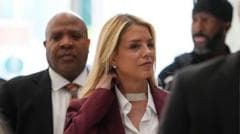
Bondi, who in April was removed from her post as America's top law enforcement officer by US President Donald Trump, testified behind closed doors on Friday in Washington DC."We demonstrated an unprecedented commitment to transparency in the Department's search for, collection, and review of the Epstein files, producing nearly 3 million pages of material," she said in opening remarks to the US House Oversight Committee.As attorney general, Bondi was tasked with implementing the Epstein Files Transparency Act, legislation signed into law by Trump that mandated the US Department of Justice publicly release unclassified records.But Bondi and the US Justice Department have been widely criticised, with accusations that documents were withheld and files were published that made victims of Epstein's crimes publicly identifiable."I am proud of the Department's record and commitment to transparency under my leadership," she said. "This was an enormously complicated and labor-intensive process. To the best of my knowledge, the Department produced everything required under the Epstein Files Transparency Act."The committee's Republican chairman, James Comer, wrote in a subpoena letter that they are investigating the "possible mismanagement" of the Epstein investigation and compliance with the act.Ahead of today's meeting, Comer told reporters that successive governments had failed Epstein's victims and that Bondi will be pressed about her handling of the release of the documents."We're going to try to determine whether or not there could be more documents legally turned over," Comer said. "I want every document. I don't want anything held back, and I think the majority of the committee's the same way."But three hours into the congressional interview, Democrats emerged accusing Bondi of being evasive in her answers and said government lawyers stepped in to prevent her from answering questions. "She said she would not speak or respond to any questions that had anything to do with President Trump," the committee's leading Democrat Robert Garcia said. Representative Melanie Stansbury of New Mexico also said there were no other Republicans at the interview besides the chairman and described the process as a cover-up."The United States Department of Justice is intervening on behalf of Pam Bondi to stop her from answering questions about what happened in the cover-up of this case and her conversations with Donald Trump," Stansbury said.Bondi's summons came weeks after Nancy Mace, a Republican lawmaker, accused the justice department of a "cover-up" in releasing the files and introduced a motion to subpoena Bondi - the former attorney general of Florida and who served on Trump's 2020 impeachment defence team.The Trump administration and Bondi have faced enormous bipartisan pressure to release all documents related to the probe of the sex-trafficking financier and faced criticism over its handling of the files, including its failure to redact the names of Epstein's victims. Epstein died in prison while awaiting trial in 2019.In February 2025, Bondi declared during a Fox News interview that she had a list of Epstein's high-profile clients "sitting on my desk right now", only to have the justice department walk back the statement that July when it said there was no "client list" and that Bondi had meant the overall case file was on her desk. While her tenure as the country's top law enforcement official was dogged by the Epstein files, Bondi also came under fire by Democrats for weaponising the justice department after Trump cal

US Secretary of Treasury Scott Bessent shows a proposed $250 bill featuring President Donald Trump during a press briefing in the Brady Briefing Room of the White House in Washington, DC. KENT NISHIMURA/AFP via Getty Images hide caption toggle caption KENT NISHIMURA/AFP via Getty Images President Trump's face could soon appear on a $250 bill as part of the Trump administration's celebration of the 250th anniversary of the country. The law currently states no living president can appear on currency, but the administration is preparing for the possibility that Congress will pass legislation authorizing the special Trump bill. "It's all in the hands of… Capitol Hill," Treasury Secretary Scott Bessent said in the White House briefing room Thursday. "We prepared things in advance… but we will stick to the law." Bessent added that he didn't think there was anything "untoward" about having the president who was in office during the country's 250th anniversary appear on the bill. Last year, GOP Rep. Joe Wilson of South Carolina proposed a bill that would require the treasury to print $250 notes with Trump's portrait on it but the legislation hasn't been taken up yet. The Washington Post reported it was two Trump political appointees who began urging the drafts of the new $250 note be created, including mocking up the president's likeness. Bessent held up a draft of the Post's story while briefing White House reporters on Thursday. If Congress changes the law, Trump would be the first living person to appear on currency since 1866. The president has already made history when it comes to appearing on money. Earlier this year, the Treasury Department announced Trump's signature would appear on all new printed money - a departure from having signatures from the treasury secretary and the treasurer. It's part of a larger trend of Trump putting his mark on government buildings and institutions and other materials, some in effort to commemorate America's 250th birthday. There's the possibility of a new commemorative passport with Trump's face, for example. And the commemorative coin. And the National Parks pass. In Washington, Trump's face looms on a banner over the Justice Department. His name was added onto the Kennedy Center for the Performing Arts and the U.S. Institute of Peace. His administration also named policy initiatives – such as the Trump Accounts – after the president, who was known in his business career for his prolific self-branding.

Son of former President Jair Bolsonaro is fighting to recover from a scandal that has rocked his presidential campaign.Brazilian Senator Flavio Bolsonaro has shared a photo that appears to show him meeting with US President Donald Trump at the White House, as he seeks to bolster his image amid a scandal that threatens to derail his presidential campaign in Brazil.Bolsonaro shared a photo on Tuesday of him standing by Trump’s side in the Oval Office, with a caption showing the thumbs-up emoji.Recommended Stories list of 3 itemslist 1 of 3Brazil’s Lula meets Trump amid efforts to avert new US trade tariffslist 2 of 3Brazil judge bars law that could reduce Bolsonaro’s 27-year prison sentencelist 3 of 3Poll shows Lula and Bolsonaro tied before Brazil’s presidential electionend of listFlavio is the son of former Brazilian President Jair Bolsonaro, a right-wing Trump ally who is serving a 27-year prison sentence in connection with a coup attempt after his re-election loss in 2022 to current leftist President Luiz Inacio Lula da Silva.The younger Bolsonaro has replaced his father as the standard-bearer of Brazil’s political right and is seen as the top contender challenging Lula in the South American country’s election in October.But his campaign has struggled to regain its balance following a report that he sought funds from a disgraced banker convicted of fraud to finance a film about his father. Bolsonaro has acknowledged requesting the money, but denied any impropriety or wrongdoing.Recent polls suggest that the scandal has set back his campaign, with Lula retaking the lead from the younger Bolsonaro after previous polls had shown them in a close race.Media reports in recent days stated that Bolsonaro had sought a meeting with Trump, who previously placed tariffs on Brazil in a bid to have the case against the elder Bolsonaro thrown out.Flavio then travelled to Washington without a guaranteed appointment in the hope of meeting with the US president. Trump has yet to share information about the meeting on his social media website.While tensions have remained between Trump and Lula, the two leaders have built a more cordial relationship in recent months, with the Brazilian leader visiting his US counterpart at the White House earlier this month.

The administration of US President Donald Trump has renewed its push to lift a court ruling barring progress on a new White House ballroom, once again citing gun violence as a reason for pursuing the construction.In a court filing submitted on Sunday, acting Attorney General Todd Blanche argued it was “urgent” that the ballroom be completed.Recommended Stories list of 3 itemslist 1 of 3US Secret Service shoots gunman near White Houselist 2 of 3Senate bill review gives thumbs-down to federal funding for Trump ballroomlist 3 of 3Trump showcases new ‘drone-protected’ White House ballroomend of list“This is a terrible, tremendously harmful case to the United States of America, and all it stands for!” Blanche wrote, denouncing the lawsuit that has paused construction.As justification, Blanche pointed to the events of last Saturday, when a 21-year-old suspect named Nasire Best approached a White House security checkpoint in Washington, DC, pulled out a gun, and started shooting.One bystander was injured. The suspect was killed after an exchange of gunfire with Secret Service agents. The sound could be heard across the White House lawn, where reporters were seen running for safety.Blanche argued that the incident represented the second time in the span of a month that Trump’s life had been threatened.On April 25, 31-year-old Cole Tomas Allen had attempted to breach security at the White House Correspondents’ Dinner, where Trump and his top officials were in attendance. After an exchange of gunfire with security, Allen was taken into custody.“This second attack on the President this month underscores the critical need for top level, state of the art security at the White House, including the Ballroom,” Blanche wrote in the filing.He added that the ballroom “is being constructed to ensure that the President can perform his constitutional duties in a safe and heavily secured facility”.The Department of Justice, under Blanche, advanced a similar argument after the incident at the White House Correspondents’ Dinner.And Trump himself made a nearly identical statement on Saturday, using his Truth Social platform to link the recent shooting to the ballroom.“This event is one month removed from the White House Correspondent’Dinner shooting [sic], and goes to show how important it is, for all future Presidents, to get, what will be, the most safe and secure space of its kind ever built in Washington, D.C,” Trump wrote.“The National Security of our Country demands it!”Barriers to buildingBut Trump is facing an increasingly uphill battle as he pursues his ballroom project.On March 31, a federal judge, Richard Leon, issued a temporary injunction against further construction on the ballroom.While Leon did offer a carve-out for any work “necessary to ensure the safety and security of the White House”, the judge did say that “bald assertions of ‘national security’” would not be accepted as a means of bypassing his decision or the law.He called on the Trump administration to petition Congress for approval for the project. Until then, Leon ruled, “construction has to stop”.In recent weeks, Trump has sought additional funding from Congress for the ballroom, though not approval for the construction itself.But even members of his party have baulked at the price tag. Trump demanded that $1bn for the ballroom project be added to a bill for immigration enforcement funding, but last week, Republicans in the Senate agreed to drop the provision.Some objected to the expense. Others pointed out that, with the $1bn in unrelated spending, the immigration-related funding bill would no longer qualify for a process called budget reconciliation, which allows bills to pass through the Senate with a simple majority.US President Donald Trump speaks to the media near the construction site of his proposed ballroom on May 19 [Kent Nishimura/AFP]Growing ballroom costsTrump had previously maintained that the ballroom would be funded entirely through private donations.But the



Discussion (0)