
Loading dispatches...
← Return to NewsroomWorld
Musk loses OpenAI court battle after jury finds he waited too long to sue
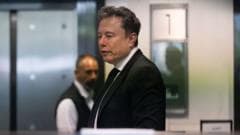
2 hours agoLily Jamali,North America technology correspondent, Oakland, CaliforniaandKali Hays,Technology reporterGetty ImagesA California jury has tossed out Elon Musk's high-profile lawsuit against OpenAI and its boss Sam Altman. In a unanimous verdict, the jury agreed that Musk had waited too long to file his lawsuit, leaving all of his claims essentially expired.Musk had accused Altman of breaching a non-profit contract by shifting the ChatGPT-maker to a for-profit company after Musk donated $38m (£28.5m) early in OpenAI's history.Musk claimed Altman had deceived him by accepting his money and then reneging on OpenAI's original non-profit mission to develop artificial intelligence (AI) technology for the benefit of humanity.Jurors spent just about two hours on Monday deliberating on the case, but they had spent three weeks viewing internal correspondence and hearing testimony from Musk, Altman, and other tech industry executives like Microsoft's chief executive Satya Nadella.Musk had accused Microsoft of aiding and abetting OpenAI in its allegedly improper transition to a more for-profit company.Musk's other claims against Microsoft were dismissed as a matter of law given the jury's findings on the two claims against OpenAI.Carl Tobias, a law professor and chair at the University of Richmond School of Law, said that the jurors made a "very fact-based decision" about the case."This case seemed kind of weird and crazy, but this is why we trust juries, because they bring the common sense of the community to resolve factual disputes," Tobias said.On the trial's first day, Musk took the stand wearing a dark suit and tie and was asked by one of his lawyers what the legal action was about."It's actually very simple," he said. "It's not OK to steal a charity... If it's okay to loot a charity, the entire foundation of charitable giving will be destroyed."Altman told the jury during his own testimony that Musk not only backed the idea of OpenAI becoming a for-profit business, he had vied for control of it for the long-run."A particularly hair-raising moment was when my co-founders asked, 'If you have control, what happens when you die?'" Altman recalled in court. "He said something like, 'maybe it should pass to my children.'"The pair started OpenAI in 2015, but Musk left in 2018 after his co-founders denied him control.The lawsuit was in some ways a culmination of the animosity between Musk and Altman built up since then. As Altman became one of the most famous and wealthy names in the tech industry after the explosive success of ChatGPT, Musk began to criticise Altman and OpenAI. In 2024, the company felt compelled by Musk's online claims to publish a lengthy blog post, offering the public a timeline of events refuting Musk's claims.On Monday, Sam Singer, a spokesman for OpenAI, said from outside the Oakland courthouse that the verdict was a "tremendous victory"."This was nothing but an effort by Mr Musk to slow down a competitor," he said, adding that it was a victory "for the justice system as well".Lawyer William Savitt, who represented OpenAI during the trial, said Musk's lawsuit "bears no relationship with reality" and that the jury decided that Musk was lying during his testimony about the company's origins."We're pleased that the jury reached the right result, and reached it quickly," he said.Savitt also said that OpenAI will continue to focus on its mission to develop "safe AI for the benefit of all humanity".After the verdict, however, Steven Molo, the lead attorney for Musk in the case, told the judge that he wanted to "preserve my client's right to appeal," leaving open the possibility that Musk will attempt to undo the jury's finding.Outside the courtroom, another lawyer for Musk, Marc Toberoff, said: "This war is not over, and I'd sum it up in one word, appeal." Should Musk decide to appeal, Tobias said the case would likely end up "being dragged out for a while." But Musk may be unlikely to win there, too."The bot
OpenAI CEO Sam Altman walks inside the federal courthouse during a recess in the proceedings in the trial over Elon Musk's lawsuit against OpenAI in Oakland, California, on May 12, 2026. JOSH EDELSON/AFP via Getty Images hide caption toggle caption JOSH EDELSON/AFP via Getty Images OpenAI CEO Sam Altman took the stand on Tuesday to defend himself against accusations from co-founder-turned-adversary Elon Musk that he "stole a charity" by converting the maker of ChatGPT into a for-profit juggernaut. The trial, now in its third week, pits two of the tech world's biggest personalities against one another in a high-stakes clash that could usher in major changes for one of the world's leading artificial intelligence companies and potentially alter the AI landscape. Musk's lawyers made the case that OpenAI, Altman and OpenAI president Greg Brockman, with the help of investments from Microsoft, jettisoned OpenAI's founding mission of being a non-profit focused on creating advanced AI for the benefit of humanity. Instead, the Musk team argues that they enriched themselves by creating a for-profit subsidiary that now effectively controls the nonprofit. OpenAI's legal team has argued that Musk is motivated by sour grapes and is out to damage a competitor. And on the stand Tuesday, Altman pushed back against the notion that Musk actually cares about OpenAI. "Mr. Musk did try to kill it," he said, adding that Musk launched a competitor called xAI, tried to poach its talent, and alleged that he engaged in "business interference." The dispute goes back nearly a decade to when the founders of OpenAI — including Musk — decided they needed to create a for-profit entity in order to attract top talent and raise big money to develop competitive AI technology. Musk, who donated $38 million to OpenAI early on, wanted control of the for-profit; the other founders were against it. On the stand, Altman testified that the co-founders felt no single person should control AGI, or artificial general intelligence, and that Musk was not a good fit for the company. Musk left the board in 2018, and Altman called that a morale boost for employees who did not like his "hardcore" approach. The trial has opened a rare window into the machinations of some of Silicon Valley's most ambitious tech entrepreneurs as they debated the future of AI and wrangled over investment plans and control of OpenAI. It would go on to become a global leader in AI thanks to the launch of ChatGPT in 2022. OpenAI's lawyers have drawn on once-private text messages and emails to try to paint Musk as power-hungry and initially supportive of plans for the for-profit to attract huge investments. The OpenAI team also tried to undermine Musk's credibility by highlighting messages that appeared to show that he tried to poach talent from OpenAI before he left the company's board, and was kept appraised of its decisions after leaving by then-board member Shivon Zilis, who is the mother of four of Musk's children. Musk's lawyers, meanwhile, have tried to make the case that Altman and Brockman were intent on reaping personal profits from OpenAI despite its original nonprofit mission. OpenAI's nonprofit still exists, and owns the for-profit entity, now valued in the hundreds of billions of dollars. But Musk argues that it has been sidelined. While cross examining Altman, Musk's attorney Steven Molo tried to undercut his credibility, asking if he was trustworthy. "I believe so," said Altman. When Molo asked Altman if he always told the truth, Altman replied: "I'm sure there are some times in my life when I did not." Asked if he had been called a liar by business associates, Altman said: "I have heard people say that." If the United States District Court for the Northern District of California finds Altman, Brockman and Microsoft liable for Musk's two civil claims — "breach of charitable trust" and "unjust enrichment" — Musk has asked for them to "disgorge" up to $150 billion to the n


Discussion (0)