
Loading dispatches...
← Return to Newsroomgeneral
Female characters with dignity: Mudassar Aziz on whether Pati Patni Aur Woh Do promotes adultery
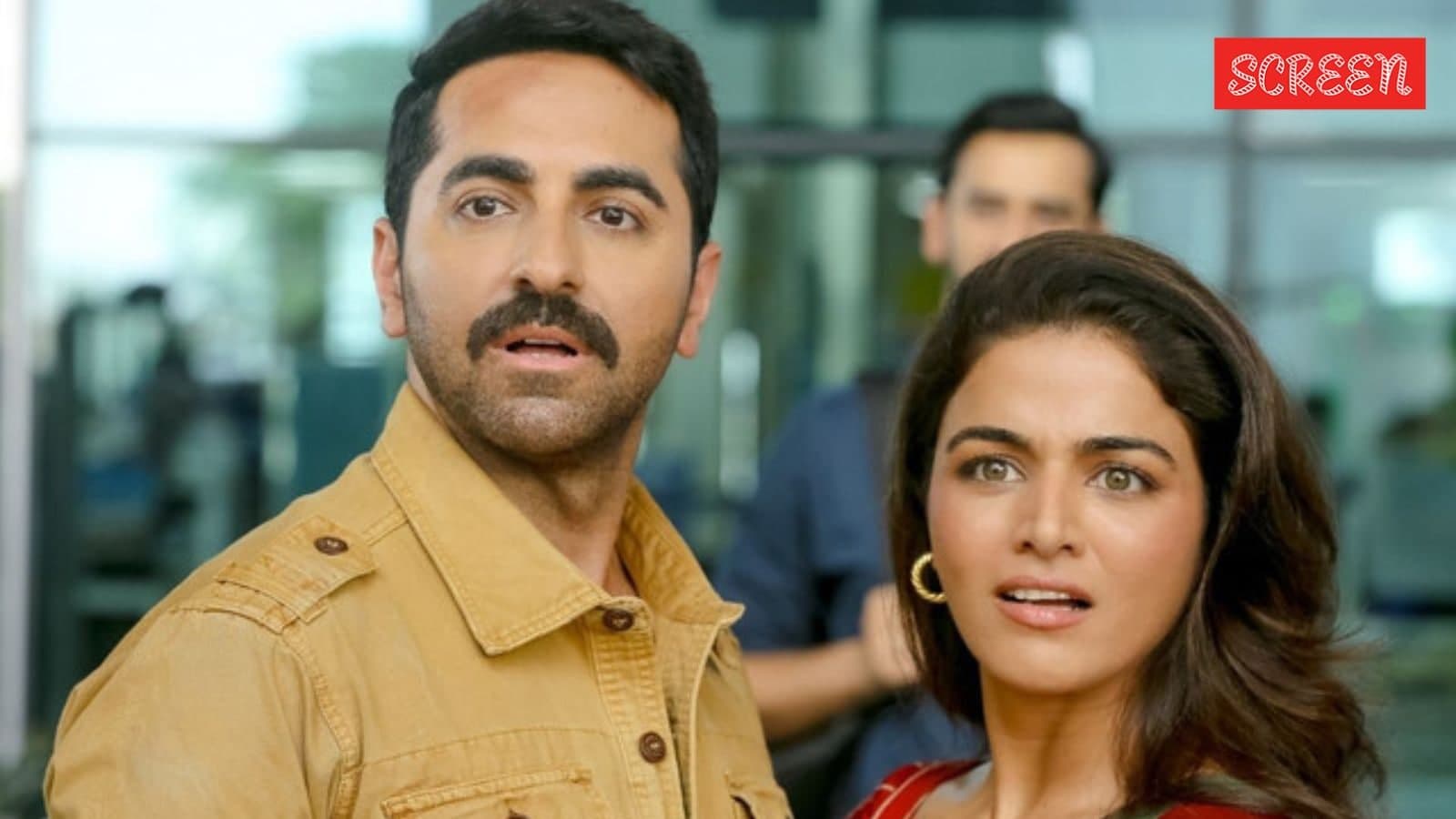
Mudassar Aziz has been around for 20 years. A journey that began in the discipline of screenwriting and gradually found its voice in direction. Along the way, he has seen the highest of the highs with features like Happy Bhaag Jayegi and Pati Patni Aur Woh, while also weathering the inevitable challenges of films that did not resonate at the box office. Yet, undeterred by the vicissitudes of the industry, he returns with yet another comedy of errors, Pati Patni Aur Woh Do. Yet another star entertainer, led by Ayushmann Khurrana, Sara Ali Khan, Rakul Preet Singh, and Wamiqa Gabbi. And yet another attempt to explore new creative possibilities within a familiar framework. In an exclusive conversation with SCREEN, Aziz addresses the allegations that the film promotes adultery, reflects on the art of reimagining remakes, the box office failures of his previous works, and discusses his commitment to writing women characters with agency. Excerpts edited for clarity and brevity What initially attracted you to the story and convinced you to make a sequel? This is a very beloved franchise. People love it. It’s something BR Chopra saab started back in 1978. And when I say “people,” I mean the aam junta, the masses. This time, the thought was: what if you had to make Pati Patni Aur Woh about a husband who is so straitjacketed that he doesn’t even have a roving eye? How would you create comedy then? That’s when the character of Prajapati Pandey, played by Ayushman, came into being. When the trailer dropped, social media buzzed with critiques noting that even in 2026, we’re making films that promotes adultery. I can answer on two levels: personal and professional. Personally, I don’t have a presence on social media, I don’t have Instagram, Twitter, or Facebook, so it’s easy to stay away. Professionally, as a filmmaker, I started my career as a writer. And a writer must allow discourse of any kind, and that’s always welcome. If people react to a trailer or film in a certain way on social media, I’m happy. Because eventually, people watch the film, and then they realise whether it’s about adultery or not. Maybe they were too quick to react, and the problem solves itself. So, why worry? If I were genuinely trying to promote adultery, I’d be concerned. But I’m not. At the end of the day, the film releases, people watch it, and they’ll see: “Oh, this is not about adultery, and it’s certainly not promoting it.” As they say, the proof of the pudding is in the tasting.Story continues below this ad Ayushmann Khurrana and Sara Ali Khan in Pati Patni Aur Woh Do.In your previous films, like Happy Bhaag Jayegi and Khel Khel Mein, you handled gender dynamics rather thoughtfully. How do you approach getting the politics of gender right at a time when women characters are often just footnotes in commercial comedies? It’s not entirely in my hands whether films hit or flop, that’s up to the audience. But what I can do is write my female characters with dignity. Even, if you see, Pati Patni Aur Woh, Ananya Panday and Bhumi Pednekar’s characters are dignified. They team up to challenge the male lead, and in the climax, you realise they were playing him all along. Even in Khel Khel Mein, characters of Taapsee Pannu and Vaani Kapoor make their own decisions. In an Akshay Kumar-like vehicle, they find space to express themselves. Similarly, in Pati Patni Aur Woh Doh, the three women are really the film. And I think, again, a hint should be taken from the fact that everyone knows how difficult it is to cast three contemporary leading ladies in one film. It is only if the script provides them with that kind of impetus while they are reading and hearing it that they will say, “My arc is completely in place, I’m gonna do this.” So you will find that the three of them, each one of them, is in a completely different kind of character, very, very assured. And they are more capable, more able, and have more agency than Prajapati Pandey does in this film. Sara Ali Kha

Discussion (0)