
Loading dispatches...
← Return to NewsroomPolitics
India sees relations with China in a bilateral context, Beijing has never seen it that way: Vijay Gokhale

In an interview with The Hindu, author Vijay Gokhale, a former Foreign Secretary, explains his research into Chinese decision-making, how China deploys “grey zone coercion”, and the consequences for the future of its relations with India.A theme that emerges from the conflicts that you research in this book is that it has never been one single reason that led China to go to war, but rather a confluence of factors, especially the global context. I wrote this book because I thought I should write a companion piece to my earlier book The Long Game. That book was about how the Chinese negotiate with India in various situations. However, given our background, not just in terms of the conflict in 1962 but also because of the current situation where there is tension along the Line of Actual Control (LAC), I felt it was important to study how China engages in conflict, and what are the motivations that lead China to engage in conflict. The fact is after 1979, the Chinese have not really fought a hot war. But one of the key points I wanted to make in the book is that conflict is not simply a hot war. Grey zone warfare is also a form of conflict. It involves continuous tension with another country using military or largely military means, although not entirely military means because there are economic and psychological levers, and so on. That was the real objective of writing this book, also because I thought it would be helpful to the strategic and policymaking communities in India, as well as to the general public. Coming to the objectives, what appeared apparent to me after studying all the conflicts that China has waged, is that it was rarely, if ever, driven purely by operational or territorial objectives. Of course, these were important and continue to be so for China, but it was driven much more by political objectives. China looked at political goals vis-à-vis the other country rather than simply territorial or military objectives. The second point is that China has always viewed conflict in a wider global geopolitical context rather than in a narrow bilateral one. If you go through the book, you will see that in practically any conflict China has engaged in — both hot wars and grey zone conflicts — they have looked at where that conflict will place them in the context of the larger global balance of power. That is an extremely important element that I want to flag in my book, because we tend to see India-China relations only in a bilateral context. Beijing has never looked at it that way, and will never look at it that way either. Therefore, we need to study how Beijing looks at India in this much larger global context. One of the key elements of the book is looking at how China uses diplomacy and propaganda once it decides to enter a conflictual situation. This is not a reactive approach. The Chinese plan their diplomatic and propaganda initiatives as part of the larger operational strategy towards achieving the specific political objectives they have already identified. The book also looks at whether domestic politics has had any impact on how or when China wages war. I felt this was important because we know that in democratic societies, domestic politics inevitably impacts foreign policy. I presumed it was the same in the case of China. But China is such an opaque society and polity that this is not often written about, particularly in the context of China’s wars. As I did my research, I was surprised at how much of a correlation there was, and is, between China’s domestic politics and its decision to use force. This is what motivated me to write this book. I think the lessons I have drawn will be important for us going forward, because we are now in a globalised world. As we recently saw during the [China-U.S.] summit in Beijing, both sides recognise that the international order is collapsing. Both sides are looking to stabilise it in their own way. That is going to impact India as well. How China looks at us will
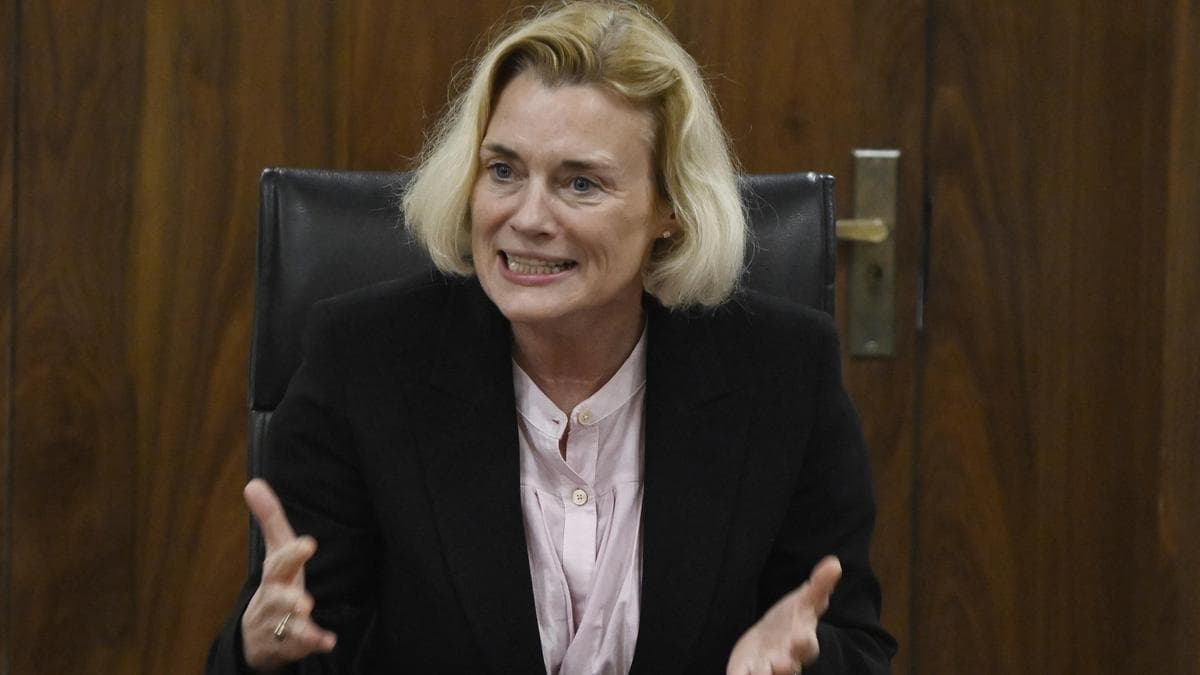
Norwegian Ambassador May-Elin Stener. File photo | RAGU As Prime Minister Narendra Modi arrived in Oslo on Monday (May 18, 2026) for a two-day visit where he will hold bilateral talks and then meet with leaders of Sweden, Norway, Iceland, Finland and Denmark for the 3rd India-Nordic summit, conflicts in Ukraine and Iran and their economic impact will be on the agenda.In an interview to The Hindu, Norway’s Ambassador to India May-Elin Stener says Norway will also discuss more gas and oil supplies to India, even as U.S. sanction waivers on Russian oil lapsed over the weekend, indicating India may have to reduce its intake. It has been 43 years since the last Indian Prime Minister visited Norway for a bilateral visit. Tell me about the significance of Prime Minister Narendra Modi’s visit, and what are some of the big outcomes that you are expecting. Well, we are also greatly looking forward to Prime Minister Modi’s visit here to Oslo for the third India-Nordic Summit. The last one was in Copenhagen (Denmark) four years ago (2022). The world has changed a lot since then. So, all five Nordic countries are really looking forward to discussing geopolitical issues with the leader of the [world’s] most populous country, and there will also be a lot of discussions — on climate, on the green future, sustainability and how we look forward, how we work closely together as democracies. How do you see the conflicts in Ukraine and Iran play out in the bilateral conversations, and are you expecting a concrete sort of outcomes in terms of statements on both the conflicts? Well, when Prime Minister Modi lands in Oslo, the first day will be a bilateral visit, and these issues that you are mentioning, they will for sure be discussed and I am also expecting that there will be statements on these issues. The full-scale Russian invasion of Ukraine is of course a crucial issue for Norway because we are also a neighbouring country of Russia, and the conflict in the Middle East affects us all, and as you were saying, it affects our energy security. Norway, is an energy superpower. We are a small country, but we are a great deliverer of oil and gas to Europe, and we will also be looking at some discussions on how we can deliver more gas to India. You’ve already had one delivery last week. Are you seeing a greater conversation between India and Norway when it comes to energy? We are discussing more and more, what we can do together on energy, and we are expecting also several business-to-business MoUs on the energy side [during the visit]. Last week, there was a big LNG delivery to India, and that is part of a 15-year deal [signed] last year by our biggest energy company, Equinor (and Deepak Fertilizers and Petrochemicals Corp-DFCPL) They will continue to deliver LNG to India, which will also power fertiliser production. As Norway speaks about energy supplies to India, are you also hoping that India will now reduce its energy intake. India’s largest supplier right now is Russia. As far as the U.S. is concerned, their sanction waivers on Russian oil lapsed just this weekend. Are you expecting India to shift its position at all? A: Well, we will discuss these issues with India, and of course we also have an understanding of the needs of the fastest-growing big economy in the world. So, these issues will definitely be discussed, and then exactly what will be the result that I cannot say now. (The reporter is in Norway at the invitation of the Norwegian Ministry of Foreign Affairs to cover the India-Nordic Summit) Published - May 18, 2026 04:23 pm IST
Discussion (0)