
Loading dispatches...
← Return to Newsroomgeneral
Why Punjab and Haryana are seeing higher temperatures than Rajasthan
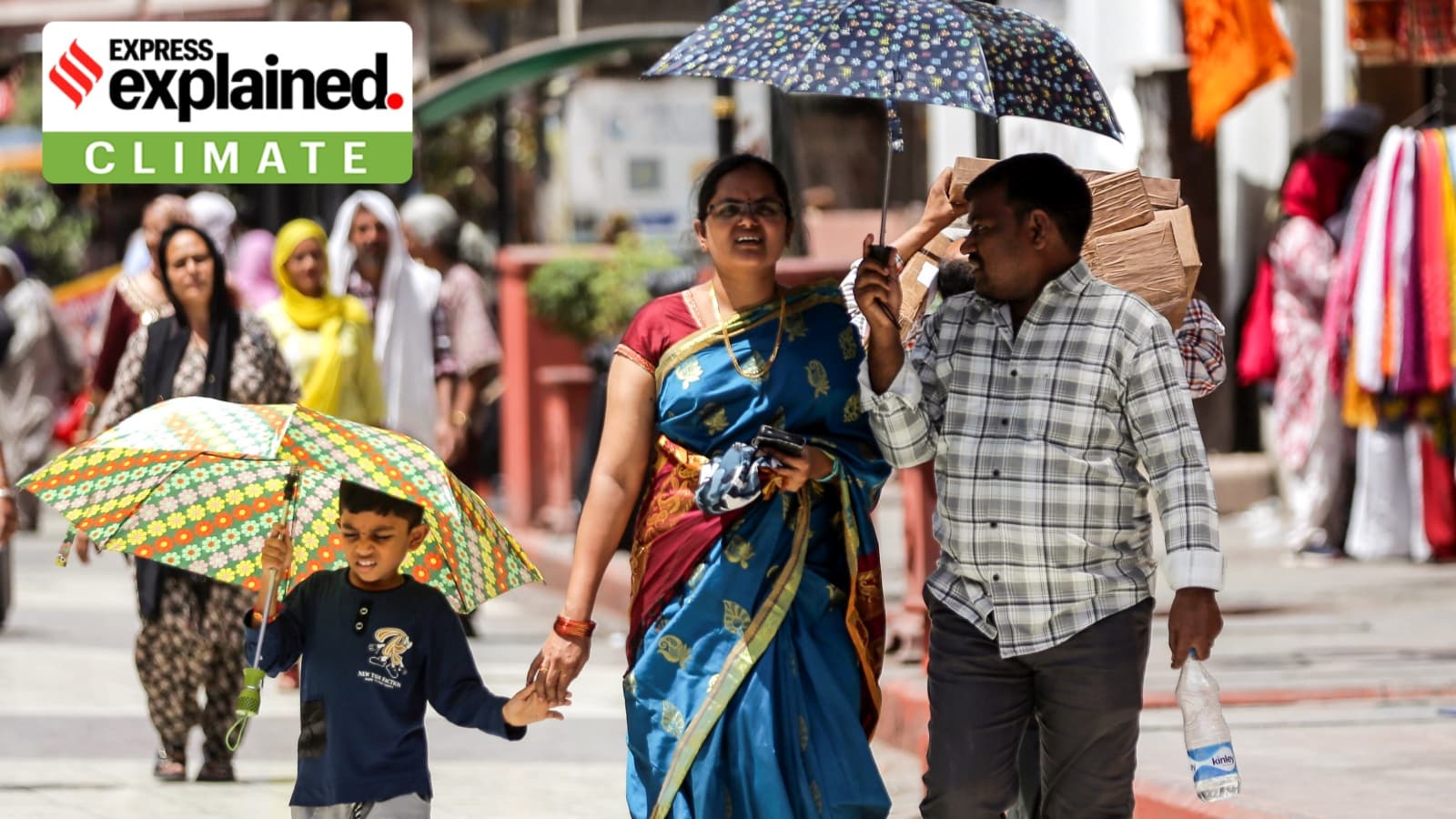
For long, Rajasthan’s deserts and scorching loo winds have symbolised India’s harsh summers. But the ongoing heatwave across north India is revealing a striking and scientifically important trend — several cities of Punjab and Haryana are recording temperatures comparable to, and in some cases even higher than, the desert state’s cities.Weather experts, climate scientists and agriculture specialists have raised concerns over this. Why is this happening and what could be its fallout? We explain.First, northwest India naturally experiences heatwaves around April and May. But the intensity as well as spatial spread of the heatwave this year has raised concerns. Climate scientists at the India Meteorological Department’s Chandigarh centre say that heatwaves are no longer restricted to the western desert regions. The Indo-Gangetic plains, including Punjab, Haryana, Delhi and Uttar Pradesh, are experiencing the phenomenon. Several Indian cities featured among the world’s hottest urban locations during this heatwave. Cities in Uttar Pradesh such as Banda and Prayagraj have recorded temperatures nearing 48°C in recent days. On May 21, Punjab’s Bathinda recorded a maximum temperature of 45.6 degrees Celsius and Haryana’s Sirsa touched 45.8°C. In comparison, major Rajasthan cities recorded relatively lower maximum temperatures — Jaipur 42°C, Jodhpur 41.5°C, Bikaner 44°C and Jaisalmer around 42°C. Even Sri Ganganagar — traditionally among Rajasthan’s hottest places — recorded 45.1°C, lower than Sirsa and Bathinda. So why are Punjab and Haryana heating up?Story continues below this ad Climate change is increasing the frequency, duration and severity of heatwaves. But for these two states in particular, there are several other factors that have contributed to this rise in temperatures — including humidity, urbanisation and land-use changes. Here’s a look: The farm and forest factor Dr Sutantra Airy, former Director Punjab Agriculture Department believes that decades of wheat-paddy monocropping have altered the ecological balance of Punjab and Haryana. Excessive groundwater extraction, shrinking biodiversity, declining tree cover and large-scale stubble burning even after wheat harvesting in April and May have weakened the region’s natural cooling systems. Bare agricultural surfaces after wheat harvesting absorb solar radiation rapidly, causing land temperatures to rise sharply during May and June, said Airy.Story continues below this ad According to Manmohan Singh, former director at IMD, Chandigarh, extensive irrigation networks, the ongoing paddy nursery cultivation in Punjab and Haryana, and summer maize cultivation in Punjab are not only putting stress on groundwater and canal systems but also contributing to atmospheric moisture. The increased humidity levels makes temperatures feel harsher. Experts say the disappearance of traditional ponds, trees and green belts around villages has also intensified local heating. Punjab today has the lowest forest cover in India. According to the India State of Forest Report, Punjab’s forest cover is around 3.67% while Haryana’s is around 3.7%. Rajasthan, a desert state, has more forest cover at 4.8–4.9%. Warmer nightsStory continues below this ad What has particularly alarmed experts is that Punjab and Haryana are not only witnessing extreme daytime heat, but also unusually warm nights. This is a phenomenon that has been observed in other states as well. So why are cities not cooling down? One factor is humidity. Cities in Haryana and Punjab’s Malwa belt are increasingly retaining heat even during nights owing to the increase in humidity mentioned above. Another key factor is what is called the urban heat island effect, when concrete infrastructure in cities absorb heat during the day and retain it through the night. Environmental experts increasingly describe parts of Punjab and Haryana as “heat-trap landscapes.”Story continues below this ad “Rapid urbanisation, highways, industrial clusters, ve
In a matter of weeks, the world is set to be gripped by football World Cup fever, as an expanded, 48-team tournament will be played in the North American summer for the first time since 1994. Before the heat rises on the pitch, a new scientific analysis by the World Weather Attribution (WWA), a climate research group, has warned that human-induced climate change has made heat stress at the upcoming World Cup more likely than it was in 1994.The study found that more matches will be played under humid heat conditions, which pose health risks to not only athletes, but also fans, officials and staff inside and outside the venues. It also mapped city and venue-specific heat stress risks, and the matchdays that will see high humid heat.What did the study analyse and what did it find? Researchers from Imperial College London analysed Wet Bulb Globe Temperature (WBGT) across 16 venues in the United States, Mexico and Canada during the tournament period of June 11 to July 19. WBGT is a composite index which factors in the combined effect of humidity, sunlight and winds to determine how the human body can regulate internal heat and cool itself. The research involved comparing today’s climate and temperature with those of 1994, which was 0.7°C cooler. Using climate and weather model simulations, the researchers assessed how many cities or venues were likely to see WBGT exceed the threshold of 26°C. To be sure, a WBGT of 26°C translates to temperatures of roughly 30°C with mid to high humidity, or the equivalent of 38°C in dry heat, as per WWA. The study found that at least 25% of the 104 World Cup matches were likely to be played at 26°C and higher wet bulb globe temperature. “Our research shows that climate change is having a real and measurable impact on the viability of holding World Cups during the northern hemisphere summer. The 1994 World Cup may not feel particularly distant to many adults today, yet half of human-induced climate change has happened since then,” said Friederike Otto, one of the study’s authors and professor of climate science at Imperial College, London. How higher wet-bulb temperatures and related heat stress impact health Wet-bulb temperature, and WBGT specifically, is an indicator to determine how wind, humidity, and direct heat from sunlight affect the body’s ability to cool down through sweating. Typically, in humid heat, the body is unable to cool down quickly enough, making it harder to regulate body temperature. WBGT as an index has been used for decades to capture the heat-stress impact, rather than air temperature alone.Story continues below this ad When the body is unable to cool down quickly enough, it increases the risk of heat exhaustion, heat stroke and cardiovascular disease, making those engaged in outdoor occupations and exposed to long periods of uninterrupted, direct sun and humidity more vulnerable. A landmark 2010 study theorised that sustained six-hour exposure to a wet-bulb temperature of 35°C could prove fatal. A March 2026 study, published in Nature, said that risks are rising even at temperatures below this 35°C threshold. With footballers exerting themselves in direct sunlight through sprints and high-intensity movements, humid heat is expected to affect their performance and endurance. The FIFPRO, an organisation of professional players, has issued guidance recommending that when WBGT reaches 26°C or higher, heat strain becomes a real risk, which necessitates cooling and drink breaks. At 28°C and above, FIFPRO says it is unsafe for play and postponement is advised. “The calculations to estimate the likelihood of 2026 FIFA World Cup games being played in high WBGT conditions are in line with FIFPRO’s calculations published in 2023,” said FIFPRO’s medical director Dr Vincent Gouttebarge in a statement issued by World Weather Attribution. However, FIFA, the global football governing body, will consider postponement only if WBGT levels exceed 32°C. Precedent shows that cooling breaks were



Discussion (0)