
Loading dispatches...
← Return to NewsroomWorld
Trump holds to maximum demands on Iran, threatens more strikes

Trump holds to maximum demands on Iran, threatens more strikes The Washington Post Live updates: Trump says he won’t rush Iran deal because ‘I don’t care about the midterms’ CNN 'I don't care about the midterms': Trump makes clear he's in no rush to reach deal with Iran ABC News - Breaking News, Latest News and Videos A Frustrated President Can’t Get the Deal Done The Atlantic Iran's IRGC forces 'lying in wait' if Trump restarts combat; talks reach critical phase Fox News
CNN LIVE: Trump says Iran deal not ‘fully negotiated yet’ Al Jazeera Oil prices fall 5% after Trump says Iran talks proceeding in a 'constructive manner' CNBC Trump says not to rush as details emerge of a potential Iran deal AP News
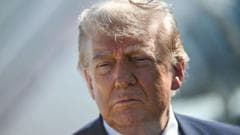
Just nowJaroslav LukivandTom Bennett,Washington DCAFP via Getty ImagesUS President Donald Trump said both "both sides must take their time" to reach deal US President Donald Trump says he has instructed his negotiators "not to rush into a deal" with Iran, after reports suggested an agreement was close. According to US media, the deal under discussion involves a 60-day ceasefire extension, reopening the Strait of Hormuz and further negotiations over Iran's nuclear programme.In a social media post, Trump said "constructive" talks were proceeding but "both sides must take their time and get it right".Trump said on Saturday an agreement had been "largely negotiated," prompting speculation an announcement could be imminent. Reports in Iranian media also say there are still "one or two" points of disagreement in the potential deal.Iranian officials had similarly signalled progress in talks over the weekend, but foreign ministry spokesperson Esmail Baghaei said that did not mean agreements would be reached on key issues.The mooted deal has split Republicans, with some publicly arguing it is too lenient on Iran.Senator Ted Cruz said it would be "a disastrous mistake", while Roger Wicker, who chairs the Senate Armed Services Committee, said a 60-day ceasefire would mean "everything accomplished by Operation Epic Fury would be for naught!"But Representative Mike Lawler, who sits on the House Foreign Affairs Committee, said the administration has managed to "force the remnants of this regime into a negotiation, a real negotiation".The US and Israel launched wide-ranging strikes on Iran on 28 February, sparking conflict across the Middle East. Iran responded by launching attacks on Israel and US-allied states in the Gulf.A ceasefire agreed in April meant to facilitate talks has largely been observed, despite occasional exchanges of fire.In Sunday's post on Truth Social, Trump said negotiations "are proceeding in an orderly and constructive manner, and I have informed my representatives not to rush into a deal in that time is on our side"."Both sides must take their time and get it right. There can be no mistakes!"Trump also said Iran "must understand" it cannot develop a nuclear weapon, a stance he has frequently reiterated and that is shared by Israel and other Western allies.The US and its allies suspect that Iran is seeking to develop a nuclear weapon - but Tehran has said its nuclear programme is solely for peaceful purposes.Some reports in US media suggest the deal under discussion would also see Iran hand over its highly-enriched uranium. It is thought to have about 440kg (970 lbs) of the metal.In his social media post, the US president also said Washington's blockade of Iranian ports - which has been in place since early April - will remain "in full force and effect until an agreement is reached, certified, and signed".The US has been enforcing its blockade to exert pressure on Tehran to agree to its terms.For its part, Iran has continued to control the Strait of Hormuz, effectively closing the vital waterway through which around 20% of the world's oil and liquefied natural gas travels. The move has sent oil prices soaring globally.US Secretary of State Marco Rubio earlier said that "significant" but "not final" progress had been made in the negotiations. He hinted at good news on Hormuz, saying that progress over the past 48 hours - if it works - could result in a "completely open strait... without tolls".On Saturday, Baghaei told state television that Iran was in the process of finalising a "memorandum of understanding" which would allow additional talks so that "ultimately a final agreement can be reached".Trump also mentioned a "memorandum of understanding" in a Truth Social post on Saturday.Pakistan's Deputy Prime Minister Ishaq Dar, who has been mediating talks, has said that recent negotiations are "grounds for optimism" that a positive outcome is "within reach".Some US media outlets reported that no agreement between the t

US Secretary of State Marco Rubio attends at a press conference at the US Embassy in Rome, Friday, May 8, 2026. Stefano Rellandini/Pool AFP/AP hide caption toggle caption Stefano Rellandini/Pool AFP/AP WASHINGTON — President Donald Trump and America's top diplomat on Thursday again raised the specter of U.S. military intervention in Cuba, a renewed threat that takes on greater weight a day after the administration announced criminal charges against the island's former leader, Raúl Castro. Trump said previous U.S. presidents have considered intervening in Cuba for decades but that "it looks like I'll be the one that does it." "Other presidents have looked at this for 50, 60 years, doing something," Trump told reporters when asked about Cuba during an environmental event in the Oval Office. "And, it looks like I'll be the one that does it. So, I would be happy to do it." Secretary of State Marco Rubio told reporters separately that Cuba has been a national security threat for years because of its ties to U.S. adversaries and that Trump is intent on addressing it. Rubio says the US prefers a negotiated agreement with Cuba Rubio, the son of Cuban immigrants who has long taken a hard-line against Cuba's socialist leadership, said the Trump administration wants to resolve differences with Cuba peacefully but is doubtful the U.S. can reach a diplomatic resolution with the island's current government. Trump's "preference is always a negotiated agreement that's peaceful. That's always our preference. That remains our preference with Cuba," Rubio said in Miami before boarding a plane to attend a NATO meeting in Sweden and then visit India. "I'm just being honest with you, you know, the likelihood of that happening, given who we're dealing with right now, is not high," he said. Top Trump aides — including Rubio, CIA chief John Ratcliffe and other senior national security officials — have met with Cuban officials in recent months to explore possible improvements in relations. But the U.S. side has come away unimpressed from those talks, leading to even more sanctions imposed on the Cuban government in the past week. Over the years, Cuba has gotten used to "buying time and waiting us out," Rubio said. "They're not going to be able to wait us out or buy time. We're very serious, we're very focused." Images of Raul and Fidel Castro adorn the wall of a building that houses an art installation on the Cuban Revolution, in Havana, Cuba, Wednesday, May 20, 2026. Ramon Espinosa/AP hide caption toggle caption Ramon Espinosa/AP When asked whether the U.S. would use force in Cuba to change the island's political system, Rubio repeated that a diplomatic settlement was preferred but noted that "the president always has the option to do whatever it takes to support and protect the national interest." He pushed back on a reporter's suggestion that it sounded like "nation-building," insisting it was about addressing a national security risk. New threats follow US announcement of charges against Castro Federal prosecutors on Wednesday unveiled an indictment that accuses Castro of ordering the shootdown in 1996 of civilian planes flown by Miami-based exiles. The charges, which were secretly filed by a grand jury in April, included murder and destruction of an airplane. Cuban President Miguel Díaz-Canel has condemned the indictment as a political stunt that sought only to "justify the folly of a military aggression against Cuba." The Castro indictment has led many to believe that the Trump administration is following the same playbook it did when it captured then-Venezuelan President Nicolás Maduro in a military operation in early January. Maduro, who has been imprisoned in the U.S. since his seizure, faces federal drug trafficking charges and has pleaded not guilty. The U.S. military touted the arrival of the USS Nimitz aircraft carrier and accompanying ships to the Caribbean Sea on the same day the charges against Castro were anno
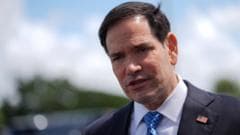
14 minutes agoSofia Ferreira SantosReutersThe US secretary of state said Cuba had always posed a threatCuba poses a "national security threat" to the US and the likelihood of a peaceful agreement is "not high", US Secretary of State Marco Rubio has said.His comments come just a day after the US charged Cuba's former president Raúl Castro with murder over the 1996 downing of two planes resulting the the killing of US nationals.Rubio said Washington's preference was "a diplomatic solution" but warned that President Donald Trump had the right and obligation to protect his country against any threat.Cuba's Foreign Minister Bruno Rodríguez accused Rubio of "lies" and said the island had never posed a threat to the US.Speaking to reporters on Thursday, Rubio said diplomacy "remains our preference with Cuba", but added: "I'm just being honest with you, you know, the likelihood of that happening, given who we're dealing with right now, is not high."He also accused Cuba of being "one of the leading sponsors of terrorism in the entire region", which Rodríguez vehemently denied in a post on X.The Cuban foreign minister criticised Rubio for trying to "instigate a military aggression" and accused the US government of "ruthlessly and systematically" attacking his country.Cuba is suffering from a fuel crisis exacerbated by an effective US oil blockade, while under pressure from the Trump administration to make a deal.Its citizens have experienced extended blackouts and food shortages over the last few months.Rubio said the country had accepted a US offer of $100m (£74.4m) in humanitarian aid.Trump has repeatedly sought to exert pressure on Cuba and has openly discussed toppling its communist regime.Wednesday's indictment of the former Cuban president is seen by some as reminiscent of Trump's seizure of Venezuelan President Nicolás Maduro in January.Asked by reporters whether - and how - his government would get Castro to the US to face the charges, Rubio replied: "I'm not going to talk about how we're going to get him here, if we were trying to get him here, why would I say to the media what our plans are about that?"Acting Attorney General Todd Blanche, who announced the charges in Miami on Wednesday, said the US "expect he will show up here, by his own will or another way".Speaking to reporters in the Oval Office, Trump said Cuba was a "failed country" and that his administration was trying to help them "on a humanitarian basis".He said Cuban-Americans "want to go back to their country" and help Cuba succeeded."Other presidents have looked at this for 50, 60 years doing something and it looks like I'll be the one that does it, so I would be happy to do it," Trump said.

A nurse checks a patient's blood pressure. kieferpix/Getty Images hide caption toggle caption kieferpix/Getty Images A coalition of 24 states and the District of Columbia filed a lawsuit in federal court Tuesday challenging a Trump administration rule that limits access to federal student loans for borrowers earning a graduate degree in several popular, healthcare-related fields. "Higher education is expensive, and our health care system is already under immense strain," New York Attorney General Letitia James said in a statement. "This rule will shut talented people out of critical professions and leave communities with fewer health care providers they desperately need." At issue is a pair of complex changes that, taken together, drew the ire of the American Nurses Association and triggered Tuesday's lawsuit. First, Republicans passed new limits on graduate student loans as part of last year's One Big Beautiful Bill Act. The law does not change limits for undergraduate borrowers, including those attending undergraduate nursing programs, but it dramatically scales back how much graduate students can borrow. Previously, grad students could borrow up to the cost of their program, but the new limits cap annual borrowing for most at $20,500 with a total limit of $100,000. These limits are legal, if controversial. Arizona, California, North Carolina, Kentucky and Nevada are among the states that joined the lawsuit, which focuses on a rule that essentially outlines an exemption to the limits. In implementing the changes in the One Big Beautiful Bill Act, the Trump administration has scaled back the types of graduate degrees that qualify as "professional" and for which students can borrow up to $50,000 a year and $200,000 overall. It is limiting those exempted programs to 11 categories: chiropractic, clinical psychology, dentistry, law, medicine, optometry, osteopathic medicine, pharmacy, podiatry, theology and veterinary medicine. Nursing, physical therapy and nurse anesthesia are some of the many healthcare-related programs excluded from that short list of professional degrees. A press release announcing the lawsuit argues that the Trump administration "issued a final rule unlawfully narrowing" the pre-existing federal definition of a professional degree. It says, "The rule imposes new restrictions not enacted by Congress, leaving many health care and other professional degree programs unable to qualify for the higher loan limits." What's more, in the lawsuit itself, the plaintiffs point out that the department's list of professional degree examples "was taken from a regulation that had not been changed since the 1950s, a time when graduate programs in nursing and other healthcare professions barely existed." Late last year, in a fact-sheet titled "Myth vs. Fact," the Education Department noted that these new loan caps "are limited to graduate programs and have no impact on undergraduate nursing programs, including four-year bachelor's of science in nursing degrees and two-year associate's degrees in nursing. 80% of the nursing workforce does not have a graduate degree." Still, last month, when the Trump administration finalized its rule, the American Nurses Association said it was "profoundly dismayed." "This Department of Education has chosen to make it harder for nurses to advance their education and their careers," Jennifer Mensik Kennedy, president of the American Nurses Association, said in a statement. She continued: "Make no mistake, this is not a technicality or a footnote. This rule will be felt in real communities, for example, in rural areas where nurse practitioners, midwives, and nurse anesthesiologists are often the only providers of core care services." In a February fact sheet about the new limits, the American Association of Colleges of Nursing warned, under the rule, nursing students "could be forced to seek high-interest private loans or abandon advanced practice education." In a study of the

China will buy ‘at least’ $17bn worth of US agricultural goods annually, the White House says.China will buy “at least” $17bn worth of agricultural goods from the United States annually following US President Donald Trump and Chinese leader Xi Jinping’s summit in Beijing, the White House has said.China will make the purchases through 2028, with the 2026 target applying to the remainder of the year on a proportionate basis, according to a fact sheet released on Sunday.Recommended Stories list of 4 itemslist 1 of 4Israel kills at least five in Lebanon after ‘ceasefire’ extendedlist 2 of 4‘Won’t be anything left’: Trump issues threat to Iran amid stalled talkslist 3 of 4Trump holds prayer rally to ‘rededicate’ US as ‘one nation under God’list 4 of 4Pakistan interior minister holds talks with Iranian president in Tehranend of listThe White House said the deal is in addition to China’s commitment to buy at least 87 million metric tonnes of US soya beans, which was made at Trump and Xi’s summit in South Korea in October.China will also restore market access for US beef by renewing the expired listings of more than 400 production facilities, and resume imports of poultry from states determined by the US Department of Agriculture to be free of avian influenza, according to the fact sheet.Trump and Xi also agreed to establish two new bodies – the US-China Board of Trade and the US-China Board of Investment – to manage trade and investment between the sides, the White House said.China has yet to confirm or comment on the White House’s announcement.The Chinese Embassy in Washington, DC, did not immediately respond to a request for comment.The White House’s update provides further clarity on the outcome of Trump and Xi’s two-day summit, which was heavy on pageantry and camaraderie but light on concrete agreements.During their two days of talks in Beijing, Trump and Xi sought greater alignment on economic issues and trade, while largely skirting the sensitive issues of Taiwan and the US-Israel war on Iran.In a readout after the summit wrapped up on Friday, the White House said the two sides had discussed ways to “enhance economic cooperation”, and that they agreed on the need to keep the Strait of Hormuz open and that Iran “can never have a nuclear weapon.”Beijing did not explicitly state that Iran should not have nuclear weapons, but stressed the importance of reaching “a settlement on the Iranian nuclear issue and other issues that accommodates the concerns of all parties”.Neither White House statement contained any mention of Taiwan, the self-governing island that Beijing views as an integral part of its territory.The omission of any reference to the island – the defence of which Washington is committed to supporting under the 1979 Taiwan Relations Act – came after Xi warned of “clashes and even conflicts” between the superpowers if the issue is not “handled properly”.After nearly a decade of tit-for-tat economic salvoes between Washington and Beijing, US-Chinese trade is down sharply from its peak.Their bilateral trade in goods last year came to some $415bn, down from more than $690bn in 2022.



Discussion (0)