
Loading dispatches...
← Return to Newsroomgeneral
Google launches Search Profiles to help creators and publishers showcase content
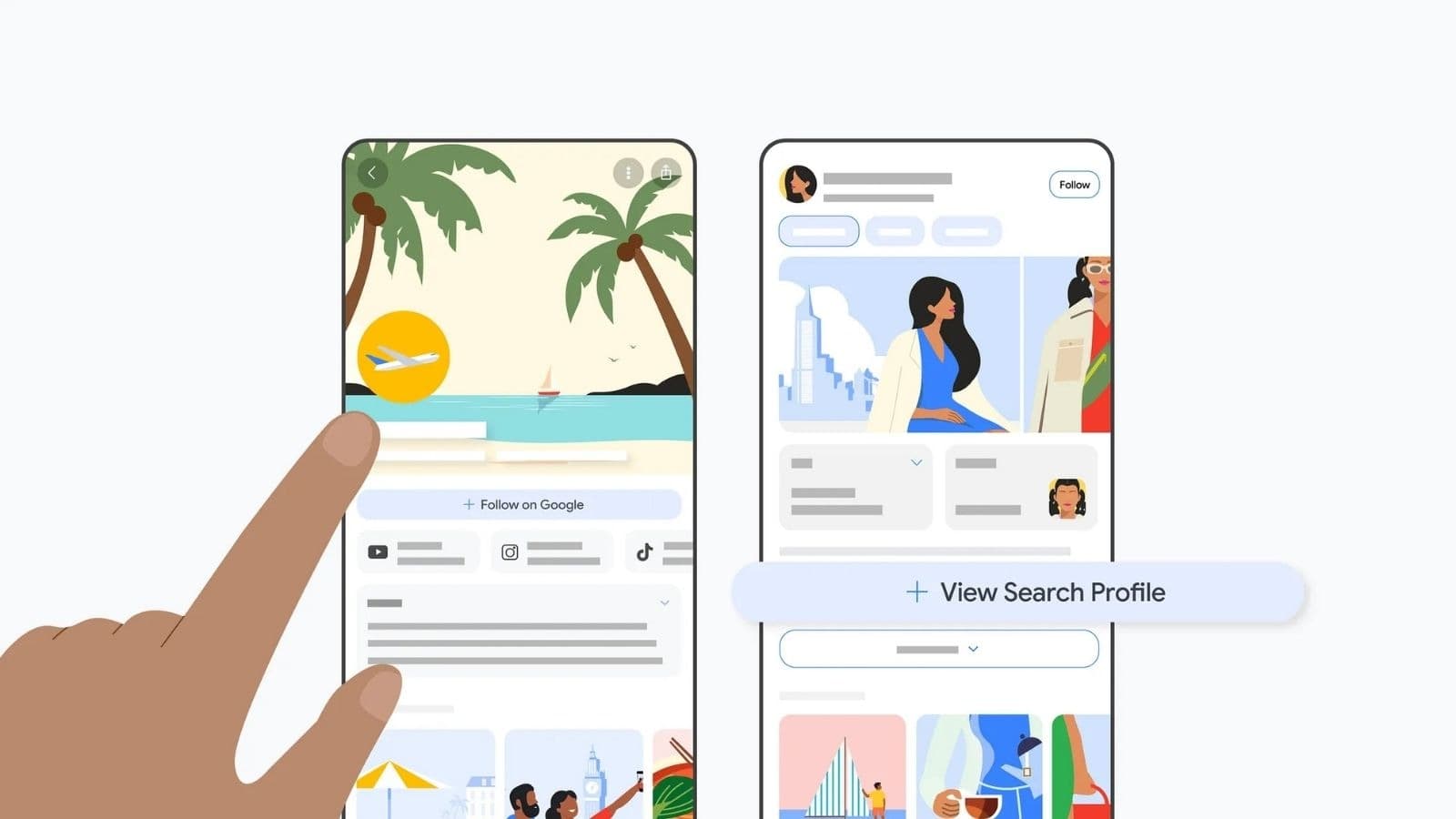
To be eligible, creators and publishers must have a sizable following on at least one major social media or video platform. (Image: Google )Google has announced the launch of Search Profiles, a new feature designed to help creators and publishers manage how they appear on Search while making it easier for audiences to discover and follow their content. The new profiles act as a dedicated and shareable hub where creators and publishers can showcase content from across the web, including articles, videos and social media posts. Google says the feature is intended to provide users with accurate and up-to-date information about sources they encounter on Search.According to the company, Search Profiles give publishers and creators a central place to highlight their latest work across multiple platforms. Users can also follow creators and publishers directly from these profiles, increasing the chances of seeing their content in Discover, the personalised content feed available on the Google app. Search Profiles can be accessed on mobile devices through a creator or publisher’s knowledge panel, by tapping on a publisher or creator name within Discover, or through a direct URL. To be eligible, creators and publishers must have a sizable following on at least one major social media or video platform. Once a profile is claimed, users can customise it with an avatar, biography, website links, social media accounts, video channels and other relevant content. Google said that claiming a Search Profile may also trigger the creation of a knowledge panel for eligible creators and publishers. Those who already have a knowledge panel will see it enhanced with updated profile information, including a new avatar, recent content and a direct link to their Search Profile. The company is initially rolling out Search Profiles in the United States. Google said it plans to expand the feature to more creators and publishers globally over time while adding new capabilities aimed at improving how profiles function and how audiences interact with them.Story continues below this ad The launch reflects Google’s broader effort to help publishers and creators strengthen their online presence while making it easier for users to discover and follow content from trusted sources directly through Search and Discover.
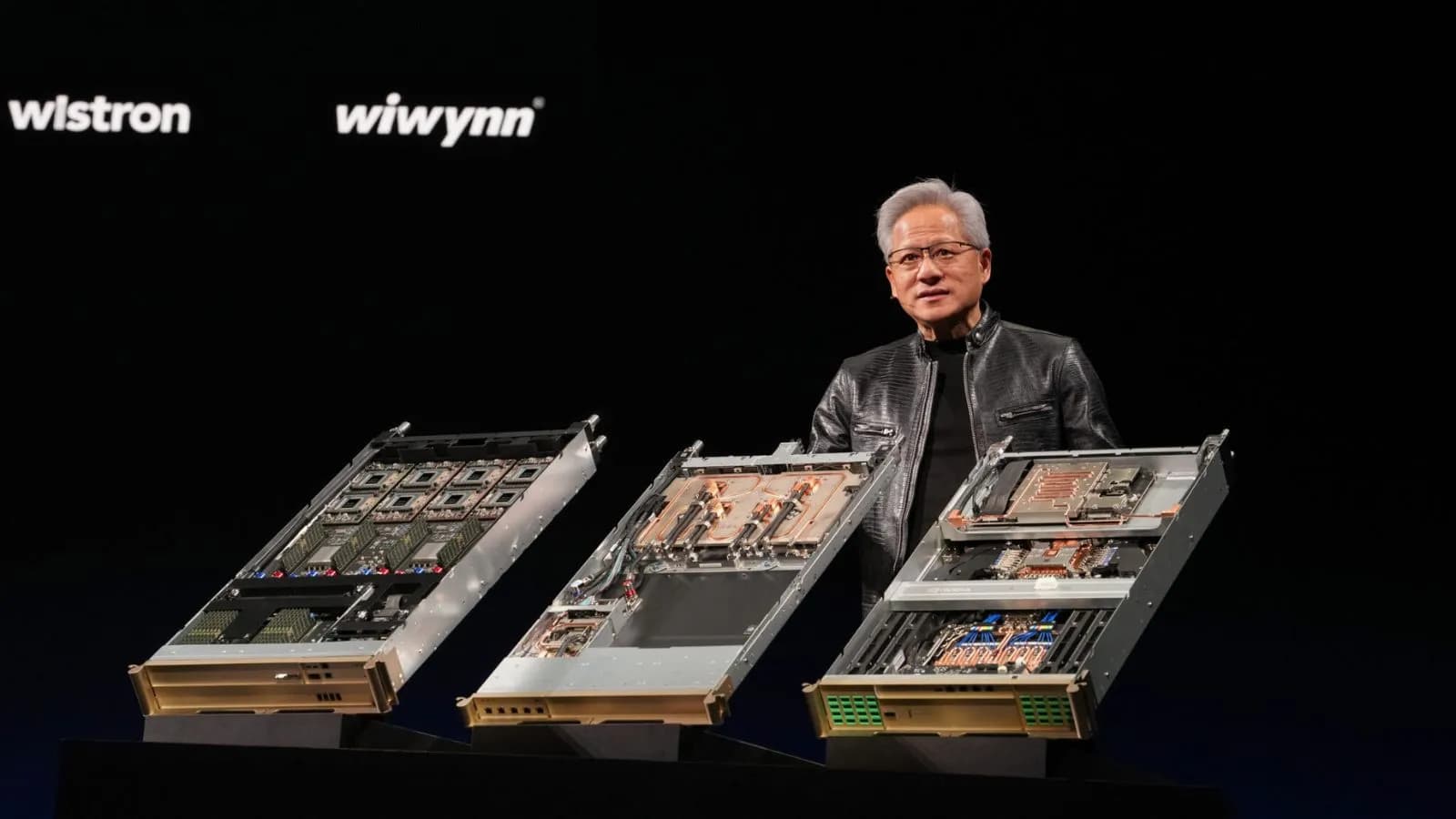
Nvidia on Monday, June 1, made a slew of announcements, including a new chip that puts AI capabilities directly into laptops and desktop computers.The RTX Spark PC chip was unveiled by Nvidia CEO Jensen Huang in his keynote speech at the Computex conference in Taipei, Taiwan. The PC trade show runs from June 2 to June 5, with some of the world’s largest tech companies expected to showcase their latest innovations in the Intel-Windows ecosystem.Nvidia’s RTX Spark PC chip is part of a three-year collaboration with Microsoft to “reinvent the PC” for the AI era. It is designed to run AI agents locally rather than relying solely on cloud computing. It was also developed in partnership with Taiwan’s MediaTek. “The PC is being reinvented. For forty years, you launched apps. Click. Type. With RTX Spark and Microsoft Windows, you ask — and the PC does the work. RTX Spark brings everything NVIDIA has built — CUDA, RTX, our AI platform — into a single superchip. Local agents. Frontier models. Creative workflows. RTX games. All on a laptop. This is the new PC. The personal AI computer,” Huang said in his keynote speech at Taipei Music Hall on Monday. The RTX Spark chip will power a new wave of Windows laptops and desktop PCs launching this fall. The devices, which aim to deliver all-day battery life and premium displays, will be made and sold by major brands such as Asus, Dell, HP, Lenovo, Microsoft Surface, and MSI. Models from Acer and gigabyte will follow, as per Nvidia. Huang also spent much of his keynote address on Monday highlighting the new Vera CPU (central processing unit). The new hardware could potentially transform how users engage with AI. It also marks Nvidia’s first major push into the Windows PC market. So far, Qualcomm had exclusive license to develop Arm-designed system-on-chip (SoCs) for Windows 11 devices. Here is a quick look at everything Nvidia announced at Computex 2026.Story continues below this ad RTX Spark PC chip The RTX Spark chip features an NVIDIA Blackwell RTX GPU with 6,144 CUDA cores and fifth-generation Tensor Cores with FP4 precision, connected via Nvidia’s NVLink to a high-performance, 20-core NVIDIA Grace CPU. To meet the processing demands of on-device agents, RTX Spark has been designed to deliver up to 1 petaflop of AI compute and 128GB of unified memory. This will enable users to carry out a wide range of compute-intensive tasks such as render ultralarge 90GB 3D scenes, edit 12K 4:2:2 video, run 120-billion-parameter large language models (LLMs) with 1 million tokens context, and play AAA games at 1440p resolution and over 100 frames per second, as per the company. Nvidia also said it is working with Adobe to optimise Adobe Premiere and Photoshop for RTX Spark-powered laptops.Story continues below this ad In an attempt to address security risks posed by AI agents, Nvidia said that the new RTX Spark-powered devices will come with new Windows security primitives and Nvidia OpenShell, which will provide “additional policy capabilities for the user to define what agents can and cannot do…” Vera CPU for agents Nvidia on Monday announced Vera CPUs to drive diverse workloads across industries, including agentic AI, reinforcement learning, and data processing. Its early adopters include OpenAI, Anthropic, and SpaceX. Anthropic is evaluating adding Vera to scale CPU-intensive agentic workloads, Nvidia said. The central processor gives Nvidia access to a new $200 billion market. “This (Vera CPU) is going to be our new major growth driver,” Huang said in an earnings call last month. Vera features 88 Olympus cores, Spatial Multithreading and a LPDDR5X memory subsystem that delivers up to 1.2TB/s of bandwidth. This helps “deliver higher end-to-end throughput and faster time to solution for users, improving responsiveness and efficiency across training, inference and agentic execution,” Nvidia said. It will be available to system builders and cloud partners starting this fall.Story continues below this
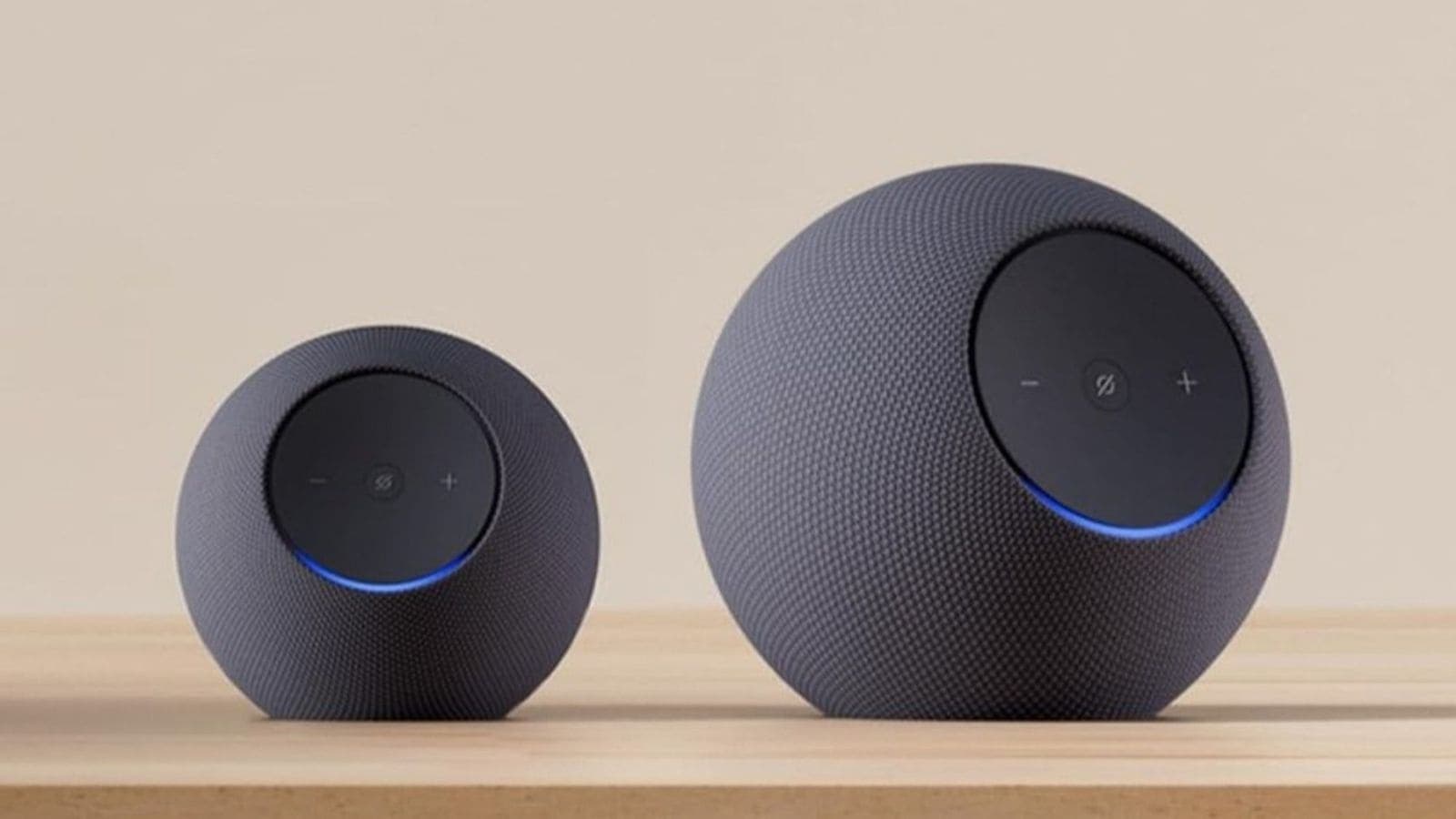
Both speakers include Omnisense technology for automated smart home routines based on motion and presence detection. (Image: Amazon)Amazon has expanded its smart speaker lineup in India with the launch of the new Echo Dot Max and Echo Studio, introducing upgraded audio hardware, new smart home automation features, and redesigned aesthetics focused on delivering premium sound experiences. The two Alexa-powered devices were announced on Wednesday, May 27, and are now available through Amazon India and Flipkart. The Echo Dot Max is priced at Rs 10,999 and is available in three colourways: Graphite, Amethyst, and Glacier White. The Echo Studio is priced at Rs 23,999 and is available in Graphite and Glacier White.The Echo Dot Max is Amazon’s most advanced Echo Dot model so far. For the first time in the Echo Dot lineup, the speaker uses a two-way audio system that combines a high-excursion woofer for deeper bass with a custom tweeter designed to deliver clearer vocals and sharper high frequencies. Amazon said that the Echo Dot Max delivers nearly three times more bass compared to the fifth-generation Echo Dot. The speaker also automatically adjusts audio performance based on room acoustics. Meanwhile, the updated Echo Studio focuses on immersive home audio. The smart speaker supports Dolby Atmos-powered spatial sound and uses a combination of a high-excursion woofer and three full-range drivers to create a wider room-filling soundstage. Amazon has also redesigned the Echo Studio with a new spherical appearance and acoustic fabric covering intended to improve both aesthetics and sound transparency. Amazon’s custom AZ3 silicon chips power both devices, while the Echo Studio gets the more advanced AZ3 Pro chip. According to Amazon, the chips improve Alexa wake-word detection performance by nearly 50 per cent while also enhancing conversational responsiveness.Story continues below this ad The speakers also introduced Omnisense, Amazon’s new ambient sensing platform for smart home automation. Omnisense combines ultrasound, Wi-Fi radar, motion sensing, accelerometer inputs, and audio detection to automate routines based on user presence, movement, or room temperature. Amazon says users can automate actions such as switching on lights, adjusting air conditioners, or activating appliances without manual interaction. The Echo Dot Max is also the first Echo Dot speaker to include a built-in smart home hub that supports Wi-Fi, Zigbee, Matter, Thread, and Bluetooth-based smart devices. Both speakers can also connect with compatible Fire TV devices to create a wireless Alexa Home Theatre setup. Amazon also confirmed that both devices are designed to support Alexa+, the company’s upcoming generative AI-powered assistant, once it launches in India.
Google I/O 2026 marked one of the company’s biggest AI-focused events yet, with Google unveiling a sweeping lineup of Gemini-powered products, agentic AI systems, developer platforms and futuristic hardware designed to push AI beyond chatbots and into everyday digital life. From the launch of Gemini 3.5 Flash and the new Gemini Spark AI agent to AI-powered Search upgrades, intelligent smart glasses, generative video creation tools and advanced scientific research assistants, Google positioned Gemini at the centre of nearly every product across its ecosystem.The company also introduced major updates for Workspace, Android XR, Google AI Studio, Antigravity and Google Flow, alongside new AI commerce tools such as Universal Cart and agentic shopping experiences. New creative tools like Gemini Omni and Google Pics aim to simplify video and image generation, while Neural Expressive redesigns the Gemini app experience with dynamic visuals and conversational interactions. Google additionally highlighted new AI transparency initiatives, enterprise-grade research tools under Gemini for Science, and AI-powered coding systems aimed at accelerating software development and automation workflows.Gemini 3.5 Flash with faster AI agents and coding tools Google has introduced Gemini 3.5, its latest family of AI models focused on combining “frontier intelligence” with advanced agentic capabilities. The first release, Gemini 3.5 Flash, is designed for complex multi-step workflows, coding, automation, and real-world AI tasks while delivering significantly faster performance than rival frontier models. Google says the model excels in coding, multimodal reasoning, and long-horizon task execution, with applications ranging from app development and financial document preparation to enterprise automation. Gemini 3.5 Flash combines frontier intelligence with action capabilities, delivering outputs up to four times faster than rival AI models.Gemini 3.5 Flash also powers new AI experiences across the Gemini app, Google Search, and the upcoming Gemini Spark personal AI agent. The company highlighted stronger safety protections, enhanced cyber safeguards, and improved AI transparency. Gemini 3.5 Flash is now available globally through the Gemini app, AI Mode in Search, Google AI Studio, Android Studio, and enterprise platforms, while Gemini 3.5 Pro is expected next month. Gemini app gets proactive AI agents, cinematic video tools and redesigned interface Google has announced a major upgrade to the Gemini app at I/O 2026, introducing more proactive AI-powered features, a redesigned interface, and new agentic capabilities. The update includes Gemini 3.5 Flash, Google’s latest fast-performing AI model, alongside a refreshed “Neural Expressive” design language with fluid animations, richer visuals, and integrated conversational voice interactions. Google also unveiled Gemini Omni, a new multimodal AI tool capable of generating and editing cinematic-quality videos using text, image, and video prompts. Another key addition is Daily Brief, an AI agent that creates personalised morning summaries using Gmail, Calendar, and other connected apps. Google also introduced Gemini Spark, a cloud-based 24/7 AI agent that can automate recurring tasks, organise workflows, monitor emails, and interact with connected services like Canva and OpenTable. Many of the new features will initially roll out to Google AI Plus, Pro, and Ultra subscribers, while a macOS Gemini desktop app with advanced voice features is also launching later this year. Google introduces AI-powered Search with agents, smarter browsing and custom mini apps Google has announced a major overhaul of Search at I/O 2026, introducing new AI-powered features designed to make Search more conversational, proactive, and agentic. The company is upgrading AI Mode with Gemini 3.5 Flash as the default model globally, alongside what it calls the biggest redesign of the Search box in over 25 years. The new AI-powered Searc



Discussion (0)