
Loading dispatches...
← Return to NewsroomTechnology
For Taylor Swift, Madison Square Garden’s Controversial Cameras Briefly Went Dark
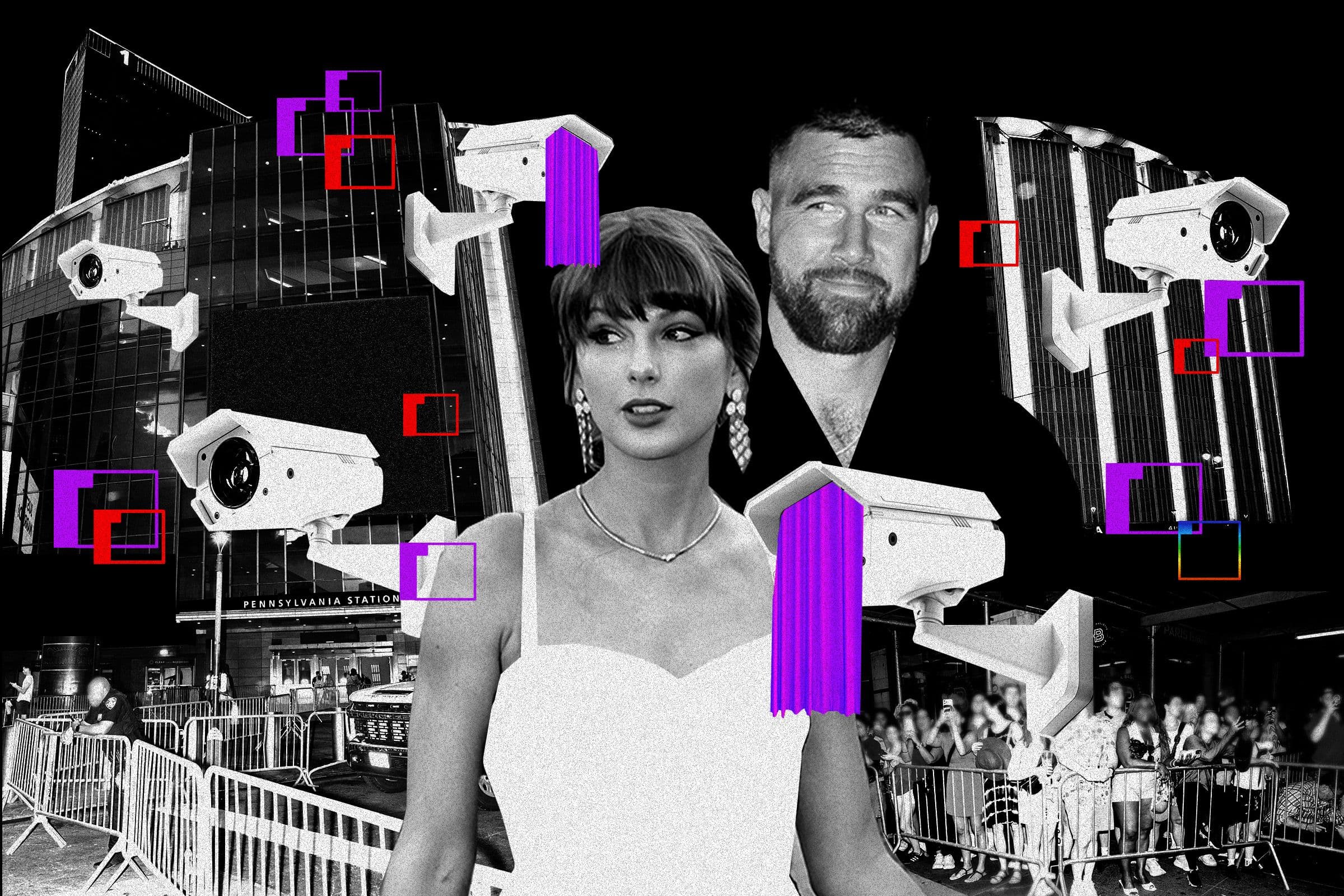
Madison Square Garden owner James Dolan has insisted that the face-recognition system and array of surveillance cameras deployed at his venues is “very, very useful for security”—a big reason why MSG “is the most secure venue in the country.”On the night of July 2, security in and around the Garden was particularly intense. Roughly 130 cops were deployed to the area. New York City officials were preparing to shut down the surrounding blocks to both vehicles and pedestrians the next day for a major, major event.July 2 was, of course, the kickoff to Taylor Swift and Travis Kelce’s wedding celebration, an approximately 100-person rehearsal dinner at Madison Square Garden’s Infosys Theater. And yet, on that extremely sensitive evening, Dolan’s MSG locked nearly all of its security team out of the network of surveillance cameras inside the arena, according to an internal document reviewed by WIRED. The move functionally prevented MSG security from fully operating the venue’s controversial face-recognition program that evening, two sources familiar with the Garden’s operations say.While the shutdown order reviewed by WIRED applied only to July 2, those sources add that they were told the lockout was repeated on July 3, Swift and Kelce’s wedding night, which drew roughly 1,000 of the biggest names in media, music, business, and sports.At every stage of their planning, Swift’s and Kelce’s teams went to extraordinary lengths to keep private what happened inside the Garden. Guests had to sign a nondisclosure agreement before they could receive a digital invitation. Tents were set up for cars to park in, so people could move in and out in relative secrecy (and, presumably, avoid the biometric surveillance gear positioned at the standard entrances). Wedding attendees were told there was a no-phone policy. The only detailed description of the event posted by a wedding night guest was quickly deleted.According to the internal document, an MSG executive ordered on July 2 a seven-hour lockdown of the Garden’s video management system, made by the security tech company Genetec, “due to a client privacy request.” Security staffers who ordinarily monitor the building’s internal cameras and the accompanying face-recognition software were barred from doing so. The memo states that only a handful of company leaders and engineers were allowed into their Genetec accounts. The rest were “disabled.”“If you somehow still have access to cameras after 3PM, you will be forcibly logged off,” the document warned MSG security personnel.Since 2018, Dolan’s company has experimented with biometric surveillance at its venues, which include Radio City Music Hall and the Beacon Theater in New York, as well as the Sphere in Las Vegas. The organization contends that the technology is a security measure, but there are many publicly documented cases where the face-recognition system appears to have been for something else: retribution.Fans who’ve been critical of Dolan have had their faces captured and then put on watch lists. A lawyer representing a cop was banned in April because his client is suing MSG. A mom trying to take her then 9-year-old Girl Scout to a Christmas show at Radio City Music Hall had her face flagged and was blocked from entering. The reason: She was an attorney, and her firm was in a legal dispute with one Dolan-controlled entity.Genetec’s software serves as the backbone for MSG’s video security system, monitoring feeds from the various cameras and allowing security personnel to manage the applications that rely on those feeds, including face recognition. Cameras at the guest entrances are tied into a face-recognition system made by eConnect. If someone’s face triggers an alert, Genetec then allows that person to be easily tracked across the camera network. According to a person familiar with the security surveillance setup, “This makes it much easier to track a person, because we can jump from camera to camera in real time and follow them.”As WIR
His client is a New York cop who was injured during a private security gig at Madison Square Garden. He sued the Garden on behalf of the cop.Now John Scola, a lawyer well known for representing local police officers, is banned from the high-profile arena and several others owned by the famously controlling James Dolan.For years, Dolan openly excluded entire law firms from his venues if a single attorney was in any sort of legal dispute with the Garden; those bans would then be enforced by Dolan’s increasingly sophisticated facial recognition system. What wasn’t entirely clear was whether Madison Square Garden was continuing to grow its legal blacklist. A letter to Scola, dated April 30 and reviewed by WIRED, suggested this practice continues. “Any tickets to MSG Venues,” the letter reads, “are hereby revoked.”The ban also highlights the fissures in the multilayered relationship between New York City’s public servants and its most iconic arena. As WIRED reported last month, MSG security functionally acted as a second, unsanctioned surveillance force in midtown Manhattan—without the New York Police Department’s formal permission. (NYC mayor Zohran Mamdani called this expansion beyond the Garden’s walls “deeply troubling,” and promised further investigation.)Dolan says that the biometric surveillance system is in place to stop dangerous actors from entering his properties—"if you're a terrorist, [the list] will say that's a terrorist," he once told the local Fox affiliate—but the NYPD hasn’t shared facial recognition or any other kind of data with the Garden. The Garden did, however, add a New York police officer’s photo to the many, many others in its facial recognition database, as WIRED reported. "New Yorkers should be able to go to a game or a concert without their rights being violated,” New York attorney general Letitia James told the Pablo Torre Finds Out podcast in a statement. “My office is closely reviewing the latest reporting on Madison Square Garden surveillance tactics."On the other hand, the Garden does hire NYPD officers, through the city’s paid detail program, to augment its own security forces. That’s what happened in February of 2025, when a lightweight boxing match was being held at MSG’s then-named Hulu Theater. The audience was likely to be large and “requir[e] active crowd control,” according to the lawsuit, so the Garden brass figured they’d need eight off-duty cops to help. “Despite that determination,” the suit claims, “only two officers were actually present.” One of them was seven-year NYPD veteran John Przybyszewski.At some point, an incident erupted near ringside.The rapper Lil Tjay seemed to spit in the face of a Garden security staffer who appeared to be trying to keep him from getting closer to the ring. Videos from the night show a chaotic scene. Lil Tjay’s bodyguards and entourage joined in the scuffle. According to the lawsuit, Przybyszewski claims he was knocked to the ground, pinned beneath several people.Przybyszewski claims that when he got up, he was “in severe pain,” and was sent to the hospital in an ambulance. According to the lawsuit, “diagnostic imaging revealed significant cervical and lumbar spine injuries,” some of them “permanent.”Przybyszewski blamed both the rapper and Garden officials. He sued Lil Tjay and Madison Square Garden. For a lawyer, he tapped Scola, who frequently represents NYPD officers in disputes with their bosses and the city. Scola filed his suit in February of this year. “Defendants made conscious operational decisions that placed Plaintiff directly in harm’s way. Those decisions caused his injuries,” the lawsuit claims.Madison Square Garden did not respond to WIRED’s request for comment for this story. A lawyer who has represented Lil Tjay also did not respond to a request for comment.Five weeks after Scola sued Madison Square Garden on behalf of his police officer client, the Garden announced a “Thank You, NYPD” event, featuring Cyndi Lauper and John Fogerty.


Discussion (0)