
Loading dispatches...
← Return to NewsroomWorld
Ebola spread in DR Congo 'alarming', charity warns, as WHO chief visits worst-hit area
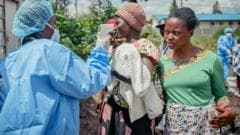
10 minutes agoEmery Makumeno,BBC Africa in Bunia, eastern DR CongoandJaroslav LukivAnadolu via Getty ImagesDR Congo is the epicentre of the outbreak though a few cases have been detected in UgandaThe rapid spread of Ebola in the Democratic Republic of Congo has created a "deeply alarming" situation, the medical charity Médecins Sans Frontières (MSF) has warned.Speaking two weeks on from the outbreak being declared, MSF Deputy Director Dr Alan Gonzales said never before had "so many cases" been recorded so soon. His comments came as the head of the World Health Organization (WHO), Dr Tedros Adhanom Ghebreyesus, arrived in the eastern Congolese province of Ituri - the worst-hit area - to oversee virus containment efforts.There are now more than 1,000 suspected Ebola cases in the DR Congo, and at least 246 deaths. Neighbouring Uganda has reported nine confirmed cases and one death.AFP via Getty ImagesWHO head Tedros Adhanom Ghebreyesu visited eastern DR Congo's Ituri province on Saturday"Two weeks after the declaration of the Ebola disease outbreak in Ituri Province, the situation is deeply alarming," Gonzalez said in a statement on Saturday."Never before has an Ebola outbreak recorded so many cases so soon after its declaration," he said, stressing his teams on the ground were "witnessing a response that has not yet caught up to the rapid spread of the epidemic"."The reality today is that nobody knows the true scale and severity of this outbreak. New suspected cases are being reported daily, yet hundreds of samples remain untested."Gonzalez added that containment efforts and humanitarian aid deliveries were being delayed by "major constraints", including border and airport closures.The WHO has repeatedly warned that ongoing conflict in the DR Congo was also significantly hampering the Ebola outbreak response.After arriving in Ituri's provincial capital of Bunia on Saturday, Tedros said he and his team were in the DR Congo "to see how the response is running and if there are challenges to help".He urged communities in the centre of the outbreak to play a bigger role in fighting the disease, saying they "understand the problems better and they know the solution as well". Tedros also said he understood how important it was for people to honour their dead at funerals - but warned that right now this was dangerous."Certain practices including touching of bodies of those who have died from Ebola, can spread the virus further. While we grieve for those we've lost, we must do everything we can so that we don't lose another, and get into a cycle of grief," he said.In Bunia, daily life appears largely unchanged. People continue to move around, trade and go about their normal activities. On arrival at the city's airport, passengers are directed to handwashing stations where they are required to clean their hands with soap and water.Public health advisories are displayed in parts of the airport, while information is also being broadcast on radio and television. These messages are being delivered in local languages as well as in French, the DR Congo's official language.One of the WHO head's first stops was the National Institute for Biomedical Research laboratory in Bunia, where samples from suspected Ebola patients are tested.Local health officials say the facility is now able to return results within 24 hours, helping doctors quickly identify infections and begin treatment.Until recently, samples had to be transported more than 1,500km (932 miles) to the DR Congo's capital, Kinshasa, causing delays that health workers feared could cost lives and allow the virus to spread further.In a separate development, health officials in Brazil said on Saturday that they were investigating a suspected Ebola case in São Paulo state. Brazilian media report that a 37-year-old man - who had recently returned from the DR Congo - was now in isolation in an infectious diseases institute.The current outbreak, a rare strain of Ebola known as Bundibugyo, has no

9 minutes agoEmery MakumenoBBC Africa, KinshasaReutersThe unrest highlights the struggle authorities face as cases of the virus riseAn angry crowd set alight a section of a hospital at the epicentre of the Ebola outbreak in the eastern Democratic Republic of Congo after family and friends of a young man thought to have died from the virus were prevented from taking his body away for burial."They started throwing projectiles at the hospital. They even set fire to tents that were being used as isolation wards," local politician Luc Malembe Malembe told the BBC about the scene he witnessed at Rwampara General Hospital.In the chaos, police fired warning shots to disperse the crowd.The body of a dead Ebola victim is highly infectious and the authorities need to ensure safe burial to stop the spread of the virus.Medical workers at the Rwampara hospital, located near the city of Bunia in Ituri province, where almost all of the cases have been reported, were placed under military protection as the police moved in to restore order.A healthcare worker was injured by stone-throwing protesters before law enforcement agents intervened, a hospital worker told the AFP news agency.The man who died was a popular figure in the local community and those upset by his death did not "grasp the reality of the disease," Jean Claude Mukendi, who is co-ordinating the security response to Ebola in Ituri, told the Associated Press.Witnesses told Reuters the young man was a footballer who had played with several local teams. His mother told the news agency she believed her son had died of typhoid fever, not Ebola.Malembe said the crowd did not believe the virus, which has so far killed more than 130 in eastern DR Congo, was real."People are not properly informed or sensitised about what is happening. For a certain segment of the population, especially in remote areas, Ebola is an invention by outsiders - it does not exist," the politician said."They believe it is the NGOs and hospitals creating this to make money, and this is tragic."He said two tents had been burned down, along with a body that had been due to be buried.Congolese Foreign Minister Thérèse Kayikwamba Wagner called it a "very frightening situation" for communities to be in."I think it is normal and it would be normal in any setting that all sorts of reactions are triggered, including challenging or questioning narratives that they might not feel comfortable with," she told the BBC's Newsday programme.She went on to say that the authorities were "ramping up" their activity in affected areas to ensure communities feel safe, understood and heard.The World Health Organization (WHO) recommends "safe and dignified burials" for Ebola victims, with trained teams using protective equipment to handle bodies.Six patients had been receiving treatment in the tents on the grounds of the hospital - and it was reported they may have fled in the mayhem.ReutersMedical staff were placed under military protectionThe WHO has called it a "public health emergency of international concern", but said it was not at pandemic level.On Wednesday, the WHO said 139 people in DR Congo were thought to have died from Ebola, out of 600 suspected cases.However, on the same day, Congolese Health Minister Samuel Roger Kamba told state broadcaster RTNC TV that authorities had registered 159 deaths.Two cases of the virus have been detected in DR Congo's neighbour, Uganda.The authorities there have temporarily suspended flights, buses and all other public transport crossing the border as a result of the outbreak. Passenger ferries are also not permitted on the Semliki River, which forms part of the border between DR Congo and Uganda.The outbreak has been caused by a rare species of Ebola known as Bundibugyo. There is currently no vaccine for this species and the WHO has said it could take up to nine months for a jab to be ready.On Thursday, the M23 - a rebel group that controls parts of eastern DR Congo - said it had confirmed the
Two possible "candidate vaccines" against the Bundibugyo species are being developed, but neither had gone through clinical trials yet, WHO advisor Dr Vasee Moorthy said on Wednesday.WHO chief Dr Tedros Adhanom Ghebreyesus said there have been 600 suspected cases of Ebola and 139 suspected deaths but numbers are expected to rise given the time taken to detect the virus.Speaking to journalists in Geneva, he said 51 cases have been confirmed in the Democratic Republic of Congo - where the first case was reported - and two in neighbouring Uganda.On Sunday, the WHO declared a public health emergency of international concern, but said it was not at pandemic level.Tedros said that after meeting on Tuesday, the health organisation's emergency committee agreed the situation was "not a pandemic emergency"."WHO assesses the risk of the epidemic as high at the national and regional levels and low at the global level," he explained.The 51 cases confirmed in DR Congo are in its eastern Ituri province - the epicentre of the outbreak - as well as North Kivu province. Of the two confirmed in Uganda's capital, Kampala, both had travelled from DR Congo, one of whom has died."We know the scale of the epidemic in DRC is much larger," the WHO chief said, adding that healthcare workers were among those who had died, which was a particular concern.Local health workers say some facilities are being overwhelmed. Although personal protective equipment has started to arrive, they say they are still working without adequate protection. Trish Newport, a Medecins Sans Frontieres (MSF) emergency programme manager, said health facilities are telling them: "'We are full of suspect cases. We don't have any space'. "This gives you a vision of how crazy it is right now," she told AFP news agency.The UK government has announced it will provide up to £20m to help to contain the outbreak. The money will pay for frontline health workers, improved infection control and disease surveillance.A WHO official said investigations were under way to find out how long the virus had been spreading for, but that their priority was to curb transmission.The first known case was a nurse who developed symptoms and died on 24 April, in Ituri's provincial capital Bunia. The body was repatriated to Mongwalu, one of two gold-mining towns where the majority of cases have been reported. Araali Bagamba, a lecturer who lives in Bunia, said people understand how dangerous the situation is. "For the last three days I haven't shaken anyone's hand and I observe that within the general population," she told the BBC World Service Newsday programme. "It's our habit to shake hands all the time... [but] the habit has changed."Ebola is spread through direct contact with bodily fluids and through broken skin, causing severe bleeding and organ failure.Bagamba said people "believe it will get worse before it gets better", because people did not initially realise it was Ebola.Ebola was first discovered in 1976 in what is now DR Congo, and is thought to have spread from bats.There are four species of Ebola known to cause disease in humans, including Zaire, which DR Congo has dealt with on numerous occasions and is most familiar with.The country is facing its 17th outbreak of Ebola, but the Bundibugyo species - which has not been seen for more than a decade - brings its own difficulties.Bundibugyo has only caused two previous outbreaks - in Uganda in 2007 and DR Congo in 2012 - when it killed about a third of those infected.Although less deadly than other Ebola species, the rarity of Bundibugyo means there are fewer tools to stop it.There is no approved vaccine for Bundibugyo, but expe


Discussion (0)