
Loading dispatches...
← Return to NewsroomEconomy
Joseph Campbell quote of the day: What the hero’s achievement really means
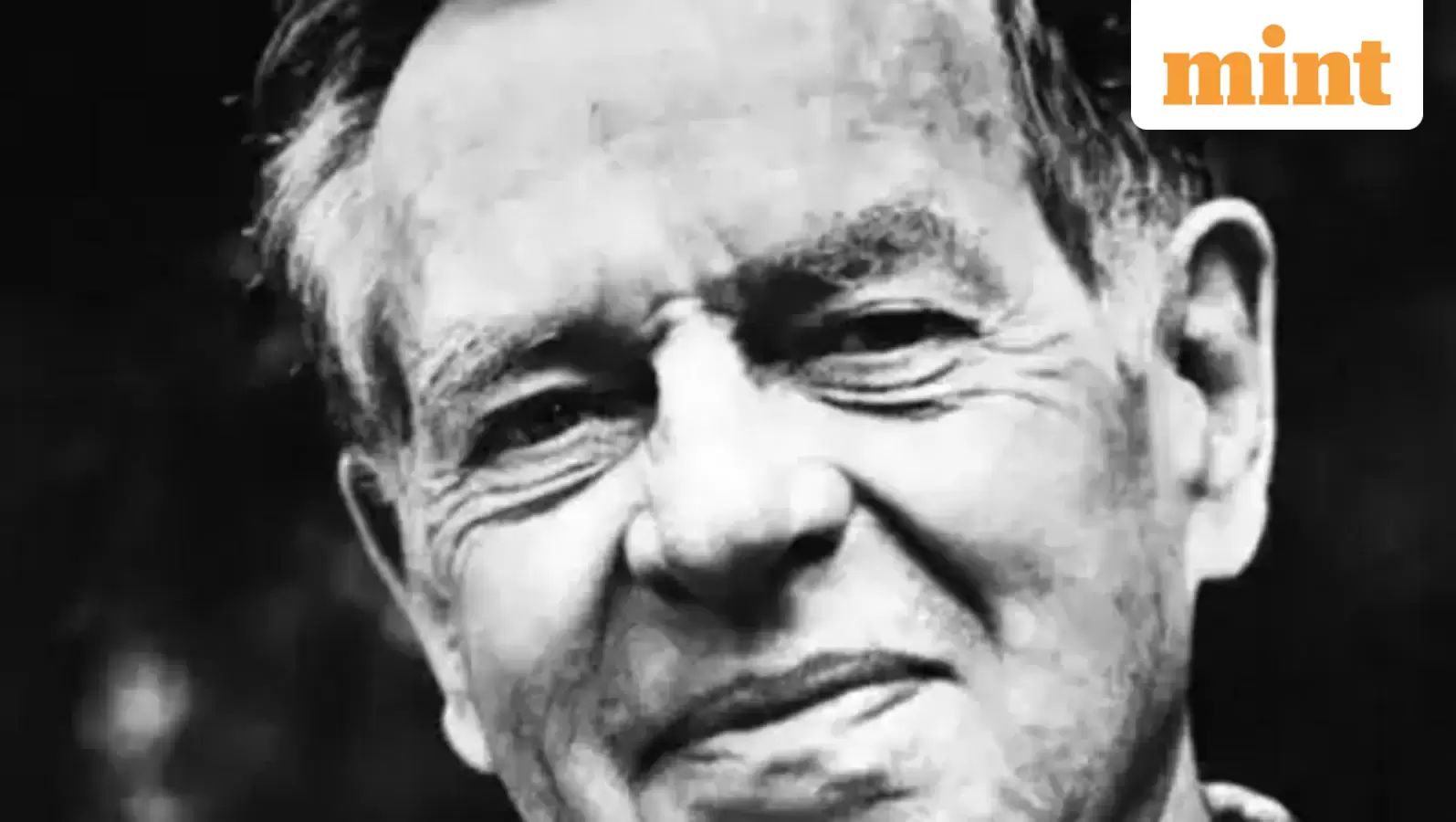
Joseph Campbell, born in New York City in 1904, became one of the most influential American scholars of comparative mythology. His work examined myths, symbols, rituals and heroic figures across cultures, arguing that human beings repeatedly return to similar story patterns to understand transformation, fear, purpose and meaning. His best-known book, The Hero with a Thousand Faces, published in 1949, popularised the idea of the “hero’s journey” or monomyth. Campbell later reached a wider public through the 1988 PBS series Joseph Campbell and the Power of Myth with Bill Moyers.“The achievement of the hero is one that he is ready for, and it’s really a manifestation of his character.”— Joseph CampbellThe fuller version comes from Joseph Campbell and the Power of Myth, Episode 1, “The Hero’s Adventure,” first broadcast in 1988. Campbell continues: “The adventure that he’s ready for is the one that he gets.”Meaning of the QuoteJoseph Campbell’s quote is about readiness. In myth, the hero does not receive a random adventure; the challenge arrives because something inside the hero is ready to be tested. The achievement is not only the external victory — the battle won, the mountain crossed, the treasure found — but the revelation of character under pressure.The deeper lesson is that life often gives people the challenges that expose who they are becoming. A difficult job, a failed relationship, a career setback, a creative risk or a personal crisis can feel accidental in the moment. Campbell’s idea suggests that such moments may also reveal hidden strength, courage, discipline or wisdom that the person did not know they possessed.This is not a claim that hardship is always fair or deserved. It means that transformation happens when a person meets a challenge with enough awareness to grow through it. The hero’s real achievement is not just success; it is becoming the kind of person capable of carrying the success.Why This Quote ResonatesCampbell’s quote resonates today because many people are being pushed into new “adventures” by forces they did not choose: AI disruption, job shifts, career reinvention, economic uncertainty, social pressure and changing ideas of identity. The World Economic Forum’s Future of Jobs Report 2025 says employers expect 39% of workers’ core skills to change by 2030, making adaptability, resilience, curiosity and lifelong learning essential.That is exactly where Campbell’s hero idea becomes practical. A professional learning a new skill, a student facing failure, an entrepreneur rebuilding after loss or a leader managing uncertainty may not feel heroic. But the challenge can still become a threshold: a moment that forces them to discover what they are ready to become.The Joseph Campbell Foundation notes that The Hero with a Thousand Faces explores hero journeys across multiple myths, including ancient stories such as Inanna’s descent into the underworld. That pattern still matters because modern people also move through symbolic journeys: leaving comfort, facing trials, learning from failure and returning changed.“Follow your bliss and the universe will open doors where there were only walls.”— Joseph CampbellThis is one of Campbell’s most famous ideas from The Power of Myth, often used to describe the call toward a life path that feels deeply alive and meaningful.Together, both quotes create a rounded lesson. “The achievement of the hero” is about readiness and character. “Follow your bliss” is about listening to the call that pulls you toward the journey in the first place.The combined message is powerful: you do not become heroic by avoiding difficulty. You become heroic by following the path that demands your growth, then meeting its trials with courage, attention and persistence.How You Can Implement ThisIdentify your current threshold: Name the challenge in front of you — career change, skill gap, rejection, conflict, public pressure, creative risk or personal uncertainty.Ask what quality it is testing
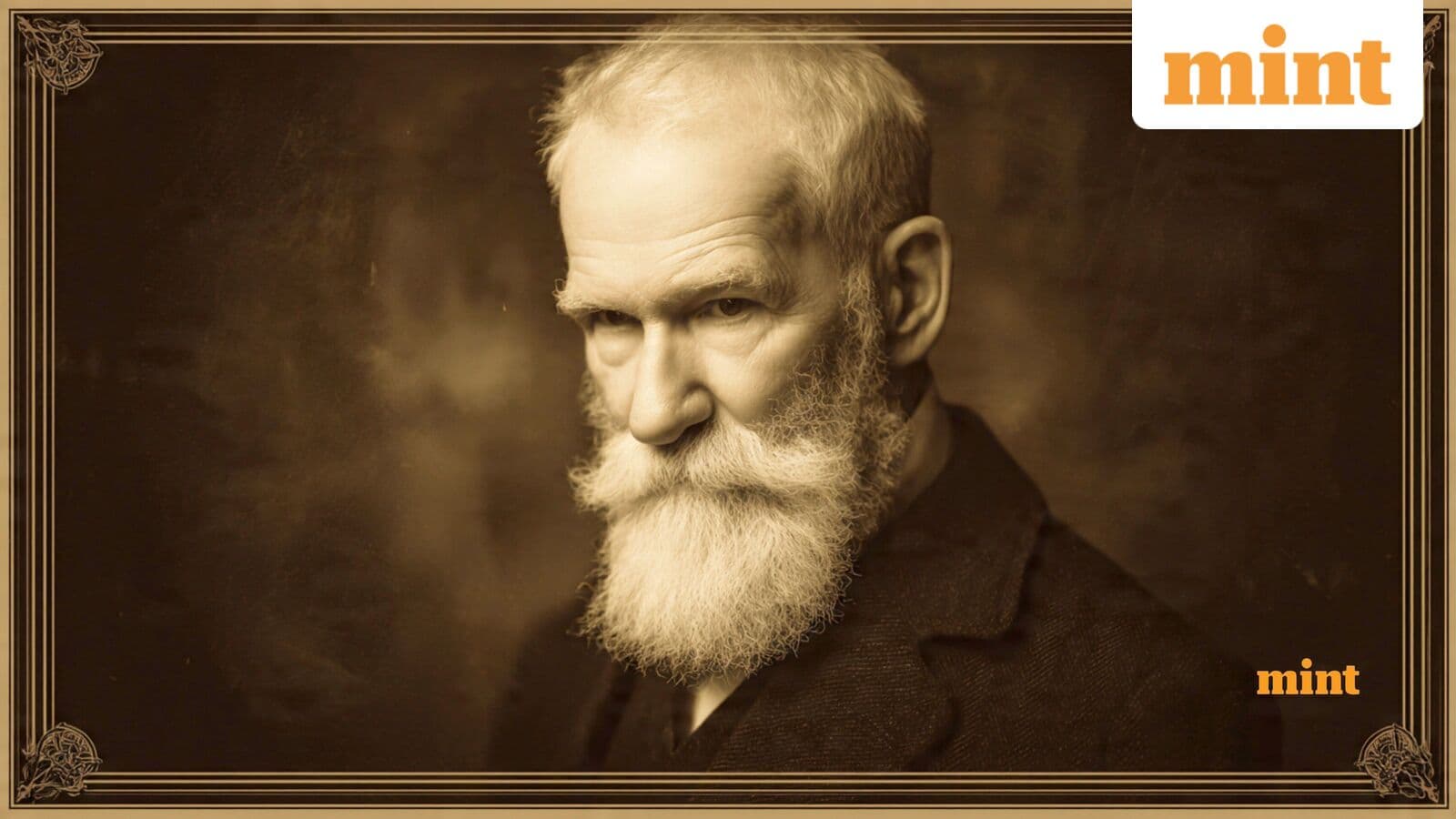
Today, the Quote of the Day us by George Bernard Shaw, which says: "Life isn’t about finding yourself. Life is about creating yourself"About George Bernard ShawGeorge Bernard Shaw, born in Dublin in 1856, became one of the most influential playwrights, critics and public intellectuals of the modern era. After moving to London in 1876, he struggled for years as a novelist before establishing himself as a drama critic, socialist thinker and dramatist. His major plays include Man and Superman, Major Barbara, Pygmalion and Saint Joan, and he received the Nobel Prize in Literature in 1925. Britannica describes him as an Irish comic dramatist, literary critic and socialist propagandist whose plays used wit to examine society’s contradictions.“Life isn’t about finding yourself. Life is about creating yourself.” — Often attributed to George Bernard ShawThis quote is widely attributed to Shaw in popular quote collections, but Quote Investigator found no substantive evidence that Shaw used this exact saying. The idea appears in related forms in later writers, including Sydney J. Harris and Thomas Szasz, so strict publication should mark the line as widely attributed / attribution uncertain.The quote challenges the idea that identity is something hidden and fixed, waiting to be discovered like an object. Instead, it suggests that the self is built through choices, habits, risks, failures, relationships and repeated action. You do not simply “find” who you are; you become who you repeatedly choose to be.The deeper lesson is one of agency. A person may be shaped by background, family, education, luck and circumstance, but they are not limited to passive discovery. They can create new skills, new discipline, new confidence, new values and a new direction through deliberate effort.This does not mean people can become anything without limits. It means the search for identity should not become an excuse for waiting. Life asks people to participate in their own becoming.Why This Quote ResonatesThis quote resonates strongly today because careers, identities and skills are changing faster than before. The World Economic Forum’s Future of Jobs Report 2025 says employers expect 39% of key job skills to change by 2030, making continuous learning, upskilling and reskilling central to future readiness.That makes the quote especially relevant for students, young professionals and anyone facing reinvention. AI, automation and new career models are forcing people to stop asking only, “Who am I?” and start asking, “What can I build in myself next?” In this context, self-creation becomes practical: learn the tool, build the habit, improve the craft, change the environment, and take ownership of the next version of yourself.“A life spent making mistakes is not only more honorable, but more useful than a life spent doing nothing.” — Widely attributed to George Bernard ShawThis second quote is also widely circulated as a Shaw line, though many public quote databases do not provide a primary textual source. Its spirit complements the self-creation quote because it explains how creation happens: through action, mistakes and correction.Together, both quotes create a powerful personal-growth lesson. The first says you create yourself. The second says creation requires risk. A person who never acts may avoid embarrassment, but also avoids becoming more capable, confident or alive.How You Can Implement ThisChoose one identity to build: Instead of saying “I want to find myself,” say, “I want to become more disciplined, creative, confident, healthy, skilled or courageous.”Turn identity into behaviour: If you want to become a writer, write daily. If you want to become confident, practise speaking. If you want to become fit, train consistently.Stop waiting for clarity before action: Take one small step first. Clarity often comes after movement, not before it.Use mistakes as construction material: After every failed attempt, ask what it taught you about your habits, f
Bernard Feringa, a Dutch organic chemist, says that science belongs to everyone. The Nobel laureate says it connects people in ways that power and politics often fail to do.Bernard FeringaScience has always been a universal language, transcending borders, politics and culture. Nobel laureate Bernard Feringa captures this truth in his words, reminding us that a molecule drawn in China or Argentina carries the same meaning everywhere. His reflection highlights the beauty of knowledge as a shared human pursuit, uniting people across nations in the quest for progress.Quote of the Day“When I draw a molecule in China or in Argentina, it is the same molecule. People understand immediately without knowing Spanish or Chinese. That is beautiful. Our common goal is not about power or borders of the country, it is about bringing forward human knowledge"- Bernard FeringaMeaning of the quoteThese words by Feringa carry a serene but powerful message about the true purpose of science and human progress. In a world deeply divided by borders, politics, conflicts, languages and national interests, the quote reminds us that knowledge has no confined area.Science belongs to everyone. It connects people in ways that power and politics often fail to do.Today, countries compete in almost every field. There are tensions over land, power, dominance, resources, technology and influence. At times, the world appears more focused on division than unity. In such an environment, Feringa’s words feel important and slightly intense because they directly challenge the idea that progress should belong to only one nation or group of people. A scientific discovery made in one corner of the world can improve lives everywhere. A molecule remains the same no matter where it is drawn because truth does not change according to geography.Science beyond national identityThe beauty of science lies in its honesty and universality. A mathematical formula, a chemical structure or a medical breakthrough can be understood by people from different cultures even without any translation, creating a silent bond among scientists, researchers and learners across the world. While languages divide people, knowledge often unites them.The quote also reflects the spirit of collaboration. Some of the greatest achievements in human history became possible because people from different nations worked together and shared their experiences and experiments. Vaccines, space research, climate studies and technological innovations are examples of collective effort. These achievements were not created for one flag alone. They were created for humanity.The quote indirectly criticizes the growing tendency to use knowledge for power struggles.Scientific advancement should not become a tool for domination or political rivalry. When nations focus only on control and superiority, the true purpose of knowledge gets lost. Bernard Feringa reminds us that the aim should be to move humanity forward, not to strengthen divisions.Message the world needs todaySuccess should not only be measured by personal achievement or national pride. Real progress happens when knowledge is shared and used to improve society and human life. Education becomes meaningful when it builds understanding rather than conflict.Feringa’s words may sound simple, but they carry emotional depth. In a divided world, they remind us that human knowledge has the power to rise above borders, war, languages and politics. That is what makes science beautiful. It does not ask where a person comes from; it only asks what can be discovered for the betterment of humanity.About Bernard FeringaBernard Feringa is a prominent Dutch chemist. He won the 2016 Nobel Prize in Chemistry. He shared this honour with Jean-Pierre Sauvage and Fraser Stoddart. They received the prize for designing and creating molecular machines.His major work happened in 1999. He built the first light-driven molecular motor. This is a tiny structure that spins in one direction when



Discussion (0)