
Loading dispatches...
← Return to NewsroomTechnology
Einride strikes deal to add 500 Tesla Semis to its fleet

Swedish electric and autonomous trucking company Einride said Tuesday it plans to buy 500 Tesla Semis and make the electric big rigs available to Amazon and other customers. The Tesla Semis will be added in phases to Einride’s fleet over the next 24 months, starting in September, according to the company. Einride will manage the Tesla Semis through its Saga AI software, a fleet management platform designed to give customers all the benefits of using electric trucks to carry freight without the financial and logistical burden that comes with owning them. Einride CEO Roozbeh Charli said this “deployment is yet another proof point that we can execute at the scale our customers demand.” And scale is what this deal promises, if Tesla can deliver. Tesla revealed a concept of the Semi in 2017 and five years later, after numerous delays due to the Covid pandemic and global supply chain shortages, the company delivered the first batch to customers like PepsiCo. Volume production of the Tesla Semi was delayed even further. It wasn’t until April 2026 that the first Semi rolled off its high-volume production line at its factory in Nevada. Despite that recent milestone, Tesla has pulled back on promises to reach “volume production” in 2026. Tesla said in its second-quarter shareholder letter and earning scall that it’s trying to increase battery production, specifically around the company’s 4680 cell, in order to start building the Tesla Semi (and its Cybercab) at scale. Einride, which went public in June, operates a fleet of about 200 of its own heavy-duty electric trucks for companies such as Heineken and PepsiCo. It has also developed autonomous pod-like trucks, which are noticeable for their cab-less design. The Saga AI software pulls it altogether, determining how those vehicles are used, routed, and charged. The deal with Tesla is outsized in its potential for Einride. It will triple the size of Einride’s fleet while sweetening the company’s sales pitch for its Saga AI software. Einride said the Tesla Semis will be available to customers across North America and extend its electric freight network to key corridors in California, Georgia, New Jersey and Texas. Einride is using a third party to finance the purchase of the Tesla Semis. And it could help Einride convert about $800 million in “potential long-term annual recurring revenue under joint business plans with shippers” into actual revenue, according to the company. The company, which was founded a decade ago, spent years developing the various components of its business from its software and electric trucks to the self-driving system in its cabless trucks. Einride is now pushing to scale its business, an effort that has accelerated in 2026. Einride struck a deal with Amazon to add 75 of its electric heavy duty trucks to the e-commerce giant’s Relay freight network and provide charging infrastructure across five locations in the United States. Einride also acquired EV charging company Flipturn, a deal that allows it to offer customers the full package of services, including electric trucks and the charging software needed to run them more efficiently and reliably. When you purchase through links in our articles, we may earn a small commission. This doesn’t affect our editorial independence. Kirsten Korosec is a reporter and editor who has covered the future of transportation from EVs and autonomous vehicles to urban air mobility and in-car tech for more than a decade. She is currently the transportation editor at TechCrunch and co-host of TechCrunch’s Equity podcast. She is also co-founder and co-host of the podcast, “The Autonocast.” She previously wrote for Fortune, The Verge, Bloomberg, MIT Technology Review and CBS Interactive. You can contact or verify outreach from Kirsten by emailing or via encrypted message at kkorosec.07 on Signal. View Bio

In May 2025, Mozilla announced that it was shutting down the popular read-it-later app Pocket, which it had acquired back in 2017 for an undisclosed amount. That led to a growing demand for alternative apps that could help people save online content, particularly longer articles, that they want to read later when they have more time. While Mozilla exited the business, saying the way people are browsing the web is changing, the shutdown boosted adoption of a number of other apps, like Matter, Instapaper, and Raindrop.io, among others. It’s supporting the creation of new, indie alternatives, as well. Many of the apps will support imports. However, Pocket users only had until October 8, 2025, to export their saved articles and other items, including lists, archives, favorites, notes, and highlights. Below are the read-it-later alternatives that are picking up where Pocket left off. Matter Matter is a GV-backed company that makes an eponymous iOS app along with browser extensions for Chrome, Safari, and Firefox. The app lets you listen to articles and transcribes your favorite podcasts. Though the app itself is free to use, you can pay $79.99 per year to unlock features like improved transcriptions for podcasts and YouTube videos, tools to adjust reading speed, and additional integrations with other apps like notes apps, Gmail, and Kindle. Image Credits:Matter In March 2025, the company also added an AI-powered co-reader to answer questions about different topics users might have while reading an article. Instapaper Instapaper, which was founded by developer Marco Arment in 2008, is one of the oldest read-it-later apps. It’s available on both iOS and Android, and lets you save unlimited articles and videos without paying any fees. It was acquired by Pinterest in 2016. Image Credits:Instapaper However, for $59.99 per year, you can add notes to saved articles, have a permanent archive of articles in your accounts, create a text-to-speech playlist to listen to stories, enable full text search for all saved items, and get the ability to send articles to your Kindle. The company allowed Pocket users to import their account into Instapaper. Users who imported this way also received an email offering a three-month free trial to Instapaper Premium. Raindrop.io Raindrop works primarily as an alternative bookmark manager for web browsers. However, its accompanying mobile apps for iOS and Android allow you to read your saved articles and PDFs. The free version gives you unlimited bookmark saving along with integrations like Zapier and IFTTT. If you decide to pay $33 per year, you’ll also get AI-powered suggestions for organizing your content better, full text search, reminders for your bookmarks, a duplicate and broken links finder, and a file upload limit of 10GB per month. Image Credits:Raindrop.io / raindrop.io Plinky Former Twitter engineer Joe Fabisevich created Plinky to allow users to save and categorize any kind of link, including articles, videos, recipes, and memes. The app is available across all Apple platforms, along with browser extensions to save links. Once you’re signed up, Plinky lets you use folders and tags to categorize your links, and even set reminders to read them at a specific time. Image Credits:Plinky You can save 50 links, create three folders, and use five tags with the free version. To remove these restrictions, you can pay $3.99 per month, $39.99 a year, or a one-time fee of $159.99. Pro users are able to save unlimited links, create an unlimited number of folders, use an unlimited number of tags, and set an unlimited number of reminders. Paperspan Paperspan is a very simple app that offers a reading list across devices, allows you to add notes, and has text-to-speech functionality. The app is free, but it offers an $8.99 per month subscription to unlock advanced search, as well as the ability to create playlists, show reading stats, and send your articles to Kindle. (Though the app wo

Today on Uncanny Valley, Brian Barrett, Zoë Schiffer, and Leah Feiger break down Meta CEO Mark Zuckerberg’s 6,500-word AI manifesto and why it ultimately rings hollow. Plus, why are job seekers scheduling bot-run interviews at 1 am? WIRED's Andy Greenberg also joins to unpack the best findings from Black Hat and Defcon, from a hacked kids’ smartwatch to a coin-sized device that can hijack a Boeing 737.Articles mentioned in this episode:The Rise of the 1 am Job InterviewHackers Stalked Me by Hijacking a Smartwatch for KidsThis Coin-Sized Device Can Hack a Boeing 737McDonald’s Built a 515-Page Dossier on Me. It Says I’ll Never Stop Eating ThereYou can follow Brian Barrett on Bluesky at @brbarrett, Zoë Schiffer on Bluesky at @zoeschiffer, Leah Feiger on Bluesky at @leahfeiger, and Andy Greenberg on Bluesky at @agreenberg. Write to us at [email protected].How to ListenYou can always listen to this week's podcast through the audio player on this page, but if you want to subscribe for free to get every episode, here's how:If you're on an iPhone or iPad, open the app called Podcasts, or just tap this link. You can also download an app like Overcast or Pocket Casts and search for “uncanny valley.” We’re on Spotify too.TranscriptNote: This is an automated transcript, which may contain errors.Brian Barrett: Leah, how did you like The Odyssey?Leah Feiger: I liked it.Brian Barrett: Good.Leah Feiger: I really liked it. I thought it was fun. The dialogue was kind of whatever, beautiful shots of the Sicilian ocean. And I went with my husband who loves to remind me that he studied Latin and Greek in high school, and he actually liked it too. So frankly, 10 out of 10 from our family.Brian Barrett: Good. Yeah, I agree. I think everyone who is complaining about it needs to stop. Anyway, welcome to WIRED Uncanny Valley. I am Brian Barrett, executive editor.Leah Feiger: And I'm Leah Feiger, director of politics and science.Brian Barrett: Today on the show, we're going to be talking about Mark Zuckerberg's manifesto about AI, which weighs in at over 6,500 words. We will be talking about it for less time than it would take to read it, so you're welcome for that. But most importantly, we'll discuss what it says about Meta's strategy as it continuously tries to catch up in the AI race.Leah Feiger: We'll also get into the rise of the 1 am job interview. As more people talk to a bot instead of a human for their first interview rounds, some job seekers are choosing to schedule theirs very late at night. We're going to look into that and how it's far from the only way that AI is changing job interviews as we know them.Brian Barrett: And later in the show, we'll be joined by WIRED's Andy Greenberg to dive into some of the most exciting research that came out of Black Hat and Defcon, two of the world's biggest cybersecurity events. So on Monday, Meta CEO Mark Zuckerberg published a roughly 6,500 word essay on AI titled, "The Future is for Everyone." And doesn't that sound nice? It's the latest entry in the unfortunate genre of philosophical manifestos from tech CEOs. They've all got one. Sam Altman, Dario Amodei. Everyone's got a manifesto these days.Leah Feiger: It's requirement. It's a requirement.Brian Barrett: Some people have multiple manifestos. Even Zuckerberg's manifesto was an expansion of a Wall Street Journal op-ed that he wrote. Anyway, they all want to lay out their views for the industry, for the world, why their companies are best positioned to tackle the future, why you shouldn't be scared of their products, right? The core argument of Zuckerberg's manifesto is that concentrating AI power in a few institutions is dangerous and broad access to these models is what you need to diffuse that power. He didn't name specific names, clearly taking jabs at OpenAI and Anthropic, which favor tighter control over their private models. At one point he writes, and I quote, "Historically hoping that an absolute power will benevolently provide for humanity

Bartesian’s cocktail makers would be best described like a Keurig or Nespresso machine, but for alcoholic drinks. The Bartesian Duet model that I tested certainly lives up to that description — it’s really easy to serve a bunch of different cocktails with the push of a button, plus your own liquor. But as I sipped on my raspberry ginger gimlet, I couldn’t shake the nagging question: who is actually going to buy a $300 cocktail robot? There’s nothing wrong with the product. And it does exactly what it says! In the sleekly designed machine, you add your spirits of choice (between one and four types of liquor, depending on what model you’re using) and plop in a Bartesian capsule with hyper-concentrated mixes for multi-ingredient drinks like espresso martinis, watermelon margaritas, mai tais, and cosmos. There’s a barcode on the capsule that your machine scans to determine what spirit (or spirits) you need in your drink, and then you can select how strong you want your drink to be, which modulates the amount of water the machine will use to dilute the concentrate. Then, you put the drink in the provided, high-quality cocktail shaker with some ice to cool it down before pouring it into your glass. When I invited some friends over to test the Bartesian, we enjoyed the inherent novelty of trying out a product we’d never seen or used before. Once we all sat down with our various drinks, we tried to decide who actually makes up the target audience for such an odd product, which also requires the purchase of cocktail capsules at about $2.50 each. Image Credits:Bartesian / The Bartesian is not for true cocktail lovers — the capsules don’t actually contain any alcohol, which means that if you’re making a drink like an aviation, you’re getting some sort of non-alcoholic approximation of ingredients like crème de violette and maraschino liqueur. It’s no coincidence that my friends and I all liked the Bartesian’s lemon drop capsules the best, since the only alcoholic ingredient in the drink is the vodka that we bought ourselves to add to the machine. To be fair to Bartesian, it’s not like you’d recommend a Nespresso machine to your friend who owns a Fellow kettle and only buys single origin beans. This cocktail robot is also not for anyone who is even remotely worried about the amount of counter space in their kitchen. It’s pretty big for something that you (hopefully?) aren’t using on a daily basis, and if anything, it would probably encourage me to start drinking more often just to justify the $300 expense. Plus, if you have counter space to spare, you probably have a lot of money. And if you have a lot of money and like cocktails, I’d say you are more likely to have a fully stocked bar with fancy liqueurs already. What will the other partners at your law firm say if you serve aviations that don’t use real crème de violette? Even as someone who thinks Tito’s is top-shelf liquor (I am not that fancy), I could tell that something tasted a little bit artificial about most of these drinks. My friends and I all doctored up our drinks with some seltzer and lemon juice, which made them taste much better. But this kind of post-robot mixing sort of defeats the point of the whole endeavor. Maybe my tastes just don’t align with the mixologists at Bartesian — my colleague Lauren reviewed a different Bartesian unit last year and told me that she loved it, especially the margaritas. Drink preferences aside, I still keep coming back to the same question: who is this product for? I could see the Bartesian being useful if you host a lot of parties and don’t hire a bartender, since you can make a whole cocktail menu’s worth of drinks without much effort or planning. One friend remarked that this machine feels like the sort of thing that an older couple would keep in their beach house to impress their friends. A colleague suggested that this could really shine in a retirement home. Personally, I could see a Bartesian at a co-working space’s happy
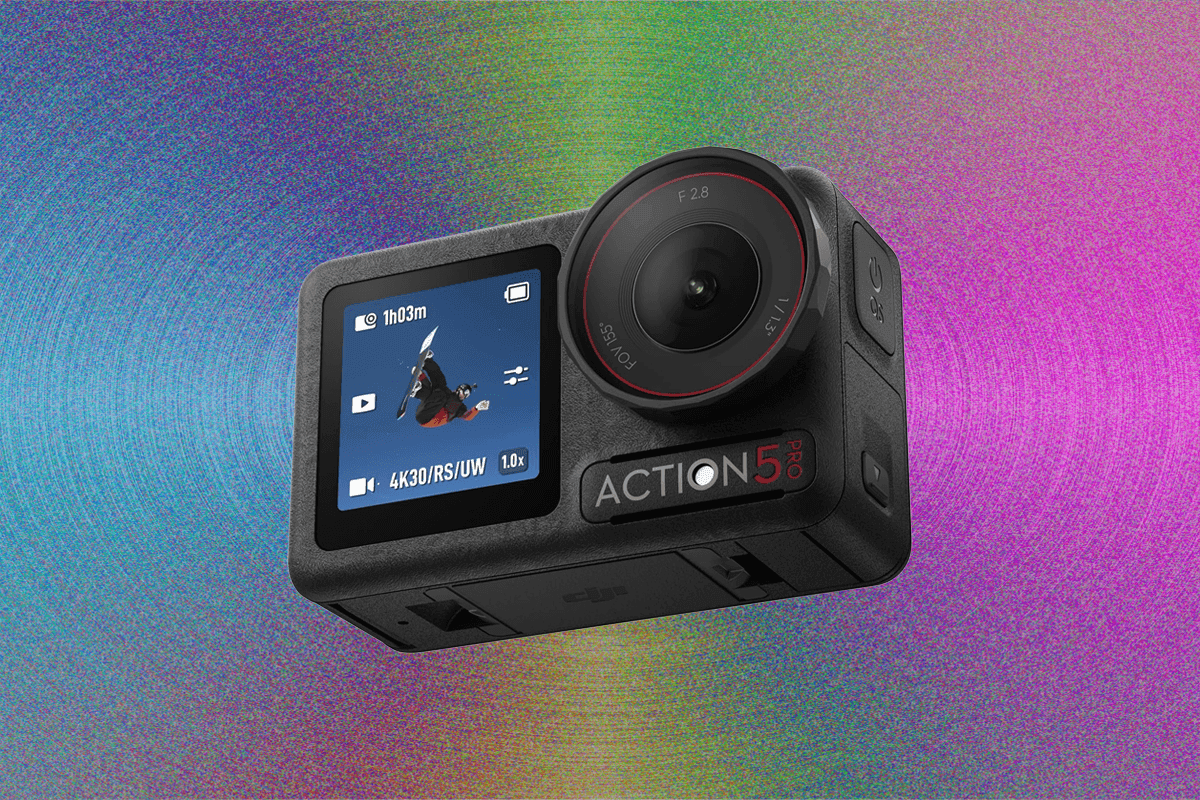
Best Flying Action CameraPhotograph: Sam KieldsenHoverAirX1 ProMaxIf I had to pick a video trend of the year, it'd be solo adventures shot from a third-person point of view—as if you have a film crew following you. If you want to imitate a Hollywood production without the personnel, a drone is an essential piece in your filming kit. Of all the drones I've tested, the Hover Air X Pro is the best at being a flying action camera. It's spendy, and not without its quirks, but no drone is better at following you through all kinds of terrain, and no other drone is this easy to use.All you do is unfold it, hit the power button, select the video mode, and then place the drone on your outstretched palm facing you. Tap the power button again, and it’ll head out to capture your shot. When you're done, it'll land in your hand again. It can follow you at up to 26 mph, shoots up to 8K/30-fps video, and offers 50 GB of built-in storage (expandable by 1 TB via microSD card). The one thing I don't like is the battery life, which is only about 15 minutes in my testing. The flip side to the poor battery life is that the battery is small, meaning you can carry two or three when you go out.WIRED/TIREDWIREDExcellent follow system and obstacle avoidanceSimple operation and range of automated flight modesGood image qualitySmaller and lighter than a DJI FlipTIREDShort battery lifeController costs extraBest for Underwater ActionCourtesy of OlympusOlympusTough TG-7The OM System (formerly Olympus) TG-7 isn't a strap-it-to-your-head-and-shred camera, but if you're shooting underwater—a common use case for these cameras—this is your best bet. Besides the Mission 1, the sensor in the TG-7 is the largest of the bunch (it's a 1/2.33-inch CMOS sensor), and this is a seriously tough camera: freeze-proof, crush-proof, dustproof, and shockproof (you can drop it from 7 feet). It also has "real" camera features you won't find elsewhere, like focus stacking for close-ups, an extensive set of add-ons, extra lenses, and even an underwater case that extends its depth rating. The catch is that you probably don't want to strap it to your head, but for certain use cases, it will give you better-looking photos and video in many situations.Alternative: Ricoh's Pentax WG-8 ($477) looks very similar to the TG-7 but costs a bit less and uses a 20-MP sensor instead of the TG-7's 12 MP. Images are sharp, and the LED lights around the lens work remarkably well for macro images. The major limitation is that it only shoots JPG, not RAW photos. But if you don't care about editing your RAW files and just want images straight out of the camera, the WG-8 is a cheaper alternative to the TG-7.WIRED/TIREDWIREDMicro 4/3 sensor captures excellent high res imagesVideo capabilities are dated but still good enough for most (4L/30fps)Large lens with optical zoom (25-100mm)TIREDFuture of Olympus camera line is unclearThe B-RollAbout all those cheap cameras on Amazon: Readers often ask, why spend $400 on a GoPro when they can get a camera with 4K video for $100? It's a fair question, and the answer comes down to software, primarily image stabilization. Action cameras are designed to be strapped to helmets or clipped to your chest while you skydive, rock climb, or race through the city on a scooter. Without stabilization, the results are something even your closest friends won't sit through. So yes, you'll get 4K footage with the cheaper cams, but it'll be footage no one wants to see. In our view, you're better off spending another $100 for an older GoPro or DJI Osmo Action on sale.Best Accessories to Trick Out Your CameraPhotograph: Scott GilbertsonOnce you have an action camera, you're good to go for most use cases. GoPro, Insta360, and DJI all provide helmet mounts and other ways to stick your camera where you want it. But there are some nice extras that can make getting that shot you're dreaming of even easier. Here are a few:A good microSD card: The action camera you buy may include an SD card

On Monday, Mark Zuckerberg published a 6,500 word manifesto about personal AI, largely about the possibilities for the “personal superintelligence” systems Meta AI is building. The ideas in the post aren’t totally new. A version of the essay ran in the Wall Street Journal a few months ago and he’s talked about them on Meta earnings calls before. But this is probably the most detailed version he’s shared. I’ve seen it described as an anti-doomer essay, but that’s not quite right. It’s more of a description of why Mark Zuckerberg is personally excited about the ways AI is going to change society. Yet, even as Zuckerberg tries to paint a picture of the wonderful future abundant superintelligence will bring, he keeps reminding us of all the ways it’s likely to go wrong. I find AI exciting too — that’s why I keep writing about it — but a lot of the public sees AI as creepy and unpleasant. So it’s worth pinning down exactly what’s happening here, and why Zuckerberg isn’t doing the industry any favors with essays like this. Social media is still a sensitive topic in the tech industry, and we don’t have the space here to litigate the relative merits of every single complaint people have about Facebook. Suffice it to say, Facebook as a prodcut and Zuckerberg as a person are both unpopular with the US public. A recent survey found that 64 percent of Americans believe social media has been harmful to democracy and a similar percentage believe it should be more heavily regulated, numbers that cut evenly across partisan lines. Just this weekend, a court fined the company $567 million for being harmful to children. The vibes are bad. I don’t bring this up to imply that Zuckerberg should withdraw to the wilderness in shame — but the fallout from social media is one of the central reasons we’re now seeing so much anxiety about the social impact of AI. Whether it’s fair or not, the public does not trust tech executives to make sure new technologies like this have a positive impact on society. Instead of acknowledging that and trying to win back their trust, this essay demonstrates over and over again how the trust was lost in the first place. A large part of the essay is devoted to hazy generalities about intelligence — very similar to the hazy generalities Zuckerberg and Dorsey used to give about free speech. Here is one for instance: As everyone gains more powerful tools, each person will become more capable of shaping the future, not less….People and institutions with competing interests naturally check and balance each other to lead towards positive outcomes. The best and most realistic path to building a positive AI future is by delivering superintelligence to everyone. I guess? I can think of a few examples of conflicting interests leading to bad outcomes, but let’s put that aside. The weirder thing is that this is being presented as an earnest philosophical conclusion, instead of a specific product called “personal intelligence” that Meta is bringing to market. If you’re already inclined to distrust this person, you might worry that they’re writing all this to convince themselves that nothing bad can happen. That feeling got more intense for me when Zuckerberg got to the specific examples, many of which are alarmingly out of touch with the reality of how AI tools are being used. For instance, this is Zuckerberg’s take on AI in education: Everyone will have a personalized tutor and coach with a PhD in every subject and unlimited patience to help you learn anything you want. Students will have extra help in areas they need it that is currently only available to those whose parents can pay. Adults will have a superintelligent learning assistant that knows exactly how to teach you new job skills, new languages, new hobbies, or anything else you’re interested in. Of course, the product Zuckerberg is describing already exists: this is a consumer chatbot like ChatGPT, Claude and Gemini. These tools really are helpful if you want to l

TechCrunch Disrupt 2026 takes place at Moscone West in San Francisco from October 13–15, but some of the best conversations aren’t exclusive to the stage or held within workshops or the halls. They spread into happy hours, rooftop mixers, breakfast meetups, and pitch nights across the city throughout the week of October 10-16. Many of those events come through the official Disrupt Side Events. One of the best parts of the program is that it’s a wide-open opportunity. If you have a good idea for a theme and a place to host, you’re well on your way toward applying to host one. Here’s how it works: You put together the concept — from a founder mixer, an after-hours panel, a themed party, a morning run, whatever fits your goal — and the TechCrunch team helps put it in front of the attendees already in town for Disrupt. There’s no cost to apply, no licensing, just the best ideas rising to the top and adding to the community’s experience in October. Start your application right here! What does hosting a Disrupt Side Event mean? There are a few things you should know up front about how our Side Event program works: Side Events can be hosted throughout the week of October 10-16, and our deadline for applications is September 4. You own the format. From a cocktail party to a rigorous workshop to a casual networking brunch, it’s about getting the community into the room. You’re responsible for logistics like the venue, budget, registrations, and a degree of promotion. At the end of the day, this is your event, running under the Disrupt banner. TechCrunch will spread word about the event through our Side Events page, agenda, app, attendee emails, and site coverage. Hosts receive a discount promo code on Disrupt passes to share across their own networks. For an even more detailed rundown of our Side Events, check out this guide. What kinds of events were hosted in 2025? Last year’s lineup ranged from VIP penthouse mixers with major cloud players to founder pitch nights, community meetups, running clubs, and late-night AI debates. There were dozens of different formats and vibes, all pulling from the same pool of more than 10,000 founders, investors, and community members enjoying the Bay Area. If you have a community, a product story, or just a great excuse for a party, this is the easiest way to put your name next to Disrupt without buying a table or a sponsorship package. That said, those options are available too. You get a ton of additional benefits by getting an exhibit table for the Expo Hall, and you can learn more about sponsorship options here. Appy to host a Side Event here by September 4! And if you have any additional questions, contact side.events@techcrunch.com. And regardless of whether you’re hosting, we’re excited to see you at Disrupt 2026. And if you’re still on the fence for Disrupt itself, you can save up to $400 on your ticket by following this link. This special discount ends at 11:59 p.m. PT Friday, August 7. When you purchase through links in our articles, we may earn a small commission. This doesn’t affect our editorial independence.

Image Credits:Slava Blazer Photography 3:00 PM PDT · August 6, 2026 Not everyone needs a keynote slot to make noise at TechCrunch Disrupt 2026. Sometimes the best way to meet investors, customers, and partners is by exhibiting directly on the Expo Hall floor at San Francisco’s Moscone West from October 13-15. That’s exactly what our Exhibit Program offers, and it’s still open to showcase your startup. Here’s what $12,500 buys you: A 6’ x 30″ table in the Expo Hall, which is the highest-trafficked part of Disrupt, where more than 10,000 founders, VCs, and tech leaders come looking for partnerships, investments, and networking. We provide the table, linen, chairs, and signage so you can focus on showcasing your startup — not logistics. 10 Disrupt passes, including five all-access Exhibitor-Partner passes and five Expo+ passes, so your whole team can work the floor, not just staff a booth. Those cover nearly $4,000 of the exhibition price by themselves! Lead generation through the Disrupt 2026 mobile app, so every conversation turns into a follow-up, not a lost business card. Access to the Disrupt 2026 press list and Silver Tier sponsor branding across the site, app, and signage. Joining fellow exhibitors is the fastest, lowest-lift way for a startup at any stage to get in front of the exact room that matters, from investors sourcing deals, to operators evaluating tools, to founders scouting partners. There is one catch, though: Tables are limited. This offer ends when the last exhibit table sells out, or on September 25 at 11:59 p.m. PT, whichever comes first. Book your exhibit table now by heading here. Or, if you’re not ready to exhibit this year, get a Disrupt 2026 ticket here while we’re running a limited-time $400 discount and start planning your presence for next year! Image Credits:Slava Blazer Photograpy Topics When you purchase through links in our articles, we may earn a small commission. This doesn’t affect our editorial independence.

Danielle Egan and Athena Leong know how to have fun. Between the two of them, they’ve organized a citywide scavenger hunt in San Francisco and turned a viral prank into an exclusive NYC restaurant for a night. They even created an alternative to a running club for socializing, dubbed a “sit club,” where people just bring their chairs and relax. Now, with their new startup, Outernet, the co-founders want to help others add more fun to their lives, too. The app’s name is inspired by the concept of using the internet as a tool to get you to go outside, hence “outernet.” It’s one of several apps that helps you save the things you see online — like local events, restaurants or bars to try, or other city landmarks — and turn them into a list of to-dos for exploring the world around you. Outernet’s pitch is that instead of simply liking a post about something you’d like to see or do on social media, you should share it to its app, where it will track the activity or place you want to visit for you in an organized interface. (Invite codes to try the app for yourself are at the bottom of this post). What makes Outernet different from others in the space, like Albo, Tabi, or Plotline, is who’s behind it: founders who have devoted much of their time to playfulness and having fun offline. Now, they want to bring that same spirit into their app. Image Credits:Outernet “In my free time, I’m very passionate about getting people to go outside and do things,” explains Egan, whose offline persona is quite different from her former day job working in product BizOps at LinkedIn. “I just love capturing attention in unexpected ways and delivering delightful things.” She says the thesis behind the app is becoming the “motivation engine for IRL” — something that removes the friction between wanting to do something and actually going out to do it. Outernet taps into an already common consumer behavior. As you scroll TikTok and Instagram, you’re often inspired by a creator’s post, so you’ll save it in the app as a reminder. But then you promptly forget about the idea as you continue to consume more content. Outernet solves this problem by keeping track of the things you want to do or places you want to visit, all in one place. Image Credits:Outernet To save a post to the app, you’ll tap the share option from the source app, like TikTok or Instagram, then scroll through the list of places you can share to until you find Outernet. You can also paste in social media URLs or website links directly into the app, or upload a photo of something you see, like a flyer. To organize everything, Outernet leverages AI to pull relevant information, like the date, time, location, and details about the activity you want to try or the location of a place you’d like to visit. Events are saved to a chronological feed, which you can revisit whenever you’re looking for something to do. Other activities without a date, as well as places you’d like to visit, are organized into separate tabs within the app. You can also save events to your Apple or Google Calendar. Image Credits:Outernet The app can also send proactive reminders and nudges that encourage you to go do the things you’ve saved. Then, as you explore places in the real world, you can “stamp” them as such, building what will eventually become a passport documenting your activities. Image Credits:Outernet “We’re thinking of different ways of creating maybe some sort of like passport book where you can look at all the things [you’ve done] and maybe share that with friends and get some sort of sense of pride of that,” Egan says of future product plans. They’re also thinking of using traditional gamification techniques to encourage activity, like giving out stamps when you reach different milestones. The idea for Outernet came out of the co-founders’ experience designing a citywide scavenger hunt in San Francisco, called “Pursuit,” which began three years ago and is now held annually. The monthlong game

Rivian spinoff Also will finally start delivering its first e-bikes to customers next week, after months of delays related to unspecified supply chain issues. The company told TechCrunch on Friday that the Launch Edition of its TM-B e-bike, which retails for $4,500, has started shipping from its manufacturer to its warehouse in the U.S. Also said it expects to deliver all Launch Edition bikes between next week and September. Also began as a skunkworks project inside Rivian in 2022, after CEO RJ Scaringe started looking into making an e-bike to complement his portfolio of electric vehicles for the outdoorsy set. The company spent a few years tinkering with the idea, and even hired Jony Ive’s design firm LoveFrom to help with an early design, as TechCrunch first reported in 2025. In March 2025, Rivian spun out Also as its own company, with $105 million in backing from Eclipse. The startup revealed its first e-bike, the TM-B, in October of last year. It originally targeted a “Spring” 2026 ship date, but supply chain headaches got in the way, and the company pushed the delivery window to July. “The primary factor driving our updated summer timeline is current stress on global supply chains. A rapid, industry-wide spike in demand for raw materials and electronic components has impacted key parts required for the TM-B. This has temporarily delayed our planned manufacturing ramp-up and pushed our first delivery dates past our original spring window,” the company wrote in June on a support page. “Our engineering and production teams are working around the clock to minimize these constraints without cutting a single corner on safety or quality.” Also declined to say what components, specifically, caused the delay. Also has big plans beyond the TM-B. The startup mostly refers to itself as a “vehicle” company, and has plans to make four-wheel pedal-assist cargo vehicles for Amazon. The company is working on an autonomous delivery vehicle for DoorDash, too. But for now, Also needs to focus on delivering its first e-bikes while navigating the next set of headaches for a company shipping products like these: customer service. On Friday, the last day of July, a number of customers were venting in a thread in the r/ALSOmicromobility subreddit about the repeated delays. “I’m really frustrated by the lack of communication and the actual miscommunication/lies from Also regarding shipment timelines,” the original poster wrote. “Why do they keep making these promises about shipping timelines just to blow right past them without any communication or actual updates? It really makes no sense.” “Hey we’ve still got a few business hours left in July. Maybe we’ll get an email later this morning ☺️,” a different user responded. Not everyone was so patient. “Couldn’t wait any longer and canceled my reservation,” another wrote. When you purchase through links in our articles, we may earn a small commission. This doesn’t affect our editorial independence. Sean O’Kane is a reporter who has spent a decade covering the rapidly-evolving business and technology of the transportation industry, including Tesla and the many startups chasing Elon Musk. Most recently, he was a reporter at Bloomberg News where he helped break stories about some of the most notorious EV SPAC flops. He previously worked at The Verge, where he also covered consumer technology, hosted many short- and long-form videos, performed product and editorial photography, and once nearly passed out in a Red Bull Air Race plane. You can contact or verify outreach from Sean by emailing sean.okane@techcrunch.com or via encrypted message at okane.01 on Signal. View Bio



Discussion (0)