
Loading dispatches...
← Return to NewsroomEconomy
US sanctions Iran's Persian Gulf Strait Authority over Hormuz traffic control – ‘Attempt to extort global maritime…’

The United States on Wednesday (local time) imposed sanctions on Iran's Persian Gulf Strait Authority (PGSA), accusing Tehran of using the body to "extort" commercial vessels transiting through the Strait of Hormuz and "funnelling" revenue to the Islamic Revolutionary Guard Corps (IRGC).The move, announced by the US Department of the Treasury's Office of Foreign Assets Control (OFAC), adds the PGSA to the Treasury Department's Specially Designated Nationals (SDN) list as part of the US President Trump's administration's intensified "Economic Fury" campaign aimed at increasing pressure on Iran amid ongoing regional tensions.According to the Treasury Department, the PGSA was established by Iran to manage requests from ships seeking passage through the strategically vital Strait of Hormuz. US officials alleged the authority works closely with the IRGC and the IRGC Navy to direct vessel traffic and impose "illegitimate tolls" on international maritime commerce."The Iranian military's latest attempt to extort global maritime trade is proof that Economic Fury has left the regime desperate for cash," US Treasury Secretary Scott Bessent said in a statement, according to the official release."Through Economic Fury, the United States has imposed a financial stranglehold on the world's leading state sponsor of terrorism. Treasury has deprived the Iranian regime of revenue for their weapons programs, terrorist proxies, and nuclear ambitions. Under President Trump's leadership, we will remain relentless in our pursuit to constrict the network of vessels, intermediaries, and buyers through which Iran exports both its oil and malevolence." Bessent added.The Treasury Department said vessels transiting the Strait of Hormuz were being required to submit information to the PGSA and comply with Iranian-designated navigation routes near Iran's coastline in exchange for "permission" for safe passage.Washington further warned that companies or ship operators complying with Iranian demands for passage fees, " including payments made via fiat currency, digital assets, offsets, informal swaps, or other in-kind payments such as nominally charitable donations," could face US sanctions exposure.The sanctions were imposed under Executive Order (E.O.) 13224, a counter, a counterterrorism authority used by the United States to target entities accused of materially supporting designated terrorist organisations. The Treasury Department said the PGSA was designated for "having materially assisted, sponsored, or provided financial, material, or technological support for" the IRGC.According to the release, the latest measures expand the administration's broader maximum pressure campaign against Tehran, which the Treasury Department said has already targeted "Tehran's global shadow banking networks; designated networks supplying weapons and other military components to Iran; sanctioned a corrupt Iraqi official who has facilitated the sale of oil along with Iran-backed militias operating in Iraq" and "taken numerous actions against Iran's terrorist proxies; and targeted shadow fleet vessels, companies, and other entities that sustain Iran's illicit oil industry."Earlier on May 21, the newly-launched Persian Gulf Strait Authority (PGSA) defined the boundaries of the Strait of Hormuz management supervision area.In a post on X, PGSA stated that the supervision area starts from the line connecting Kuh Mobarak in Iran and the south of Fujairah in the UAE in the east of the Strait of Hormuz, to the line connecting the end of Qeshm Island in Iran and Umm al-Qaiwain in the UAE in the west of the Strait of Hormuz.The management body said, "Frequencies in this range for passing through the Strait of Hormuz require coordination with the Persian Gulf Waterway Management and a permit from this entity."Meanwhile, on May 18, Iran announced the launch of a new regulatory body aimed at managing and monitoring operations related to the strategically important waterway, the Strait of

The Social Security Administration will make its final payment for May 27, 2026, to beneficiaries born between the 21st and 31st. Different schedules apply based on birth dates, with specific amounts varying depending on retirement age and enrollment date.Final Social Security Payments for May 2026 Scheduled for May 27(REUTERS)The Social Security Administration will complete its final payment round for the month On Wednesday, May 27, 2026, sending Social Security benefits to millions of Americans born between the 21st and 31st of any month.Who qualifies for today's payments?Beneficiaries born on the 21st–31st of any month who enrolled after May 1997.The payment schedule is divided into three groups:Beneficiaries born between the 1st and 10th receive payments on the second Wednesday of the month.Those born between the 11th and 20th are paid on the third Wednesday.Recipients born between the 21st and 31st receive payments on the fourth Wednesday.The last payment round is scheduled for Wednesday (May 27) for beneficiaries born between the 21st and 31st.Special payment rules for some beneficiariesPeople who began receiving Social Security benefits before May 1997 follow a different payment schedule. These recipients typically receive benefits on the third day of each month unless the date falls on a weekend or federal holiday.Individuals who receive both Social Security and Supplemental Security Income (SSI) generally receive SSI payments on the first day of the month and Social Security payments on the third day.The next SSI payment is scheduled for Monday (June 1), while Social Security payments for long-term beneficiaries and dual SSI recipients are due on Wednesday (June 3).All about Social Security paymentsSocial Security benefits are primarily designed for retirees and older adults. The Social Security Administration also provide support to people with limited income or resources, seniors aged 65 and above, individuals who are blind or have a qualifying disability and eligible children with disabilities.The maximum monthly Social Security benefit varies significantly depending on retirement age. The highest possible benefit of $5,181 per month is available only to individuals who consistently earn at or above the taxable maximum income and who delay claiming until age 70.Those who retire later in life have higher maximum benefits. For 2026, those who retired at 62 have a maximum benefit of $2,969, while those who wait until full retirement age (67) have a maximum benefit of $4,152, and those who retire at 70 have a maximum benefit of $5,181, as per Social Security AdministrationAbout the AuthorSanchari GhoshSanchari Ghosh is an Assistant Editor at Mint with over 12 years of experience in journalism, specialising in personal finance, DLT & DeFi, geopolitics and foreign policy, with a particular emphasis on how these areas intersect. She writes extensively about how money works in everyday life—helping readers navigate personal finance decisions. As AI reshapes investing behaviour, capital is increasingly flowing into decentralized ecosystems, redefining how assets are managed, traded, and valued. She focuses on explaining how money flows within frameworks like Distributed Ledger Technology (DLT), DeFi protocols, and crypto markets—while also exploring what the future of money could look like in a trustless, programmable financial world. She also focuses on immigration-related issues, simplifying complex topics around visas, passports, overseas financial planning, and the many practical challenges Indians face while moving or living abroad. Alongside personal finance, Sanchari has a strong understanding of international politics, contemporary and historical conflicts, and global state decisions. She closely tracks how geopolitical developments influence economies, markets, and individual financial choices, bringing together finance and global affairs in her reporting. She began her career as a desk edi
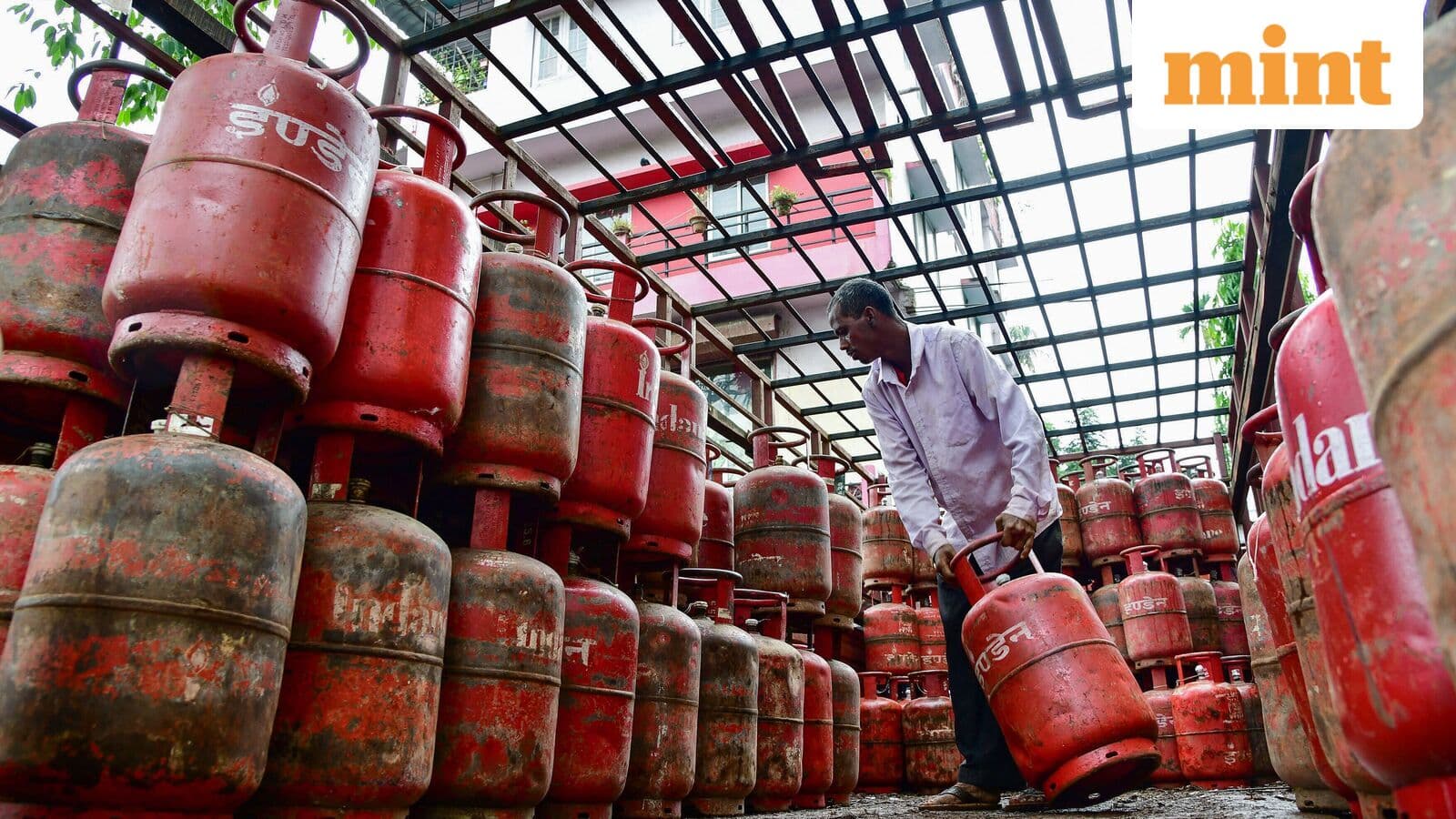
Domestic LPG cylinder prices in India remain unchanged as of 26 May 2026, despite global crude oil and LPG markets facing volatility amid tensions in West Asia.A worker carries a filled LPG gas cylinder (ANI)Domestic liquefied petroleum gas (LPG) prices remained unchanged across major Indian cities on Monday, May 26, even as petrol, diesel and CNG prices have risen sharply over the past 10 days amid the ongoing US-Iran conflict.According to the latest rates issued by oil marketing companies (OMCs), a 14.2-kg domestic LPG cylinder continues to cost ₹913 in Delhi, ₹912.50 in Mumbai, ₹939 in Kolkata and ₹928.50 in Chennai.The decision to hold cooking gas prices steady comes despite continued volatility in global crude oil and LPG markets, driven by fears of supply disruptions linked to escalating tensions in West Asia.International LPG benchmark prices have fluctuated in recent weeks, particularly due to concerns around shipping routes through the Strait of Hormuz, a critical global energy corridor.However, the cost of commercial LPG has increased, as the price of the 19-kg LPG cylinders rose by over ₹900 last month. The prices have largely remained stable after that.Reports suggest that state-run oil companies, including Indian Oil Corporation, Bharat Petroleum and Hindustan Petroleum, are absorbing part of the losses on domestic LPG sales as global prices rise.CityDomestic LPG (14.2 Kg)Commercial LPG (19 Kg)New Delhi ₹913.00 ₹3,071.50Kolkata ₹939.00 ₹3,202.00Mumbai ₹912.50 ₹3,024.00Chennai ₹928.50 ₹3,237.00Gurgaon ₹921.50 ₹3,088.00Noida ₹910.50 ₹3,071.50Bangalore ₹915.50 ₹3,152.00Bhubaneswar ₹939.00 ₹3,238.00Chandigarh ₹922.50 ₹3,092.50Hyderabad ₹965.00 ₹3,315.00Jaipur ₹916.50 ₹3,099.00Lucknow ₹950.50 ₹3,194.00Patna ₹1,002.50 ₹3,346.50Thiruvananthapuram ₹922.00 ₹3,106.00LPG prices in India are usually revised at the start of every month, depending on changes in global crude oil prices, currency exchange rates, freight costs and government subsidy policies.Domestic cooking gas prices remain politically sensitive because of their direct impact on household budgets. For now, consumers continue to get temporary relief as LPG cylinder prices remain unchanged despite growing uncertainty in global energy markets.13 LPG cargo vessels stranded in GulfThe Centre has said its immediate focus is to secure the return of Indian ships stranded in the Gulf region before deploying more vessels to load fuel cargo.“Our priority is to get all our ships out of the Strait of Hormuz,” Mukesh Mangal, Additional Secretary at the Ministry of Ports, Shipping and Waterways, said earlier, according to a previous LiveMint report.He added that India would send vessels west of the Strait of Hormuz again “whenever the situation becomes conducive.”According to Mangal, 13 Indian-flagged vessels and one Indian-owned vessel remain stranded on the western side of the Strait.He also said that 13 vessels carrying energy cargoes most of them loaded with LPG have successfully transited out of the Strait since its effective closure following the conflict.Stay updated with the latest Trending, India , World and US news. HomeNewsLPG cylinder rates on May 26: Here's how much domestic and commercial gas costs in Delhi, Mumbai, Bengaluru todayMore

Bloomberg.com Tankers: A Timeline of a Potential Hormuz Reopening Hellenic Shipping News CITIC Securities: The cross-strait navigation is approaching, waiting for demand to recover WEEX

UAE presidential advisor Anwar Gargash on Friday said there is a "50-50 chance" of an American-Iranian peace deal, yet emphasised that any diplomatic resolution must address the core drivers of regional instability to prevent subsequent warfare.Islamabad has been brokering a US-Iran truce to halt hostilities that have rattled world economies and bottlenecked commerce across the Strait of Hormuz, a critical bottleneck for roughly 20% of global petroleum and liquefied natural gas supplies."It is a 50-50 chance that we will reach an agreement. My worry is that the Iranians have always over-negotiated," Anwar Gargash, diplomatic adviser to the UAE president, said at the Globsec conference in Prague."This is not something new. They have missed many opportunities over the years because of a tendency to overestimate their cards. I hope they don’t do that this time," Gargash said.He additionally said that the territory requires a diplomatic remedy, warning that an additional phase of armed hostilities would only exacerbate regional challenges.Nevertheless, Gargash maintained that talks focusing exclusively on achieving a truce risked setting the stage for subsequent warfare if they neglected to fix foundational grievances.Tehran has continually struck the UAE throughout the hostilities, launching assaults against public infrastructure and zones proximate to American defence installations situated within the Gulf nation. Emirati authorities reported that Iranian unmanned aerial vehicles and rocket barrages struck water purification hubs, power stations, and zones surrounding Dubai and Abu Dhabi.Gargash cautioned that any authority over the Strait of Hormuz would establish an alarming pattern by weaponising the vital maritime passage and granting Iran strategic influence."That is not what we are seeking," he added.Modifications to existing arrangements in the channel would trigger severe international consequences, particularly for Europe, he remarked, pressing European nations to recognise the matter as intimately tied to their own fuel stability and commercial prosperity.He concluded that the Strait of Hormuz needs to revert to its historical standing as a global maritime corridor, ensuring uninhibited transit for energy, commerce, and shipping.Pakistani minister holds fresh talks with Iran’s FM to review peace bidIn Tehran on Friday, Pakistan’s Interior Minister Mohsin Naqvi met Iranian Foreign Minister Abbas Araghchi for their second meeting in 24 hours to assess strategies for halting the US-Iran conflict.Naqvi arrived in Tehran on Wednesday for a surprise trip—his second in under seven days—seeking to narrow the diplomatic divide separating Tehran from Washington.He has already held talks with senior Iranian officials, including President Masoud Pezeshkian, Iran's interior chief, and other top-tier leaders.Foreign Minister Araghchi previously met Naqvi on Thursday morning to analyse the backchannel Iran-US talks.On Friday, the Pakistani Interior Minister reconvened with Araghchi to evaluate frameworks for settling disagreements, according to Iran’s semi-official Tasnim News agency.Naqvi and Araghchi examined comprehensive blueprints designed to conclude the US-Iran hostilities, Geo News reported, citing Iran's state press.It noted that both figures also analysed potential structures for securing enduring tranquillity and order throughout the territory.According to sources, the network stated that Naqvi will extend his Tehran visit through Friday for vital consultations regarding the US-Iran mediation and broader regional diplomacy.Pakistani representatives have refrained from discussing Naqvi's activities in Iran, maintaining a cautious silence on this major diplomatic initiative.About the AuthorLivemintFor about a decade, Livemint—News Desk has been a credible source for authentic and timely news, and well-researched analysis on national news, business, personal finance, corporates, politics and geopolitics. We bring the latest u
Iran and Oman are negotiating a fee system for vessels passing through the Strait of Hormuz, defying Trump administration warnings. Here is what the talks mean for global shipping, international law, and US-Iran diplomacyIran has discussed partnering with the Gulf state of Oman — an American ally — in a system charging fees for vessels passing through the Strait of Hormuz, ignoring the Trump administration’s warnings(AFP)Iran is quietly negotiating with the Gulf state of Oman over a plan to charge vessels for passing through the Strait of Hormuz, a move that puts Tehran on a direct collision course with US President Donald Trump even as both sides claim to be working toward a diplomatic resolution, according to a New York Times report.The Plan Taking Shape in the Strait of HormuzBehind the public posturing of ceasefire declarations and diplomatic overtures, Iran and Oman have been holding discussions over something far more concrete: a system that would generate revenue from one of the busiest and most consequential shipping lanes on heart- Strait of Hormuz.The talks, confirmed by two Iranian officials to New York Times, centre on a proposed arrangement in which vessels transiting the Strait of Hormuz would be charged fees, with Oman receiving a share of the proceeds. Oman, which shares a coastline with the Gulf of Oman adjacent to the strait, was initially cool to the idea. It has since warmed to it considerably, having calculated the potential financial upside of participation.The discussions were first reported by Bloomberg News. Nothing has been signed. Whether anything will be is still an open question.How Iran Built Its Grip on Global ShippingTo understand why these talks are happening, it helps to go back to late February, when American and Israeli forces struck Iran. Tehran's response was not purely military. Iranian authorities effectively throttled commercial traffic through the Strait of Hormuz, bringing international shipping to a near halt and sending energy prices sharply higher across global markets.The disruption was a demonstration of leverage as much as a retaliation. About a fifth of the world's seaborne oil and natural gas moves through the strait. By showing it could bring that flow to a standstill, Iran established a bargaining chip it has since been reluctant to surrender.A ceasefire followed. But Iran kept its eye on the waterway.Iran Creates a New Authority to Control the StraitOn Wednesday (20 May), Iran's newly established Persian Gulf Strait Authority announced on social media that it had "defined the boundaries of the Strait of Hormuz management supervision area," adding that vessels would henceforth require a permit from the authority before passing through. The Gulf of Oman, which ships must cross before reaching the strait from the east, falls within the zone the authority claims to oversee.Iranian state media outlet Press TV has separately reported that a new mechanism is being put in place to control maritime traffic along a designated route and charge for what it calls "specialised services."Why Iran Is Calling It a Fee and Not a TollThe choice of language is deliberate and legally calculated. A straightforward toll on passage through an international strait would violate the 1982 United Nations Convention on the Law of the Sea, which guarantees vessels the right to transit such waterways without impediment. Iran is not a signatory to the convention, but experts widely regard its core principles as binding on all nations under customary international law.Charging for services rendered to ships is a different matter and is permitted under certain conditions. By framing the proposed charges as fees for specific services rather than payment for passage itself, Iran is attempting to construct a legal justification for what would otherwise be plainly unlawful.James Kraska, a professor of international maritime law at the US Naval War College and visiting professor at Harvard Law School, said the n



Discussion (0)