
Loading dispatches...
← Return to Newsroomgeneral
WhatsApp introduces Channel Status for admins to share 24-hour updates
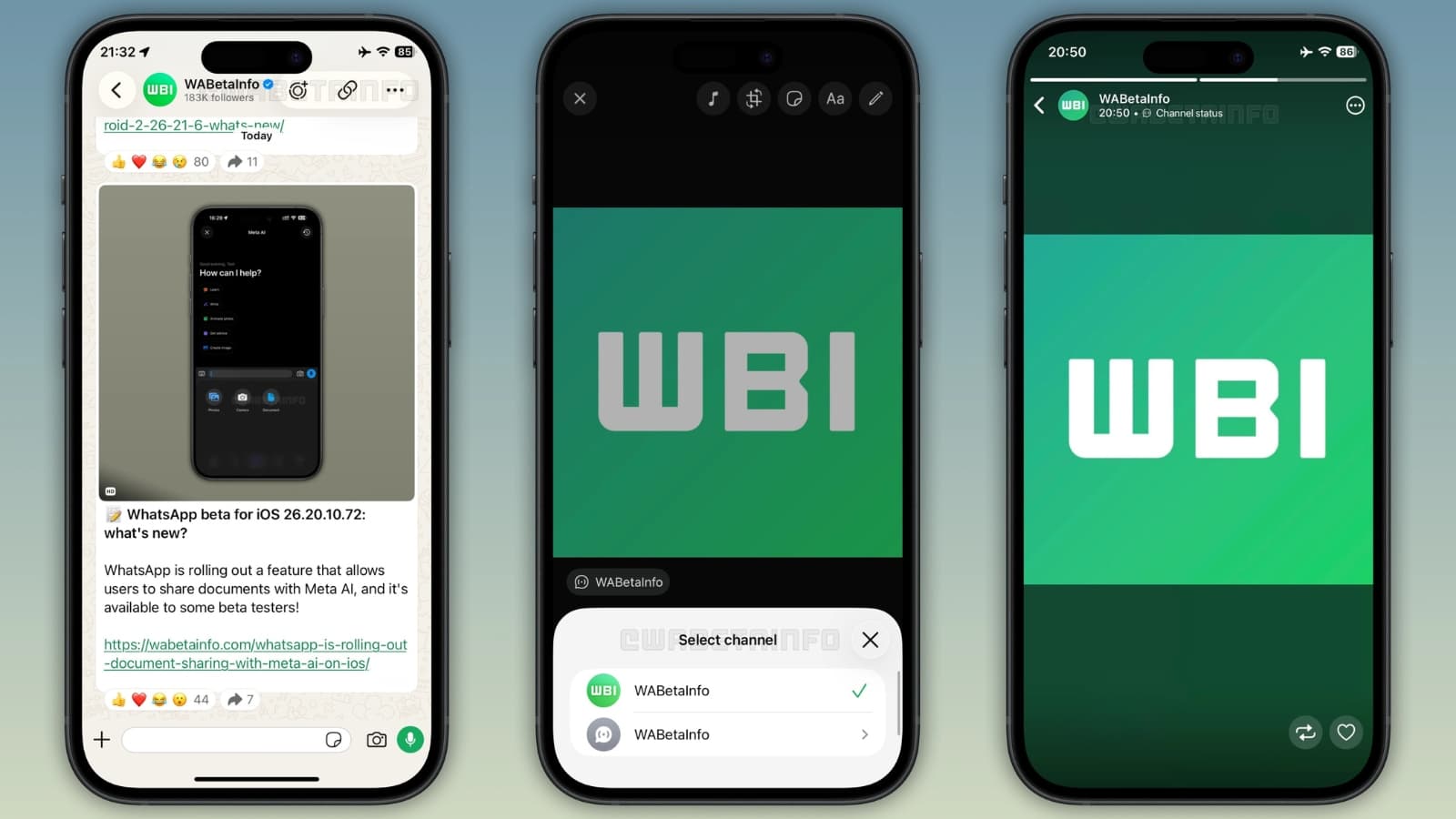
New DelhiMay 28, 2026 11:52 AM IST WhatsApp expands Channels with 24-hour photo and video status updates. (Image: WABetaInfo)WhatsApp has begun rolling out a new feature called ‘Channel Status’ that allows channel admins to share temporary updates directly within their channels on Android and iOS. The feature, first spotted in development months ago, is now reaching select users through the latest WhatsApp updates on the Apple App Store and Google Play Store. According to WABetaInfo, Channel Status allows admins to post photos, videos, layouts and text updates directly from the channel interface. The update will expire after 24 hours automatically, so channel followers have enough time to view and interact with it.The feature is designed to help channel owners quickly share timely announcements or updates without publishing a permanent channel post. Like other channel updates, it can be viewed and shared by anyone who has access to the channel content. The temporary updates will appear in the Status tray within WhatsApp’s updates tab, alongside regular status updates from contacts. This is done so that it is easy for the followers to catch up on the updates shared by the channels they follow without opening them. To create a Channel Status update, admins can open their channel and tap on the create status option. They can then upload the content, be it a photo or video, add captions, stickers or other edits and publish it. WhatsApp will also allow admins to verify which channel the update will be published to or switch channels before posting, although only one channel can be selected at a time. WhatsApp is also introducing interaction options for followers viewing these updates. Users can react with likes or share the update on their own status or send it to their contacts. For followers to identify the status, a ‘Channel Status’ label will appear at the top of the interface to distinguish these updates from regular status updates shared by their contacts. The feature is currently rolling out gradually and remains limited to select users on both iOS and Android. WhatsApp is expected to expand availability to more users over the coming weeks.Story continues below this ad The rollout comes as WhatsApp continues to add new tools to Channels. Its one-to-many feature launched to help creators, businesses and organisations communicate with followers more efficiently. (This article has been curated by Shivani P Menon, who is an intern with The Indian Express)

New DelhiMay 27, 2026 02:56 AM IST Around 4 pm every day, 50-year-old Neelam steps out of her one-room home in West Delhi’s Faridpuri carrying three buckets and a stack of steel containers. She places them in a queue and sits under the harsh summer sun, waiting. One by one, her friends and neighbours also join her with their containers. Sitting on their upturned buckets and drums, they talk about what they watched last night on television and what they plan to cook in the night.Around half-an-hour later, a blue-coloured water tanker appears at the end of the street. All conversations stop. Faces tighten and the women stand up. As soon as the tanker reaches their spot, there is a scramble – everyone tries to tie their pipes to the water outlet and fill their containers before the supply runs out. Male members of the family shuttle filled buckets back home while the women guard their place in the queue. Neelam says this is not how they fill water usually. But they have to now — their area is fullly dependent on tankers to fulfill their daily needs, as their usual supply has gone dry. “Earlier, the supply came between 6 am and 7.30 am every day. We depended on water tankers on alternate days to fulfill our additional demand. But for almost a month now, we have not received any water in our homes. Everyone is relying on tankers now,” she adds.Story continues below this ad Neighbourhoods across the Capital are reeling under water shortage, as water levels at the Wazirabad pond continued to fall sharply amid peak summer demand. The shortage has spared neither low-income colonies nor affluent neighbourhoods. Trisha Arora (40), who lives in Block E of Greater Kailash 1, says, A neighbour who has someone suffering from Parkinson’s at home broke down when we did not get water for 15 days straight. No water at home is not a thought one wants to wake up to every morning. We check the water tank six times a day to see how much is left.” She adds that even supply by private tankers is unreliable because of the restrictions that have been put on diesel vehicles during peak pollution days. “Sometimes tankers also are not available.”Story continues below this ad Sanjay Anand, president of the Greater Kailash Residents Association, recalls that this might be the first time that the locality is facing supply cuts. “But to the credit of Delhi Jal Board, whenever we call them, they send tankers,” he adds. Sunanda (41), who lives in South Delhi’s Dakshinpuri and irons clothes for a living, says they are trying new things every day. “We collect water from wherever we can—tankers, bottled cans… we also get water from neighbours who have borewells. You just learn to manage somehow.” Ramesh Ahuja, president of Northwest Delhi’s Ashok Vihar D Block RWA, said people are angry. “Earlier, we used to get water for four hours in the morning and two hours in the evening. This has now come down to two hours in the morning and one hour in the evening. As we don’t know when water will come in the four-hour slot in the morning, residents stay awake since 4.30 am. Else, they will miss the day’s supply,” he adds. Devansh Mittal is a Correspondent at The Indian Express, based in the New Delhi City bureau. He reports on urban policy, civic governance, and infrastructure in the National Capital Region, with a growing focus on housing, land policy, transport, and the disruption economy and its social implications. Professional Background Education: He studied Political Science at Ashoka University. Core Beats: His reporting focuses on policy and governance in the National Capital Region, one of the largest urban agglomerations in the world. He covers housing and land policy, municipal governance, urban transport, and the interface between infrastructure, regulation, and everyday life in the city. Recent Notable Work His recent reporting includes in-depth examinations of urban policy and its on-ground consequences: An investigation into subvention-link



Discussion (0)