
Loading dispatches...
← Return to NewsroomTechnology
Best Handheld Fans and Wearable Fans (2026)
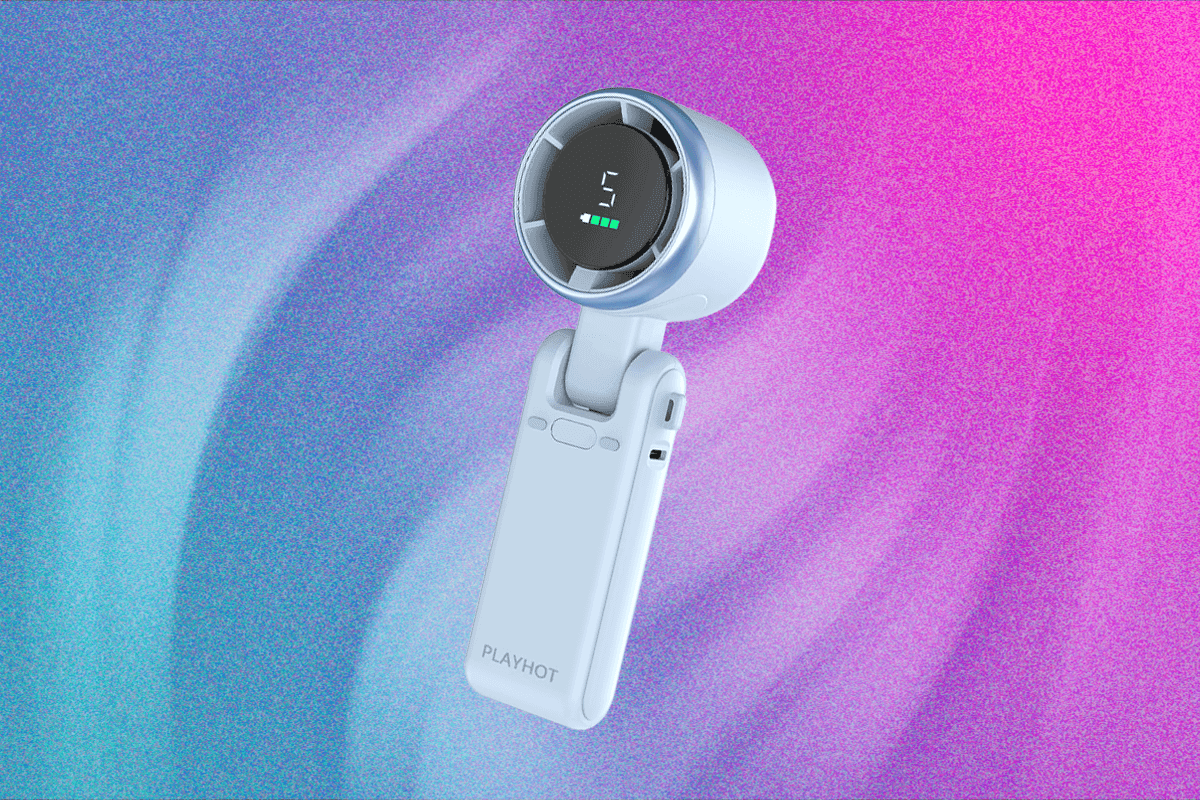
The Best Handheld and Wearable Fans for People Who Hate Being SweatyWhether you’re at a festival, tennis match, or wedding, these hand fans and wearable cooling devices will make the heat way more bearable.Featured in this articleBest Handheld Fan OverallPlayHot Handheld Turbo FanRead moreBest Waist FanAecooly Portable Waist FanRead moreBest Neck FanJisulife Portable Neck FanRead moreBest Cooling JacketOroro ZenFlow Power Cooling JacketRead moreBefore I started using a handheld fan, I was a total skeptic. I’d seen the ones that attach to your phone or fit in a bag, and I couldn’t imagine they’d provide any real relief from the heat—and they seemed completely unnecessary. But now that I’ve used the fans on this list, I don’t know how I was functioning without them.There are certain scenarios where having a portable fan makes your life so much better: Outdoor concerts, weddings, festivals, amusement parks, sporting events, backyard parties. I don’t live in New York City anymore, but I could imagine having one of these on the subway would be a game changer. Despite their size, they do actually create a significant breeze—in some cases, it’s enough to stop you from getting sticky, shiny, and sweaty. If you want to make it through a ridiculously hot day without your makeup melting or pitting out, you need one of these handheld fans.Photograph: Kat MerckFor more ways to stay cool, check out our guides to the Best Fans and the Best Window ACs.Updated June 2026: We've added new fans from Dyson, Shark, and Aecooly, removed discontinued fans, and ensured up-to-date links and prices.Best Handheld Fan OverallPhotograph: Kat MerckPhotograph: Kat MerckVideo: Kat MerckPlayHotHandheld Turbo FanThis fan was a godsend during a sweltering outdoor concert. It bends at the neck, so I was able to set it up on the picnic table and blast it toward my face without even holding it, then straighten it back into the standard position to carry it with me as I walked around. It also comes with a lanyard that allows you to hang it from your neck. It felt stronger than the other handheld fans I tested, and I liked that the blades were contained, which made the airflow feel more concentrated and meant I couldn’t catch them on anything. It kept my face from melting off on the 100-degree day I used it, and while it isn’t slim enough to slide into a clutch or pocket (like some other fans on the list), it fit into my small crossbody bag.There are five speed levels, and the 5,000-mAh battery lasts from three to 12 hours depending on which level you’re using. A digital display lets you know what level you’re using and how much battery life you have left (you can get a full charge in three hours). The only cons to this fan are that it doesn’t have any other uses (no charging bank or flashlight capabilities, like some options on this list), and it’s a bit loud, with a drone-y sound. It didn’t bother me at a loud concert, and I was even able to talk to a friend without any problem, but if you’re in a quieter setting, it might be an issue. At only $20, it’s a solid investment for any outdoor festivals or weddings where you need a heavy-duty airflow to really stave off sweat. —Kristin CanningWIRED/TIREDWIREDHands-free carry and operation5 speed levelsLong battery lifeTIREDCan't fit into a pocketBest Waist FanPhotograph: Kat MerckVideo: Kat MerckAecoolyPortable Waist FanI liked the 3-in-1 design of this chunky waist fan, which lets you wear it on your belt or waistband inside or outside your shirt, on a strap around your neck, or propped up on a table or desk. It's not super lightweight at nearly three-quarters of a pound (which means you can't wear lighter-weight pants or shorts if you plan to clip it on your waistband), and it's not exactly quiet at 53 decibels, but with five speeds and a top wind speed of 866 feet per minute, it's one of the more powerful waist fans I've tried. There's also a “flashlight” on the side with a strobe option, but it's
I have accomplished the unthinkable: I have learned to sleep soundly through the night without my phone at my bedside. Please, hold your applause. If it weren’t for the Dreamie alarm clock, I’m not sure that this Herculean feat would have been possible. If it feels as though I am bragging that I brushed my teeth this morning, then you are not Dreamie’s target audience. But I certainly am, and I’m not alone in feeling so attached to my phone that I’m basically a cyborg. I know that using my phone in bed interferes with my sleep, and poor sleep interferes with basically everything else about my mental and physical health. Yet before Dreamie, I went more than a decade with my phone at my bedside every single night – that’s tens of thousands of nights spent so attached to my glowing rectangle that I couldn’t imagine the horror of waking up in the middle of the night without it. I’m not totally helpless. Over the last few years, I’ve established a habit of reading before bed, which makes me feel markedly more relaxed when it’s finally time to shut my eyes. Still, I’ve never been a good sleeper (just ask my parents, who suffered endlessly for taking me to see a museum exhibit about the Titanic when I was a child, which made me think I was going to die on the Titanic). Sometimes, when I can’t drown out my noisy brain, the only thing that can get me to sleep is to close my eyes and listen to podcasts or audiobooks (as long as they’re not about the Titanic). Whoever designed the Dreamie seems to share my affliction, because what sets Dreamie apart from all of the other fancy alarm clocks is laughably simple: It can play podcasts. Image Credits:Dreamie Before we get to the podcasts, though, we need to zoom out. Here’s how Dreamie works. In “ambience” mode, it’s just a normal clock – but it has another series of modes that make up your sleep routine. The “wind down” starts your routine, signaling that it’s almost time for bed. I have mine set to sound like a fireplace crackle with a soft, orange light, which fades and glows to imitate actual fire. I have the fireplace running for about 25 minutes, during which I’m usually reading. Then, it transitions to the “noise mask” mode, which I set to sound like a thunderstorm — but if I get sleepy earlier, I can turn it on then. Whatever sound you pick will play until your wakeup routine begins, with the “sunrise” light slowly getting brighter until it’s time for your alarm to go off. (You can also choose no sound, if you prefer.) Dreamie’s best feature is its “back to sleep mode.” If you wake up in the middle of the night, you can turn on “back to sleep,” which plays whatever media you choose, whether it’s a breathing routine that comes loaded onto the device, another soundscape, or any podcast you want to listen to. You can choose the episode or show ahead of time so that you’re not scrolling around the interface in the middle of the night, making you feel even more awake. You can opt to use Dreamie with Bluetooth headphones, so if you share a bed with someone else, you won’t disturb them… but you have to wear headphones to sleep. Dreamie is Wi-Fi enabled, which means it can download whatever podcast you want from the internet. For that, you have the architecture of podcasts to thank – since podcasts are distributed by RSS feeds, any developer can create their own custom RSS app, which is how Dreamie can play them. (Let’s take a moment to appreciate RSS, one of the last relics of the open internet, which Spotify has actively tried to quash in favor of its own walled garden.) Image Credits:Dreamie It’s embarrassing that this feature is so useful for me. Usually, if I wake up and can’t fall back asleep, I have to pick up my actual phone to turn on a podcast. But you see, I’m a millennial, which means that if I’ve gotten any notification after I’ve fallen asleep, I will reflexively open that notification before I turn on my podcast or audiobook. From there, it’s a cascade of bad decisi


Discussion (0)