
Loading dispatches...
← Return to Newsroomgeneral
In signal to contractors, Railway tells Faridabad station developer can’t reduce project scope
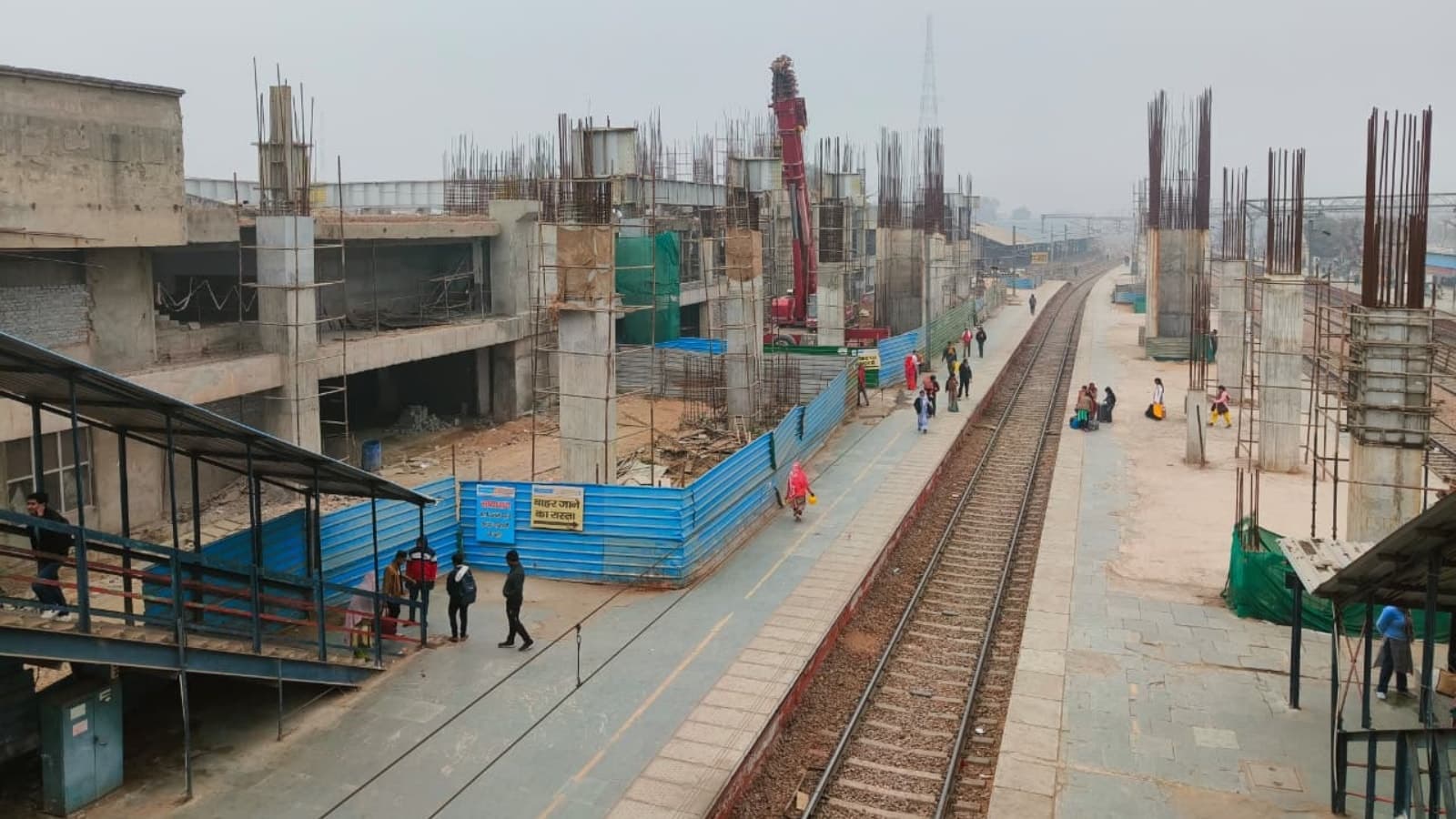
IN A decision that sends a clear message to contractors, the Northern Railway has turned down a proposal for reducing the scope of the station redevelopment project being executed under the flagship Amrit Bharat station scheme.Ludhiana-based contractor Deepak Builders and Engineers India Ltd had in November 2025 proposed to do away with the originally-planned through-roof (canopy covering the entire station), reduce the width of the concourse or pathways between platforms, and cut down on the number of lifts and escalators, from the Rs 240-crore project. This was deliberated upon for almost six months before the Northern Railway finally turned it down on May 16.The Northern Railway has asked the contractor to submit a detailed planning as per original plan, but assured it of all possible help including reasonable space for timely completion of the project. Railway sources said at least two other contractors had proposed a similar reduction of scope of development after emerging as the lowest bidder and winning the contract. “Had the proposal gone through, it would have downgraded the originally conceived airport-look of the station,” said a source, who did not wish to be named. Further, it has sent a signal to contractors they cannot bid low, get a project, and then attempt to scale it down, On May 16, the Northern Railway zone informed Deepak Builders that descoping of Faridabad station that it sought was not feasible in the view of future passenger growth, The Indian Express has learnt. The company had cited safety and restoration work in its proposal to scale down the scope of the project. When contacted, a senior executive in Deepak Builders and Engineers, told The Indian Express, that the company was not getting enough blocks to complete the redevelopment work; hence it proposed to reduce the scope of work. Blocks refer to temporary suspension of train movement on specific sections for construction works. Deepak Builders is executing the project under an Engineering, Procurement and Construction (EPC) contract. The company was awarded the work in 2022.Story continues below this ad Sources said the removal of the entire through-roof of about 22,950 sqm — bigger than an international cricket ground — was proposed on the grounds of safety and restoration concerns. The reason cited for compressing the concourse between platforms 1 and 4 was that the contractor was not getting enough space for undertaking construction activities with trains operating continuously, said the sources. On March 25, The Indian Express sent a detailed questionnaire to Northern Railway on the proposed descoping of the Faridabad project. The Ministry of Railways responded on May 27 and said the work will be carried as per the original scope of the contract. “No descoping is envisaged at this stage in respect of the ongoing Faridabad station redevelopment work and the work is planned to be carried as per the original scope of the contract,” it said. Such de-scoping of the project after awarding it to the contractor could have raised questions on the fairness of the tender and could be understood as giving favour to a party in a competitive bid, said a source. The descoping was pitched as entailing savings of almost Rs 24 crore to the Railways, but sources said these works are actually valued at a much higher price as per current market rate and the contractor was likely to benefit from a scaling down of the works. Sources said that Railways have already made payment of almost 50 per cent of the project cost (Rs 117 crore) to the contractor.Story continues below this ad The contractor had, in its November missive, proposed to reduce the width of concourse from 72 meters to 15 meters for some parts between platform 1 and platform 4, removal of through roof, 50 per cent reduction in lifts in concourse area and reducing five escalators in both foot over bridges (FOBs). This could have adversely affected the total passenger evacuation time from the platf
Around 56 kilometers far from Surat in Gujarat, at a 14-acres factory, over 200 workers are manufacturing a part of a track system being used for the first time in the country.Arjun Yadav, a site worker from Uttar Pradesh, slides out his digital depth caliper and fixes it to one side of a 4.5 tonnes track slab — which looks roughly like a double-edged razor blade. The machine reads 191 mm. Relieved, he marks “OK” on its surface. This is the 36,112th number of the track slab manufactured at the Kim, one of the two facilities in Gujarat for the 508-km Mumbai-Ahmedabad High Speed Rail project.What Yadav measured was the thickness of the track slab, which was prepared after more than 12 hours of the rigorous work. Even a minor error could have marked it redundant. This is what will eventually hold the rail. The country’s high-speed dreams are now being expedited with faster laying of track slabs, which is among the last works before bullet trains will run, as the 48-km Surat-Bilimora stretch of the 508-km project is scheduled to be completed by August 2027. The entire corridor from Ahmedabad to Mumbai is targeted to be made operational by 2029. According to the National High Speed Rail Corporation Ltd, the government agency behind the implementation of bullet train projects, a total of 2.05 lakh track slabs is required for the entire project. Out of this, 75,473 track slabs have been casted in two units, another one is in Anand, and 35,327 slabs have been laid over track bed on the viaduct. The track slab is one of the most unique features of the Japanese high speed system, so much so that even the word Shinkansen is derived from it. This is different from the ballasted track system that the Indian Railways uses for its projects. “In Japanese, Shin means new, Kansen means track. It is, quite literally, a new track,” said an official of NHSRCL.Story continues below this ad The Kim facility is the largest one, which will provide track slabs for Vapi to Vadodara section of the project. It was started in September 2023. Out of the 96,000 slabs, 36,000 have been supplied. Its peak capacity is to cast 120 slabs in a day. Inside the cavernous factory, the Italian bar cutting machine of schnell group runs at a full flow. It cuts 11 types of bars in different dimensions (shape and size) with the smallest one of 4.84 meters and the longest of 106 meters. In one minute, it cuts 30 bars, and in a day it cuts over 10,000 bars. The steel cage for this has arrived from Japan, there cannot be even a millimeter of error. The cage is created with 11 types of bars and then it is put in the japanese moulds. One cage weighs 300 kg. The spreader bucket moves vertically and horizontally with the concrete aggregate- cement admixture. The four vibrators are deployed in the mould for concrete compaction.Story continues below this ad The steam pipe from a boiler outside runs down the mould which heats up the concrete for 12 hours at 40-45 degree celsius. Then it is submerged in treated water for three days for curing. A total of 4.5 tonnes of concrete is poured into one slab. After this process, there are a total of nine gauges which are used to check the properties. There are two pages of a checklist to check 16 items and over 50 points. Manu Maheshwani, lab incharge and Deputy Manager of IRCON, works at the compressor testing machine. He said the sample for each track slab is collected during the moulding. To check its strength, it should achieve a minimum 50 mpa (megapascal). It is checked two times, first after three days, second after 28 days. Along with this, a cement cube is tested for quality, aggregate test, water test of its PH and TDS. In total more than 30 tests are done to verify that a particular track slab can be used for the Bullet train. He said a particular electrical resistance test is conducted to check that the signals are not passed from the track to the slab. “A 6 volt current is passed through the rail for checking the rail fracture.



Discussion (0)