
Loading dispatches...
← Return to NewsroomPolitics
DMK regime created Enforcement Bureau-CID to control drug menace, says Udhayanidhi
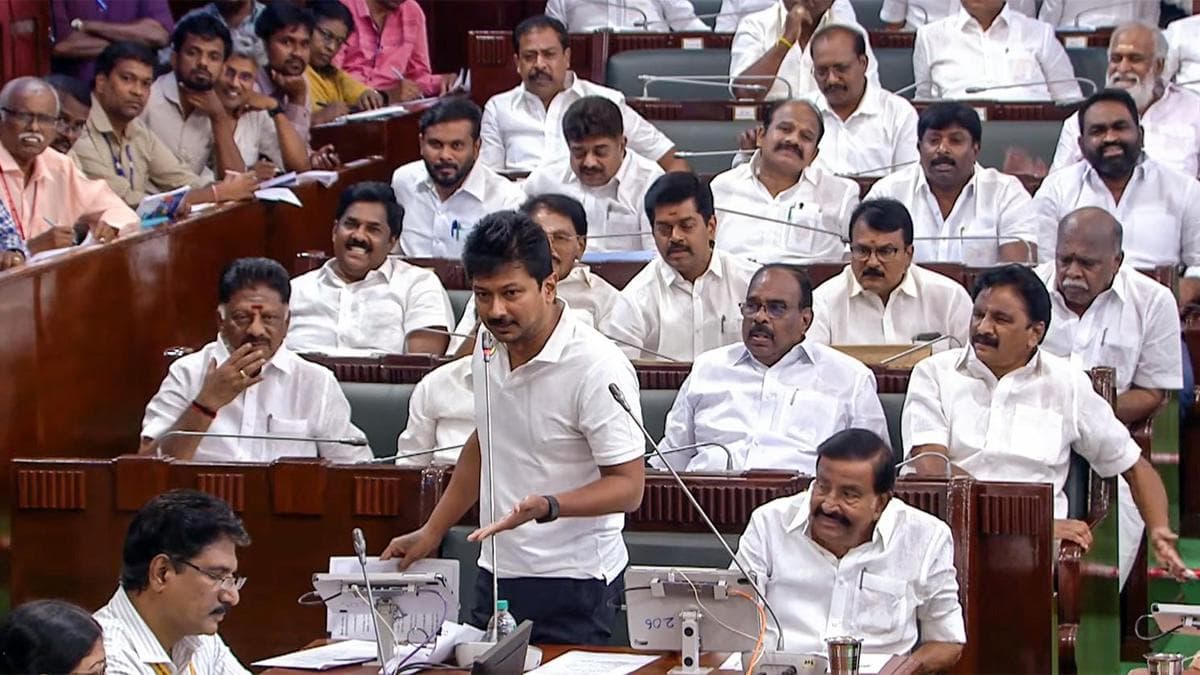
Leader of the Opposition Udhayanidhi Stalin speaking at the Assembly at the Secretariat on Monday. | He said the then Chief Minister, M.K. Stalin, had integrated the Narcotics Intelligence Bureau and the Prohibition Enforcement Department and created the Enforcement Bureau-CID (EB-CID) to achieve a drug-free State.“Our government created awareness against drug use and seized narcotics. If data is required, it is available with the Minister,” he said while participating in a special calling-attention motion in the Assembly on the killing of engineering college student Amuthan in Coimbatore and school student Dhanush in Tiruvottiyur.Mr. Udhayanidhi said even the Greater Chennai Commissioner of Police, A. Amal Raj, would be in a position to provide the details, as he had headed the EB-CID.“If our government had not taken measures to control drugs in the State, why did the new government give such an important position to the officer? The 15 policemen who were given awards for controlling drugs on Independence Day had worked effectively during the DMK regime,” he said.He also said while everyone was raising the issue of law and order, the Minister in charge of law and order, the Chief Minister, was not ready to respond. Published - August 18, 2026 12:52 am IST
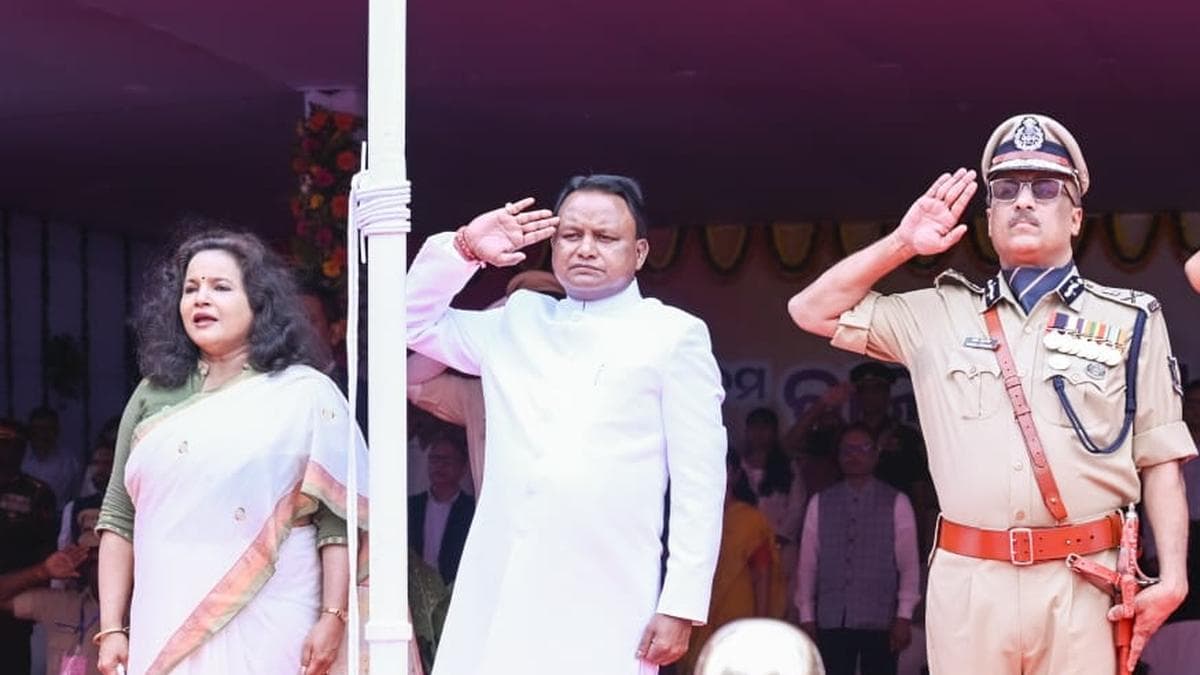
Odisha Chief Minister Mohan Charan Majhi hoisted the national flag at Mahatma Gandhi Marg in Bhubaneswar and addressed the people of the State on August 15, 2026. Credit: X/@MohanMOdisha Odisha Chief Minister Mohan Charan Majhi on Saturday (August 15, 2026) advised youths to focus on their career, instead of being influenced by "external forces" that do not want to see India as a strong nation, while asserting that only Prime Minister Narendra Modi can solve their problems.Addressing a State-level event here marking the 80th Independence Day, the Chief Minister made five major announcements, including removing the maximum limit of six chances for the State civil service exam. Aspirants can now appear in the exam till they reach the upper age limit.He also announced compassionate recruitment following the death of government employees, creating three lakh employment opportunities in the next two to three years, which will be extended to 20 lakh in the next five years."Some external forces have been trying to mislead the youth of the country because they do not want to see India as a strong nation," the Chief Minister said.He said the "external forces" are well aware that Prime Minister Narendra Modi will not bow down before them and will not compromise on the interests of the country. "Therefore, they are targeting the youth." Describing the youth as the main "force" towards fulfilling the goal of building a developed India, Mr. Majhi asserted that only PM Modi can solve whatever problems India's youth have."Therefore, you should not be influenced by anyone and focus on your own career; this should be your priority," he said.On the occasion, Mr. Majhi announced that the students of classes 9 and 10 in State-run schools will be provided free textbooks, as is done for the students up to class 8.Asserting that education was one of the focus areas of his government, the chief minister said 'Godavarish Mishra Model Primary School' is going to play an important role in providing opportunities for quality learning.As many as 2,200 such model primary schools will be built in the first phase, he said, adding that 26,000 teachers have been appointed in the past two years and the process to appoint 45,000 more teachers was underway.Mr. Majhi announced that for the first time, mid-day meals have been arranged for students of Classes 9 and 10. "To give a boost to higher education opportunities in the state, 18 government colleges and four universities would be set up in the sub-districts," he told the gathering.He described farmers as the "breadwinners" for the State and said Odisha’s economy cannot be strengthened unless their income increases..He said farmers' income has increased significantly through different programmes. "Our government is committed to doing everything possible to increase their income further.""I would like to make it clear to our farmers that Agri-Stack registration has nothing to do with P-Pass registration for paddy purchase. Farmers need not worry about problems in paddy sale. Like every year, this year too, P-Pass registration will be done, and the paddy procurement will be run on that basis," Mr. Majhi said. Published - August 15, 2026 12:57 pm IST
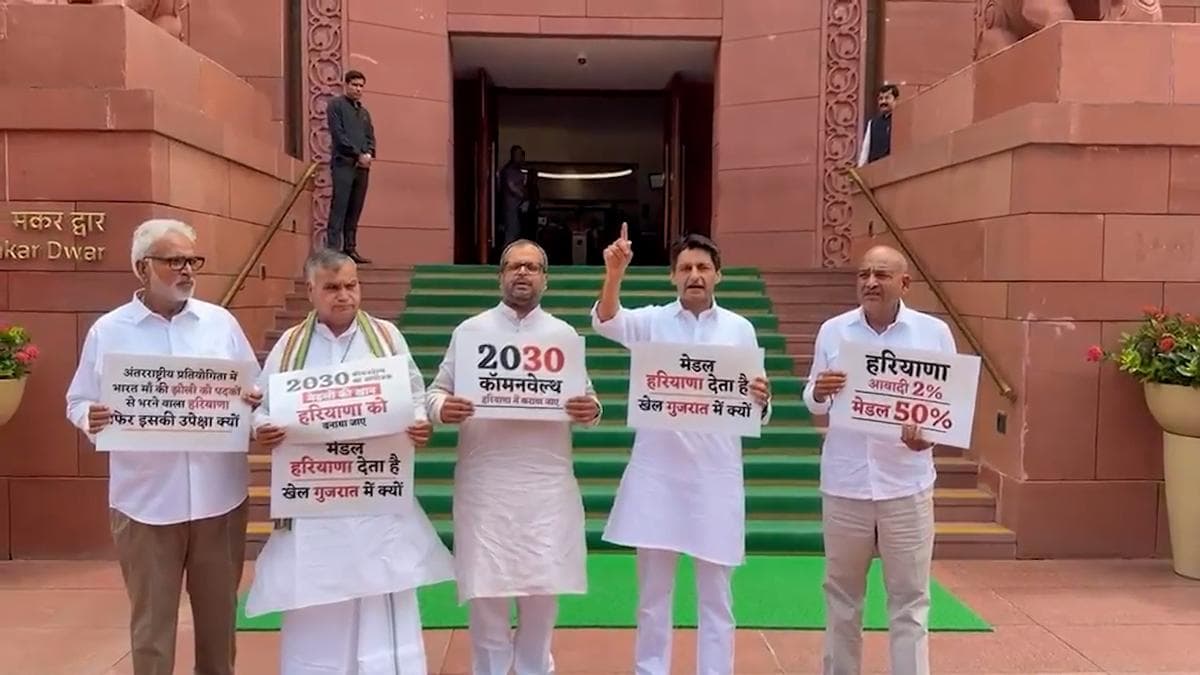
Haryana MPs in New Delhi on Tuesday demanding that the State co-host the 2030 Commonwealth Games. Photo: SPECIAL ARRANGEMENT Haryana’s dominance at the recently concluded Commonwealth Games (CWG) in Glasgow has sparked a fresh demand from sportspersons and political leaders across party lines to make the State a co-host of the 2030 CWG scheduled to be held in Ahmedabad.Sportspersons from the agrarian State bagged seven of India’s 13 gold medals and 11 medals overall. Five of the seven golds in boxing came from Bhiwani alone, four of them won by women.The performance has fuelled calls that the “Mini Cuba” of India, a tribute to the Caribbean island nation that has produced many famed boxers, deserves more than praise.Bhiwani Boxing Club founder Jagdish Singh, who has trained several world-class boxers, said the demand is legitimate.‘Strong claim’“Haryana certainly has a strong claim; after all, we win the highest number of medals. The government renamed the existing stadium in Gujarat after Prime Minister Narendra Modi, and the facilities there are excellent. In terms of infrastructure, that venue is indeed deserving, but Haryana has a stronger claim in terms of performance on the ground,” he said.Olympic bronze medallist boxer Vijender Singh, a Bharatiya Janata Party (BJP) leader, said while the final call rests with the government, “it would be good if they were held in Haryana”.Will speak to PM: BJP MPBharatiya Janata Party’s (BJP) Bhiwani-Mahendragarh MP Dharambir Singh said, “It is valid to say that boxing events — or at least some CWG events — should be held in Bhiwani. It is a hub for boxing in India.”Mr. Singh said he would seek an appointment with Prime Minister Narendra Modi and raise the issue.BJP leader and Olympic bronze medallist boxer Vijender Singh said while the final call rests with the government, “it would be good if the games are held in Haryana”. Former BJP Rajya Sabha member Kiran Choudhry said “If that happens, it would not only benefit budding sportspersons in Bhiwani but also those in neighbouring Hisar and Rohtak,” Ms. Choudhry said, adding she would take up the matter with the Prime Minister and Chief Minister Nayab Singh Saini.On Monday (Auust 3, 2026), Congress’s Haryana MPs — Deepender Hooda, Jai Prakash, Varun Mulana, Satpal Brahmachari, and Karmbir Baudh — staged a protest at the Parliament complex demanding that Haryana be made the host or a co-host for the 2030 games.‘Centre shut the door’Mr. Hooda alleged the Centre had already shut the door by announcing the Games would be held exclusively in Ahmedabad and that the 2036 Olympics bid was also being submitted only for Gujarat. He asked why Haryana, which wins 50% of the country’s medals at the CWG, Asian Games and Olympics with just 2% of India’s population, continues to face neglect. “Investments worth lakhs of crores of rupees for the games will now flow into Ahmedabad, where sports infrastructure will be developed. Had Haryana been made a co-host, this massive expenditure would have taken place in Haryana as well,” he said.The Congress leader attacked the State government for not submitting a proposal to host the games and demanded that it immediately send a bid and that the Central government consider it seriously. Published - August 05, 2026 01:08 am IST
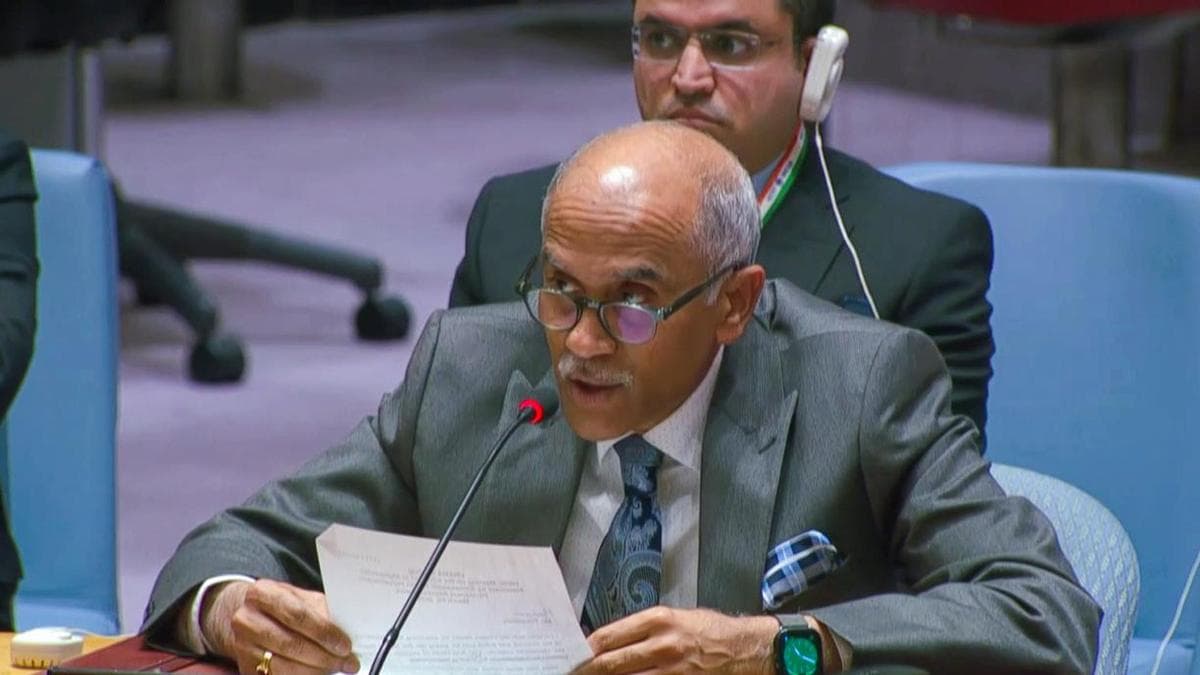
Permanent Representative of India to the United Nations, Parvathaneni Harish. File | The UN General Assembly on Tuesday (July 28, 2026) decided to “roll over” to its next session the Inter-Governmental Negotiations (IGN) on Security Council reforms, an annual practice by the 193-member body that now enters its 18th year with no concrete results or end-date so far.Negotiations to reform the powerful 15-nation Security Council will now continue in the 81st session of the UN General Assembly that will commence in September.India joined the consensus to adopt the draft oral decision for the rollover of IGN on the ‘Question of the equitable representation on and increase in the membership of the Security Council’ to the 81st session, but voiced strong criticism over the lack of progress in achieving tangible outcomes and efforts by some Member States to stall the process.“The 80th IGN session, like the previous sessions, has not been successful in forging any outcomes or initiatives that could pave the way for implementing real reforms. The cluster debates have largely been a reiteration of known positions of member states and groups,” India’s Permanent Representative to the UN Ambassador Parvathaneni Harish said here Tuesday (July 28).In a statement at the adoption of the oral decision to roll over the Intergovernmental Negotiations to the 81st UNGA session, Mr. Harish invoked the Indian philosophy that a soul has to go through cycles of births and deaths, making incremental progress each time, before attaining liberation. “The IGN has been through seventeen cycles already. Sadly, however, there is no liberation in sight. How much longer should the world wait?” he said.Voicing strong criticism over the slow-moving reform process, India said that every session in which UN Member States spent “regurgitating” their positions from the "comfort of New York" dashed the hope for a fit-for-purpose UN in the real world. “There is a palpable sense of disappointment among Member States and global citizenry regarding the inability of the Security Council to meaningfully intervene in conflicts across the globe. The need for comprehensive UN Security Council reforms cannot be more pronounced, and more urgent. It cannot be held hostage by the narrow, divisive interests of a select few Member States,” Mr. Harish said.He emphasised that the path to securing such reforms is clear — text-based negotiations with clearly defined timelines and milestones.India said the outcome of such a genuine effort must lead to an expansion in both the permanent and non-permanent categories of UNSC membership, with greater representation of the Global South. “India stands fully ready to contribute to this endeavour. It is our sincere hope that the 81st IGN session would mark a new beginning on this count,” he said.Earlier this month, External Affairs Minister S. Jaishankar launched India’s official campaign for a non-permanent seat at the Security Council for the 2028-29 term. Elections for the 2028-29 term will be conducted in June next year, when India and Tajikistan will compete for the sole seat in the Asia-Pacific Group category.India had last sat in the UNSC in 2021-22, its eighth time at the horseshoe high table after tenures in 1950-1951, 1967-1968, 1972-1973, 1977-1978, 1984-1985, 1991-1992 and 2011-2012.India has called for expansion in permanent and non-permanent categories of UNSC membership, cautioning that reform of the UN Security Council will border on “failure” if only its non-permanent category of membership is expanded, as this will “fundamentally” not change the decision-making power structure of the five permanent members.The Uniting for Consensus (UfC) Group, which comprises Canada, Pakistan, Türkiye and Ita
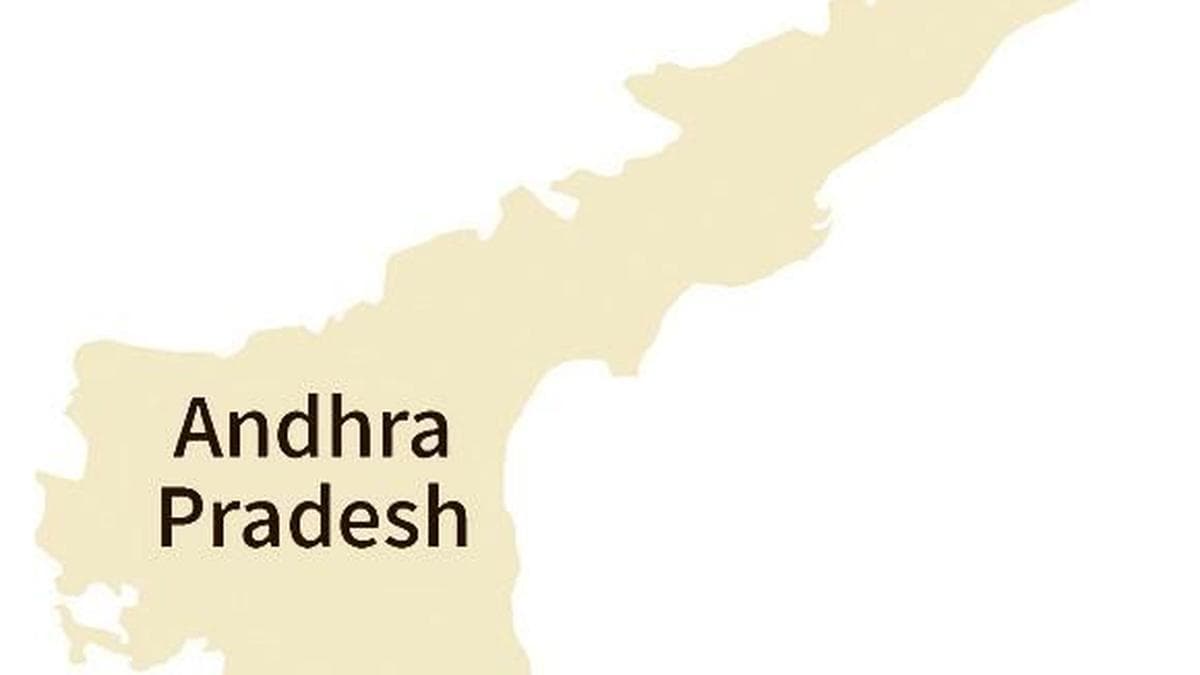
Chronic drought and resultant famines have been an integral part of Rayalaseema, with the region having some of the driest places in India.However, the economic landscape here has undergone a perceptible transformation in the last decade and a half, as some mega manufacturing industries have started moving in with huge investments. Except agriculture and horticulture, which flourished in isolated pockets, Rayalaseema never had any major industrial activity to boast of, but this is rapidly changing and in no small measure.Numerous cotton ginning and pressing, textile mills, and mineral-based units were the earliest industries to come to the region in the mid-20th century. Multiple large-scale industries, including the State-owned Rayalaseema Thermal Power Plant, the cement plants of Dalmia Bharat and Zuari in the Kadapa-Kurnool belt, and a clutch of renewable energy projects such as the ultra-mega solar parks in the Kadapa and Kurnool districts, were established subsequently.After a big gap thereafter, the stage has been set for yet another tranche of massive investments, the most prominent being the integrated steel plant being built by the JSW Group in Kadapa district; a string of defence sector projects namely the DRDO’s Advanced Medium Combat Aircraft integration and flight testing centre at Puttaparthi, Bharat Forge’s defence energetics facility in Madakasira, and a high-precision ammunition making unit of HFCL in Sri Sathya Sai district; and the Royal Enfield manufacturing plant near Tirupati. Then there is the Space City poised to take shape close to the country’s only rocket launchpad at Sriharikota.These are only a few projects turning parts of the Rayalaseema region into a manufacturing hub.A gradual boomDue to its location in the rain shadow area of the Deccan plateau and the consequent inability to fully capture the bountiful rains which the southwest and northeast monsoons normally bring, the Rayalaseema region had for centuries been starved.However, over the years, the same vast tracts of barren lands, which entrepreneurs would not even look at, became beehives of industrial activity as the Telugu Desam Party (TDP) government of 2014-19 and the present TDP-led ruling coalition offered attractive incentives and created the necessary infrastructure that brought about an industrial revolution of sorts in this resource-rich yet parched region.The establishment of India’s only KIA Motors’ car manufacturing plant in Anantapur (the site is now in Sri Sathya Sai district) in 2019 was a trigger for the steady flow of big-ticket investments into this region. Royal Enfield’s entry into Tirupati from Tamil Nadu, which is the only State where Eicher Motors is currently making the iconic motorcycles, complements the existing automotive ecosystem in Anantapur, positioning the region as a growing hub for vehicle manufacturing.What clearly clinched all these projects is the government’s focus on ‘ease of doing business’, and its subsequent evolution into the ‘speed of doing business’, and the untiring efforts made by the government through the State Investment Promotion Board to promote Rayalaseema as an investment destination.While going the whole hog in rolling out the red carpet to investors across the industrial manufacturing spectrum, the government now has its sights fixed on consolidating the region’s leadership in the production of horticulture crops. Accordingly, the food processing sector is being aggressively promoted.Looking back, it was the JSW Group’s Rayalaseema Steel Plant, for which the foundation was laid on July 3, which gave a fillip to the industrialisation of this region; its investment roll-out for Phase-I is ₹4,500 crore (1 MTPA capacity) out of the overall proposed investment of ₹16,350 crore.From then on, several new major industries started taking tangible shape in Sri City, adding up to the ‘core manufacturing sector’ in Rayalaseema that gained momentum.The present government has essentially gone all ou
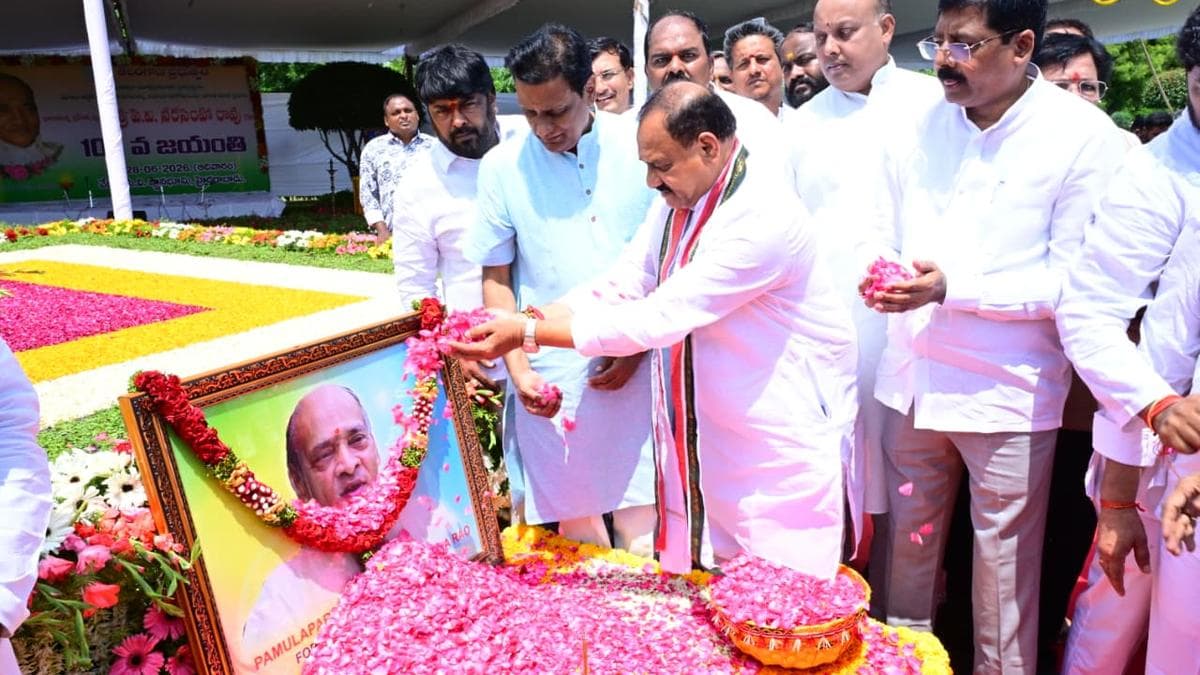
TPCC chief Mahesh Kumar and others pay floral tributes to former Prime Minister PV Narasimha Rao 105 th birth anniversary at PV Ghat in Hyderabad on Sunday. HYDERABADPolitical leaders across party lines paid rich tributes to former Prime Minister P.V. Narasimha Rao, a son of the soil, on the occasion of his 105th birth anniversary on Sunday, recalling his great contributions to nation-building and economic reforms.Chief Minister A. Revanth Reddy paid floral tributes to Mr. Narasimha Rao’s portrait at his residence in Jubilee Hills. Ministers Komatireddy Venkat Reddy and Adluri Laxman Kumar accompanied him. In a message shared on social media, the Chief Minister said the services rendered by the former Prime Minister in shaping modern India were unforgettable. Telangana Chief Minister A. Revanth Reddy with Ministers Komatireddy Venkat Reddy and Adluri Laxman Kumar pay tributes to PV at the former’s residence in Jubilee Hills on Sunday. TPCC president and MLC B. Mahesh Kumar Goud, Ministers Ponnam Prabhakar and Adluri Laxman Kumar, MP Anil Yadav, Government Adviser Harkara Venugopal, AICC secretary Rudra Raju and several other Congress leaders paid homage at the P.V. Ghat on Necklace Road. Congress leaders also organised commemorative programmes and offered tributes at Gandhi Bhavan. The Chief Minister later laid foundation stone for the first phase of the drinking water scheme at NG College Grounds ahead of the public meeting.BJP leaders Union Minister G. Kishan Reddy and Telangana BJP president N. Ramchander Rao also paid glowing tributes at the P.V. Ghat. Recalling Mr. Rao’s tenure as Prime Minister, Mr. Kishan Reddy said his initiative and vision in economic and policy reforms laid the foundation for India’s development.He added that the former Prime Minister’s contribution in the making of modern India remains enduring and significant. Mr. Ramchander Rao said Mr. Narasimha Rao was the first Prime Minister outside the Nehru-Gandhi family to complete a full five-year term in office. He also recalled the cordial relationship between Mr. Narasimha Rao and former Prime Minister Atal Bihari Vajpayee. Former Governor and BJP senior leader Bandaru Dattatreya, party leader and Mr. Narasimha Rao’s grandson NV Subash and others were present. Published - June 28, 2026 07:28 pm IST

APSRTC Employees’ JAC leaders join hands in a show of solidarity before addressing the media in Vijayawada on Sunday. | N. RAO The APSRTC Employees’ Joint Action Committee (JAC) proposes to launch its second phase of agitation from July 7 in support of its demand that the State government withdraw its plan to hand over valuable depot lands to private operators in the name of operating electric buses.At a meeting held here on Sunday, JAC conveners Y. Srinivasa Rao and P. Damodara Rao alleged that the government’s move would gradually pave the way for privatisation of the public transport service, and demanded that all electric buses be operated directly by the corporation.“The second phase of agitation will also seek protection and strengthening of the public transport system and fulfilment of the legitimate demands of the APSRTC (PTD) employees,” they said.The JAC leaders said representations to this effect would be submitted to the Chief Minister, the Chief Secretary, the Transport Minister, the Special Chief Secretary (Transport and R&B), and the Vice-Chairman & Managing Director of APSRTC on June 29 (Monday).They alleged that four APSRTC depots had already been handed over to the private operators for operation of 1,050 electric buses. In another eight depots, nearly 50% of the land was being allotted to the private operators.They said the government was reportedly preparing to hand over another 29 depots for operation of an additional 1,450 electric buses, and raised concern that these developments indicated a systematic plan to hand over all APSRTC buses and depots to private companies by 2029.Action planThe leaders said that July 7 and 8 would be observed as ‘APSRTC Protection Day’, wherein employees across the State would wear printed badges displaying the JAC’s demands while discharging their duties. From July 9 to 18, a campaign would be run to seek the support from public representatives, and from July 19 to 26, a State-wide signature campaign would be conducted among the employees on a memorandum addressed to the Chief Minister, highlighting their concerns.On July 27, memoranda carrying employees’ signatures would be submitted to the Chief Minister through the District Collectors as part of the Grievance Day programme and, on July 30, a State-level meeting of the JAC would be held in Vijayawada to announce the third phase of the agitation.The JAC leaders appealed to all the employee unions and associations within the APSRTC to extend their support to the movement to prevent privatisation of the corporation. Published - June 28, 2026 06:57 pm IST
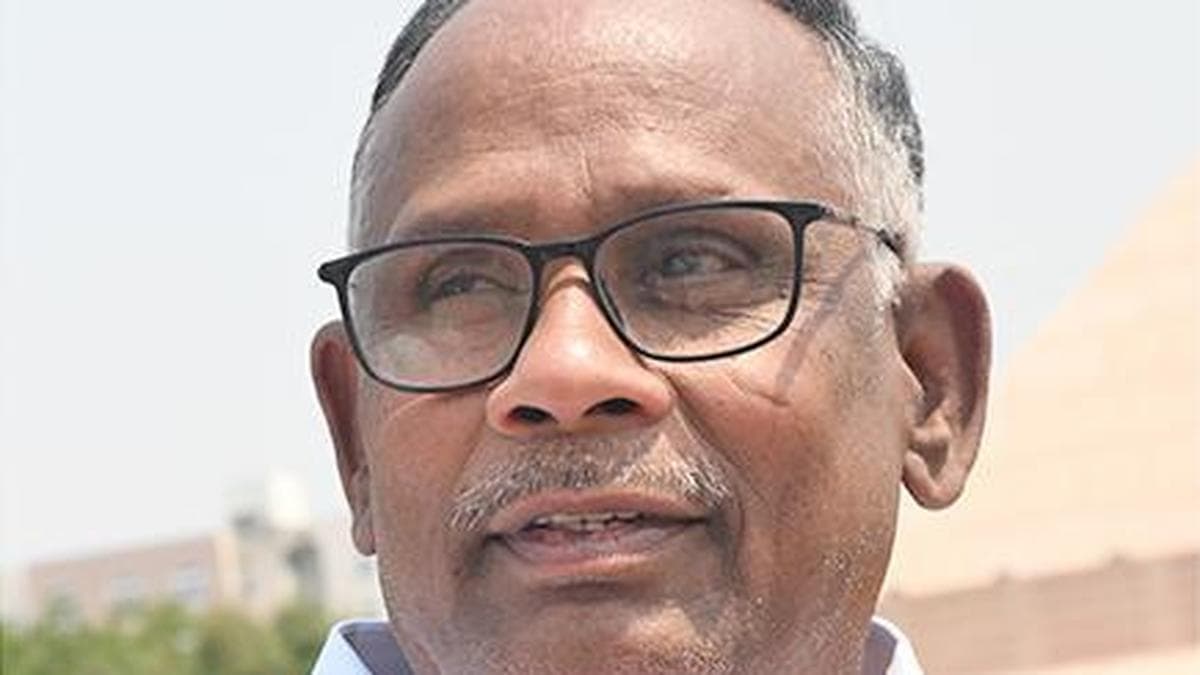
APCC vice-president Kolanukonda Shivaji questions the silence of Chief Minister N. Chandrababu Naidu and Deputy CM K. Pawan Kalyan over the Ram temple donation case. | Chandrababu Naidu and Deputy Chief Minister K. Pawan Kalyan, over the alleged financial irregularities involving donations to the Ram Temple in Ayodhya, despite their earlier strong stand on Tirumala Tirupati Devasthanams (TTD)-related issues.At a press conference, APCC vice-president Kolanukonda Shivaji asked why political parties were not demanding action against those allegedly responsible for diverting devotees’ contributions and urged Prime Minister Narendra Modi to order a judicial inquiry headed by a sitting judge.Citing judicial oversight in the Sree Padmanabhaswamy temple, Puri Jagannath temple, and Sabarimala temple, the Congress leader said similar intervention was needed to ensure transparency and protect the temple assets.Alleging that the Ayodhya Ram Janmabhoomi Teerth Kshetra Trust had betrayed the faith of millions through irregularities involving hundreds of crores of rupees, Mr. Shivaji demanded the arrest and prosecution of the Trust’s general secretary Champat Rai. He opposed an SIT probe, arguing that only an inquiry by a sitting High Court judge would ensure accountability.Mr. Shivaji noted that Mr. Modi, who had personally overseen the Ram Temple project from its foundation to the consecration ceremony, was silent now. He also congratulated Rahul Gandhi on completing two years as the Leader of the Opposition in the Lok Sabha.He also demanded the resignation of Union Education Minister Dharmendra Pradhan over the NEET UG 2026 paper leak and called for the RSS to be brought under a legally recognised regulatory framework, urging RSS chief Mohan Bhagwat to clarify the organisation’s legal status and ensure transparency. Published - June 27, 2026 10:53 pm IST

Discussion (0)