
Loading dispatches...
← Return to NewsroomPolitics
Shigella outbreak: ‘Operation Clean Kerala’ intensified in Thrissur; four eateries fined

In the wake of a Shigella outbreak, the Food Safety Department in Kerala has intensified inspections under ‘Operation Clean Kerala’ across Thrissur city limits.Over the past week, special inspections were conducted in 65 establishments, including hotels, restaurants, cool bars and juice stalls. Authorities issued penalty notices to four establishments found to have committed serious violations of food safety norms.Rectification noticesAdditionally, 15 outlets were served rectification notices for minor lapses, directing them to address deficiencies. As part of surveillance, 12 food samples were collected and sent to laboratories for quality testing.Health authorities have urged the public to take strict precautions to prevent the spread of infection. People are advised to drink only boiled and cooled water and exercise caution while consuming salads, chutneys, undercooked food and mayonnaise.Maintaining personal hygiene is critical, officials said, stressing the importance of washing hands with soap before eating and after using the toilet. They also called for regular cleaning and chlorination of drinking water sources such as wells and storage tanks.Authorities further advised that anyone experiencing symptoms should avoid self-medication and seek immediate medical attention. Published - June 09, 2026 01:20 pm IST

Kerala Health Minister K. Muraleedharan | Muraleedharan has said that the State government has sought the Centre’s permission to hand over 28 acres of revenue land to the Forest department in return for a similar parcel of land for the development of the Government Medical College Hospital (MCH) at Mananthavady in Wayanad.Mr. Muraleedharan was in Kozhikode on Tuesday to open the State-level launch of ‘Kayakalpam’, an outreach initiative to gather public opinion on the deficiencies in the health system and patient care services. It also aims to seek suggestions on how health service delivery can be improved to meet people’s expectations.Mr. Muraleedharan said the Wayanad MCH needed over 28 acres for forest land for its expansion. “However, the Forest department needs a similar parcel of land in return. We have now sought the Union government’s permission to do so,” he said.CSR funds for developmentMr. Muraleedharan claimed that the government was planning to use corporate social responsibility funds for the development works in public hospitals.He said the previous Left Democratic Front government had left behind crores of rupees as dues to be given to various agencies and others. “Till March 31, 2026, the government has to give ₹2,017 crore to hospitals for insurance claims under the Karunya Arogya Suraksha Padhathi (KASP). Kerala Medical Services Corporation Ltd. has to be given ₹476 crore. Distributors of surgical devices have stopped their supply after their dues crossed ₹150 crore. This is even affecting surgeries to save those suffering from life-threatening diseases,” he said.Mr. Muraleedharan claimed that because of this situation, many private hospitals had either stopped accepting claims under schemes such as KASP or Medisep or were discouraging such admissions.The Minister also took a dig at Beypore’s LDF MLA P.A. Mohamed Riyas for his absence from the event.Virtual post-mortemMeanwhile, responding to a request from Shafi Parambil, MP, Mr. Muraleedharan said steps would be taken to launch virtual post-mortem examination procedures at the Government Medical College Hospital, Kozhikode. Published - June 09, 2026 01:28 pm IST

West Bengal Chief Minister Suvendu Adhikari. File | Speaking at an event organised by the BJP in Kolkata’s New Town Area, Mr. Adhikari said jobs would be provided to kin of 315 deceased BJP workers in June. The Chief Minister also announced one-time financial assistance of ₹5 lakh for all the affected families from the Chief Minister’s Relief Fund.The BJP had lost the West Bengal Assembly polls in 2021, and the BJP workers were subjected to post-poll violence. During the campaign for the West Bengal Assembly polls in 2026, Mr. Adhikari had promised to provide compensation to the families of BJP workers killed in post-poll violence.After the post-poll violence in 2021, a committee by the National Human Rights Committee had said West Bengal was experiencing a “manifestation of the ‘law of ruler’ instead of ‘rule of law’.”After the BJP Government came to power, the West Bengal Government has started registering and reopening previous cases relating to violence during and after the 2021 Assembly polls. The State Government started 458 new enquiries, 181 new First Information Reports (FIRs) have been registered, and 59 cases where final reports had been submitted have been reopened.West Bengal has had a history of electoral violence, and even after the 2026 Assembly polls, there have been reports of post-poll violence, though the incidents of violence were fewer in number. The Trinamool Congress has been at the receiving end of the violence. Published - June 07, 2026 09:54 pm IST

The number of employees in Bill Pulte’s office had been “way too high for way too long,” says Donald Trump. File | S. President Donald Trump said Friday (June 5, 2026) he wants his incoming acting spy chief to start firing employees, deepening the controversy over the appointment of a man with no previous intelligence experience.Bill Pulte, a Mr. Trump loyalist who heads the Federal Housing Finance Agency, was named by the Republican president on Tuesday (June 2) as acting Director of National Intelligence.“If he cut, I wouldn’t mind that,” Mr. Trump told reporters aboard Air Force One, adding that the number of employees in Mr. Pulte’s office had been “way too high for way too long.”Mr. Trump had earlier said in an interview with the Wall Street Journal that he wanted Mr. Pulte — who will oversee the 18 sprawling U.S. intelligence agencies — to slash employee numbers.“I’d like to see it smaller. I think there are a lot of people in there that shouldn’t be there,” Mr. Trump told the newspaper, citing holdouts from the Biden and Obama administrations.Democrats have condemned Mr. Pulte’s appointment to replace Tulsi Gabbard as intel chief, pointing to the loyalist’s history of weaponising government records against Mr. Trump’s opponents.Mr. Trump has tried to quell the row, insisting that Mr. Pulte will only be in the job as a stopgap and saying on Friday (June 5) that he had recently interviewed five people for the post.But Mr. Trump told the WSJ that he could also give Mr. Pulte leeway to gut the U.S. intelligence community. “You’re less shackled,” he told the newspaper. “It sort of gives you more power, you know, for a somewhat limited period of time.”Mr. Trump suggested on Thursday that Mr. Pulte would also investigate “rigged elections,” doubling down on his unfounded claims about voting stemming from his 2021 election loss.The Republican president previously deployed Gabbard, who said she was stepping down to care for her sick husband, to investigate alleged election fraud despite the Director of National Intelligence position having no mandate for it.Property heir Mr. Pulte has previously shown his loyalty to Mr. Trump by going after the president’s political enemies. Mr. Pulte has used mortgage records to support investigations of Mr. Trump adversaries, including Federal Reserve governor Lisa Cook, New York Attorney General Letitia James and Democratic Senator Adam Schiff.Mr. Trump’s appointment of Mr. Pulte has also added to the president’s growing rift with Republican lawmakers, who are looking nervously at the polls ahead of midterm elections in November.U.S. senators blocked legislation renewing a major foreign surveillance authority on Friday in protest at Mr. Pulte’s appointment, upending a bipartisan deal.Democrats said Mr. Pulte’s appointment made it impossible to back expanded surveillance powers without assurances over how intelligence would be used.In Kharkiv, at least 19 people were wounded in residential areas in the past two days — including 11 on Tuesday (June 2), burying some residents in the rubble. Published - June 06, 2026 09:54 pm IST

Tamil Nadu Governor Rajendra Vishwanath Arlekar addressing a gathering in Auroville in Villupuram district on Friday. Tamil Nadu Governor Rajendra Vishwanath Arlekar on Friday, visited Auroville praising the township’s founding vision of global human unity.During the visit, the Governor met Auroville residents, the Auroville Foundation Secretary and members of key working groups and formally distributed identity cards to residents, marking a crucial step in supporting the township’s administrative framework and shared future.Mr. Arlekar expressed profound joy at fulfilling a long-held dream of visiting the “sacred city” of Auroville, a visit made possible with the persistent encouragement of the Auroville Foundation Secretary.“When I came here today along with my wife, both of us felt that The Mother is just around here in all this atmosphere. We could feel that she is here, blessing and guiding all of us. There is no negativity here. Whosoever comes here, even for a short while, will take only positivity from here,” the Governor said.Linking Sri Aurobindo’s teachings to India’s broader role on the world stage, he emphasised on the ancient philosophy of Vasudhaiva Kutumbakam (The world is one family).He clarified that the concept of Arya is not a race, but a quality of goodness that must reach every human being.Echoing Sri Aurobindo’s predictions, he noted that India is rapidly stepping into its role as a global guide (Vishwa Guru), leaving behind colonial mindsets and returning to a culturally integrated system of true education.Mr. Arlekar said he and his wife are deeply invested in the educational sector in Goa, running institutions dedicated to specially-abled children. He noted that Auroville stands as a global benchmark for what integrated education should look like, stating, “Anybody in the world can come here and see what the change is, and what the world is to be,” he said.Jayanti S. Ravi, Additional Chief Secretary of Gujarat State and Secretary of Auroville Foundation, Ministry of Education, Government of India, said that backed by the Auroville Foundation and the Governing Board, the community is moving decisively to implement its visionary “Galaxy Plan” master plan.First envisioned in 1968 by The Mother and designed by chief architect Roger Anger, Auroville is actively transitioning from a conceptual blueprint into a thriving urban reality.Ms. Ravi emphasised that with the recent series of administrative victories clearing the path since 2021, development has rapidly accelerated to expand the township’s infrastructure, economy, and population while establishing it as the world’s greenest and most sustainable city.Auroville’s core working groups — including the Auroville Town Development Council (ATDC), the Sri Aurobindo International Institute of Educational Research (SAIIER), the Funds and Assets Management Committee (FAMC), and the Working Committee — presented detailed updates on the accelerated growth. Published - June 05, 2026 10:24 pm IST

Image used for representative purpose only. | A senior police officer from the Bhangar subdivision confirmed the development, saying an NIA team, accompanied by Central Armed Police Forces (CAPF) personnel and local police, reached Mr. Molla’s residence around 7 a.m.Officials said the searches were still on. Mr. Molla was reportedly not present at his residence when the team arrived. NIA officials briefly questioned his wife and two children and also visited a cafe run by his son Imran.Many local residents, meanwhile, have also alleged that several such properties and lands have been illegally occupied by Mr. Molla over the years. “This cafe was built on a 70 bigha land at the bank of the Matla river. Mr. Molla’s brother is also building a multi-storey house at the riverbank. There are many such shops and buildings have been occupied by Molla family members illegally over the years — many of them are government properties,” a resident told the reporters in Maukhali’s Jeebantala area where the cafe is located. The agency also carried out searches at several locations in Bamunia village, where the blast had occurred.Mr. Molla represented the Canning Purba Assembly constituency and won elections in 2016 and 2021. He contested the recent Assembly election from Bhangar but lost to Indian Secular Front (ISF) leader Naushad Siddiqui.Ahead of the Assembly polls, a blast in the area on March 19 killed one person and injured three others while crude bombs were allegedly being manufactured. Following the incident, police recovered at least 79 crude bombs and other explosive materials.The explosives were reportedly stored by unidentified persons in an abandoned house near a burial ground in Majherhat (Poilepara) village.A First Information Report was registered at the Uttar Kashipur police station under the Bhangar division. The case was subsequently transferred to the NIA in April, following directions from the Union Home Ministry, after which the agency registered a fresh FIR.The NIA had earlier arrested local TMC leader Ahidul Islam for his alleged role as a co-conspirator in the manufacture of the bombs.Other arrestsIn a separate development, the Regent Park police in Kolkata arrested Biswajit Mondal, a Trinamool Congress councillor from Ward No. 114 of the Kolkata Municipal Corporation, in connection with an alleged incident of harassment and assault of a woman in 2024.Another Trinamool leader Sahidul Mian was arrested from Mathabhanga in Cooch Behar district. He was found hiding under a cot at his residence when angry villagers had surrounded his residence. The allegations against the arrested involve taking cut money for giving benefit of government schemes.Kolkata-based Paritosh Dutta was also arrested by the police on Thursday after they recovered two suitcases containing termite-infested cash and a firearm from the union room of Surendranath College on Tuesday. Mr. Dutta is considered to be a close aide to Trinamool Congress leader Debasish Banerjee, who was also named in the FIR of the case. Hundreds of local level Trinamool leaders and former and sitting MLAs have been arrested after the change of regime in West Bengal on allegations of corruption and extortion. Published - June 04, 2026 11:05 am IST

Curiosity got the better of me and I shot off a request to explore one of the verdant spaces in Thiruvanathapuram — Lok Bhavan Kerala, the official residence of the Governor of Kerala. The heavily-guarded power centre, stretching across almost half the tree-lined Vellayambalam-Kowdiar stretch, has a treasure of tree flora and what better time to write about it than the World Environment Day.On the appointed day I make my way up the tarred avenue — it is a small climb as the buildings stand on a small hillock. I walk in with the knowledge that it has the first digitalised garden with QR codes among the Lok Bhavans in India.The sprawling 12-hectare green campus has 183 species of tree flora, as per the team that conducted digitalisation in 2019 during the tenure of Governor P Sathasivam. Six years down the line, the number has grown. Governor Rajendra Vishwanath Arlekar planting paddy saplings | We were contacted by the Governor’s office after we digitalised the trees on the Kanakakunnu premises,” says Akhilesh SV Nair, then a research scholar with the Department of Botany, University of Kerala, who carried out the process with A Gangaprasad, who was then the honorary director, Centre for Biodiversity Conservation, University of Kerala.With flora of all kinds — herbs, shrubs, ornamental plants, hedge plants and avenue trees — occupying the sprawling campus it was difficult to fix a starting point for the tour. So, we start from near the Band Stand built near the main buildings where stands the giant jamun or njaaval. The bed of fallen ripe fruit underneath indicates that is the fruiting season. The branches have spread all over the place, a portion even bending close to the ground, making it easy to pluck the ripe fruits. “The fruits are smaller than the variety sold on roadsides. We have two other njaaval varieties here,” says Rajaneesh Kumar R, garden supervisor.History saysBuilt in mid-19th century, the Lok Bhavan was once the guest house of erstwhile kingdom of Travancore. “It used to be called Traveller’s Bungalow. The king of Bobbilli was the first one to stay there. It is also the first building in the city to be fully electrified,” notes historian Malayankil Gopalakrishnan. When Kerala was formed in 1956, there were three Raj Bhavans - at Thiruvananthapuram, Ernakulam (Bolgatty Palace) and Munnar (Devikulam Palace). Later Bolgatty Palace was converted to heritage hotel and Devikulam Palace became the Government Guest House.As we proceed, I realise that the premises is a haven for mangoes. Wherever you look there is a mango tree, starting from the main entrance. And the best part? All of them are laden with mangoes. “The production is high this year since the weather was conducive. Although we don’t have the exact number of varieties there would be more than 75,” says Rajaneesh. Mango trees are aplenty on the Lok Bhavan premises | The harvested mangoes are usually distributed among the staff and other employees of the Lok Bhavan.There is an oldie among the trees who even made it to the news in 2021 — the muthassi mavu, as they call the grand old mango tree, believed to be 150 years old at the time. There was a move to fell the tree after it was found unhealthy. Tree Walk, a city-based nature collective, opposed the move and submitted a memorandum to the then Governor Arif Mohammed Khan to assess its health. The tree was eventually saved once a favourable report was submitted. It still stands tall, braving the sun and the rain.Then there are scores of grafted mango plants. The star attraction being the one grafted with 10 mango varieties, developed by MV Anish, an employee at Kerala Agricultural University. It was planted by Governor Sathasivam in 2016 to mark his

The Minister was responding to a calling attention motion moved by Congress MLA V.T. Balram on the necessity to start more KSRTC depots and to operate more services in the northern districts. | P. John told the Assembly on Thursday.He was responding to a calling attention motion moved by Congress MLA V.T. Balram on the necessity to start more KSRTC depots and to operate more services in the northern districts.Mr. John said that in the context of the United Democratic Front (UDF) government’s plan to provide free bus travel for all women on KSRTC buses, it is important that people from all regions receive its benefit.“The MLA from Manjeswaram told me that there is not a single service of the KSRTC in the entire Manjeswaram taluk. We will have to start new services in such places, without which people in these regions will not even know that the government is providing such benefits to women,” said Mr. John.The Minister said that out of a total of 5,765 buses of the KSRTC, only 1,406 buses are based in depots in the seven districts of the Malabar region. Only around 33% of all the inter-district services cover these districts, he said. Later, he added a caveat that the number of services will be increased as the “health” of the KSRTC improves.Mr. Balram said that out of the 28 depots of the KSRTC, the seven districts from Palakkad to Kasaragod have only 5 depots, while the number of sub-depots is 8 out of 41. The imbalance in the number of services and depots needs to be addressed, he said. Published - June 04, 2026 01:56 pm IST

Kerala Chief Minister V.D. Satheesan | D. Satheesan on Thursday (June 4, 2026) tabled a White Paper on the financial status of Kerala in the State Legislative Assembly.The contents of the document are expected to be made available in a short while.K.N. Balagopal, who was Finance Minister in the previous CPI(M)-led LDF government, tabled a dissent note. Mr. Balagopal argued that the document should have been drafted by the State Finance department, not by an external committee as in this case.Mr. Satheesan described the White Paper as a “status report of Kerala’s fiscal health.” All norms have been followed in drafting the document, he said.The keenly-awaited document is expected to intensify the heated debate between the Congress-led United Democratic Front (UDF) and the CPI(M)-led Opposition Left Democratic Front (LDF) on the fiscal health of the State.Ahead of BudgetThe White Paper comes ahead of the presentation of the Revised State Budget on June 19.The plan to publish the White Paper was among the first announcements of the new UDF government which came to power in May. On May 19, it formed a special committee chaired by former Union Cabinet secretary K.M. Chandrasekhar for drafting the White Paper. Economist and former Director of the Gulati Institute of Finance and Taxation D. Narayana, and Professor and Director of the Centre for Development Studies C. Veeramani were members. Additional Chief Secretary (Finance) K.R. Jyothilal was the convener of the committee.State finances have been a touchy issue ever since Mr. Satheesan, who also handles the Finance portfolio, claimed after the UDF’s landslide election victory that the front had inherited “an empty treasury.”LDF stanceThe LDF, led by former Chief Minister and current Leader of Opposition Pinarayi Vijayan and former Finance Minister K.N. Balagopal, had countered the charge. Mr. Balagopal had argued that the State was in a much better position financially. Mr. Vijayan had recently stated that When the previous LDF government stepped down the treasury had a cash balance of ₹5,429 crore when the LDF stepped down.During the past 10 years of LDF rule, State finances have been in the spotlight on account of the extended tussle between the State and Centre over fiscal policy. Published - June 04, 2026 09:38 am IST
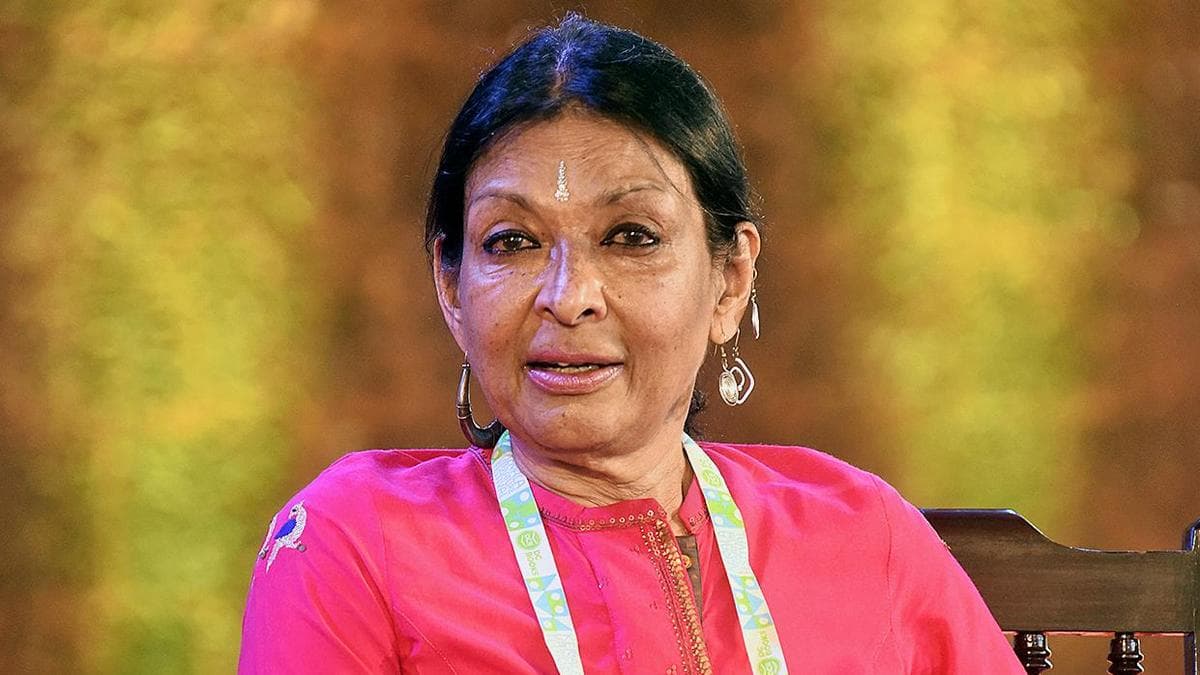
A fresh controversy has erupted over the post of Chancellor at Kerala Kalamandalam Deemed-to-be University, with a memorandum demanding the removal of noted dancer Mallika Sarabhai as Chancellor citing financial strain, even as the institution highlights a sharp rise in self-generated revenue.The memorandum, submitted by the ‘Save University Campaign Committee’, alleges that appointing Dr. Sarabhai as Chancellor in December, 2022, replacing the then Governor Arif Mohammed Khan—due to clash between the Left Democratic Front (LDF) government and the Governor—has imposed an additional annual burden of around ₹50 lakh on the university. “At a time when the institution struggles to even pay staff salaries on time, this extra expense has worsened the crisis,” it states.It further claims that expenses related to the Chancellor’s travel from Maharashtra, accommodation, and remuneration, have added to the financial strain. The committee has demanded her immediate removal and called for the Chief Minister to be appointed as Chancellor, with the Cultural Affairs Minister as Pro-Chancellor.Responding to the criticism, Kalamandalam Vice-Chancellor B. Ananthakrishnan said the appointment of the Chancellor was a government decision made in accordance with University Grants Commission (UGC) norms for deemed-to-be universities. Acknowledging the financial crunch, he noted that the institution requires over ₹12 crore annually for staff salaries, with two months’ pay currently pending.Added revenueHowever, the V-C emphasised that Kalamandalam has made significant strides in strengthening its institutional framework and revenue streams. “There has been a 200% increase in income through cultural tourism initiatives. Last year, receipts touched ₹4 crore, compared to about ₹75 lakh earlier,” he said.He highlighted several reforms, including the establishment of an academic council, finance committee, boards of studies, and student grievance mechanisms. “Earlier, even basic infrastructure was lacking. Today, we have structured departments, research and development facilities, and welfare systems in place,” he added.Elaborating on revenue generation, Prof. Ananthakrishnan said the university has leveraged its cultural capital through innovative tourism models. “Our ‘Day with Masters’ programme allows visitors to experience live demonstrations of traditional arts. It has been successfully packaged as a cultural tourism product. We have also developed a visitors’ lounge and preview theatre,” he said.The university has also launched tailor-made programmes, set up a performance and outreach centre in Kochi, and initiated productions involving faculty and students. Notably, its Kathakali adaptation of The Old Man and the Sea won the Mahindra Theatre Excellence Award.Dr. Sarabhai, reacting to the memorandum, said the decision rests with the government. “There is indeed a financial crisis—not just in Kalamandalam, but across Kerala,” she said, adding that one of her priorities has been to mobilise non-governmental funding.“We have been exploring multiple avenues to generate income, and these initiatives are yielding results,” she noted. Published - May 29, 2026 06:52 pm IST

Discussion (0)