
Loading dispatches...
← Return to NewsroomPolitics
Tamil Nadu’s own-tax effort has ‘collapsed’, says White Paper

The White Paper presented by Finance Minister N. Marie Wilson on Tuesday said “the State’s own-tax effort has collapsed”.Giving an account of how the State’s Own Tax Revenue (SOTR) fared in the last five years vis-à-vis three “peer States” (Maharashtra, Gujarat, and Karnataka), the White Paper stated that the SOTR marked “the biggest component which is most directly within the State’s control and the most reliable indicator of fiscal effort”.The State’s “own-tax revenue is drawn from five principal sources”, which pertained to commercial taxes (Goods and Services Tax), Value Added Tax (VAT) on petroleum, State Excise and VAT on liquor, Stamps & Registration, Motor Vehicle Tax, and other taxes.Within the broader commercial taxes, GST accounted for around 53%; VAT on liquor, 28%; and VAT on petroleum products, 19%. “[Revenue from] Commercial taxes, as a proportion of GSDP (Gross State Domestic Product), have declined from approximately 4.53% in 2021-22 to approximately 3.89% in 2025-26 — a decline that was not seen in the case of peer States,” the document said.Pointing out that the Total Revenue Receipts (TRR) fell from about 10% of GSDP in 2021-22, the start of the post-COVID window, to 8.32% during 2025-26, the official document stated that the SOTR-to-GSDP ratio declined from 5.93% to 5.45%, the “lowest in the State’s history and the steepest decline” among the benchmarked States. But in 2006-07, SOTR, as a percentage of GSDP, had a peak of 8.94%. The cumulative decline from the historical peak meant approximately ₹1.23 lakh crore in annual revenue had been foregone — around 90% of the provisional fiscal deficit for 2025-26.“The decline is spread across all major tax heads — GST, VAT on petroleum, State Excise, Stamp Duty and Motor Vehicle Tax,” the document pointed out, attributing a significant part of it to “leakages and systemic corruption” in revenue-collecting departments, instead of structural economic disadvantage.The White Paper mentioned that “the peer comparison on SOTR-to-GSDP presents a concerning analysis”, raising the question of whether “Tamil Nadu’s revenue decline is the result of external structural forces or internal policy and administrative failure”.Over the post-COVID window from 2021-22 to 2025-26, Maharashtra’s SOTR-to-GSDP ratio increased by 1 percentage point, while Karnataka and Gujarat more or less maintained their ratios. “Tamil Nadu alone has recorded a decline in the ratio — from 5.93% in 2021-22 to 5.45% in 2025-26,” the document said.As a result of the poor performance in SOTR collections, the ratio of interest payment, as a share of SOTR, had risen from 33.83% in 2021-22 to 34.83% in 2025-26 (provisional).“More than one-third of every rupee the State raises through its own taxation effort goes directly to servicing past debt,” the White Paper added.The White Paper said mining revenue was among the “most striking examples of stagnation” in non-tax income of Tamil Nadu.Even though the revenue collections during 2025-26 went up to ₹4,433 crore (provisional) from ₹1,942 crore during 2024-25, after the imposition of Mineral Bearing Land Tax, the revenue was “broadly flat” during post-COVID years, the report said.Pointing out that mining revenue, as a share of total revenue receipts, represented barely 1.5%, the White Paper said “this is not a reflection of resource scarcity”. The State had “substantial deposits” of granite, limestone, sand, quartz, vermiculite, and a range of other minor minerals. Royalties, rents, and seigniorage fee on minor minerals contributed to mining revenue, the report said.“The revenue potential of this head is materially larger than current collections suggest,” the White Paper said, identifying several factors for the present state of affairs. Among the factors were “lack of revision in fees, leakage in the assessment of minor mineral extraction, intentional holding up of applications for extraneous reasons, inadequate enforcement against unauthorised mining, and slow
Rajiv Gandhi Centre for Biotechnology (BRIC-RGCB), an institution of the Department of Biotechnology, Government of India, has invited applications from GAT-B qualified candidates for its MSc Biotechnology programme for the academic year 2026-28.MSc Biotechnology course offers specialisations in two disciplines – Disease Biology and Genetic Engineering.The course spans over two years in four semesters. A total of 20 seats are available with 10 students per each specialisation.Besides a valid Graduate Aptitude Test-Biotechnology (GAT-B) score, the applicants must have 60% aggregate marks (or an equivalent grade point average) in Bachelor’s degree in any branch of Life Science or Medicine as per the UGC guidelines. Candidates from the SC, ST, OBC (non-creamy layer), and Persons with Disability (PWD) categories are entitled for a relaxation of 5% in aggregate marks.Students admitted to the course will receive a monthly stipend of ₹6,000 in the first year and ₹8,000 in the second year. Hostel accommodation is available on the RGCB campus.Candidates in the final year of their qualifying degree course are also eligible to apply by producing a proof of having secured the required marks in their undergraduate programme at the time of admission.The final selection of the students will be done based on the GAT-B cut-off rank/score fixed for each category.To submit the online applications and other details about eligibility visit: https://rgcb.res.in/MSc2026/.The last date for submitting online application is June 30, 2026. Published - June 16, 2026 08:25 pm IST
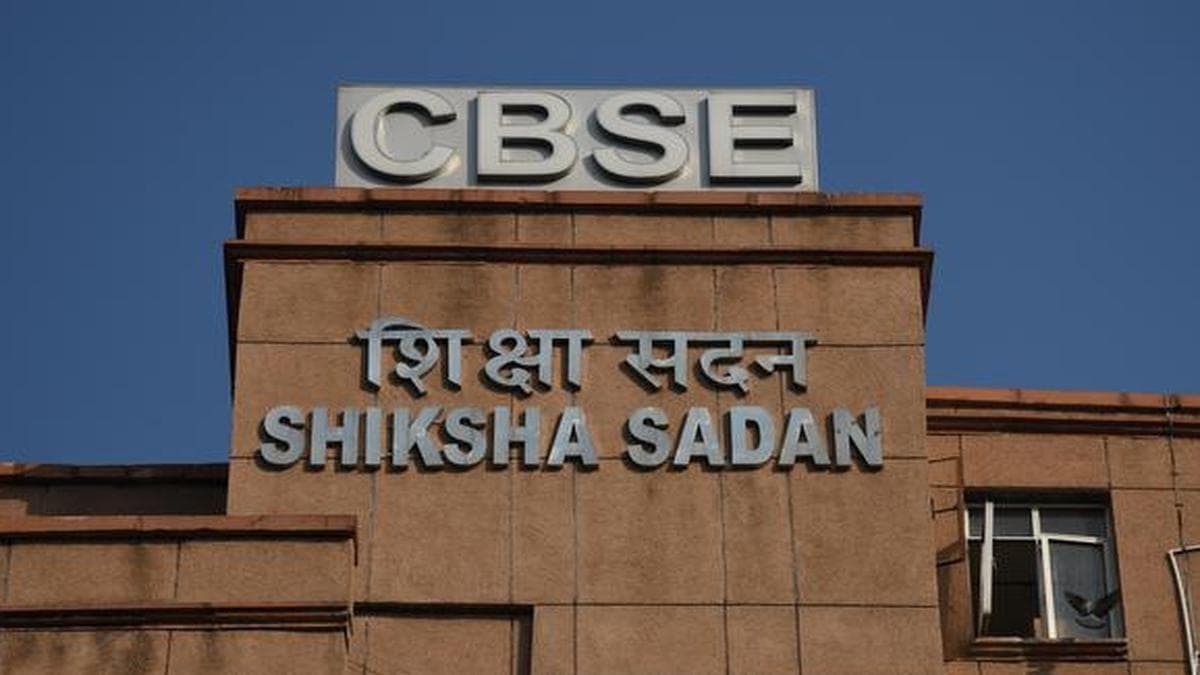
The CBSE has come under criticism after several Class 12 students reported incorrect marking for seemingly correct answers upon receiving copies of answer scripts they requested for re-evaluation. File | “In order to ensure a transparent and glitch-free process for verification and re-evaluation of answer books of students who intend to submit their applications on the Post-Result Activities portal, it has been decided that the designated portal will now be operational from 1st June 2026,” the Board said in a statement.This is to ensure the highest standards and protocols of evaluation, it added.The portal which first crashed on May 19 due to the heavy traffic has witnessed multiple glitches and slipped into maintenance codes.CBSE 2026 re-evaluation: How to apply for revision of marks?Following multiple complaints by Class 12 students about discrepancies a four-member team with two experts each from the Indian Institute of Technology (IIT) Madras and IIT Kanpur are expected to conduct a “full check-up” of the CBSE’s IT ecosystem, and submit a confidential report to the board, V. Kamakoti, Director, IIT Madras told The Hindu. This announcement on the portal comes days after the CBSE rejected claims that its Onscreen Marking System (OSM) portal — used by the examiners to evaluate scanned copies of answer sheets digitally — could have been compromised.The CBSE has come under criticism after several Class 12 students reported incorrect marking for seemingly correct answers upon receiving copies of answer scripts they requested for re-evaluation. Students and parents have also complained about the struggles they face in the re-evaluation process after the completion of the board examination.“This was the first time CBSE used [the OSM process], and some discrepancies have come to light. I take responsibility for this and assure you that a solution will be found. We are working on it. We will not leave any student’s query unaddressed,” Union Education Minister Dharmendra Pradhan said on Thursday (May 28, 2026).Officials in the Education Ministry confirmed that 98 lakh answer books were scanned and evaluated digitally.The CBSE has said that as on May 26, it has received 4,04,319 applications from students for obtaining scanned copies of answer books. A total of 11,31,961 answer books have been requested through these applications. The Board said it had furnished up to 8,98,214 answer books digitally.“Students who may have queries may reach out to the CBSE Tele-Counseling Helpline- 1800 11 8004 and via email - resultcbse2026@cbseshiksha.in,” the statement read. Published - May 29, 2026 06:06 pm IST
With less than a week to go for the deadline for the registration of applications for Tamil Nadu Engineering Admissions (TNEA) 2026, over 2.6 lakh students have submitted applications on the portal.The total registrations stood at 2,64,421 at the end of Day 25 of the admissions process, a press release stated. The cumulative number of candidates who have completed the payment process was 1,95,109, and the total number of candidates to have completed uploading their certificates on the website was 1,57,813. Published - May 27, 2026 11:53 pm IST


Discussion (0)