
Loading dispatches...
← Return to Newsroomgeneral
B K Hariprasad is new Karnataka Congress chief
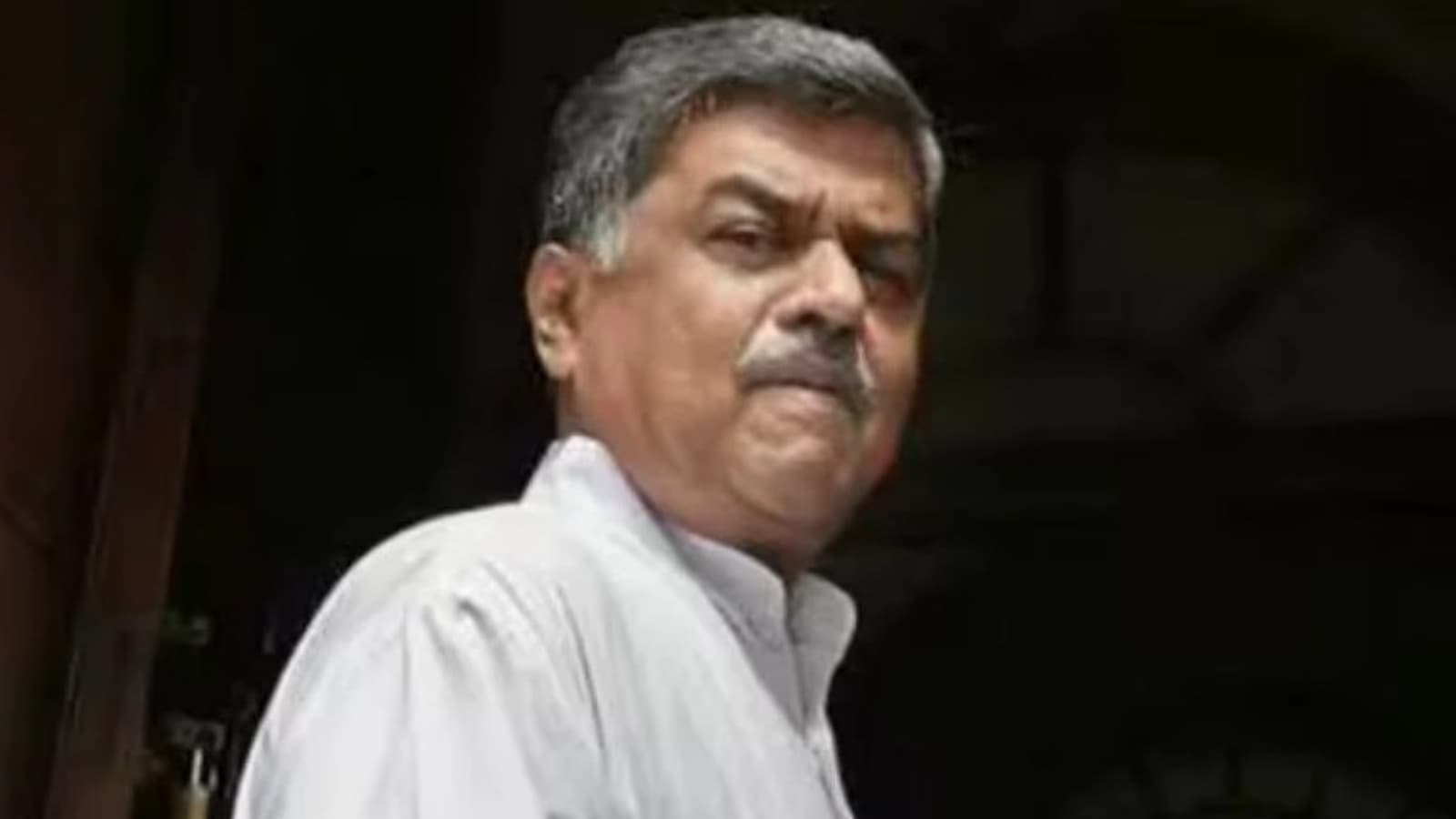
Ending suspense on who will succeed Karnataka CM D K Shivakumar as president of the state unit of the Congress, the AICC on Wednesday appointed senior leader and MLC B K Hariprasad for the post. Hariprasad, who is an OBC leader from the Billava community, has been associated with the Congress since the late 80s. He is a four-time Rajya Sabha MP, starting from 1990 and his last election to the Upper House was in 2014.Subsequently, he was elected to the Karnataka Legislative Council in 2020. He was picked for a second term in the Council from July 2026 by the Congress leadership earlier in the day. He is also a permanent invitee to the CWC. A leader close to the Gandhi family, Hariprasad courted controversy last October when he dubbed RSS as ‘Indian Taliban’. He, along with Karnataka minister Priyank Kharge, had consistently attacked RSS over the last few months calling for the organisation’s registration and its source of income to be revealed to the public. Hariprasad’s choice for the post is also seen as a counter for Shivakumar, due to his careful ‘soft Hindutva’ stance as evidenced during the swearing-in ceremony. Shivakumar had kept an image of his family deity at the swearing-in stage, which he bowed to seconds before taking oath as CM. Picking the OBC leader of Billava community, who form a deciding factor in several constituencies of coastal Karnataka, is also seen as a move to attract the caste group – voters of which have aligned largely with the BJP in recent decades.
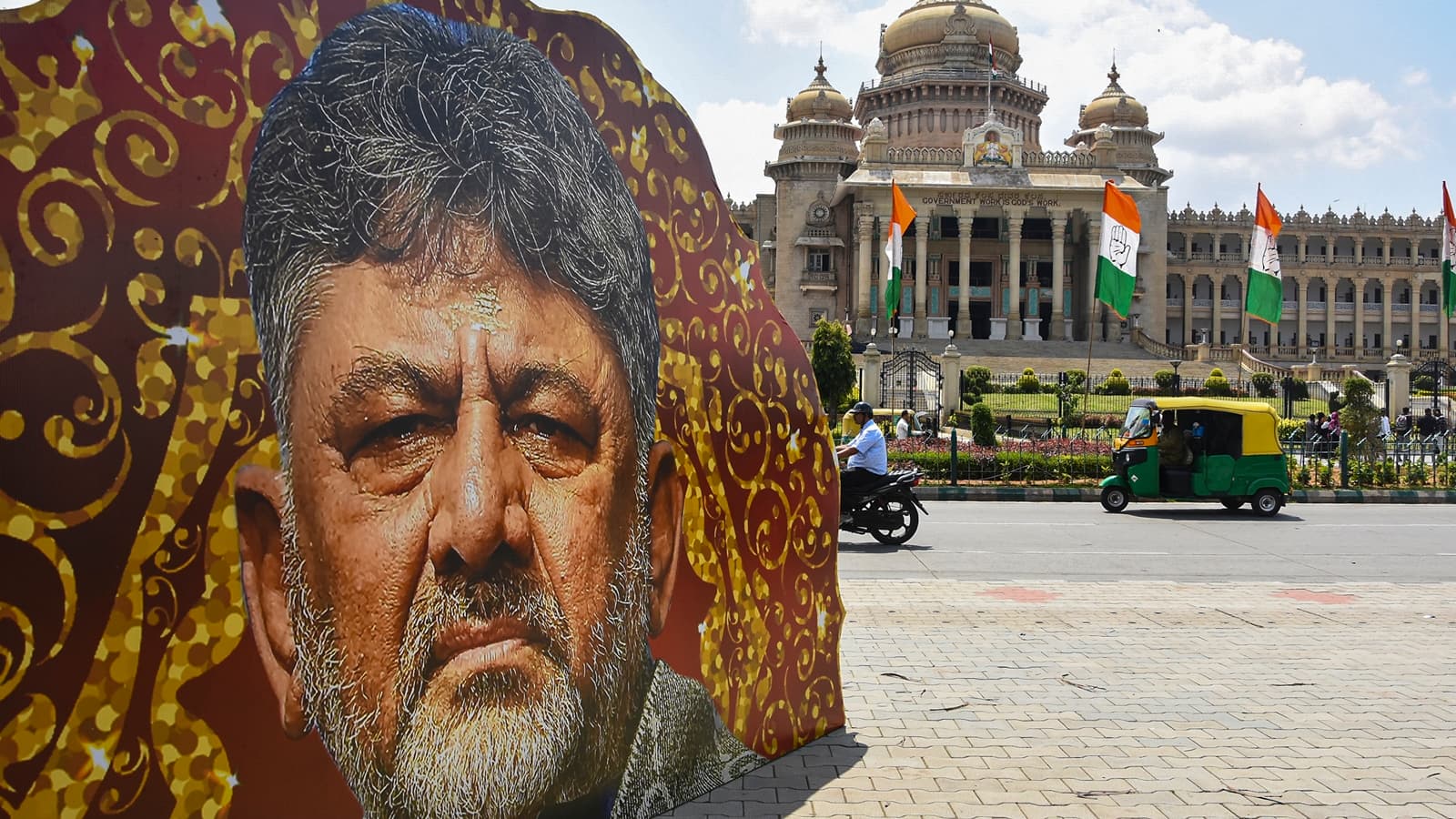
Bengaluru, New DelhiJun 3, 2026 05:21 AM IST An installation with portrait of Karnataka CM-designate D K Shivakumar, in Bengaluru on Tuesday. (PTI)A DAY before D K Shivakumar’s swearing-in as Karnataka Chief Minister on June 3, his predecessor Siddaramaiah was named a member of the Congress Working Committee (CWC) – the highest decision-making body of the party — on Tuesday. Congress president Mallikarjun Kharge appointed Siddaramaiah as a member of the CWC with immediate effect, said a statement from the Congress.The top party leadership on Tuesday held day-long deliberations with Siddaramaiah and Shivakumar on giving the final shape to the new Cabinet in the state. Karnataka is set to witness the oath-taking ceremony of the 34th Chief Minister, D K Shivakumar, 64, and the first batch of around 10 ministers, including Siddaramaiah’s son Siddaramaiah, 45, an MLC, on Wednesday. The oath-taking ceremony will be held with minimal fanfare at the state Lok Bhavan with a crowd of around 2,000 in attendance. Leader of Opposition Rahul Gandhi will be present at the ceremony along with party chief Mallikarjun Kharge. The probable list of 10 ministers who can take oath with Shivakumar includes several seniors from the Siddaramaiah Cabinet and two young faces — Priyank Kharge, the son of Mallikarjun Kharge, and Krishna Byregowda.Story continues below this ad The Congress is also expected to choose between veteran K H Muniyappa and his daughter Roopakala Shashidhar, who is a fresh ministerial aspirant, and Yathindra Siddaramaiah as its youth choices, sources in the state government said. The choice of senior ministers is expected to include M B Patil, Eshwar Khandre — both from the dominant Lingayat community — G Parameshwara, a Dalit, Ramalinga Reddy, a Vokkaliga, Satish Jarkiholi from an ST community and K J George, a Christian. The Muslim choice for the Cabinet is likely to be the incumbent Speaker and former minister U T Khader. The Cabinet formation in the first round will be an exercise in balancing the Congress’s caste equations in Karnataka, sources said. The OBC face to replace Siddaramaiah is likely to be his son Yathindra; the Dalit face is likely to be Priyank Kharge. Among the ministers from the Siddaramaiah government who could face setbacks are Shivaraj Tangadagi, Mankal Vaidya, Byrathi Suresh and Zameer Ahmed Khan among others.Story continues below this ad The new Karnataka Cabinet formation exercise could also see the appointment of deputy chief ministers and a new president for the state Congress to replace incumbent Shivakumar.
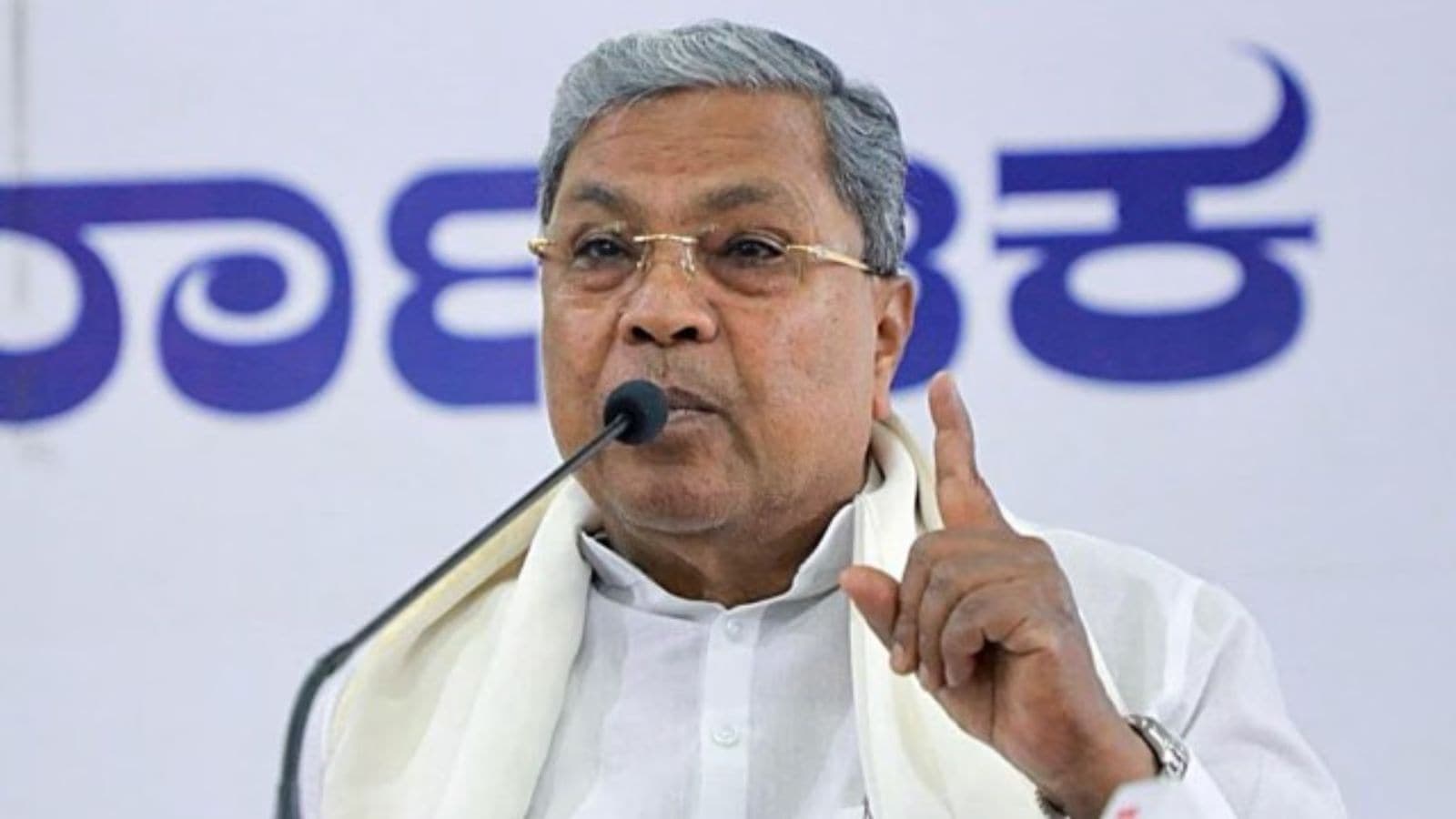
In the last six months, Siddaramaiah, who resigned as Karnataka Chief Minister on Thursday, had said more than once that he would step down from the post if Rahul Gandhi asked him to. After all, Gandhi was one of his biggest backers in the Congress. The Leader of Opposition is known to respect his political astuteness, administrative experience, and social engineering acumen.And the CM kept his word after Gandhi asked him to make way for D K Shivakumar, a dyed-in-the-wool Congressman known for his skills at realpolitik and someone who is considered both resourceful and an adept crisis manager. Siddaramaiah perhaps did not expect Gandhi to make that move. Sources close to him say he was initially in a “state of shock”.Siddaramaiah’s age — he will be 80 by the time Karnataka goes to the Assembly polls in 2028 — and the BJP’s increasing footprint across the country were among the two major factors that influenced the party’s decision. The BJP now is the dominant force in the West, North, and East, with the South the only region holding out. Karnataka is the only state where the BJP has won power on its own strength and keeping it out of its reach is important for the Congress. The transition also had to do with honouring an unwritten pact the high command had negotiated with the two in 2023 and keeping the future in mind. An influential section of the party came to believe that it was time to honour it. In the summer of 2023, when the Congress won Karnataka under the stewardship of Shivakumar — he was and still is the state Congress president — the central leadership had a tough choice at hand in picking the CM. Gandhi was keen on Siddaramaiah, while Sonia Gandhi and Priyanka Gandhi Vadra are known to have a soft spot for the Deputy CM. In 2019, Sonia had visited Shivakumar in Tihar jail, where the latter was in judicial custody after the Enforcement Directorate (ED) arrested him in connection with a money laundering case. The party had to take a call now. In 2023, the high command had thrashed out a formula that both were not fully in agreement with. While Siddaramaiah became CM and Shivakumar Deputy CM, what was left unsaid was that the CM-ship would be rotational. Siddaramaiah is said to have insisted that if the post was rotational, then Shivakumar should not be in his Cabinet. Shivakumar insisted he should be the CM as he had brought the party to power. In the end, the two reluctantly agreed. Shivakumar steps up the pressure Shivakumar began mounting pressure on the high command as the two-and-a-half-year mark neared last November. The leadership, after the Bihar defeat, was not keen. It dithered and sent a signal that the issue would be taken up after Assembly elections in five states this year. That allowed Siddaramaiah the opportunity to overtake D Devaraj Urs as the longest-serving Karnataka CM. Urs had served as CM for seven years and 239 days. Siddaramaiah broke the record in January. But the party had to honour the pact and also look at the next elections. The party had to factor in certain issues. Can the party go for elections under an octogenarian, who has already declared that he has no desire to contest again and can he be expected to lead a spirited fight against the BJP when he has nothing to gain? The party’s inability to enforce a similar formula of rotational chief ministership between Bhupesh Baghel and T S Singh Deo in Chhattisgarh had given the impression that the high command could be pressured. In Rajasthan, the high command had promised to make Sachin Pilot the CM in the last year of the government’s term, but that could not be enforced as Ashok Gehlot stayed put. In Punjab, the Congress had replaced Captain Amarinder Singh as CM four to five months before the elections with Charanjit Singh Channi. This led to disarray in the party and in the elections, the Aam Aadmi Party (AAP) swept it away. Managing the process With that baggage, the leadership moved in to resolve the Karnataka tussle. It was not a
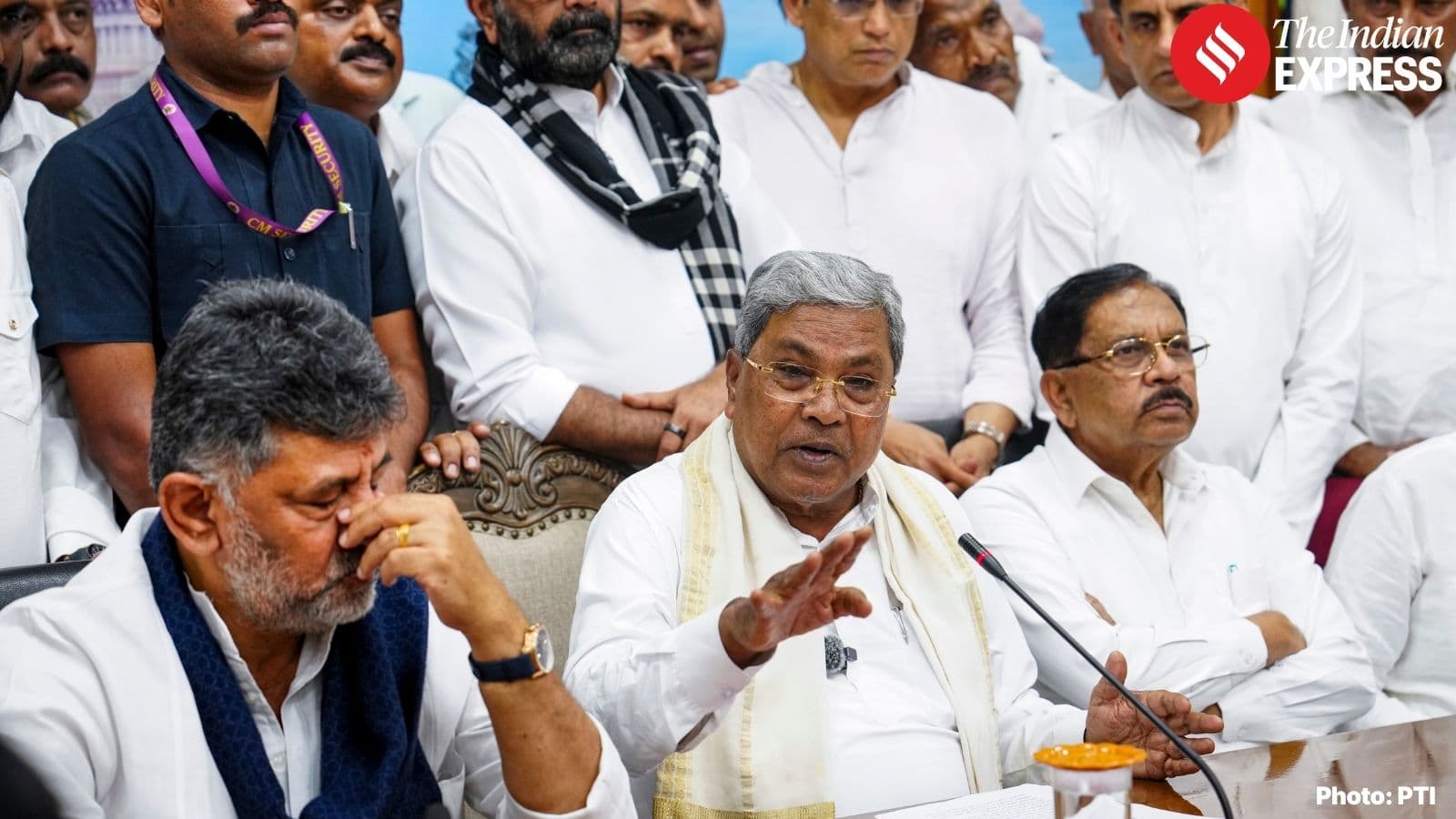
Politicians cutting across party lines agree that incumbent Chief Minister Siddaramaiah, Janata Dal (Secular) leader HD Deve Gowda and BJP’s BS Yediyurappa count among the tallest mass leaders Karnataka has seen. Deve Gowda and Yediyurappa have bowed out of active politics, and Siddaramaiah resigned today. Speculation is rife about his next move.The writing, it appears, was on the wall. Siddaramaiah is known for his passionate speeches laced with rustic humour, but his last public address to mark the completion of three years of Congress rule in Karnataka was tepid by his standards. His oratorial skills that gripped the audience were absent. Some blamed age, others saw signs of a shift within the Congress government.Siddaramaiah’s political career is a saga of defiance and resilience. Adept at turning challenges into opportunities, he had used his expulsion from the JDS to emerge as a popular leader of Karnataka’s backward communities. And when the mining scam rocked Karnataka, he paved the way for the Congress’s return to power. That he is the longest-serving Chief Minister of Karnataka and the only one in nearly five decades to complete a full term in office reflects his popularity. What endears him to many is his push for welfare schemes for the society’s underprivileged sections. The beginning Siddaramaiah was born on August 3, 1947, at Siddaramanahundi near Mysuru. He is from the Kuruba community, a pastoralist group traditionally marginalised in Karnataka’s caste hierarchy. His father was a farmer, and Siddaramaiah has said his early life was full of hardships. After completing his BSc and LLB, he briefly worked as a lecturer. Inspired by farmer leader MD Nanjundaswamy, Siddaramaiah quit teaching to enter politics. In 1983, he contested the Chamundeshwari Assembly seat on a Lok Dal ticket and won, marking his entry into the Karnataka Assembly. He quickly rose through the Janata Party ranks under Ramakrishna Hegde’s mentorship, serving as Finance Minister in the Janata Dal government. His reputation as a budget specialist focused on people-centric policies was cemented during this period. Ahinda convention, and expulsion from JD(S) By the early 2000s, Siddaramaiah had become a formidable force in Karnataka politics with a loyal base of followers. His Ahinda vision aimed to consolidate marginalised communities. Then with JDS, he organised an Ahinda convention, challenging the dominance of the so-called upper castes within JDS. Deve Gowda was projecting his son (now Union Minister) HD Kumaraswamy as a political heir, and this seems to have miffed Siddaramaiah, among others. Deve Gowda, the JDS founder, saw Siddaramaiah’s move as a threat to the party’s internal balance. In 2005, Siddaramaiah was expelled from the JDS after being accused of factionalism and indiscipline. This proved to be a turning point. He joined the Congress, bringing with him a strong grassroots base and the Ahinda plank that would redefine Karnataka’s social justice narrative. Siddaramaiah’s expulsion was a major blow for JDS. Not only did heavyweights such as Karnataka minister Satish Jarkiholi switch sides, but several communities loyal to the regional party shifted their allegiance to Siddaramaiah. This helped him emerge as a leader on par with Gowda and Yediyurappa, forcing the Congress to appoint him Leader of Opposition in the Assembly. Taking a padayatra dare In 2010, Janardhan Reddy, then a powerful BJP leader and mining baron, dared Siddaramaiah to come to Ballari, the epicentre of Karnataka’s mining wealth and corruption scandals. Siddaramaiah responded by leading a 320-km padayatra from Bengaluru to Ballari. The march spotlighted illegal mining and corruption, galvanising public opinion against the Reddy brothers. The mass mobilisation during the padayatra weakened the BJP’s grip on Ballari and dented the image of the then BJP government, already on the backfoot due to the scam allegations. It also positioned Siddaramaiah as a leader unafrai
Discussion (0)