
Loading dispatches...
← Return to NewsroomPolitics
AAP launches signature drive to press for action against ‘dacoity’ at Ram Temple
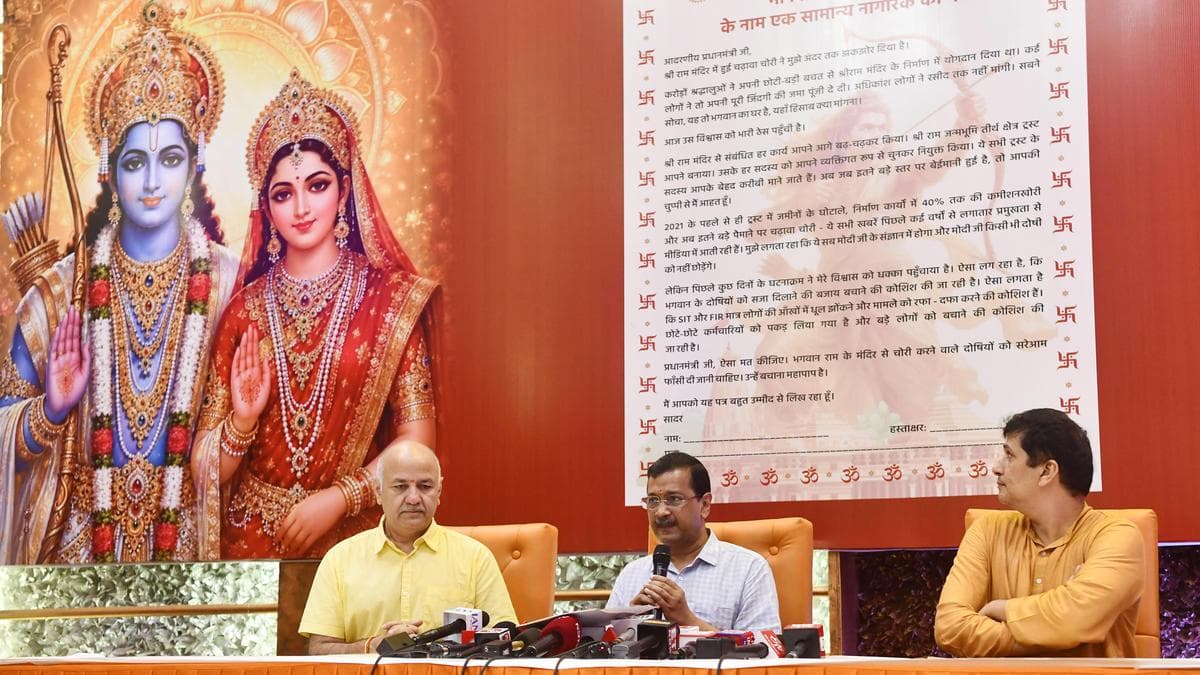
National Convenor of the Aam Aadmi Party Arvind Kejriwal speaks during Sunderkand Path performed in relation to alleged Ram Mandir donation embezzlement, in New Delhi on Sunday. Senior party leader Manish Sisodia also present. | AAP national convener Arvind Kejriwal addressed people at a Sundarkand recitation in Japanese Park in Rohini Sector 10, which he called a gathering of Ram bhakts. He said that he was signing a letter to Prime Minister Narendra Modi along with devotees present at the event to demand justice.He urged devotees across the country to organise Hanuman Chalisa recitals and collect signatures on the letter. “The movement should continue until the accused are hanged. We will not rest until those who committed this dacoity at Lord Ram’s home are brought to justice and hanged. This is Bhagwan Ram’s command and our sacred duty,” Mr. Kejriwal said.He added that the “dacoity” has deeply hurt Ram bhakts across the world. “70 incidents of theft over 40 days were captured on CCTV. Then eight months of CCTV recordings were deleted. All of us kept demanding action. We believed that those at the top would do something. But now it has become clear that they will do nothing because people from their own party, their own organisations, and all their affiliated organisations are involved,” the former Chief Minister of Delhi said.Loot ‘in Ram’s name’He added that those who carried out this theft do not believe Ram is Bhagwan. “They only want votes in Ram’s name. They loot the country in Ram’s name. They loot the people in Ram’s name. They loot the government in Ram’s name. But they do not consider Ram to be Bhagwan,” Mr. Kejriwal said.Delhi BJP President Harsh Malhotra said the event was a “political gimmick”. “Whenever Mr. Kejriwal finds himself politically cornered, he attempts to improve his political standing by organising Sundarkand recitations in Delhi. The gimmick is an effort to influence the Hindu voters of Punjab and other states where elections are due in the near future,” Mr. Malhotra said.Senior AAP leader Manish Sisodia said the campaign is being conducted to ensure that those who robbed the Ram Mandir and played with the faith of crores of Hindus receive the harshest possible punishment, so no one ever dares to commit such a sin again.Addressing the Prime Minister, Mr. Sisodia added, “PM Modi, you describe yourself as a bhakt of Prabhu Shri Ram. If your faith is genuine, then bring the truth before the people. Do not protect the guilty. Ensure that they are punished. We hope that the truth will come to light, accountability will be fixed, and justice will be delivered.” Published - July 12, 2026 09:55 pm IST
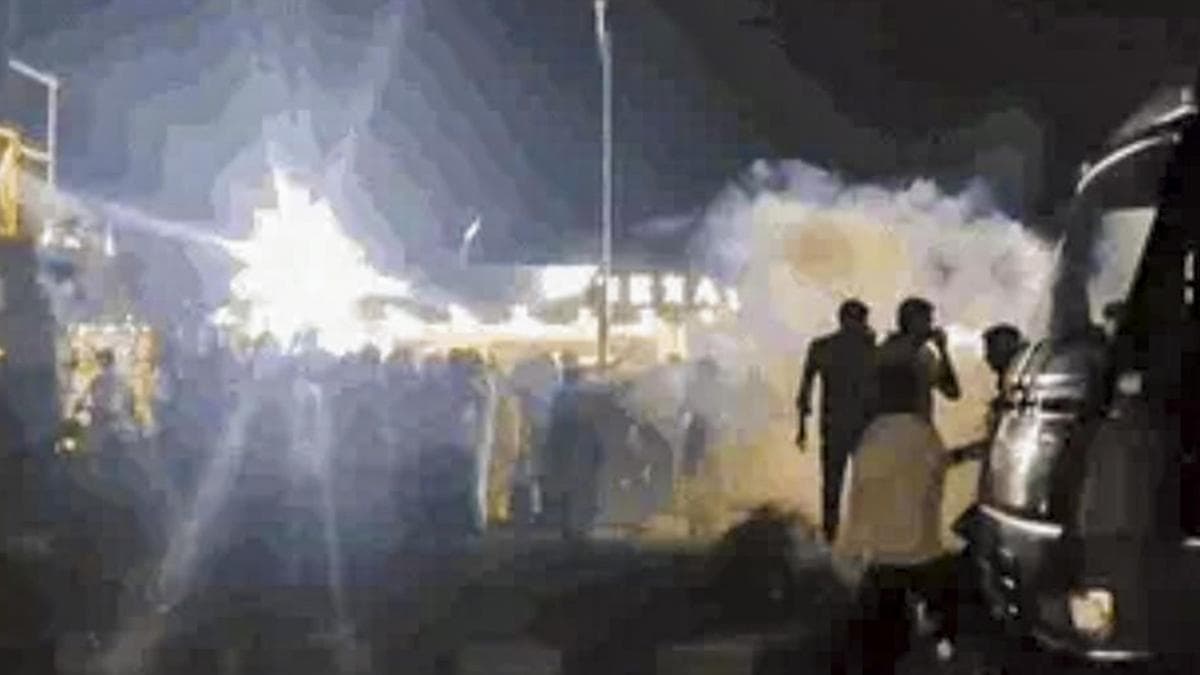
Violence erupted in Madhya Pradesh's Datia district on Saturday (July 11, 2026), as supporters of senior BJP leader Narottam Mishra clashed with police and blocked a national highway after the former Minister was denied a ticket for the July 30 Assembly byelection.The nearly 12-hour blockade on NH-44 by over 3,000 protesters left the Datia Superintendent of Police and several police personnel injured before security forces cleared the highway and arrested some agitators, officials said.The ruling BJP on Friday (July 10, 2026) announced the candidature of Ashutosh Tiwari for the Datia Assembly bypoll, angering Mr. Mishra's supporters.Enraged workers staged a blockade on the national highway for close to 11-12 hours, and despite asking them to clear the road, they pelted stones on the police, forcing the cops to fire teargas shells to disperse the mob, Datia Collector Swapnil Wankhede told reporters.The Datia SP, other senior officers and jawans suffered injuries, he said, clarifying that the police did not cane-charge the protesters.Mr. Wankhede said that the angry mob damaged police and other vehicles, but the road was subsequently cleared, and the situation is under control.Talking to PTI Videos, SP Mayur Khandelwal said that more than 3,000 protesters disrupted the peace in Datia town, tried to close the market, and staged a 12-hour road blockade.More than six policemen suffered injuries in the pelting of stones, he said."We tried to pacify them, citing the enforcement of the model code of conduct in the town. However, after they refused to back down and pelted stones, cops fired teargas shells to control the situation," the senior officer said.Some of the protesters were also arrested and warned of strict action if they resorted to violence, the SP said.Sources said that following Friday's political development, some of the party office-bearers, including the district unit president and local corporators, resigned from the party in protest. Ashutosh Tiwari's nomination came as a setback for former Minister Mishra, who, according to party sources, expected the ticket and had even purchased a nomination form.Mr. Tiwari, a resident of Sevda town in Datia, has been active in the State BJP organisation, they said.An elated Mr. Tiwari told reporters outside the State BJP office that he met senior party leaders and expressed his gratitude. "Mishra is a very senior leader, my guardian, and he said he will campaign for the party and me," Mr. Tiwari said.One of Mr. Mishra's supporters, Balram, told PTI Videos that some of them took off their shirts and lay down on the road while others staged a sit-in.Another supporter said they would not relent until "Narottam Dada" got the ticket and would even quit the saffron party.Congress leader Rajendra Bharti had defeated the then Home Minister Mishra from Datia by over 7,500 votes in the 2023 Assembly elections. However, a Delhi court sentenced Bharti to three years' imprisonment in a cheating case in April this year, leading to his disqualification as an MLA and necessitating a byelection.He subsequently got bail.The Election Commission of India recently announced the schedule for bypolls to three Assembly constituencies in the country, including Datia. The other two seats are in Bihar and Gujarat.While votes will be cast on July 30, the results will be announced on August 3, as per the schedule.
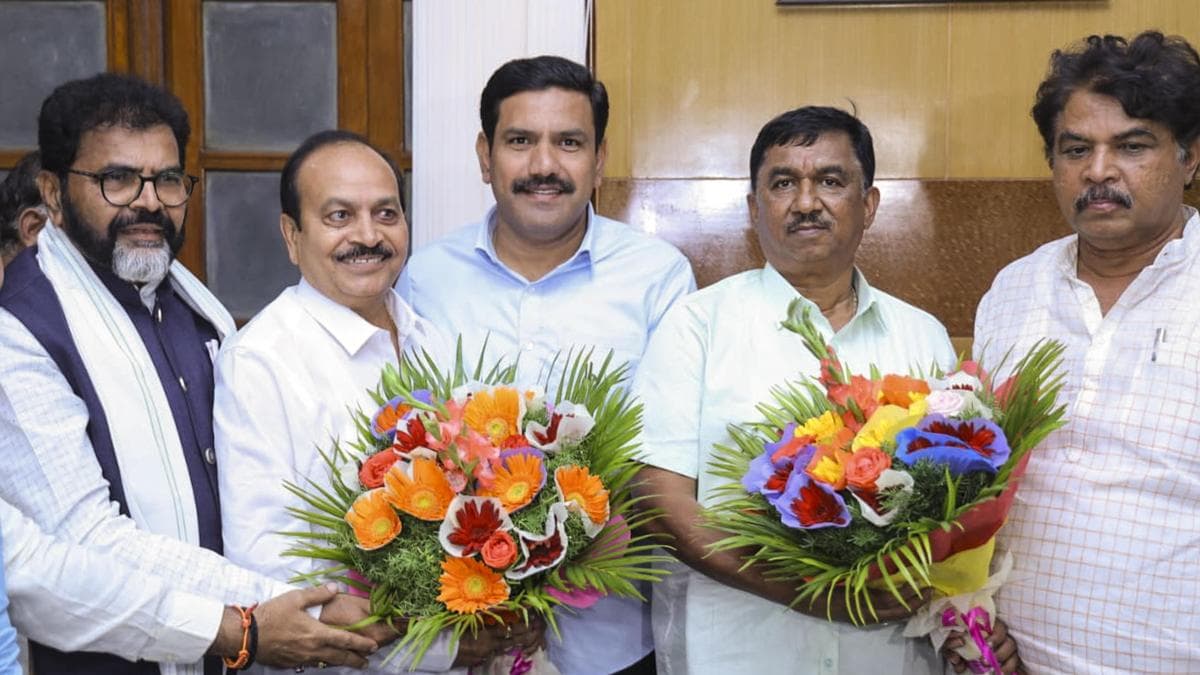
Leader of Opposition in the Assembly R. Ashok and State BJP president B.Y. Vijayendra with party-elected candidates Lingaraj Patil and Raghu R., who emerged victorious in the Council elections. Cross-voting by at least three BJP MLAs, which could be as many as six, in favour of the Congress in the Council elections held on Thursday, has left the party red-faced, especially at a time when several opposition MPs elsewhere in the country appear to be breaking away from their parties and extending support to the National Democratic Alliance (NDA).Three or six? Leader of Opposition in the Assembly R. Ashok told mediapersons that three of their MLAs had cross-voted in favour of the Congress. “We will definitely find out who cross-voted and betrayed the party. It will come out. The party will take suitable action against them,” he said.The BJP has a strength of 63 MLAs in the Assembly. The party had allotted 30 votes each to its two candidates, Raghu Kautilya and Lingaraj Patil. While Mr. Kautilya secured 29 votes, with one vote declared invalid, Mr. Patil polled 27 votes. He did not secure the required number of votes in the first round and eventually won with the help of second-preference votes, further embarrassing the party. Mr. Ashok argued that at least three BJP MLAs had cross-voted.However, the BJP had allotted four votes — three from its MLAs and one from expelled MLA Basanagouda Patil Yatnal (who had announced support to the BJP) — to the JD(S). While the BJP maintains that these votes were transferred, JD(S) sources claim this did not happen. Excluding Mr. Yatnal’s vote, who is not bound to any party, the extent of cross-voting from the BJP could go up to six.‘Changes bound to happen’The fiasco is likely to lead to structural changes in the State leadership of the party, which was already under contemplation, sources said. “This is a clear reflection of the sorry state of affairs in the party — disgruntlement, factionalism, lack of control over MLAs and opposition to the alliance with the JD(S),” a senior party leader, who did not wish to be named, said.“Coming just two years before the Assembly polls in the State, the party high command will not take this lightly and is likely to tighten control over the State unit,” he added. Another leader said Union Home Minister Amit Shah would not take defections from the BJP lightly.The term of party president B.Y. Vijayendra — against whose leadership there has been open rebellion — ends in November. There has also been speculation that the party may appoint a new Leader of Opposition in the Assembly, given that D.K. Shivakumar, a Vokkaliga, has assumed charge. The current Leader of Opposition, Mr. Ashok, is also a Vokkaliga.However, another senior leader said that only Mr. Vijayendra and Mr. Ashok cannot be blamed, arguing that it was a failure of the collective leadership. He added that some leaders had been “driving factionalism” ever since Mr. Vijayendra took charge. Published - June 18, 2026 09:49 pm IST

The embarrassing defeat of Janata Dal (Secular) candidate Govindaraju, who secured just 14 votes following cross-voting from his party colleagues, appears to have shocked the party leadership. Though the party was hopeful of putting up a decent fight, it eventually crumbled amid cross-voting.However, with the State Assembly elections less than two years away, party leaders believe the Council poll result will not affect the larger party base, though it calls for introspection to strengthen the organisation at the grassroots.Allocated votesThe party, a BJP ally in the National Democratic Alliance (NDA), believes that while four of its legislators cross-voted, the BJP votes assured to it also did not materialise. At the last moment, the BJP, which was planning to allocate 29 votes to its candidates, increased the quota to 30 to ensure victory, thereby reducing the numbers of the JD(S).The JD(S), with 18 legislators of its own, had hoped to secure the support of six BJP legislators, besides G. Janaradhan Reddy and expelled BJP member Basannagouda Patil Yatnal, to garner 26 votes. However, the outcome came as a shock. Senior JD(S) leader G.T. Devegowda, who had distanced himself from the party leadership, said he had voted as per his “conscience”, triggering speculation. Sources said the party had a fair idea of who the four legislators were.Reason for fieldingOne of the reasons for the party fielding a candidate was to keep its flock together, which did not hold, sources said, adding that the cross-voting had caused disappointment. “We have assured all the sitting legislators of re-nomination in the 2028 Assembly polls, and had extended the party’s support during elections. Despite such assurances, if legislators cross-vote, it is sad,” sources said.What this election showed, sources pointed out, was the need to strengthen the party base instead of cultivating individual leaders who do not show loyalty to the party in times of need. When asked if the cross-voting by its legislators was a setback to the party, sources said it was too early for such an assessment. Published - June 19, 2026 12:54 am IST
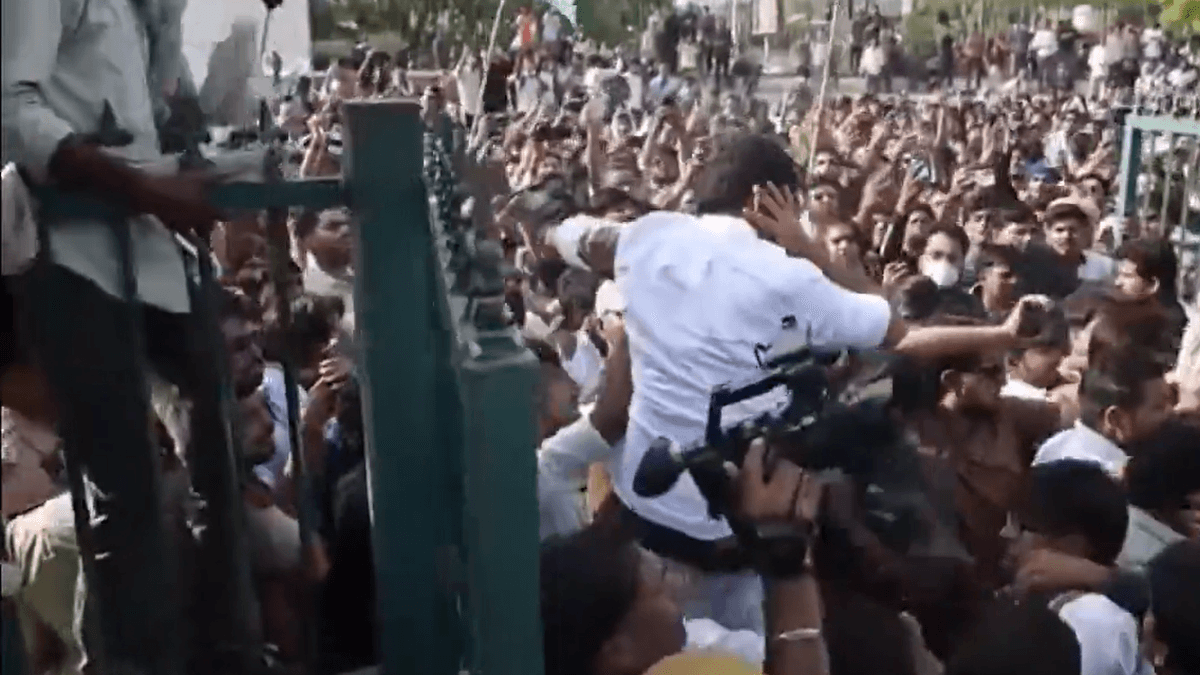
Founder of Cockroach Janata Party Abhijeet Dipke during a demonstration in Jaipur on June 15, 2026. Photo: Screengrab from X/@PTI_News Cockroach Janata Party (CJP) founder Abhijeet Dipke was allegedly manhandled and slapped by some people during a protest in Jaipur on Monday, triggering chaos and a brief struggle at the venue. Police detained two youths in connection with the incident.Supporters were carrying Mr. Dipke on their shoulders when the alleged incident took place. The demonstration, attended by a large number of youths, was organised at Shaheed Smarak to protest over the issues of the alleged NEET paper leak, unemployment and corruption.When Mr. Dipke arrived at the protest site and was being carried on supporters’ shoulders, some miscreants in the crowd allegedly manhandled him, slapped him multiple times and attempted to pull him down. Mr. Dipke’s supporters caught hold of the accused and assaulted them before the police intervened.‘A sign of fear’As tempers ran high during the chaos, Mr. Dipke attempted to calm the situation and appealed to the protesters not to assault the individuals involved in the attack. The CJP founder said physical attacks were a sign of “fear and cowardice”. “I am a follower of Gandhi and Ambedkar, and I will keep fighting this battle with peace and love,” he said.In a video message released on his X account, Mr. Dipke urged his supporters not to get distracted from the demand for Union Education Minister Dharmendra Pradhan’s resignation. He said the attack was a tactic to threaten the CJP and divert attention from the real issues, and added, “To the haters, I want to say ‘get well soon’!”— Press Trust of India (@PTI_News) June 15, 2026During the protest, the youths carried banners and placards and raised slogans demanding Mr. Pradhan’s resignation over alleged irregularities in major examinations such as NEET, CBSE, CUET and SSC.Addressing the gathering, Mr. Dipke criticised the handling of education-related issues and questioned the remarks of a Rajasthan Minister who had described the NEET paper leak as “no big deal’’. He also cited the collapse of a government school building in Jhalawar last year, in which seven students were killed.The police had initially refused permission for the demonstration, citing the law and order situation, but later granted a conditional approval. The event was allowed with restrictions, including a limit on the number of participants to 800, compliance with the noise pollution rules, and not taking out a rally from the venue. Published - June 15, 2026 06:38 pm IST
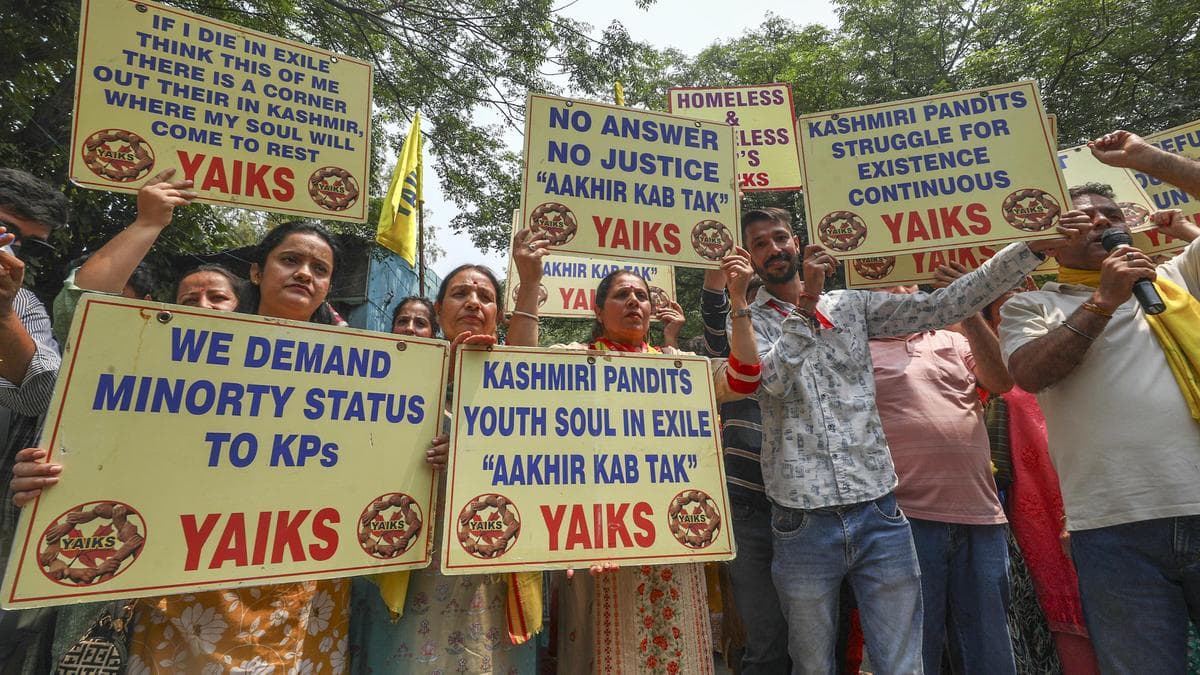
People participate in a protest and raise slogans during a protest over various demands for displaced Kashmiri Pandits, in Jammu. File | On Monday (June 15, 2026), they called for “a structured phase of engagement” and demanded a commission of inquiry after “formal recognition of the Kashmiri Pandit genocide as part of public policy”.“A week-long heritage tour and a two-day international conference, Pragaash (first light of a dawn) in Srinagar voiced a deep yearning for a return to their homeland. Pragaash is not a celebration — it is a declaration. We walked on our own soil, visited our own temples, and told the world: we are here, we shall return, and we will not be erased. This is a first victory, but only a first one,” said Dr. Surinder Koul, head of the Global Kashmiri Pandit Diaspora.A number of Pandit organisations passed a joint resolution on Monday after the two-day conclave in Srinagar. The groups that participated included the Global Kashmiri Pandit Diaspora (GKPD), Jammu Kashmir Vichar Manch (JKVM), US-based Kashmiri Overseas Association, Youth All India Kashmiri Samaj, Sanjeevani Shardha Kendra Kashmiri Pandits’ Association, Mumbai, and the AIl Minority Employees Association of Kashmir.The joint resolution called upon both the Centre and the Government of the Union Territory of J&K “to formalise community engagement through official mechanisms at the highest levels, with broad, representative, and accountable participation of Kashmiri Pandits worldwide”.It also pressed for the formal recognition of the Kashmiri Pandit genocide in public policy and urged the establishment of an appropriate commission of inquiry. “The term ‘genocide’ has increasingly entered public discourse and is now used by public representatives and government officials. Delegates emphasised that recognition must move beyond rhetoric and be reflected in official policy, institutional action, and historical documentation,” it added.It also proposed the constitution of the Kashmiri Pandits Welfare Board “anchored under the Ministry of Home Affairs and the J&K Reorganisation Act framework, to coordinate welfare, housing, rehabilitation, and property recovery”.Pandits who stayedThe Pandit bodies also referred to Pandits who stayed in Kashmir and urged that they “receive welfare”, as well as those of employees working under the Prime Minister’s Special Package. “We demanded improvements to their security, housing, service conditions, family welfare, mobility, and mental well-being — recognising their resilience as a foundation for the broader community’s eventual return”, said the joint resolution.According to the resolution, approximately 3.50 lakh community members were “forced to flee the Kashmir Valley amid violence and persecution, scattering across Jammu, Delhi, and countries around the world” in 1989-1990.These displaced Pandits also demanded a township in Srinagar’s Rainawari and urged the community “to start greater investment in Kashmir”.Meanwhile, two organisations, Roots in Kashmir and Youth for Panun Kashmir, distanced themselves from the conclave and termed it “an attempt to undermine the long-standing demand for a separate homeland”. Published - June 15, 2026 11:26 pm IST
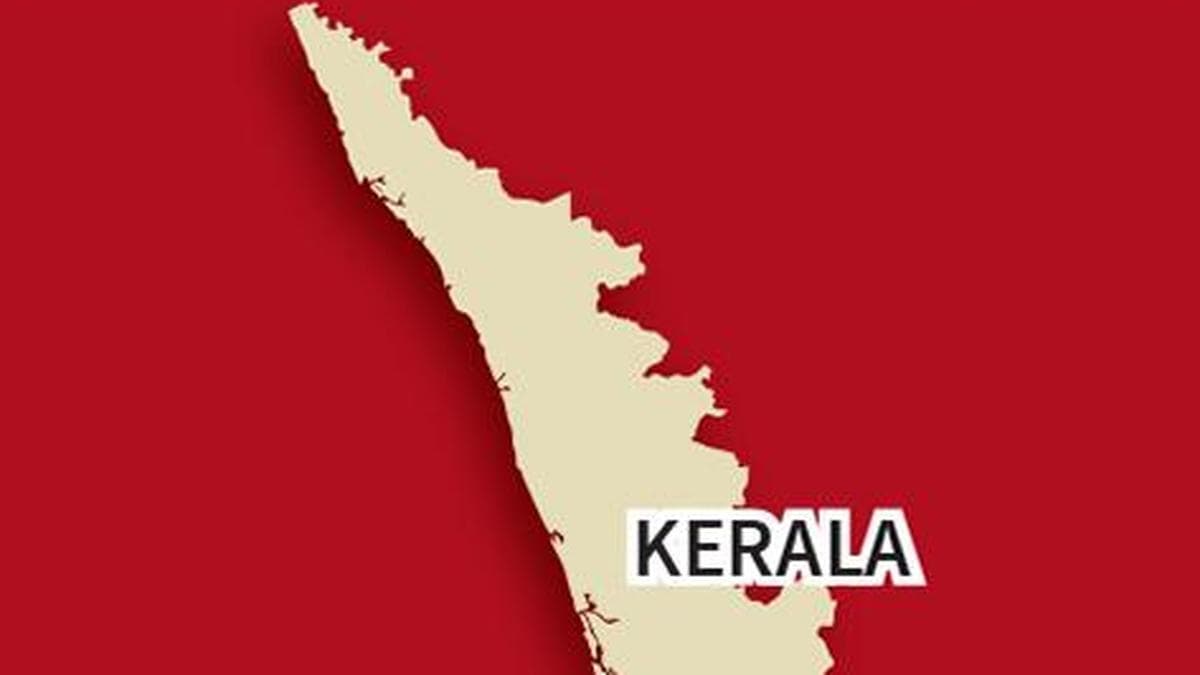
The long-standing demand to bifurcate Malappuram district in Kerala gained fresh momentum on Sunday (June 14, 2026) after the United Democratic Front (UDF) endorsed it. A district-level UDF meeting discussed the proposal and decided to seek the appointment of a special officer to examine its feasibility.UDF district chairman K.P. Abdul Majeed said bifurcation of Malappuram had become a necessity, citing what he described as inequitable distribution of government resources across the district.Malappuram has a population of about half a crore, nearly 14% of Kerala’s total population. With 16 Assembly constituencies, it spans two Lok Sabha constituencies and includes a significant portion of the Wayanad Lok Sabha constituency.“The district is too large. It takes nearly five hours to travel from one end to the other. Bifurcation is needed to ensure equitable access to services,” said Mr. Majeed.He added that the issue should not be viewed through communal or political lenses. “What matters is justice for the people and fair distribution of services, regardless of who raises or opposes the demand,” he said, reiterating the need for a special officer to study the proposal in detail.Several organisations, including the Welfare Party of India, Social Democratic Party of India, Samastha Kerala Jamiyyathul Ulama, and Kerala Muslim Jamaat, have previously called for the reorganisation of districts to correct disparities in resource allocation.IUML’s stanceThe Indian Union Muslim League (IUML), the dominant partner in the UDF in Malappuram, has maintained a cautious stance. While acknowledging that the district is overstretched, it has indicated that the timing may not be appropriate to actively pursue bifurcation.The Bharatiya Janata Party (BJP) and Sangh Parivar organisations have strongly opposed the proposal, adding to the political and communal sensitivity surrounding the issue.Separately, the Tirur Subcollector, Dilip K. Kainikkara, recently revived the discussion by listing bifurcation of Malappuram as a “wish-list” reform for the new UDF government. He argued that dividing large districts would improve administrative efficiency and public access to services.He suggested that an ideal district would comprise around seven Assembly constituencies, roughly equivalent to one Lok Sabha constituency. While acknowledging the financial burden of creating new districts, Mr. Kainikkara said the resulting gains in governance and public convenience would make it a worthwhile investment. Published - June 14, 2026 04:12 pm IST
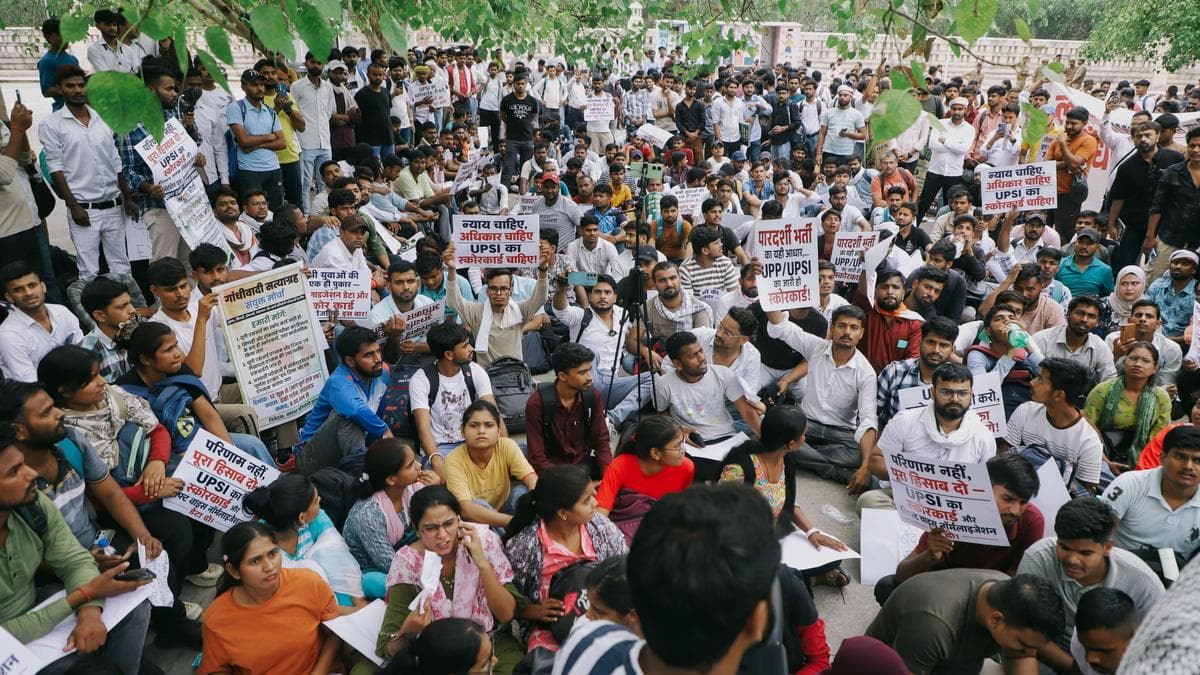
Students and government job aspirants gathered at the Eco Garden in Lucknow on June 12, 2026. | Cockroach Janta Party (CJP) founder Abhijeet Dipke also joined the protest, demanding accountability. “I am not scared of asking real questions to the government. Youths of our country are not afraid of asking real questions to the government. We will continue the movement, we will succeed,” Mr. Dipke said.Call for high-level inquiry“There have been irregularities, mismanagement at examination centres, and a lack of transparency in the recruitment processes at various levels of competitive examinations including for Lekhpal [village revenue officer] and U.P. Sub-Inspector,” said Omkar Singh, one of the aspirants at the protest venue. “We demand a thorough and impartial investigation into all allegations. An independent high-level inquiry into the alleged irregularities in the Lekhpal main examination is essential, as videos of misconduct have gone viral,” he added.“Our demands include the re-conduct of the Lekhpal main examination and the prompt release of the detailed scorecard for the U.P. Sub-Inspector examination. The government has failed to conduct numerous recruitment and eligibility tests, and we insist that the recruitment examination calendar be adhered to completely,” Mr. Singh said.Grievance redressal neededStudents also accused local authorities in Prayagraj, a major coaching hub in Uttar Pradesh, of closing three coaching centres under the pretext of non-compliance with building safety regulations. In reality, students said, the authorities suspect these centres of supporting the youth movement.The Lucknow protesters also demanded that the government set up a permanent dialogue and grievance redressal mechanism to address the issues faced by aspirants preparing for competitive examinations. On May 29, hundreds of these aspirants had assembled in the streets of Prayagraj for a similar protest.Authoritarian attitudeThe Opposition Congress party criticised the BJP-ruled Uttar Pradesh government for failing to initiate dialogue with protesting students. “In a healthy democracy, the government initiates dialogue with concerned stakeholders to understand their grievances and concerns,” said Congress national secretary Shahnawaz Alam.“In the past also, issues were raised by the student community, which was discussed in a democratic manner. But the present government is acting in an authoritarian way. This week, we saw the level of the employment crisis in U.P. as over 20 lakh aspirants gave the constable examination for around 32,000 seats. We demand that the government addresses our grievances at the earliest,” he added. Published - June 12, 2026 11:29 pm IST
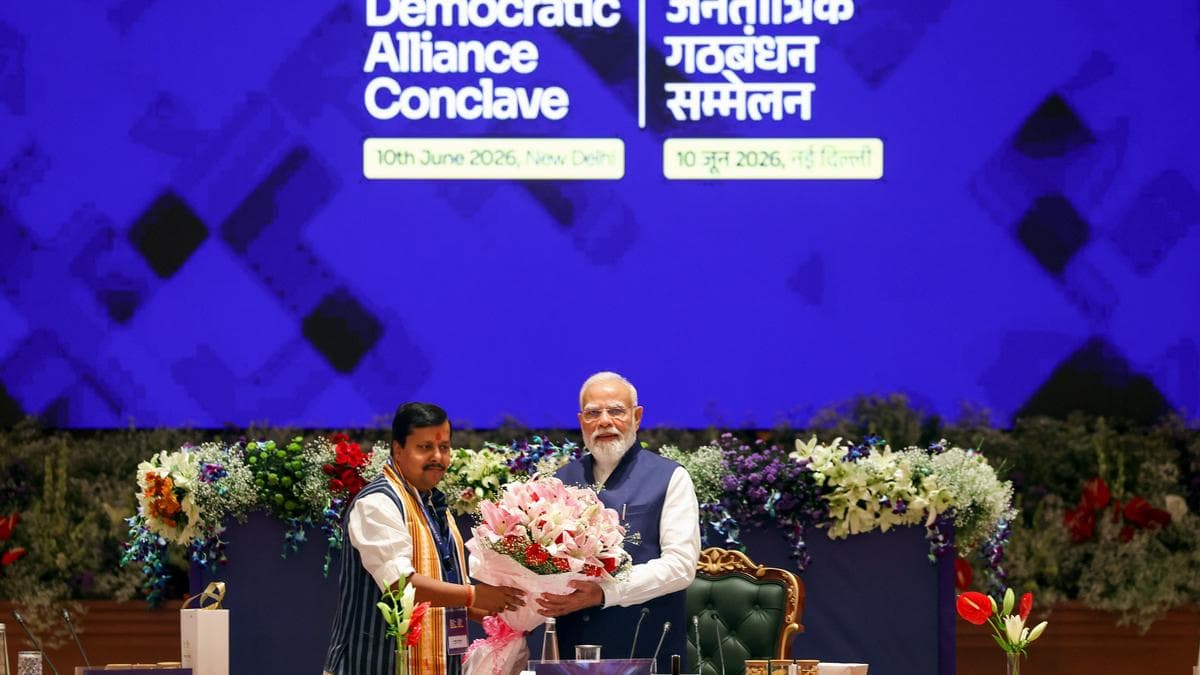
Prime Minister Narendra Modi on Wednesday (June 10, 2026) said the maturity of the people in choosing a stable government has allowed long-term reforms and rapid development over the past 12 years under the National Democratic Alliance (NDA) regime led by him.He thanked the people for giving him the opportunity to serve them. “Before 2014, there was instability and turmoil for many decades, because of which the country had to suffer immensely,” said Mr. Modi at the NDA conclave where the alliance leaders congratulated him on becoming the longest-serving elected Prime Minister.Mr. Modi said the people were now witnessing and experiencing the benefits of a stable government and were admiring its decisive approach. “Today, I bow before the great people of this country and express my gratitude to them,” he said.He said the advantages of a stable government are being noticed during the current global crisis and previously during the COVID-19 pandemic, from which the country emerged stronger.Stating that the government will make all efforts to fulfil the aspirations of all sections of society, particularly youth, women, the middle class, and farmers, Mr. Modi said that today every citizen was “dreaming” of a developed India.“I never thought that one day such a milestone would also arrive, that as an elected Prime Minister I would have the opportunity to serve continuously for the longest period. I consider this my supreme good fortune to serve Mother India… it is possible only because of the special grace of God. And for me, the people are a manifestation of God,” said Mr. Modi.The Prime Minister said he viewed service to his countrymen as a spiritual practice, adding that it had always been a collective ‘yagna’. “In it, all of you and countless colleagues have contributed with a sense of duty… I express my gratitude to all such companions in this journey,” he said.The Prime Minister said the country was today moving forward rapidly aboard the “reform express”, in cooperation with the people who extended wholehearted support. “We must continue moving forward with this public trust and participation, which is the true driving force behind building a developed India,” he said.Calling for healthy competition among the States over becoming a trillion-dollar economy the fastest, generating employment, and encouraging innovation, Mr. Modi said the country should now set its sights on a self-reliant future, including in terms of energy security.“Keeping the goal of 2047 in mind, we must increase our pace even further. India must now think in terms of parameters and competition from a global perspective. The world sees India as a reliable partner. We must keep ourselves at the forefront of futuristic technologies,” he said.The Prime Minister said positive reports about oil and gas exploration were encouraging. “The target of 500 gigawatts of renewable energy needs to be achieved as quickly as possible. The work on solar energy is also progressing rapidly. But now we must also achieve our goals for nuclear energy at a faster pace,” he said, noting that India has advanced in fast breeder reactor technology, green hydrogen, and green ammonia.“The seeds that were planted from 2014 onwards are now beginning to bear fruit. India is rapidly moving towards becoming a global manufacturing powerhouse,” he said.Emphasising that energy, minerals, chips, battery storage, space, drones, data centres, quantum computing, and artificial intelligence sectors were interconnected, he said India could not remain dependent on other countries for such critical areas. He also spoke about the goals of self-reliance in the shipping and aviation sectors.The Prime Minister said the youth had already demonstrated their capabilities in various sectors. He said they were now gearing up to show their strength in AI, deep tech, and advanced technologies. “The journey of these twelve years has been a journey of achievements. The years ahead will bring even more accomplishme
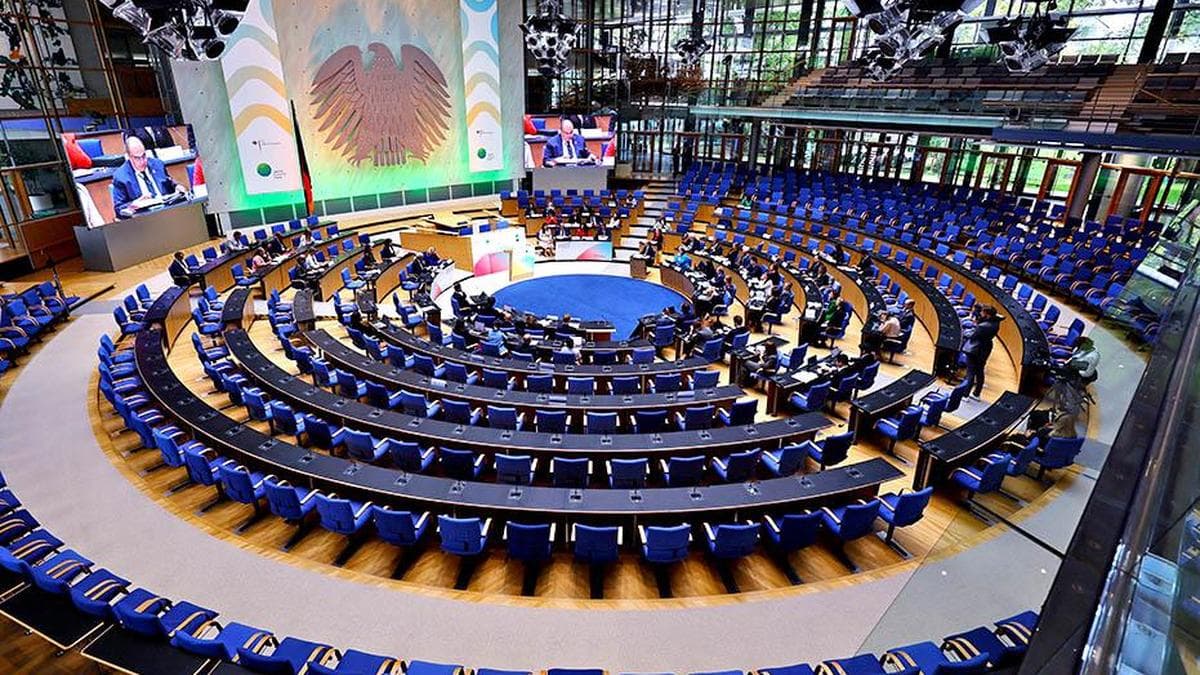
A general view shows the plenary hall during an international replenishment conference for the United Nations Green Climate Fund in Bonn, Germany. File | It has urged that a Paris Agreement provision, which obliges developed countries to provide funds to developing nations, be given dedicated agenda space to enable substantive progress.The intervention came in India’s statement to the 64th session of the UNFCCC Subsidiary Bodies (SB64), delivered by Harkeerat Randhawa of the Ministry of External Affairs (MEA). India associated itself with the positions taken on behalf of the Group of 77 and China (G-77), the Like-Minded Developing Countries (LMDC) and the BASIC bloc (Brazil, South Africa, India, China).The Bonn meeting runs from June 8 to 18 and is the mid-year session of the two subsidiary bodies — on implementation (SBI) and on scientific and technological advice (SBSTA) — that prepare draft decisions for the annual Conference of the Parties. It is the first multilateral climate conference since COP30, held in Belém, Brazil, last November, and is tasked with turning those outcomes into negotiable text ahead of CoP31. That summit will be hosted in Antalya, Turkey in November, which holds the formal presidency and Australia presiding over the negotiations.Mitigation Work ProgrammeIndia pressed for the dialogue on unilateral trade measures — a reference to carbon border levies such as the EU’s Carbon Border Adjustment Mechanism (CBAM) — to address their adverse effects on developing countries’ climate action, anchored in Article 3.5 of the Convention. It cautioned that the Mitigation Work Programme’s facilitative, non-prescriptive character be preserved, that the adaptation goal remain balanced and Party-driven, and that no obligations beyond agreed mandates be introduced.India said that equity and historical responsibility must guide this phase, arguing that developing countries need carbon space to eradicate poverty and expand energy access, while developed countries lead through accelerated emissions cuts, including negative emissions as necessary. It sought operationalisation of the Just Transition Mechanism on the basis of equity and Common But Differentiated Responsibilities (CBDR-RC).This year’s agenda is dominated by a shift to an implementation phase. Key items include the Global Goal on Adaptation, the Just Transition Work Programme and the Global Stocktake, alongside climate finance and the contested future of the Sharm el-Sheikh Mitigation Work Programme (MWP), which is due to conclude in 2026 with a possible extension on the table. Published - June 09, 2026 08:25 pm IST
Discussion (0)