
Loading dispatches...
← Return to Newsroomgeneral
US asked India to buy Russian crude then penalised us: S Jaishankar on oil tariffs
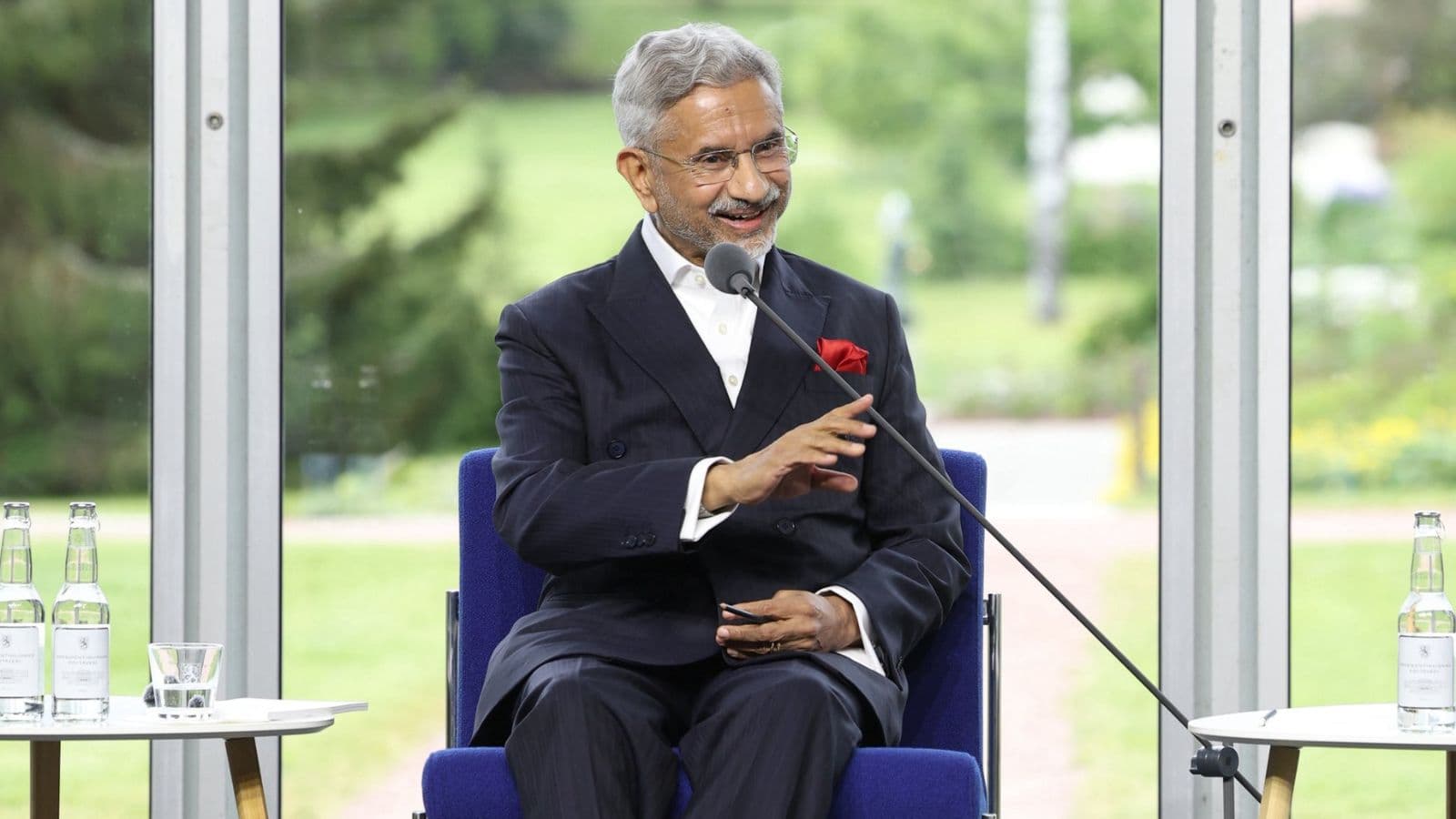
New DelhiUpdated: Jun 12, 2026 11:58 AM IST Defending New Delhi's energy choices, Jaishankar outlined India's realistic approach to safeguarding its national interests. (Credit: @DrSJaishankar X)External Affairs Minister S Jaishankar on Thursday took aim at what he described as the United States’ inconsistent approach towards India’s purchase of Russian oil. He said Washington had, at one point, encouraged New Delhi to buy Russian crude to stabilise global energy markets, only to later impose tariffs over the same issue. Speaking at the “Emerging Powers and the New Geopolitical Competition” session at the Kultaranta Talks in Finland, Jaishankar said, “Let’s not pretend that there is some great principle involved here. I mean, if it is on-off, on-off, and the US wants to do it when it suits them and not do it when it doesn’t suit them.”The remarks came in response to a question on New Delhi’s position on the Russia-Ukraine conflict, with a journalist accusing the India of being “too sympathetic to Russia” and “too willing to buy oil from Russia”. Participated in a Panel discussion at Kultaranta Talks with FM Elina Valtonen of Finland, and Assistant FM Lana Nusseibeh of UAE on ‘Emerging Powers and the New Geopolitical Competition — Dr. S. Jaishankar (@DrSJaishankar) June 11, 2026 Defending New Delhi’s energy choices, Jaishankar outlined India’s realistic approach to safeguarding its national interests. “I’ll make two observations. I buy oil based on cost and availability. So at that point, much of the oil on the market was Russian because Europeans were essentially buying oil from the Middle East, our traditional supplier. So circumstances pushed us in a certain direction,” he said. Jaishankar recalled that in 2022, Washington itself recognised the vital role India played in maintaining global economic equilibrium. According to him, the United States had encouraged New Delhi to procure Russian crude to stabilise energy markets and prevent a sharp rise in global inflation following Western sanctions on Moscow. “At that time, the US directly asked India to buy Russian oil to stabilise the oil market. We buy oil based on cost and availability,” he maintained during his address in Finland. The External Affairs Minister also questioned the contradictions in Western sanctions policies, cautioning against applying a selective moral lens to complex issues in global trade and energy security.
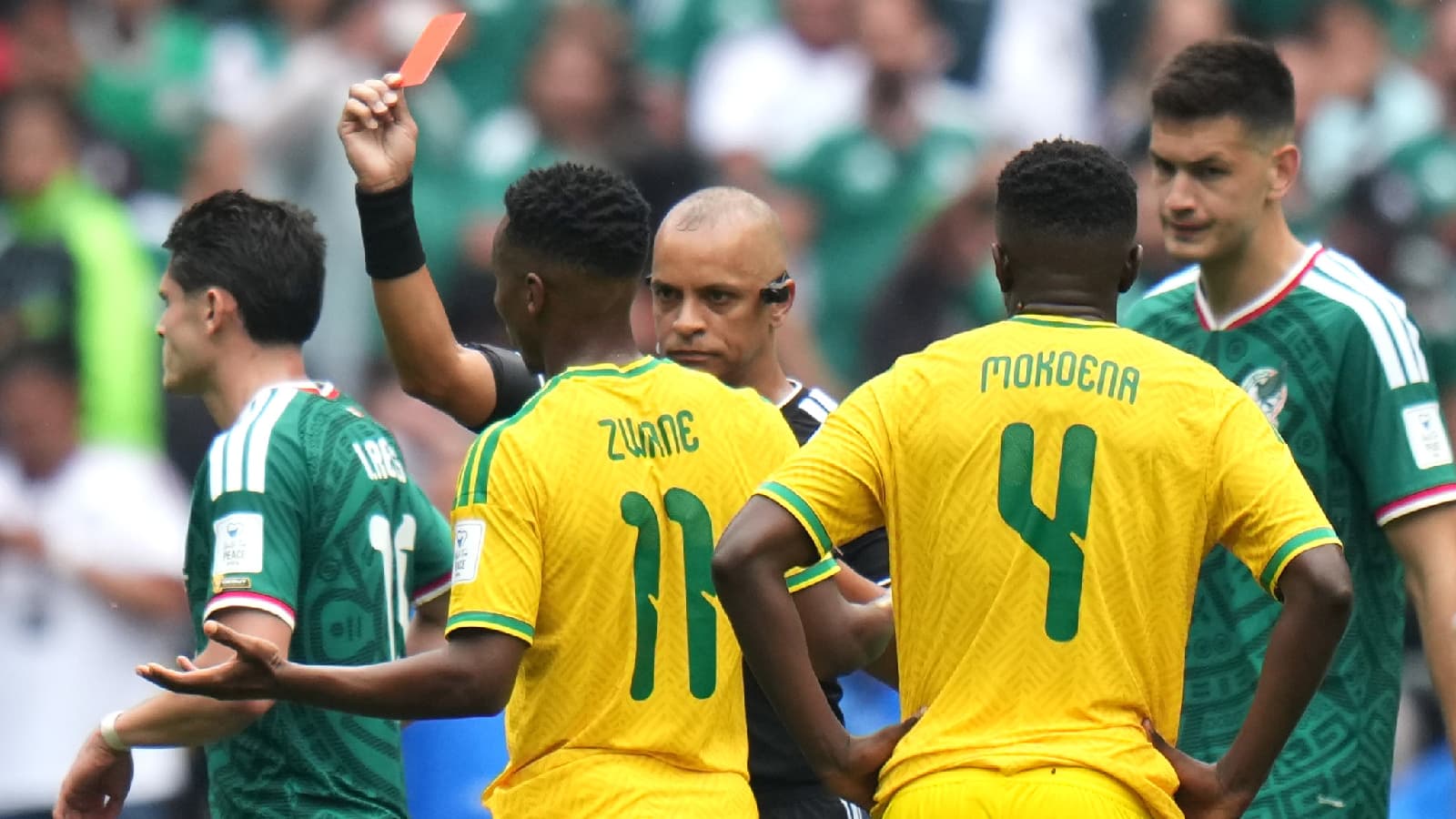
South Africa's Themba Zwane is shown a red card from referee Wilton Sampaio in the second half during the World Cup Group A soccer match between Mexico and South Africa in Mexico City. (AP Photo)We’re just one game into the FIFA World Cup 2026 but the conversation is already about VAR. In the Mexico vs South Africa game on Thursday night, where three red cards were shown, VAR assisted with the second red card of the day. South Africa’s Themba Zwane was sent off by referee Wilton Sampaio after checking replays on the screen. So what is VAR technology, and how is it implemented in football? We explain: VAR is Video Assistant Referee. It’s a person who acts as an aide for the on-field referees. This VAR comes into play after a referee has already made a decision. VAR is a qualified referee themself who watches the match from a room in the stadium through a number of screens. So the VAR can view slow-motion replays of incidents which in turn enables them to advise the on-field referee. It must be noted that the VAR’s job is to advise the referee. They cannot over-rule the referee officiating a game. The use of video assistant referees in football was first included in the Laws of the Game in 2018/19. The VAR is used in many of the world’s top football leagues. According to the English Premier League own stats, in 2018/19, before VAR was introduced by the league, the percentage of correct key match decisions was 82 per cent. After VAR was introduced the next season, this rose to 94 per cent. The Premier League also points out that over the course of 2019/20, over 2,400 incidents were checked and 109 decisions were overturned by the VAR, an average of an overturned decision every 3.5 matches. There are five main incidents that require an intervention by VAR:Story continues below this ad Goals: When a goal is scored, a VAR checks if there was a foul or a handball in the build up to the goal. A VAR will also check if the ball trickled out of bounds. Or if there is any other interference (from the attacking team on the team that conceded the goal) which caused a goal. In these cases, the goal can be disallowed (or allowed if it was originally called off). Penalty kicks: Since the on-field referee cannot always be in a great spot to see where the infringement was committed for a foul that leads to a penalty kick, the VAR could look at replays and rule out a penalty in cases where the foul happened outside the box or there was a player offside or if the ball was out of play. Corner kicks: At the FIFA World Cup, even corner kicks can be reviewed. Red cards: VAR can advise whether a red card was harshly given to a player or could advise that a red card was necessary rather than a yellow card. Story continues below this ad Mistaken identity: At the FIFA World Cup, VARs can also advise the on-field ref if the player being booked is the wrong one.
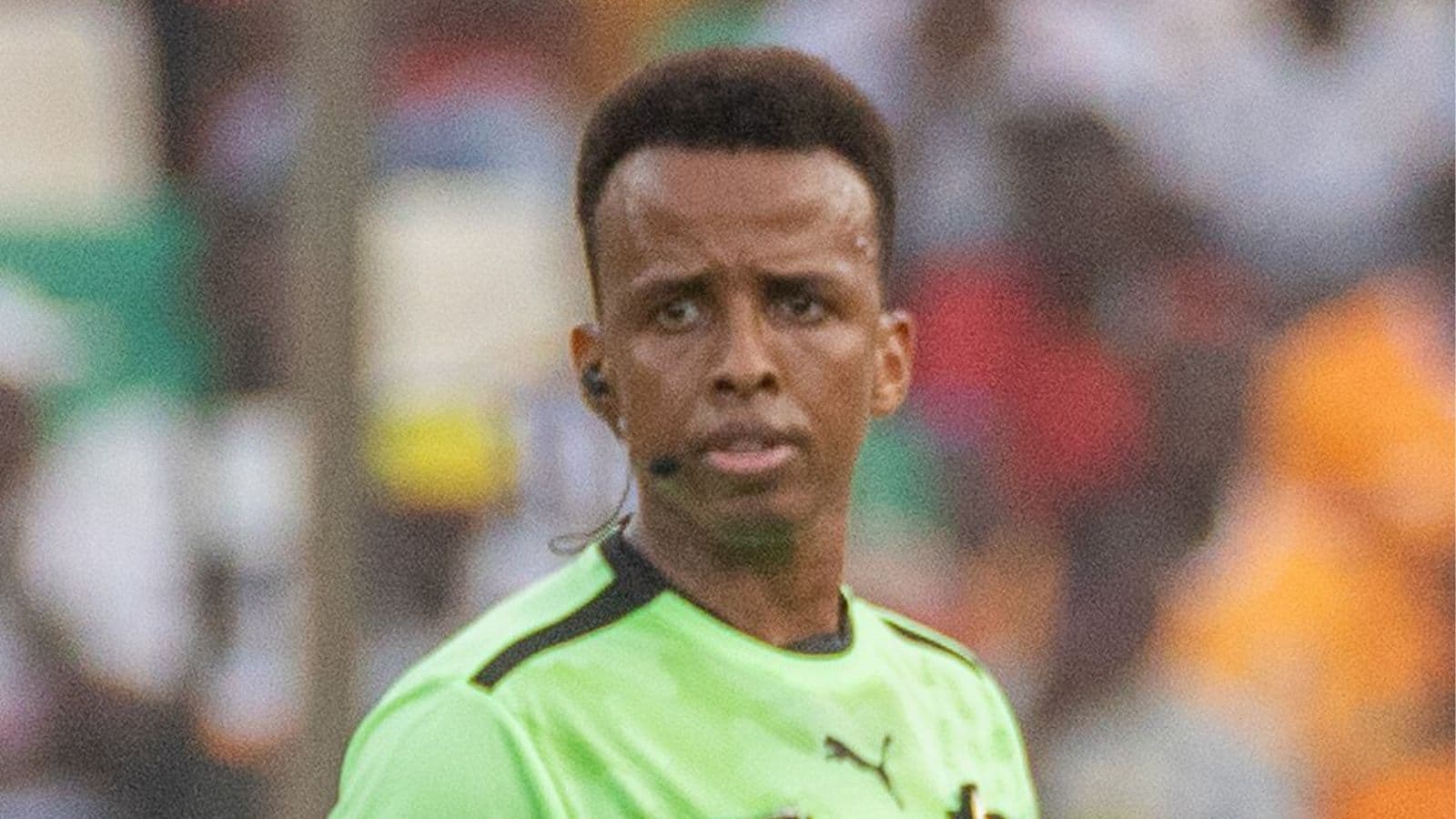
Four years ago, much of the Western football world discovered its conscience.Ahead of the 2022 World Cup in Qatar, federations from Norway, Denmark, and Germany — and many more — questioned the host’s human rights record. Armbands were designed. Statements were issued. Football, we were told, was about values as much as goals. The tournament became a referendum on Qatar itself.Fast forward to 2026, and the contrast is impossible to ignore. Days before kick-off, Somali referee Omar Artan — selected by FIFA and due to become the first from his country to officiate at a men’s World Cup — was denied entry into the United States despite holding a valid visa. FIFA confirmed that he would miss the tournament entirely because all referees are required to operate from the World Cup’s central training base in the US. Artan is not some obscure official caught in bureaucratic crossfire. He is one of Africa’s most respected referees, having worked the Africa Cup of Nations, and was named Africa’s best male referee last year. Yet, his World Cup dream ended not on a football field, but at an immigration desk. The reaction? Muted. What if it wasn’t America? Former tennis great Martina Navratilova was among the few prominent sporting voices to publicly question the episode. But compared to the moral outrage directed at Qatar before 2022, the silence has been deafening. Imagine, for a moment, if Qatar had denied entry to a referee because of his nationality, religion, or sexual orientation on the eve of the World Cup. The condemnation would have been immediate and relentless. Editorial boards, politicians, and sporting bodies would have demanded answers. But when the host nation is the United States, the standards suddenly appear more flexible. The Artan affair is not an isolated incident. Iran, one of the qualified teams, has spent the build-up navigating a maze of restrictions. FIFA regulations ordinarily guarantee each federation a share of tickets for distribution among supporters, yet Iran says that allocation has effectively been withdrawn. Journalists, officials, and ticket-holding fans from other countries, too, have complained about visa troubles. Last weekend, Iraq striker Aymen Hussein was questioned for nearly seven hours, and his phone was checked when the team arrived in Chicago. The team’s photographer was held for more than 10 hours and was denied entry. This comes against the backdrop of broader American travel restrictions that affect citizens from several nations. Security concerns and the Ebola outbreak are cited as other reasons for the strict procedures. Nevertheless, the contrast with another episode from global sport is striking. Olympic Committee – universal values, selectively applied In 2019, when India denied visas to Pakistani shooters ahead of a shooting World Cup in New Delhi following the Pulwama terror attack, the reaction from the Olympic movement was swift and severe. The International Olympic Committee suspended discussions on future events in India and advised international federations against awarding Olympic qualification competitions to the country until guarantees were provided. The message was clear: Host nations cannot selectively exclude eligible participants. That principle appears considerably harder to enforce when the host is the world’s most powerful country. Qatar was scrutinised partly because scrutiny came at little geopolitical cost. The US occupies a different place in world sport. FIFA’s commercial future is deeply tied to the North American market. Broadcasters, sponsors and governing bodies all understand where influence resides. Criticising Doha carried few consequences. Criticising Washington is another matter altogether. That does not mean every criticism of Qatar was wrong. Many were justified. Nor does it mean the United States should be held to an impossible standard. Every host nation faces legitimate security concerns and immigration challenges. But consistency matters. The issue
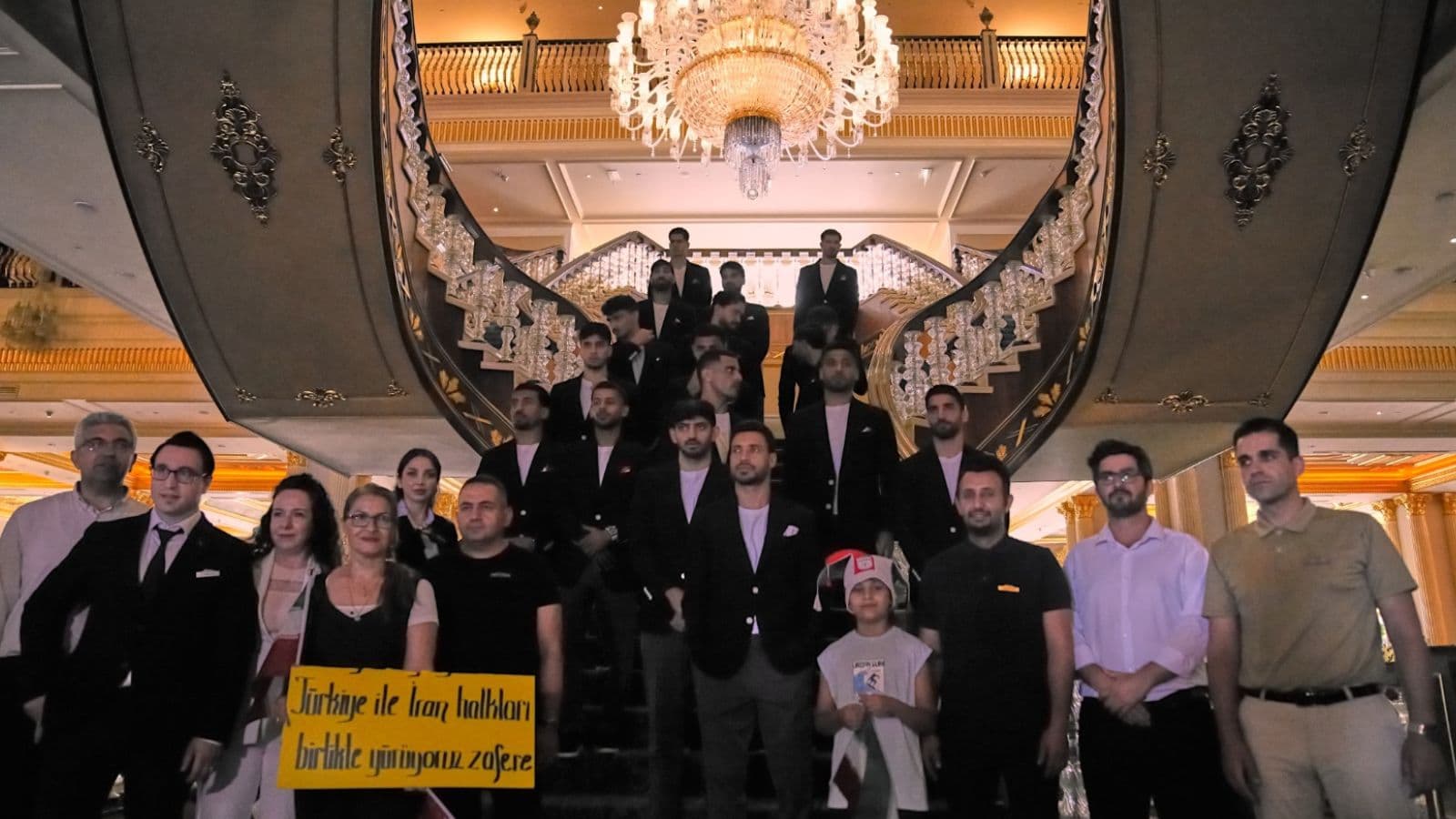
Iran's players pose for a group photo with fans in Antalya, southern Turkey, before departing to Tijuana, Mexico, for the World Cup soccer tournament. The board reads in Turkish: "The peoples of Turkey and Iran are marching together toward victory". (AP Photo) Iran has slammed FIFA World Cup co-host the United States over “discriminatory treatment” after the latter refused to grant visas to about 15 officials of its national team’s delegation to attend the tournament, The Guardian reported. Iran has alleged that 15 of its administration officials, including executive director Mehdi Kharati, secretary general of the football federation Hedayat Mombini, and media director Mohsen Motamedkia have been denied entry to the US.The move came hours after Washington confirmed Iranian players had been granted permission to travel to the upcoming soccer tournament, amid an escalating war between the two countries. Iran’s allegations The Iranian embassy in Turkey has accused the US of unleashing the “worst possible form of politically biased interference in sport” by denying visas to a “large portion of the managerial and executive staff” and “technical advisers”. Taking to X, the embassy wrote: “You have now escalated the deliberate and discriminatory treatment against Iran’s national football team to its highest level. By extending your whimsical hostilities against the Iranian nation into the realm of sport, the US government in practice is depriving Iran’s national team of its right to play in the World Cup under normal conditions and without undue pressure and stress.” You cannot whitewash conduct that violates FIFA regulations and breaches the United States’ host obligations merely by praising yourselves. Why do you not say that visas were denied to a large portion of the managerial and executive staff, technical advisers, and others who are… https://t.co/AoEvfphxmH — Iran Embassy in Türkiye (@Iran_in_Turkiye) June 6, 2026 It also demanded that FIFA hold the US accountable for the discriminatory treatment of Iranian administrative officials and the violation of its terms.The US’s security approach According to US officials quoted by the BBC, visas were issued to all players and “necessary support staff” on Friday. At the same time, these officials asserted that Iran would not be allowed to “abuse this system to sneak terrorists into the United States under false pretences”.Story continues below this ad Earlier this week, too, the US Secretary of State, Marco Rubio, told lawmakers that the US would not allow Iran to include in their World Cup delegation individuals linked to the Islamic Revolutionary Guard Corps (IRGC), a group that is fighting the war against the US from the front. Several players of the Iranian national team have completed mandatory military service with the IRGC. Moreover, while the US Department of Homeland Security did not explicitly introduce any restrictions on members of Iran’s team and its delegation during their time in the US, it told the BBC in a statement that DHS is “steadfast in our commitment to the safety and security of the American people and attendees of the 2026 FIFA World Cup”. The agency also stated they are “intricately involved in the whole of government approach securing the 11 host city sites across the nation, including Los Angeles”. Next steps for Iran With Iran set for an opening fixture against New Zealand in Los Angeles on June 15, staff members now without visas would travel from Turkey to Mexico with the team while efforts to obtain them continue, Iran’s news agency Tasnim reported.Story continues below this ad The team is expected to land in Mexico’s Tijuana in the early hours of Sunday, taking a 20-hour flight, according to The Guardian. They will now have to enter and leave the US on the same day as their matches, Iran’s ambassador to Mexico has stated. The Iranian team will face Belgium on June 21 and take on Egypt in Seattle on June 26, acc
New DelhiUpdated: Jun 5, 2026 04:27 PM IST Marginal revisions have also been made to the GDP growth estimates for April-June 2025 (6.7% to 6.8%) and July-September 2025 (8.4% to 8.3%). (File photo)India’s GDP grew by 7.7% in 2025-26, the Ministry of Statistics and Programme Implementation (MoSPI) said on Friday, adding that growth in the final January-March 2026 quarter declined only slightly to 7.8% from 8% (revised upwards from 7.8% estimated earlier) in October-December 2025. Marginal revisions have also been made to the GDP growth estimates for April-June 2025 (6.7% to 6.8%) and July-September 2025 (8.4% to 8.3%).The full-year GDP growth figure of 7.7% released on Friday, called the provisional estimate, is higher than MoSPI’s second advance estimate of 7.6%, which was announced in February. India’s GDP had grown by 7.1% in 2024-25. The latest GDP data comes hours after the Reserve Bank of India (RBI) cut its forecast for 2026-27 to 6.6% from 6.9%, with Governor Sanjay Malhotra warning that while domestic demand remains resilient and manufacturing and services sectors activity continue to expand, “there are incipient signs of moderation in some sectors”. As per the central bank’s new forecast, growth is seen at 6.6% in April-June 2026, 6.3% in July-September 2026, 6.5% in October-December 2026, and 6.8% in January-March 2027. Back in April, the central bank expected the country’s GDP to increase by 6.8%, 6.7%, 7%, and 7.2% in the four quarters of 2026-27. Siddharth Upasani is a Deputy Associate Editor with The Indian Express. He reports primarily on data and the economy, looking for trends and changes in the former which paint a picture of the latter. Before The Indian Express, he worked at Moneycontrol and financial newswire Informist (previously called Cogencis). Outside of work, sports, fantasy football, and graphic novels keep him busy. ... Read More Tags: GDP

Discussion (0)