
Loading dispatches...
← Return to NewsroomPolitics
Allahabad High Court grants bail to rape and murder accused over lack of scientific evidence
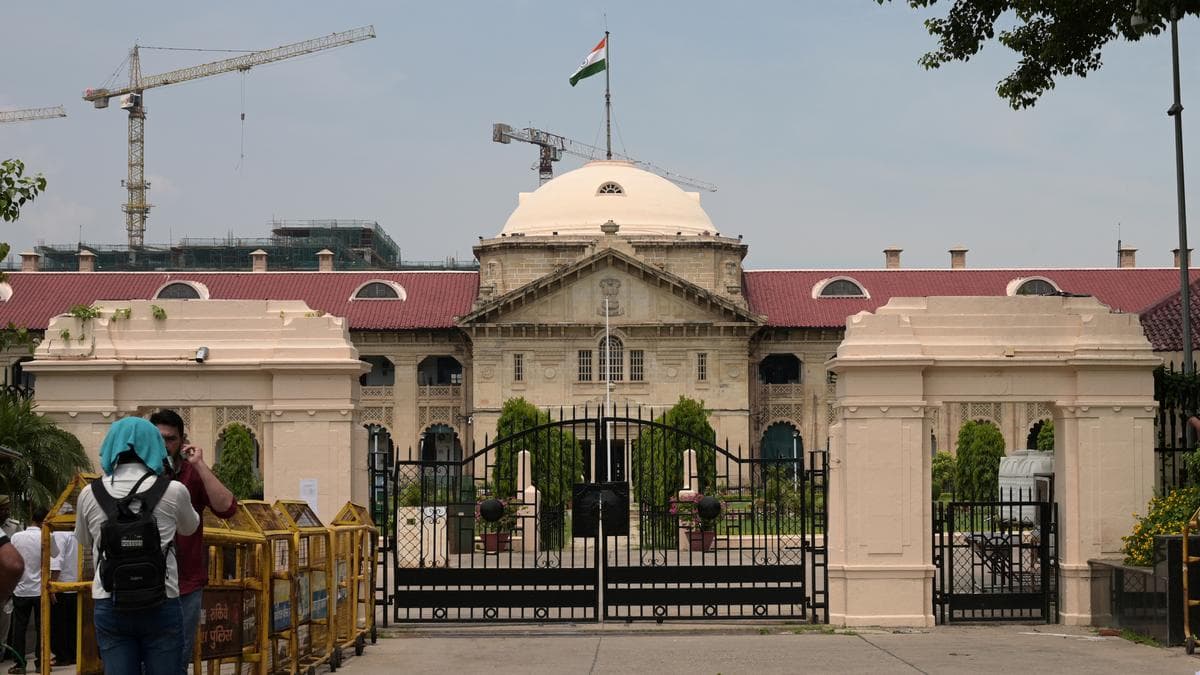
The Allahabad High Court expressed serious concerns over the State’s FSL infrastructure. File. | Granting bail, the Court said that it expects that the State Government will provide high-end machines to Forensic Science Laboratories (FSL) and sufficient staff. It directed the High Court registrar (compliance) to send a copy of its order to the U.P. chief secretary for the perusal of the Chief Minister.Justice Arun Kumar Singh Deshwal allowed the bail application of the accused, Manoj, for the reason that the FSL report did not show that the DNA found in the vaginal smear of the deceased belonged to the applicant because of insufficient generation of the DNA profile.The Court expressed serious concerns over the State’s FSL infrastructure.“...in most of the cases, the FSL report shows that because of the incomplete generation of the DNA profile, the source of DNA found in the vaginal swab cannot be determined,” the Court said.The Court in its May 21 order said, “Outdated machine as well as incomplete infrastructure in FSL is the main reason for non-generation of DNA profiles, and no one can be blamed except the State Government who has many other issues to consider apart from the issue of providing basic infrastructure to FSL.” Published - June 06, 2026 06:50 am IST
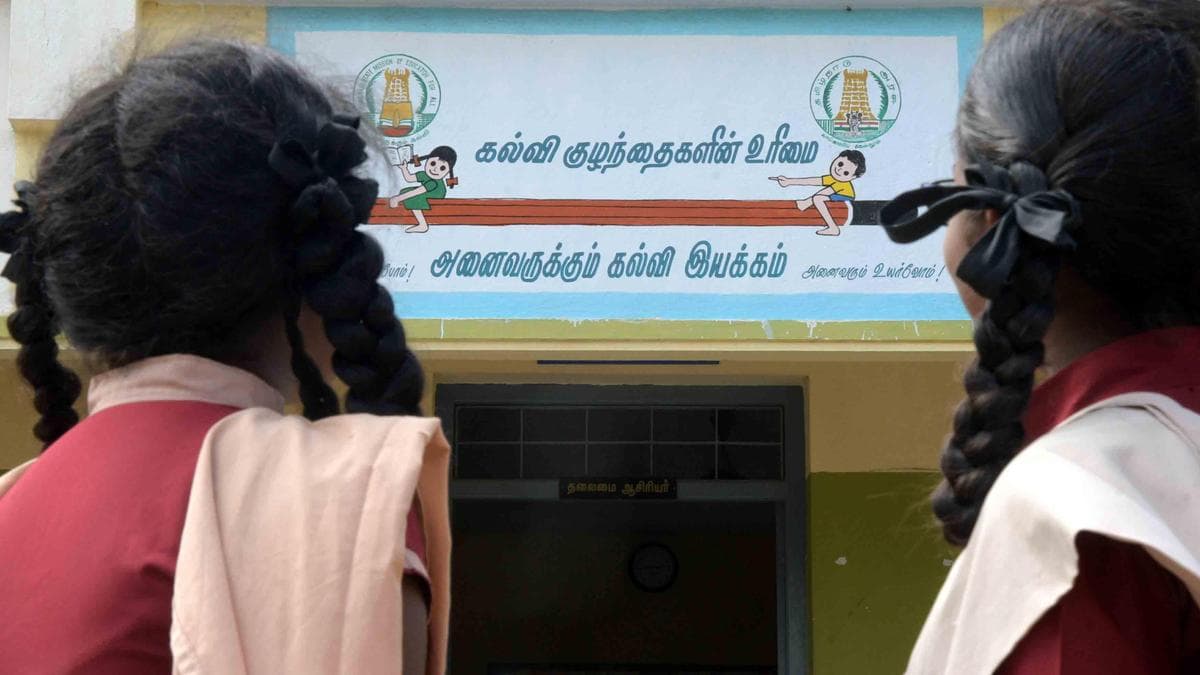
The court was informed that an individual named M. Liyakath Ali had in 2022 filed an application under the Right to Information Act of 2005, seeking information regarding the fee structure of private schools. Representational image. File | Siva Saravanan The Madras High Court on Friday (June 5, 2026) refused to grant an interim stay on a circular issued by the Director of Private Schools on June 1, 2026, which instructed all private schools in Tamil Nadu to display their fee structures on their notice boards.Justice M. Dhandapani rejected the plea for interim relief and said, he would prefer to take up for final hearing, after two weeks, a writ petition filed by All India Private Educational Institutions Association, represented by its general secretary K. Palaniappan of Chennai.The petitioner association had challenged the June 1 circular, as well as Tamil Nadu Information Commission’s (TNIC) May 25, 2026, order, based on which the circular had been issued. It had urged the court to quash the TNIC’s order and the circular and stay them until the disposal of the main case.What is the case about?The court was informed that an individual named M. Liyakath Ali had in 2022 filed an application under the Right to Information Act of 2005, seeking information regarding the fee structure of private schools. The application was addressed to the Public Information Officer (PIO)/Personal Assistant to Coimbatore Chief Educational Officer.The PIO forwarded the application to the District Education Officer (DEO) who, in turn, forwarded it further to the individual schools in the district. Aggrieved over it, the applicant had taken the matter on second appeal before the TNIC and complained about the information not having been given to him.The TNIC issued wide-ranging directions on the matter on May 25, 2026. It was in compliance of those directions that the Director of Private Schools had issued the circular under challenge, mandating all private schools to display their fee structures on their notice boards, the petitioner association said.Assailing the TNIC’s order and the circular on various grounds, the association said, such directions and instructions had been issued without analysing whether the RTI Act would apply to private unaided educational institutions and whether those institutions would fall under the definition of the term ‘public authority.’The petitioner’s counsel said, it also had to be analysed whether the TNIC had exceeded its jurisdiction under the RTI Act by passing suo motu directions of a legislative and regulatory character amounting to a general policy mandate for all private schools functioning in the State.After hearing the preliminary arguments, the judge decided to take up the writ petition for final disposal pursuant to the filing of counter affidavits by the respondents. Published - June 05, 2026 12:56 pm IST

Image used for representational purpose only. | The proposed regulations come amid concerns expressed by the top court in recent months over the growing reliance on AI by courts in rendering judgments. In March, a Bench headed by Justice P.S. Narasimha chided a trial court for relying on non-existent judgments generated with the help of AI, observing that it was not merely “an error in decision-making” but amounted to judicial “misconduct”.The preliminary draft of the ‘Regulations for Use of Artificial Intelligence (AI) in Courts, 2026’, made public on Wednesday (June 3, 2026), underlines that AI systems used in court processes must “function solely in an assistive capacity” and remain “strictly subservient to human judgment and judicial authority”.The committee, chaired by Supreme Court judge Justice P.S. Narasimha and comprising Justices Sanjeev Sachdeva, Raja Vijayaraghavan V., Anoop Chitkara and Suraj Govindaraj, has invited comments and suggestions from stakeholders as well as members of the public on the draft regulations before they are finalised. The deadline for submitting responses is June 20.‘Digital divides’Under the draft regulations, the processing of personal data through AI systems shall be governed by the provisions of the Digital Personal Data Protection Act, 2023. It also underlines that AI systems must not “perpetuate, amplify, or introduce bias” on grounds of race, religion, caste, sex, gender, disability, language, economic status, or any other ground prohibited under the Constitution.“Applications involving higher levels of risk to personal liberty, any lawful right of a person, or the integrity of judicial outcomes shall be subject to correspondingly heightened safeguards, including mandatory human-in-the-loop requirements and independent oversight,” the draft states.It further cautions that AI-assisted judicial systems should not “widen digital divides” and must remain accessible to all stakeholders, including those from rural, economically disadvantaged, or linguistically diverse communities.While the draft regulations permit the use of AI for administrative functions such as case management, preparation of cause lists, scheduling of hearings, transcription of court proceedings and translation of judgments, they make it clear that AI systems cannot be used for “risk scoring” in court processes. This includes assessing flight risk, predicting recidivism, evaluating bail eligibility, or determining the credibility of parties or witnesses.It also bars authorities from using AI systems for the surveillance or continuous monitoring of judicial officers, advocates, litigants and other stakeholders, “except as may be specifically authorised by applicable law for the time being in force”.‘Apex body’To supervise the adoption of AI in the judiciary and steer standard-setting and policy development, the draft regulations propose the creation of a full-time “apex body” at the Supreme Court.The apex body, it recommends, would comprise two Supreme Court judges nominated by the Chief Justice of India (CJI), one of whom shall serve as the ex-officio chairperson; two High Court Chief Justices and two High Court judges nominated by the CJI; one member from an institution of national importance or any institution of repute, as nominated by the CJI; an officer not below the rank of Joint Secretary to the Government of India in the Ministry of Electronics and Information Technology; a finance expert and a cybersecurity expert nominated by the CJI; one or more advocates of standing with expertise in technology-related laws, data privacy

Vinesh Phogat, in blue, competes against Jyoti in a 53kg category wrestling match during the Asian Games selection trials, in New Delhi. | A Bench of Justices P.S. Narasimha and Aravind Kumar, which refused to go into the observations made by the high court, said this court should not be taken as having reiterated the findings and observations made in the order.The Bench said all the issues are left open.Senior advocate D.N. Goburdhun, appearing for the WFI said that Ms. Phogat was allowed to participate in the selection trial but she did not succeed.“She did not succeed but she created havoc over there," the senior counsel told the Bench.The Bench told him that the issue has now become infructuous.Mr. Goburdhun submitted that there were certain observations made by the high court with regard to decisions of the Federation and terming them “malafide” and “deplorable”.“All these observations will have to go as the matter is pending before the single Bench,” the senior counsel submitted.The top court then left the questions open and disposed of the plea as infructuous.On May 29, the top court permitted Ms. Phogat to participate in the selection trials to be held on May 30 and 31 for the Asian Games 2026.The Wrestling Federation of India (WFI) had challenged the Delhi High Court order of May 22 allowing Ms. Phogat to participate in the selection trials. Published - June 04, 2026 12:14 pm IST
A Bench of Justices Vikram Nath and V Mohana dismissed the plea. File | A Bench of Justices Vikram Nath and V Mohana dismissed the plea filed by a lawyer, who had also sought laying down of uniform, structured and enforceable guidelines for regulation of adjournments in all courts across the country.The plea also sought formulation and implementation of a uniform national case flow management policy applicable to all courts in the country. Published - June 04, 2026 12:26 pm IST


Discussion (0)