
Loading dispatches...
← Return to NewsroomPolitics
S. Janaki’s fresh voice, improvisation made Kerala groove to her tunes
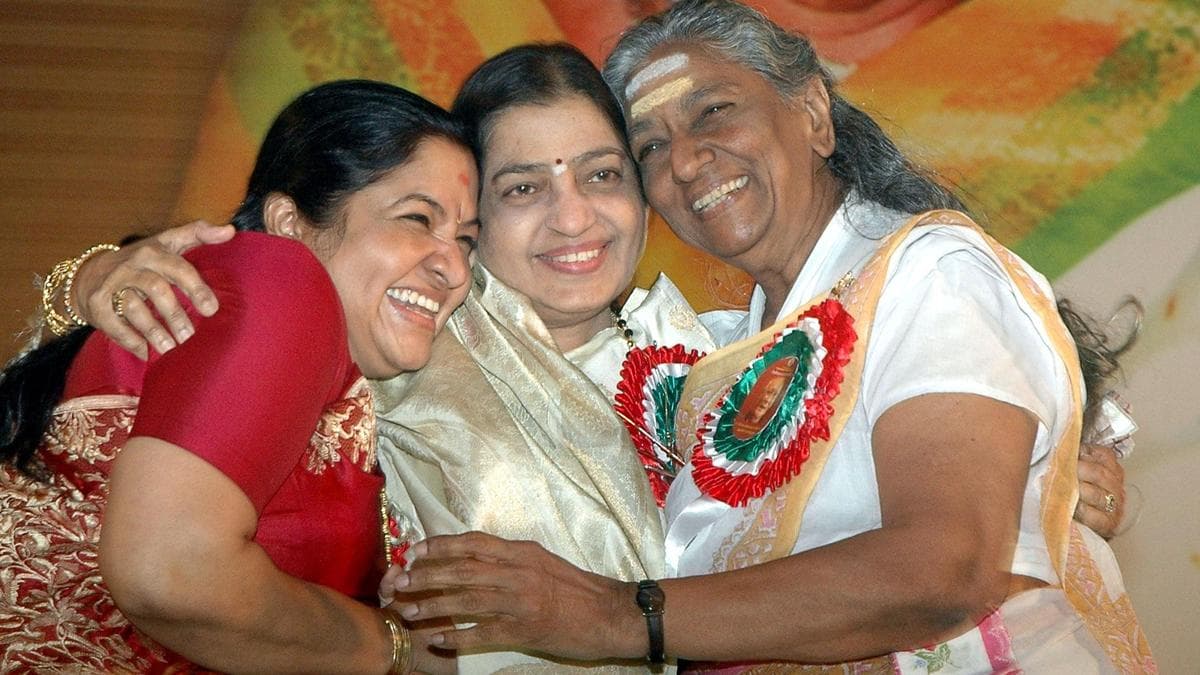
The legendary singer shares a smile with fellow greats K.S. Chitra and P. Susheela At a time when Malayalam film music was still finding its feet came Thaliritta Kinakkal as a whiff of fresh air. The unified Kerala State was on the cusp of a whole new era in all walks of life, and the voice of S. Janaki sounded similar to that of the ubiquitous koel in its verdant vistas. Set to tune by composer M.S. Baburaj, the song penned by poet-lyricist P. Bhaskaran was an instant hit in 1963 for its effusive exposition of love and longing, and it made Janaki a household name in no time. That the song hasn’t lost its sheen a wee bit to date is testimony to its lasting appeal. Hearsay is that Bhaskaran master’s jaw dropped listening to the quality of Janaki’s diction, as she never once sounded like a non-Malayali. Janaki crooned tens of thousands of songs in Malayalam, never once making it appear that it wasn’t her mother tongue. She sang under the baton of many legendary music directors such as G. Devarajan, V. Dakshinamurthy, Ilayaraja, K. Raghavan, M.S. Viswanathan and in later years, composers such as MG Radhakrishnan and Johnson. Even after becoming a sought-after singer in many other Indian languages, she reserved a special place for Malayalam in her heart. She won the Kerala State Award for the best female playback singer 11 times. Janaki with the late singer K.P. Udayabhanu She was a master of improvisation, capable of modulating her voice to that of a character of any age group or to articulate any emotion. The melancholic Sandhye... from the film Madanolsavam and the playful Thumbi vaa thumbakkudathin from Olangal acquired distinct tonal qualities in her rendition. Janaki inimitably lent her voice to numerous evergreen Malayalam film songs from the 1960s to the 1990s. Songs such as Manjanikombil, Thenum Vayambum, Nadha Nee varum, Manassiluranroo, Akale Akale Neelakasham, Ilam Manjin have retained their freshness and ability to influence the listener. “She was a committed singer who did not have any formal training in music, but could easily etch the emotions intended by the lyricist and nuances composed by the music director,” poet-lyricist Sreekumaran Thampi recalled to The Hindu. Janaki has sung hundreds of his songs, and they maintained a sibling-like relationship. “It makes me happy that among her Kerala State Film Awards for singing, two were for the songs written by me. “The perennial Aa Nimishathinte Nirvruthiyil.... was one of them. It was in Kalyani raga. She would not understand any music notation or raga, but once you tutored her the song, she would render it brilliantly. She was an embodiment of music, someone who was born to sing,” he says. “And she was aware of her immense talent too. That’s why she chose to decline the Padma Bhushan award when it arrived too late in her career. She knew she deserved nothing less than the Bharat Ratna,” says Mr. Thampi. The soulful melody of Janaki’s songs sculpted myriad female emotions for generations of Malayalis. The singer may have gone, but her song stays in millions of hearts. Published - July 11, 2026 10:20 pm IST
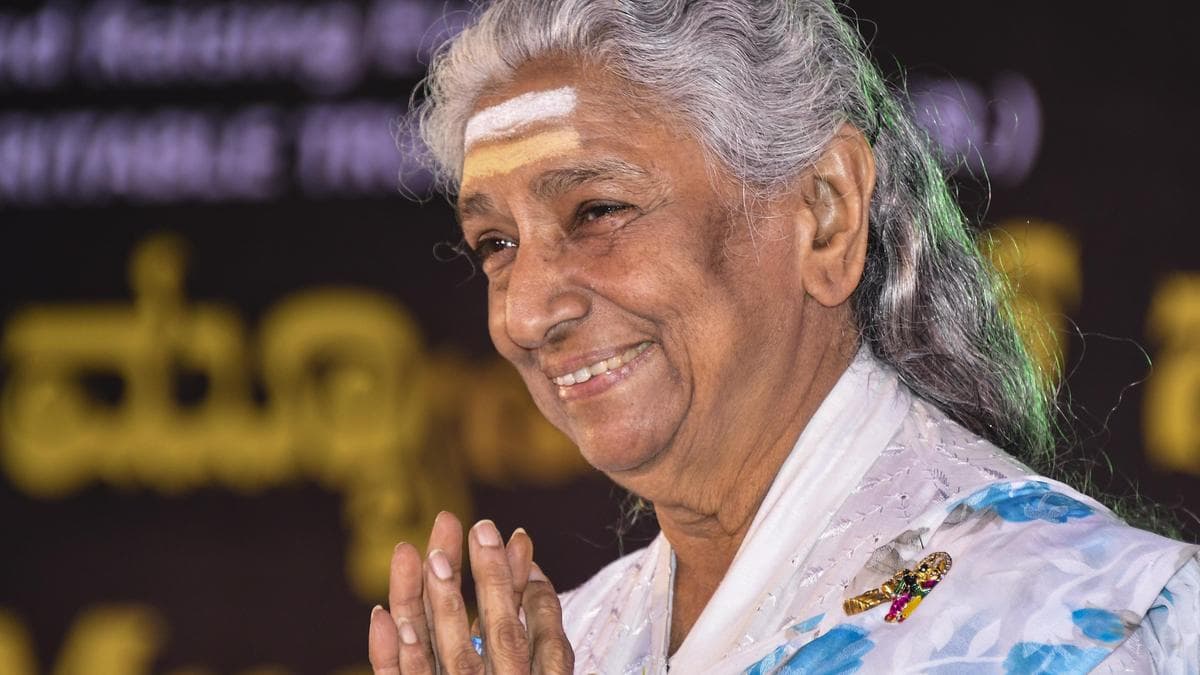
S. Janaki | Janaki remained the eternal favourite of generations of music lovers in Kerala, though never for the want of alternatives. There were stalwarts when she first arrived on the scene, and equally formidable voices when she thrived. None of them were mere pushovers, but legends in their own right such as P. Leela, P. Susheela, and Vani Jayaram. Yet casual listeners, more often than not, chose Janaki.It was not just her effortless singing style that endeared her to them. She was always cheerful, pleasant, and free of airs, from the time she was the undisputed voice of her era to when she gradually faded from the music scene in Kerala. A lullaby, Ammapoovinum from the film Pathu Kalpanakal more than a decade ago, was probably her last Malayalam film song. Still, music lovers never forgot her. Her name surfaced with striking frequency whenever both listeners and musicians were asked about their favourite singer.Her debut in Malayalam playback remains disputed. Often Minnalppadayaali, directed by G. Vishwanath and released in 1959, is cited as her first. But according to music historians, the song Irul Moodukayo En Vaazhvil from the crime-thriller Minnunnathellam Ponnalla, released two years earlier, marked the true beginning of her Malayalam journey.Of the same ilkIt was a coincidence that for a lifelong Lata Mangeshkar admirer, Janaki’s Malayalam debut was a song composed to the tune of Hemant Kumar’s popular Mera Dil Ye Pukare Aaj, sung by Lata herself. While Lata was hailed as the Nightingale of India, her ardent fan would later be crowned the Nightingale of South India.Janaki truly burst onto the Malayalam music scene in the 1960s, lending her voice to almost all eminent composers of the time, from B. A. Chidambaranath and G. Devarajan to Baburaj. Songs like Kaanaan nalla kinaavukal kondoru composed by Devarajan for the 1962 film Bharya, and Baburaj’s Thaliritta Kinakkal for Moodupadam, made her a household name.Her finest years, however, were still ahead in the 1970s and 80s, when she dominated and left competition far behind. The ten Kerala State Film Awards for Best Playback Singer she won during the 14-year period between 1970 and 1984 stand as testimony to that supremacy. The National Award for Ettumanoorambalathil from Oppol (1981) was the crowning glory. And the very next year, she amazed audiences with the rendition of the song Kokkamandi, mimicking the voice of a child for the film Chiriyo Chiri.She was a hit on the ganamela stages as well. Always by her side was her devoted husband V. Ramprasad, who meticulously checked the sound system and related arrangements before Janaki took the microphone. At a concert in Palluruthy Veli decades ago, Janaki rendered Unarunaroo Unnipoove, a tough choice for live shows, but without blinking an eye, and followed it with an encore on audience request. Published - July 12, 2026 12:05 am IST
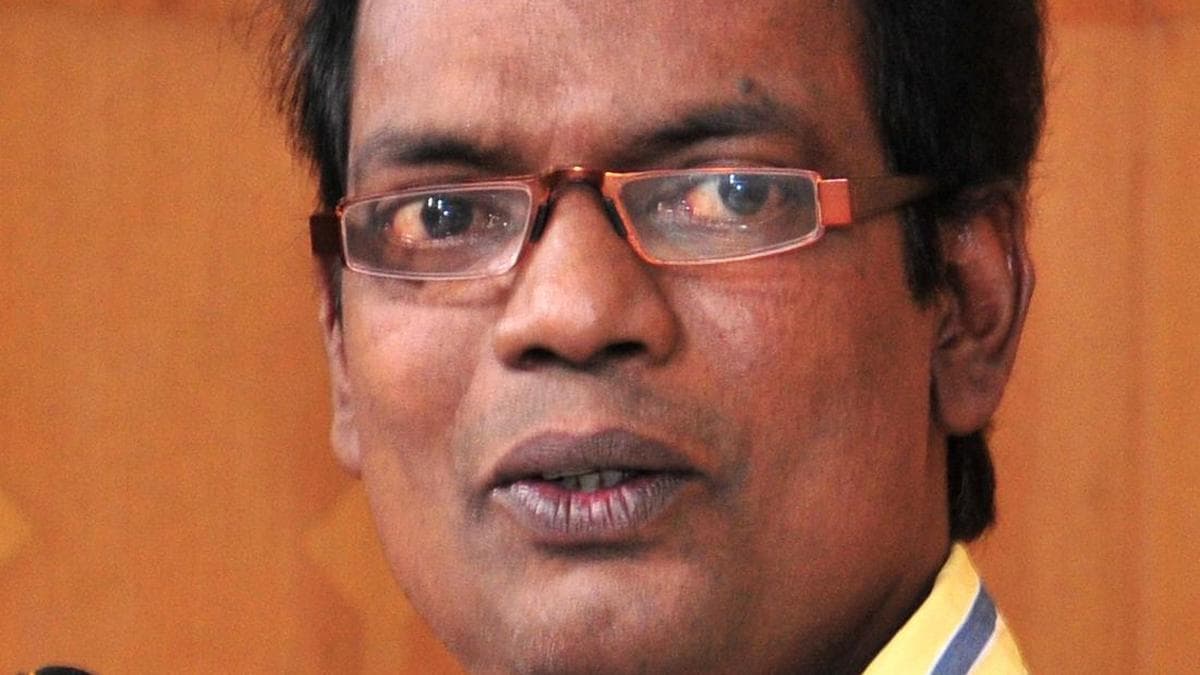
Salim Kumar | The actor experienced health issues and was rushed to the hospital in the morning, officials said.Hospital authorities said further details regarding his health condition would be disclosed later.Salim Kumar, who won the National Film Award for Best Actor in 2010, had undergone a liver transplant a few years ago.Associated with drama and mimicry before entering films, he began his film career in 1997 and is known for portraying a wide range of comedy and character roles in Malayalam cinema.He has won the Kerala State Film Award on four occasions.During the recent Kerala Assembly elections, he openly supported the Congress-led UDF, appearing alongside its leaders on several occasions and criticising the LDF leadership. Published - June 06, 2026 12:54 pm IST
Poet, writer and academic A.C. Sreehari passed away following a heart attack on Friday night. He was a former head of the Department of English at Payyanur College and had retired from service on May 30.A noted voice in contemporary Malayalam literature, several of his poems are included in university curricula across Kerala. Among his well-known works are ‘Yuva Kavithakkoottam (1999) and ‘Kavithayude Noottandu’ (2001), which earned wide recognition among readers and scholars.Born on November 24, 1969, at Alappadamba near Payyanur in Kannur district, he was a son of A.C. Damodaran Namboothiri and Savithri Antharjanam. He received his primary education at Kuruveli Vishnusharma ALP School and later studied at Government Higher Secondary School, Mathil, and Nehru Arts and Science College, Kanhangad. Mr. Sreehari graduated in English from Payyanur College and obtained his postgraduate degree from St. Joseph’s College, Devagiri.He completed his M.Phil. from Mahatma Gandhi University and earned a Ph.D. from Kannur University in 2015 with a thesis titled “Construction of Masculinity in Popular Malayalam Cinema.”He is survived by his wife Sangeetha K. and son A.C. Sreeharshan. Published - June 06, 2026 09:57 am IST

Discussion (0)