
Loading dispatches...
← Return to NewsroomEconomy
JPMorgan turns cautious on IT, sees growth headwinds ahead
Mumbai: JPMorgan said it sees further growth headwinds for the Information Technology companies over the next two years as the sector faces an uncertain demand environment from an unprecedented confluence of technology and business cycle headwinds from generative AI-led deflation and geopolitics.The brokerage downgraded HCL Technologies, Tata Technologies and Wipro to underweight, as current prices have yet to capture the price action so far. Its top picks remain TCS, Infosys, TechM, Coforge, Persistent and Sagility.AgenciesWeak demand, geopolitical uncertainty and AI-led deflation weigh on sector growth outlook for FY27JPMorgan said it sees further cuts in FY27 revenue growth expectations for these companies. "With a softer start to the year, the ask rate for FY27 gets tougher, as the usual 1H strength is unlikely to play out this time," said the brokerage's analysts in a client note.JPMorgan has cut April-June revenue growth assumptions for all companies on the back of delays in deal closures and revenue conversion. "Accenture's print and guidance confirms that weakness is not only in 1Q27, but also likely to bleed into 2QFY27," the note said.JPMorgan said growth acceleration is unlikely even for mid-cap firms over the medium term."Until we see AI inflation becoming a tailwind, we would prefer to be cautious on the pace of growth recovery, as well as structural growth for the industry."
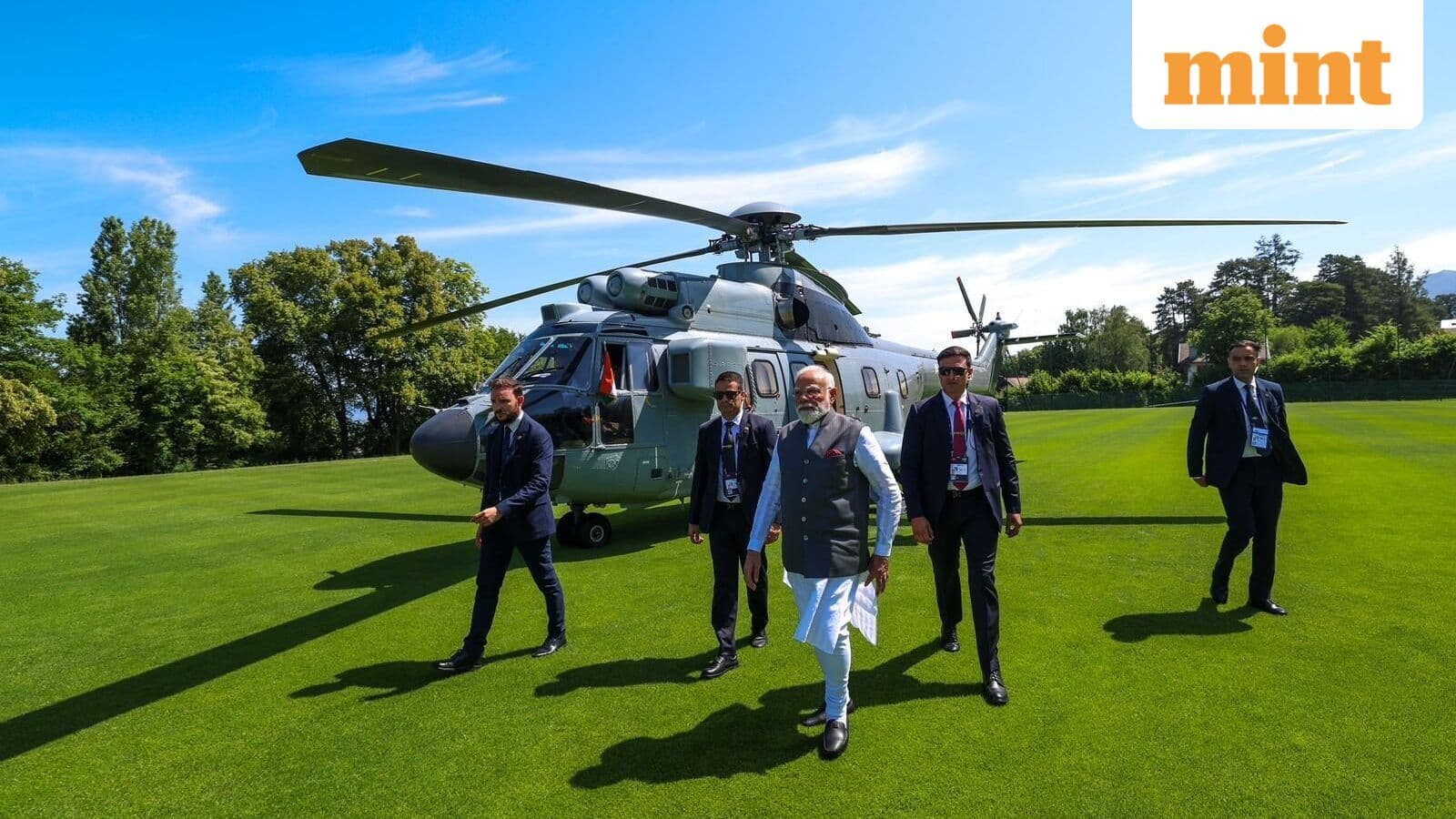
Prime Minister Narendra Modi arrived at Evian, France, on Tuesday to attend the G7 Summit and exchange views with world leaders on key global issues. This is the 8th consecutive G7 Summit to which India has been invited."Reached Evian, France, for the G7 Summit. Looking forward to engaging with world leaders and exchanging views on key global issues," Modi said in a post on X.He said that India “remains committed to advancing collective efforts for a more sustainable and prosperous planet.”Quick answers to key questions•5 QUESTIONSPM Modi's attendance marks India’s thirteenth participation at the G7 summit and indicates increasing global recognition of India's role in addressing peace, security, and environmental sustainability.PM Modi received Slovakia’s highest civilian honour, The Order of the White Double Cross (1st Class), as a recognition of the strengthening bilateral ties between India and Slovakia.The G7 Summit provides a platform where leaders from member and partner countries, including India, discuss global issues, fostering international cooperation and partnerships on various topics like economic growth and artificial intelligence.At the G7 Summit, PM Modi is expected to discuss international cooperation, economic growth, artificial intelligence, and hold bilateral meetings with leaders on these crucial issues.Yes, participating in multilateral summits like the G7 allows countries to engage in dialogue on pressing global challenges, thereby enhancing their international influence and collaboration with other nations.PM Modi arrived in Evian from Geneva. At the Geneva airport, Modi was received by the President of Switzerland, Guy Parmelin.Both leaders exchanged warm greetings and reaffirmed their commitment to further strengthen the India-Switzerland partnership.Earlier, Prime Minister Modi concluded a "historic and productive" visit to Slovakia."The outcomes of this visit will go a long way in strengthening bilateral ties between our nations. Stronger trade relations will greatly benefit our youth. Gratitude to the Slovakian government and people for the warmth," he said.His visit to Slovakia was the first by an Indian prime minister.During his visit, India and Slovakia elevated their ties to a comprehensive partnership and signed 11 agreements to expand bilateral cooperation across several areas, including migration, digital technology, and defence.During his visit, PM Modi was conferred Slovakia's highest civilian honour, The Order of the White Double Cross (1st Class), by Slovak President Peter Pellegrini. The honour marked the 33rd international recognition bestowed upon PM Modi by a foreign country.The visit by PM Modi saw the two countries sign a series of Memoranda of Understanding (MoUs) in the fields of education, research, talent mobility, and technology, further cementing their ties.The agreements were formalised in a Joint Statement issued during Prime Minister Modi's state visit to Bratislava, following delegation-level talks with Slovak Prime Minister Robert Fico.The initiatives heavily focus on talent mobility, professional safety, and institutional partnerships across the higher education and cultural sectors.About the AuthorLivemintFor about a decade, Livemint—News Desk has been a credible source for authentic and timely news, and well-researched analysis on national news, business, personal finance, corporates, politics and geopolitics. We bring the latest updates on all the listed companies on BSE and NSE, startups, mutual funds, Union ministries, geopolitics, and untapped human interest stories from around the world, helping our readers to stay informed on the latest developments around the globe. Our Coverage Areas 1. Companies: Comprehensive news and analysis on listed and unlisted companies, corporate announcements, corporate chatter, C-suite, business trends, hiring alerts, layoffs, work-life balance, world's top billionaires and richest and more. 2. Personal finance: Insights into mutual

indian households are increasingly monetising their idle gold holdings.Summary Rising gold prices and tighter lending norms are fuelling a gold-loan boom. But as borrowers take larger loans and debt levels rise, concerns about repayment stress are also mounting, putting the sector under greater regulatory scrutiny.India's gold-loan market reached ₹18.6 trillion in FY26, up 50.4% from a year earlier, making it the country's second-largest retail credit segment after housing loans. The growth signals a shift in how Indian households use gold. Traditionally, households viewed gold primarily as a store of value and a cultural asset, pledging it only during periods of financial stress. Now, they are increasingly monetising their idle gold holdings. The surge has been driven by rising gold prices and tighter regulations on unsecured credit. However, as lenders expand aggressively into higher loan brackets and new geographies, signs of borrower stress are emerging, increasing risks for lenders.Secured pivotGold loans have emerged as one of the fastest-growing segments of India's retail credit market. Outstanding gold loans have expanded nearly four-folds since March 2022. Their share of retail credit nearly doubled to 11.1% in December 2025 from 5.9% in March 2022, according to a TransUnion CIBIL report published in April. Value growth outpaced volumes as average ticket size increased. Growth continued in the final quarter of FY26, when new gold loan originations rose 115% year-on-year to ₹7.6 lakh crore, according to credit reporting agency Experian.The increase coincides with a broader shift toward secured lending. In November 2023, the Reserve Bank of India (RBI) raised risk weights on most forms of unsecured consumer credit, including personal loans, by 25 percentage points to 125%. Gold loans were exempt from the higher capital requirements, encouraging lenders to focus more on collateral-backed products.India's household gold holdings are estimated at more than 25,000 tonnes, according to HDFC Mutual Fund. With bankers estimating that only about 10% of this has been leveraged, it provides a large potential pool of collateral for lenders.Borrowing powerThe increase in gold lending coincided with a sharp rise in gold prices. Between March 2023 and early 2026, gold prices roughly doubled, increasing the value of household gold holdings and the borrowing capacity they support. As a result, households have been able to secure larger loans against the same quantity of jewellery, boosting credit growth without requiring additional collateral.According to HDFC Mutual Fund, the valuation of India's household gold reserves surged by an estimated ₹117 trillion in FY26, marking the steepest annual wealth gain in over two decades. The firm calculates that a mere ₹1,000 per gram rise in bullion prices passively expands an average family's net worth by roughly ₹1 lakh.The average gold loan ticket size more than doubled from about ₹90,000 in early 2022 to ₹1.96 lakh by late 2025, according to TransUnion CIBIL. Higher gold valuations have reduced the quantity of jewellery required to secure a given loan amount, contributing to a shift toward larger-ticket loans. Muthoot Finance said its growth is now predominantly driven by loans above ₹50,000, while nearly 1.1 million borrowers in the ₹10,000- ₹30,000 range have exited its system. The company reported assets-under-management growth of 49% year-on-year and yields of 20.8%.Shifting demographicsGold loans are becoming a larger part of India's retail credit market. Lenders are focusing more on customers with established credit histories, while the product is expanding beyond its traditional geographic and demographic base.Prime and above-prime borrowers accounted for 52% of gold loan originations in 2025, up from 43% in 2022, while the share of new-to-credit borrowers fell from 12% to 6%, according to TransUnion CIBIL. Women accounted for 40% of borrowers, while rural and semi-urban areas

Mobile data costs have fallen by more than 97% since 2014, while internet connections have crossed 105 crore, and broadband subscriptions are nearing the 100-crore mark. India's mobile data costs plunge 97% since 2014 as internet users cross 105 croreIndia's mobile data costs have fallen by more than 97% over the past decade, helping drive a sharp expansion in internet access and digital connectivity across the country.The cost of 1 GB of mobile data declined to ₹7.87 in December 2025 from ₹308 in 2014, according to New India Samachar, a government publication. During the same period, internet connections increased to 105.9 crore from 25.5 crore, while mobile subscriptions rose to 127.3 crore from 90 crore.Separately, an official government document released on Wednesday to mark 12 years of the Narendra Modi government said internet subscriptions stood at 103 crore as of December 2025, compared with around 25 crore in 2014. The document also said broadband connections increased from about 6 crore to nearly 100 crore over the same period, PTI reported.According to New India Samachar, lower data costs have played a key role in boosting internet consumption, particularly in rural areas.Internet access reaches a new scaleIndia's telecom network has expanded significantly over the past decade.According to New India Samachar, the country had 105.9 crore internet connections as of December 2025, reflecting a four-fold increase from 2014 levels.The expansion has been supported by improved network infrastructure, wider smartphone adoption, and affordable mobile data services.5G rollout and fibre expansionIndia's telecom infrastructure has grown rapidly alongside rising internet adoption.According to New India Samachar, 5G services are now available in 99.6% of districts across the country. The publication also said that more than 7.22 lakh kilometres of optical fibre cable have been laid to strengthen connectivity infrastructure.The publication noted that India now ranks second globally in terms of telecom infrastructure and internet subscriptions.The growth of digital infrastructure has coincided with increasing use of digital services, online commerce, digital payments, and internet-based platforms.Broadband base nears 100 croreThe government document cited by PTI said broadband connections have increased nearly 17-fold, from around 6 crore in 2014 to almost 100 crore by 2025.The document attributed the expansion to wider connectivity and lower internet access costs, which it said have helped bring more users online and improve access to digital services.The increase in broadband penetration comes alongside rising smartphone adoption and the rollout of high-speed mobile networks.Digital economy projected to grow furtherThe government document also cited the Ministry of Electronics and Information Technology's report, Estimation and Measurement of India's Digital Economy, which estimated India's digital economy at ₹31.64 lakh crore (about $402 billion) in 2022-23.According to the report, the digital economy accounted for 11.74% of national income and could contribute close to one-fifth of national income by 2030. The report also estimated that the sector supported 14.67 million jobs in 2022-23.Mobile exports, Aadhaar enrolments riseThe government document highlighted growth in electronics manufacturing and digital infrastructure over the past decade.Mobile phone exports increased to ₹2.6 lakh crore from ₹1,600 crore in 2014, according to the document cited by PTI. The number of mobile manufacturing units rose to more than 300 from two during the period.The document also said Aadhaar enrolments crossed 144 crore, compared with 61.01 crore in 2014. In addition, 12 semiconductor manufacturing facilities have been approved, compared with none in 2014, according to PTI.Get Latest real-time updatesStay updated with the latest Trending, India , World and US news. HomeNewsTrendsIndia's mobile data costs plunge 97% since 2014 as inter
As Prime Minister Narendra Modi becomes India's longest-serving continuously elected Prime Minister, he has received tributes and congratulatory messages from Union Ministers, political leaders, global dignitaries and prominent personalities from various fields.On June 10, Prime Minister Narendra Modi completed 4,399 consecutive days in office, surpassing former Prime Minister Jawaharlal Nehru's record of 4,398 consecutive days served after the first general election. The achievement marks a significant moment in the country's political history.Union Parliamentary Affairs Minister Kiren Rijiju said PM Modi's contribution to the nation would be "etched in golden letters" in history.Speaking to ANI, Rijiju credited the Prime Minister's leadership for steering the country towards the vision of a "Viksit Bharat.""It is a moment of pride for our country that, under the Prime Minister's leadership, 12 years have been completed and he has become the longest serving elected Prime Minister, which is a historic achievement. The Prime Minister will have completed 4,399 days in office. I believe the work accomplished for our country during this tenure will be etched in golden letters, marking the time when, under Modi ji's leadership, India took its first steps towards becoming a 'Viksit Bharat," he said.Union Minister CR Patil lauded PM Narendra Modi for becoming India's longest-serving PM in a continuous term, describing the PM's tenure as 'bemisaal' (unparalleled).Patil highlighted the impact of the Prime Minister's leadership over the past twelve years, describing the period as a time of transformative governance that has touched every corner of the nation.Reflecting on the government's approach, Patil emphasised that the success of the administration lies in its planning and effective execution."If we were to sum up what the entire nation is saying today in a single word, it would be that Prime Minister Modi's twelve years have been 'unparalleled' (bemisaal). Whether it is across sectors, for every individual, in every region, or in every state, he has formulated and implemented schemes to meet everyone's needs and ensured that the benefits actually reach the people. This comprehensive planning is precisely why people call these twelve years unparalleled," Patil said.Union Minister Jyotiraditya Scindia also hailed the Prime Minister's leadership, emphasising the transformative changes witnessed over the last 12 years."On this day, PM Modi has established himself as the longest-serving democratically elected Prime Minister of India... India's domestic production rate has reached an average of 7% over the past 12 years, on the basis of which an unprecedented transformation has also occurred. This 12-year tenure will take India's direction, India's position, and India's prominence on the global stage to new heights," he said.The Ministry of External Affairs (MEA) also highlighted what it described as a "remarkable transformation" in India's foreign policy under the PM's leadership, saying the country's global standing and international influence have significantly expanded during the period. Uttarakhand Chief Minister Pushkar Singh Dhami on Tuesday hailed his leadership, describing his tenure as an "era of karma yogi" who has worked tirelessly for the nation's progress and global stature.He extended his greetings to Prime Minister Modi on achieving the historic feat and praised his long years in public service."Today is a historic day. Today marks 12 years of Modi ji serving as Prime Minister. He has become the longest-serving Prime Minister after independence. This 12-year period is the era of a karma yogi, an ascetic, who has worked tirelessly without pausing for a moment to take Mother India to the pinnacle," Dhami said. Highlighting the Prime Minister's governance and development initiatives, he further stated that India's global standing and prestige have significantly improved over the past 12 years under his leadership," he said.
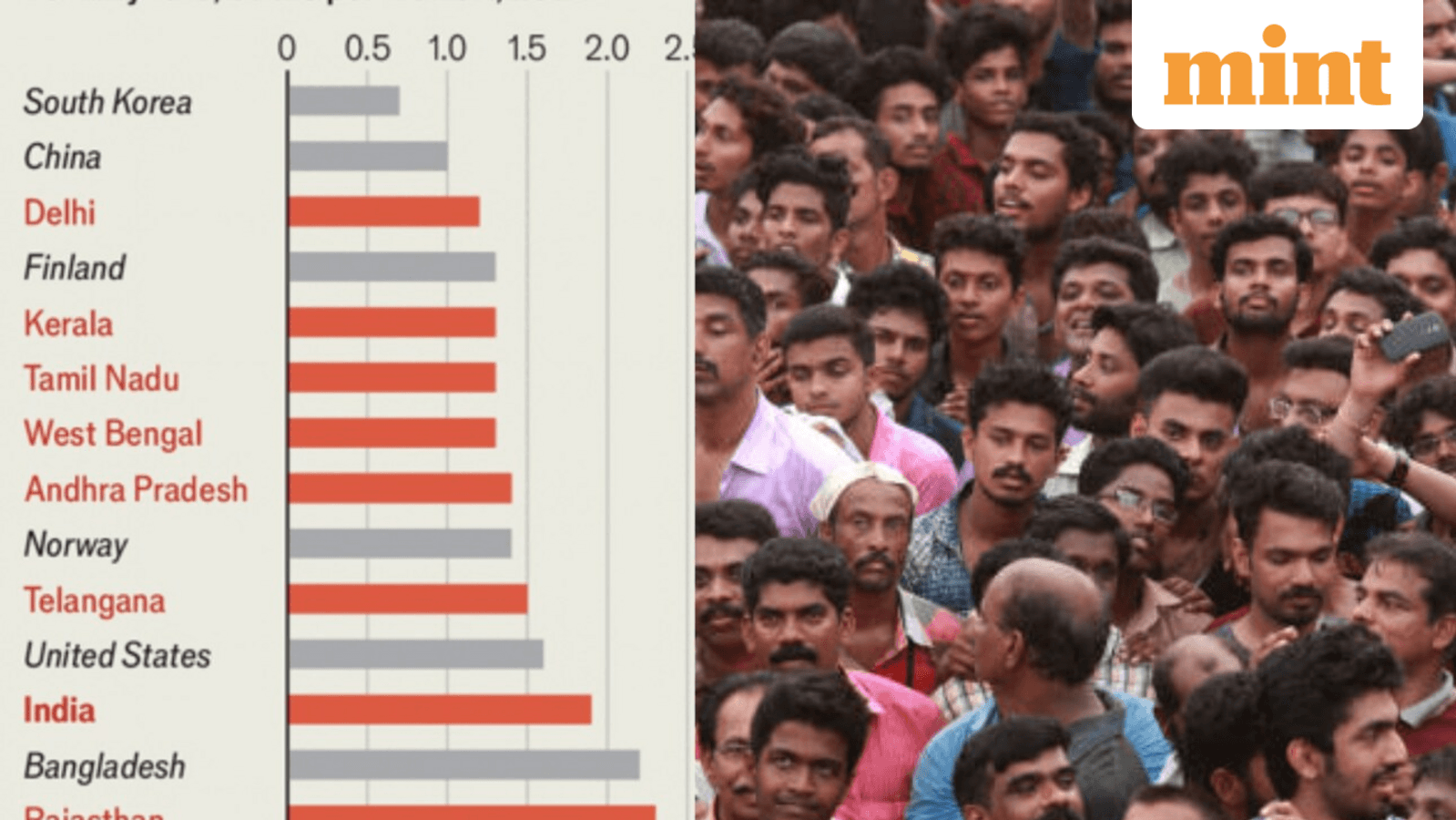
Fresh data from the 2024 Sample Registration System (SRS) report indicates that India's Total Fertility Rate has fallen from 2.1 to 1.9 children per woman. As a result, most states are now below the replacement fertility benchmark of 2.1.Fertility rate falls to 1.9 in India; Elon Musk says birth rate ‘below replacement’India - the world's most populous country with approximately 147.6 crores people - has seen its fertility rate slip below the “replacement threshold”, tech entrepreneur Elon Musk said, citing a report. Reacting to figures shared by AF Post on X, the Tesla and SpaceX chief wrote, “India’s birth rate has fallen below replacement. Among those most educated, India’s birth rate fell below replacement many years ago.”His remarks came in response to reports highlighting a sharp decline in fertility across the country.India's fertility rate drops below replacement levelFresh data from the 2024 Sample Registration System (SRS) report indicates that India's Total Fertility Rate has fallen from 2.1 to 1.9 children per woman. As a result, most states are now below the replacement fertility benchmark of 2.1.Replacement fertility refers to the average number of children a woman must have for a population to sustain itself across generations in the absence of migration.According to the report, only six states — Bihar, Uttar Pradesh, Madhya Pradesh, Rajasthan, Chhattisgarh and Jharkhand — continue to record fertility rates above the replacement level. Delhi registered the lowest fertility rate in the country, with an average of 1.2 births per woman.Why is the replacement level important?Demographers generally regard a TFR of 2.1 as the level required to maintain a stable population over time.When fertility remains below this threshold for extended periods, population growth gradually slows and may eventually decline. Experts warn that such trends can contribute to an ageing society, a reduced working-age population and growing pressure on welfare and healthcare systems.UNFPA points to ongoing demographic shiftIndia's changing population pattern was also highlighted in the United Nations Population Fund's (UNFPA) 2025 State of World Population Report. The agency estimated India's fertility rate at 1.9 births per woman, again placing it below the replacement benchmark.Although India remains the world's most populous country with a population exceeding 1.46 billion, the latest figures suggest the nation is moving into a new demographic phase characterised by smaller families and slower population growth.Population still growingDespite the decline in fertility, India remains the world’s most populous nation. The country surpassed China in 2023 to take the top spot globally and continues to add millions of people each year due to population momentum generated by previous decades of higher birth rates.Experts note that while India’s population is still growing, the sustained decline in fertility suggests that population growth could slow significantly in the coming decades, potentially leading to a shrinking population later this century.About the AuthorKanishka SinghariaKanishka Singharia is a Senior Content Producer at Mint with a passion for news, trends, and the stories shaping the digital world. She specialises in spotting viral narratives by constantly tracking social media platforms and turning them into engaging, reader-friendly stories. Her work ranges from fast-paced breaking updates to sensitive human-interest features, blending speed with clarity. With over four years of experience in news and trend reporting, Kanishka has worked with leading organisations such as Hindustan Times and Times Now. She moves seamlessly between profiling business leaders and telling the stories of everyday people, covering national developments just as effortlessly as the memes and conversations that dominate online culture. She also reports on real estate developments and civic challenges in major urban hubs like Bengaluru,
Prime Minister Modi led a meeting to discuss India's economic growth amid global instability due to the Iran war. Participants reportedly reviewed potential reforms and strategies to strengthen the economy.Prime Minister Narendra Modi chairs a meeting with the members of the Economic Advisory Council (EAC) to the prime minister, in New Delhi. (PMO via PTI Photo) (PMO)Prime Minister Narendra Modi chaired a meeting on Saturday with members of the PM Economic Advisory Council amid Iran war. The discussion centered on ideas and policy steps to strengthen India’s economic growth amid global instability, according to an ANI report. Participants also reviewed potential reforms aimed at improving both ease of living and ease of doing business in the country.The members provided their views on the effects of the West Asia war on India and the wider global economy. The meeting took place against a backdrop of continuing geopolitical tensions, trade uncertainty, and uneven economic growth worldwide.PM Modi's austerity appealPM Modi last month appealed to citizens to support the country’s economic stability by lowering reliance on imported fuel and embracing more sustainable practices, particularly in the context of the West Asia war.He encouraged people to adopt work-from-home arrangements where feasible, reduce fuel usage, avoid international travel for a year, promote Swadeshi goods, cut down on edible oil consumption, shift towards natural farming practices, and limit purchases of gold.To help manage fluctuations in fuel prices, he also advocated changes in transportation habits. He called on citizens to use public transport such as metros more frequently, share private vehicles through carpooling when necessary, rely on railways for freight movement, and progressively adopt electric vehicles to reduce dependence on petrol and diesel.India's economyIndia’s economy exceeded market expectations in the fourth quarter of FY 2025–26, with real GDP expected to expand by 7.8% year-on-year. For the full fiscal year, growth is projected at 7.7%, according to official data released on June 5, the report noted.At constant prices, real GDP for Q4 FY26 is estimated at ₹87.77 lakh crore, up from ₹81.40 lakh crore in the same quarter of the previous year. Nominal GDP for the quarter is estimated at ₹94.65 lakh crore, reflecting a 9.1% increase.For the entire FY 2025–26, real GDP is projected at ₹323.12 lakh crore, compared with the revised estimate of ₹299.89 lakh crore in FY25, marking a growth of 7.7%. Nominal GDP for the year is estimated at ₹346.36 lakh crore, registering an 8.9% rise over the previous year.Gross Value Added (GVA), another important indicator of economic performance, is expected to grow by 7.9% in FY26, with nominal GVA rising by 9.1%. In the fourth quarter, real GVA grew by 7.9%, while nominal GVA increased by 9.9%.The figures indicate that growth was primarily driven by the secondary and tertiary sectors. In FY26, the secondary sector is projected to expand by 8.8% at constant prices, while the tertiary sector is expected to grow by 9.3%.The primary sector recorded a growth rate of 3.2%, with agriculture and fisheries providing the main support.About the AuthorGarvit BhiraniGarvit Bhirani is a journalist based in Gurugram. He is a Deputy Chief Content Producer at LiveMint, where he covers national and international news stories, focusing on accuracy and compelling storytelling for readers. With a total of six years of experience in journalism, he has previously worked with Vaco Binary Semantics for Google, taking on the role of news curation lead, and reported from the field on health, education, and agriculture stories for 101reporters and News9. He has also served as a content editor for entertainment and news media organisations. Garvit holds bachelor’s and master’s degrees in journalism and mass communication from Guru Gobind Singh Indraprastha University and Gurugram University, respectively. Durin

Discussion (0)