
Loading dispatches...
← Return to Newsroomgeneral
Ricky Kej at Expresso: ‘Bollywood music has not broken cultural barriers’
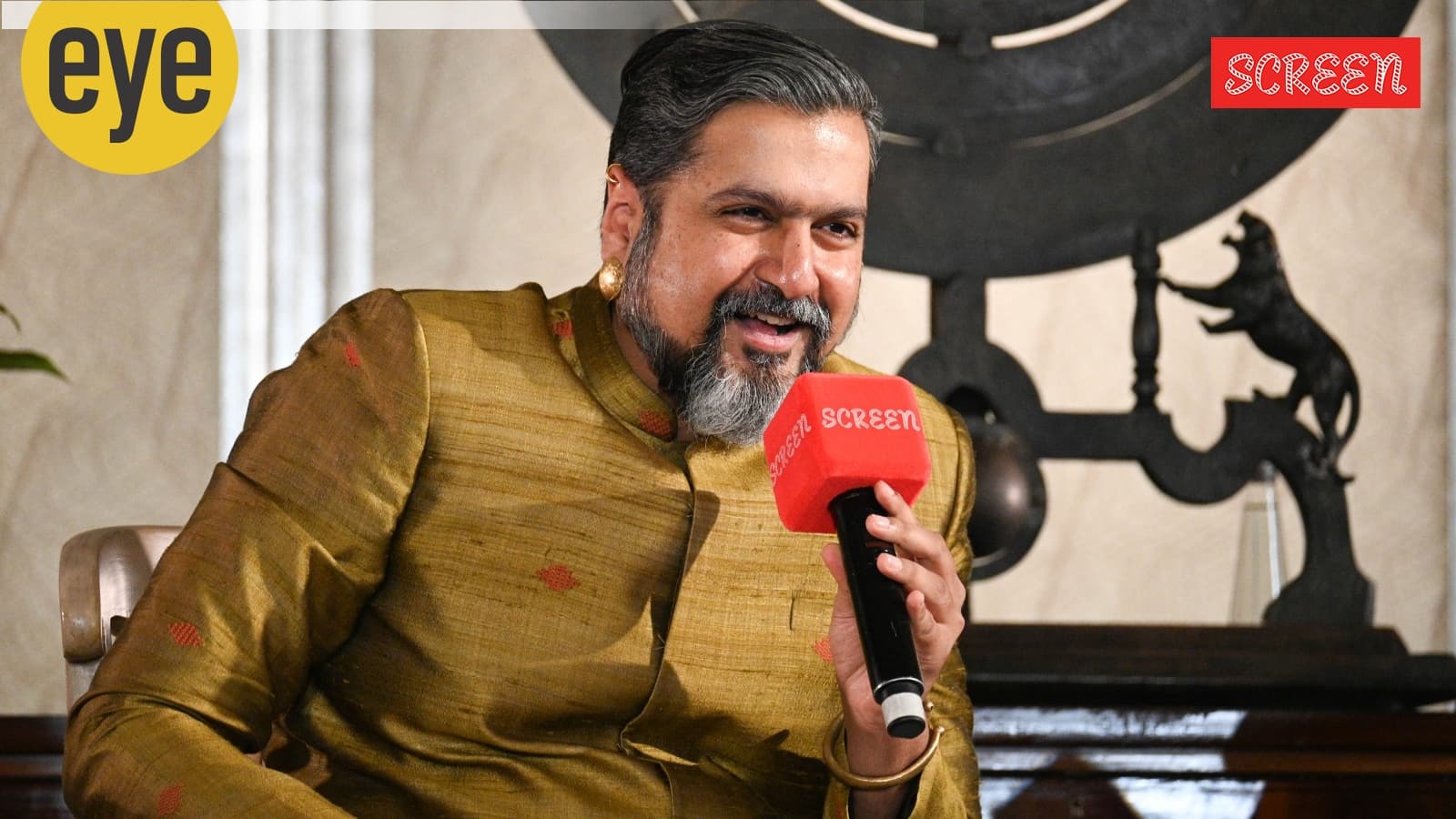
Right after you won your first Grammy, you spoke of the ‘unattainable task’ that it was for an Indian who did niche music. Now that you’ve climbed that summit multiple times, do you see a change in global institutions like the Recording Academy warming up to newer sounds or should artistes not underestimate their vision ?Indian music has been recognised all over the world. It’s just that the kind of Indian music that has been recognised is not the kind of music we ourselves are listening to. In India, film music is predominant. It rules our charts, sound systems and Spotify playlists. But when an Indian composer or a singer goes abroad for a concert, those filling up the stadiums are only people from the Indian diaspora. Bollywood music has gone all over the world but not actually broken cultural barriers; there are probably only a few songs in that area and you can count them on your fingers. The people who have actually broken cultural barriers are the classical musicians. I remember seeing a Ravi Shankar concert when I was 19 in the Bay Area and I was shocked that the demographic of the audience was representative of the demographic of the city itself. That stayed with me. I realised that in India, we’ve got something known as the Ravi Shankar syndrome. Everybody knows who he is, which instrument he played, that he won the Bharat Ratna but can anyone name one of his albums? He has created more than 70. We know him as a personality but we don’t know his music. So much so that a lot of these artistes such as Ut Ali Akbar Khan and Ut Zakir Hussain get more respect outside of India. We ourselves are not appreciating our music.That said, film music for generations, has been a soundtrack to our lives. Did you never want to veer towards it? I was never keen on doing mainstream music. In India, most of the music is either a love song or an item song or a party song. When I tell people I’m a composer, the first question I’m asked is, which film have I composed for. The only kind of music I make is about a strong social or environmental message. A lot of people ask me that why do I not create mainstream music and get that popularity and then use that to make my own music popular. But then my legacy would be defined by that popular music, which would reach far more people than the music I love. I’d rather be lesser known, but for songs that define me. You had a poster of Stewart Copeland, the founder of the British rock band The Police, in your bedroom while growing up. Was it intimidating to ask your idol to collaborate with you? My whole life, I’ve been quite outrageous in my dreams. This was one of them. I won my first Grammy for an album called Winds of Samsara in 2015. For the next seven years, I wanted to follow up. But my touring schedule had become relentless and I couldn’t create new music. Then the pandemic hit and I started making the first pieces for Divine Tides. That is when I realised that I needed a strong collaborator, somebody who I could bounce off ideas with. And I thought why not reach out to Stewart Copeland. At the worst, he was just going to say no. To my astonishment, he loved the music. We ended up spending a year exchanging music remotely, him in Los Angeles, I in Bangalore. We didn’t even meet until a few days before the Grammy ceremony in 2022. Divine Tides stems from your interest in environmental activism. How did your fascination with nature come about? All of my life, I’ve been two things: a musician and an environmentalist. Even before I knew what the meaning of the word environmentalist was, I was one. I grew up in North Carolina — the first six years — and we had a home in the middle of nowhere with nature around. We had a lot of creepy crawlies that would enter our home on a regular basis and while my parents and teachers would tell me to kill these insects or lizards, my question was why did they exist if they were meant to be killed. Now we know that every single species, no matter how seemingly
In present-day Varanasi, where the overlapping strains of temple bells, the azaan and folk and classical traditions are increasingly filtered through hardened ideas of identity and belonging, a not-so-distant memory of shehnai maestro Ustad Bismillah Khan in a musical dialogue with a young BHU professor and violinist N Rajam almost 40 years ago, still evokes the cultural memory of a city somewhat receding from us. A city untouched by modern politics and held together by diverse cultural and musical traditions; the famed Ganga-Jamuni tehzeeb that once imbued into music, language and the fabric of daily life.The texture of that time is captured in a grainy video recording from the ’80s available on YouTube, where one sees Rajam play Maithili poet Vidyapati’s Piya mora baalak (My beloved is a mere boy), on the banks of the Ganga. It is the anguish of a young bride mourning her wedding to a child with no scope of companionship and no place for desire played in Pilu, a fluid raga with longing at the heart of it.For Rajam, born and raised in a Tamil-speaking family in Chennai, this was her ode to the writing and composition of the 15th-century poet/composer still revered in the Purvanchali belt. Khan and tabla giant Pt Kishan Maharaj, sitting on either side of her, listened in sheer delight as Rajam, bent over her violin, took a deep dive into the popular folk piece. But her violin did more than just render a beloved melody. It echoed the quintessential Banarasi lehja, the unhurried grace of its cadence, in turn becoming inseparable from the city she had come to call home then. Khan is heard saying ‘wah’ at regular intervals. He joins her with his shehnai, extending the melodic thread. Khan had heard her play a solo at the university and was struck by the evocative nature of the young violinist’s music. That is when he decided to collaborate with her. N Rajam with Ustad Bismillah Khan“Though he was from a generation above me, Khan saab probably saw that what I was trying to do with the violin was in some ways similar to what he had already done with the shehnai. He had been playing khayal on the shehnai for years by then,” says Rajam, about the wind instrument that was associated with weddings, temples and folk music until Khan put it on the proscenium. “Playing with him, where he would just close his eyes listen, will remain memorable for me,” says 88-year-old Rajam. Khan’s version of Banaras was always at the centre of his affections. He considered it responsible for his music. In Rajam’s playing, he, perhaps, heard his Banaras, which surfaced in the tenderness of every glide, pause and the delicate tonal shifts. This violin could sing. And Rajam’s brilliance lay in transforming the sound of the violin by adapting the technique of a European instrument, which she learned through the grammar of Carnatic music, to the demands of Hindustani vocal music. The result was a complete reimagination of the violin with a gayaki ang (the vocal style), which hadn’t been heard on the instrument before. Because no violinist had done this before her. Rajam’s effortlessness only revealed just how much labour lay beneath the process. In Rajam’s hands, for over seven decades now, the violin has never sounded external to the Hindustani tradition. From complex classical ragas to thumris and kajris, she has absorbed them all into the medium. “Although the violin has been in practice in the south for about 300 years with a highly sophisticated technique, that technique was not sufficient for reproducing Hindustani vocal music on the instrument. I had to work very hard and do a lot of research. Even for a short phrase, I would struggle for months to get it right. The music was not just a reproduction of the existing ocean of Hindustani music; it needed to have life,” says Rajam in a conversation with The Indian Express a day after her lifelong reimagination of the violin won her a Padma Vibhushan, the second highest civilian honour, last month. She was


Discussion (0)