
Loading dispatches...
← Return to NewsroomPolitics
Switzerland’s MSC to acquire 49% stake in Adani’s Vizhinjam port in Kerala for ₹13,220 crore

An MSC vessel arrives at the Vizhinjam International Seaport in Thiruvananthapuram, Kerala. The partnership is expected to boost the potential of the port, including cargo volumes, although the transaction is subject to customary approvals, including regulatory ones. (file) | 397 billion (around ₹13,220 crore).According to a statement issued by Adani Ports and Special Economic Zone Limited (APSEZ) on Tuesday (June 30, 2026), the MSC will make the investment through its container terminal operating and investing arm, TiL. The APSEZ and TiL have entered into an agreement under which MSC Group will invest for 49% interest in Adani Vizhinjam Port Private Limited (AVPPL), the concessionaire for the Vizhinjam port, cementing Vizhinjam’s emergence as a dominant transshipment gateway in the Indian Ocean region.The partnership is expected to boost the potential of the port, including cargo volumes, although the transaction is subject to customary approvals, including regulatory ones.According to Ashwani Gupta, Director and CEO, APSEZ, “Vizhinjam port has emerged as a premier transshipment hub, becoming the first Indian port to earn the unique distinction of crossing 2 million TEUs within 18 months of operations.” The APSEZ is confident that the association will deliver enhanced supply chain efficiencies at a global scale and improve India’s access to key global mature and developing markets,” he said.The strategic collaboration between APSEZ and MSC Group is expected to deliver significant advantages for APSEZ, including greater volume visibility and faster ramp-up ahead of planned expansions, driven by additional cargo volumes. Vizhinjam is also expected to receive a higher share of Bangladesh cargo, largely dependent on competing Southeast Asian transshipment hubs. The collaboration is also expected to strengthen the presence of the port on East Africa trade routes, apart from elevated relay cargo volumes.Expansion onCommissioned in December 2024, the Vizhinjam port is India’s first deep-draft mega transshipment port with 1.6 million TEU capacity. The port is undergoing expansion that is expected to increase its capacity by 3.5 times to 5.7 million TEUs by December 2028.The port features a natural draft of 18-20m, a 2.9-km breakwater, an 800-m berth, and advanced infrastructure, including 8 quay cranes and 24 fully automated yard cranes. As India’s first automated port, Vizhinjam combines cutting-edge container handling systems, and an AI-enabled indigenous Vessel Traffic Management System (VTMS) to drive operational efficiency.In the first year of commissioning, the port handled 1.3 million TEUs and 615 vessels, becoming the fastest Indian port to cross the 1 million TEU milestone. Within 18 months, it surpassed 2 million TEUs and 950 vessels. In June 2026, Vizhinjam also welcomed its 1,000th vessel.The port has also handled over 70 Ultra Large Container Vessels (ULCVs) — the highest among Indian ports — along with 283 vessels exceeding 300 m in length and 98 vessels requiring drafts greater than 16 m. Published - June 30, 2026 11:54 am IST
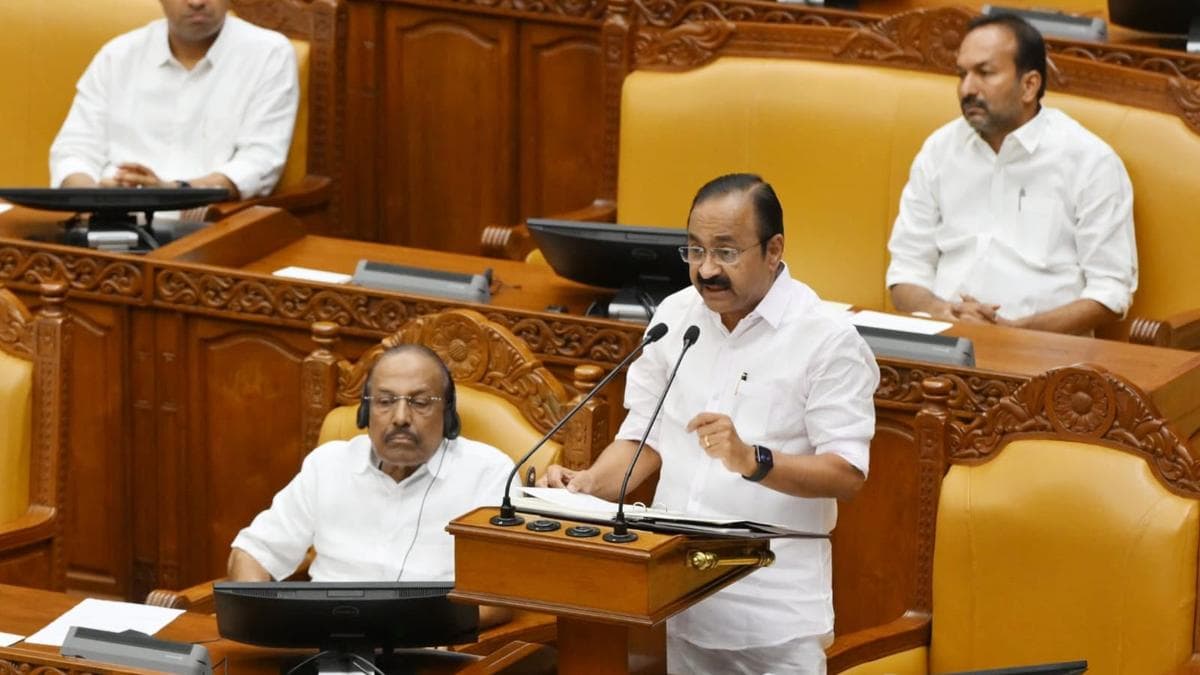
Home News India Kerala Chief Minister says the government is committed to stimulating the economy through broad-based development strategies, attracting large-scale investments across various sectors, mobilising financial resources for the public exchequer, and ensuring the equitable distribution of wealth Updated - June 19, 2026 10:30 am IST Kerala Chief Minister V. D. Satheesan presenting the revised Budget of the UDF government in the State Assembly in Thiruvananthapuram on Friday (June 19, 2026) | D. Satheesan, who also holds the Finance portfolio, is presenting the revised Budget for 2026–27 in the Assembly, pledging to build a “New Kerala” with inclusive growth and sustainable infrastructure development.Citing severe fiscal stress, hidden liabilities, lower remittances and inflation as key challenges before the government, the CM unveiled Mission Samudra to build a port-led economy, elevate the state as a global maritime and economic hub.The government is committed to stimulating the economy through broad-based development strategies, attracting large-scale investments across various sectors, mobilizing financial resources for the public exchequer, and ensuring the equitable distribution of wealth, the CM said.Follow for live updatesKey Updates Anti-ragging measures Focus on girls-friendly campuses, scientific temper Special package announced for Wayanad, Kasaragod and Idukki ₹192 crore earmarked to tackle human-wildlife conflict Rubber MSP raised to ₹250; agriculture sector gets ₹1,535 crore Oommen Chandy health insurance scheme announced with ₹10-crore allocation Budget to lay foundation for 'Puthuyuga Kerala', says Satheesan Kerala Budget Live | Chief Minister V.D. Satheesan presents UDF govt's Revised Budget June 19, 2026 10:30 Fair value of land to be reviewed; ₹5,952 crore for PWDFair value of land in Kerala will be reviewed in view of complaints of discrepancies in the present fair value fixed in various regions. Rs 5,952 crore has been earmarked for the Public Works Department (PWD). Rs 1 crore has been set aside for holding a feasibility study on constructing an elevated corridor to Calicut airportJune 19, 2026 10:24 Makalkoppam project to prevent crimes against womenMakalkoppam project to be launched to focus on preventing crimes against women. More women police officers would be appointed as station house officer in police stations across Kerala. Meanwhile, Rs 10 crore has been earmarked for ‘Operation Toofan’ to bring down narcotic crimes in KeralaJune 19, 2026 10:21 Academic Council to curb political influence in higher educationAcademic Council will formed to prevent excessive political influence on academic issues. An ombudsman mechanism will be introduced in colleges for student grievance redressal. Bridge programmes will be introduced for the benefit of job-seeking graduates.June 19, 2026 10:19 Anti-ragging measuresThe government will pursue strong steps to prevent ragging in campuses. A Sidharthan Student Distress App will be developed and a Sidharthan Anti-Ragging and Student Welfare Act will be introduced. The initiatives are in memory of J.S. Sidharthan, 20-year-old student who allegedly committed suicide at the Kerala Veterinary and Animal Sciences University in Wayanad following brutal and prolonged ragging. June 19, 2026 10:18 Housing scheme for SC/ST community A new housing scheme for the SC/ST community will be implemented. Barrier-free tourism will be promoted to help people with disabilities, says CMJune 19, 2026 10:17 Attracting foreign students via 'Semester in Kerala'A future readiness think tank will be established. Academic tourism will be bolstered by attracting foreign students through a ‘Semester in Kerala’ scheme. Credit transfer will be facilitated among Kerala’s universities to enable student mobility. Steps will be adopted to enhance student diversity in Kerala’s universitiesJune 19, 2026 10:14 Vision 2036

Tamma Srinivasa Reddy’s photography of miners at work has brought him the honour of Master of Australian Photographic Society (MAPS). Photo courtesy: Tamma Srinivasa Reddy | The honour, conferred for his series Risk as Job: The Daily Saga of Artisanal Coal Miners, highlights not only his personal achievement but also the growing global appreciation for Indian documentary work. Mr. Reddy travelled multiple times in the Srirampur area of Singareni Collieries Company Limited (SCCL) underground mines to shoot the pictures.The Australian Photographic Society described the award as recognition of “outstanding skill, talent and creativity in photography.”For Mr. Reddy, it marks another milestone in a career spanning more than four decades, during which he has won dozens of coveted awards. His coal miners’ series carries moral weight, shifting attention from coal as an industrial resource to the unseen lives of those who extract it. Tamma Srinivasa Reddy’ Historian Dr. K.H.S.S. Sundar, who has followed Mr. Reddy’s work closely, noted that coal is usually discussed in terms of energy and growth, while miners remain hidden by dust and necessity. “Srinivasa Reddy’s camera specifically captures this overlooked world,” he said, adding that his images focus on hardworking bodies, weathered faces, ritual gestures, and quiet landscapes that rarely enter public view.Mr. Reddy described the recognition as positioning his work within a broader global dialogue on visual artistry. He recalled the challenges of photographing miners, pointing out that coal mines offer neither decorative lighting nor familiar scenes. “Photographing miners involves balancing development with human resilience. A dedicated photographer must avoid both pity and romanticising,” he explained, stressing that his aim was to let the dignity of labour emerge without turning hardship into spectacle. Tamma Srinivasa Reddy’s photography of miners at work has brought him the honour of Master of Australian Photographic Society (MAPS). | S. Vijay Kumar, Social Anthropologist placed Mr. Reddy within a generation of photographers shaped by discipline, patience, and extensive travel rather than digital excess. Over the years, he has documented rural life, tribal communities, religious gatherings, working‑class environments, cultural traditions, and vulnerable regions. His Fellowship of the Royal Photographic Society in the UK in 2021 already underscored his commitment to social causes, particularly when he risked his life during the COVID‑19 pandemic to document the functioning of democratic institutions and frontline healthcare workers in India.Dr. Sundar noted that by honouring Mr. Reddy, the Australian Photographic Society has acknowledged the quiet moral power of Indian documentary photography. His recognition affirms that art can be both local and universal, rooted in Andhra Pradesh yet resonating across continents. For India, it is another reminder that its documentary tradition continues to shape global conversations on visual artistry. Published - June 18, 2026 04:54 pm IST
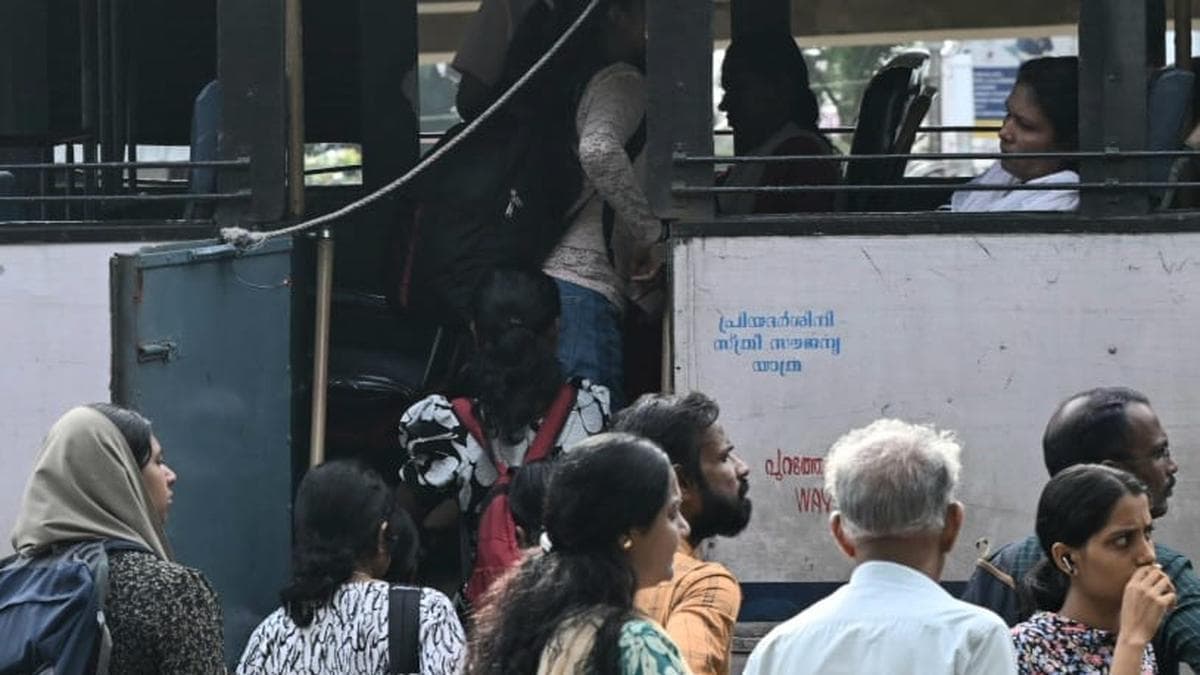
Commuters boarding a KSRTC bus in Kochi on Monday (June 15, 2026) morning. The scheme will cover around 3,125 ordinary buses operated by the KSRTC in the current phase. | Vibhu Billed as a significant step towards women’s empowerment, the Kerala government on Monday (June 15, 2026) launched its ambitious flagship ‘Priyadarshini’ free travel scheme for all women and transgender persons on ordinary buses operated by the Kerala State Road Transport Corporation (KSRTC).Chief Minister V.D. Satheesan inaugurated the scheme at the Thampanoor Central Bus Station around 9.30 a.m. The inaugural journey carrying the Chief Minister and other dignitaries from the bus station to the Secretariat premises was operated entirely by women crew.The scheme will cover around 3,125 ordinary buses operated by the KSRTC, although not all of them are currently in service due to operational constraints. It is expected to have a far-reaching impact on women from diverse social and economic backgrounds across the State.Under the scheme, women and transgender persons can travel free of charge on seven categories of KSRTC ordinary services: ordinary, city ordinary, limited-stop ordinary, fair-stage ordinary, town-to-town, point-to-point, and Gramavandi services. Ahead of the launch, stickers were affixed to eligible buses to help passengers identify the services under the scheme.Substantial financial burdenOne of the five guarantees promised by the United Democratic Front (UDF) in its election manifesto, the scheme is expected to impose a substantial financial burden on the cash-strapped KSRTC. However, the Chief Minister has assured that the State government will provide special financial support to compensate the corporation for the expenditure incurred.According to preliminary estimates, the daily cost of implementing the scheme on ordinary services alone is expected to be around ₹2 crore. The exact financial liability, however, will be assessed after analysing ticketing data generated following the rollout.Expansion of benefitsDuring the initial phase, women and transgender passengers will be allowed to travel free of charge on ordinary bus services for the first 100 days. Following a review of the scheme’s performance, the government plans to consider extending the benefit to other categories of services, including fast and superfast buses.The State government views the initiative not merely as a welfare measure but also as an economic stimulus. Officials estimate that the scheme could reduce women’s travel expenditure by 15% to 25%, enabling greater disposable income that could, in turn, boost economic activity.Women in southern Kerala, particularly in Thiruvananthapuram, are expected to benefit significantly from the scheme. The region currently has around 687 operational ordinary buses, while the southern districts together account for 1,268 buses, making them among the largest beneficiaries of the initiative. Published - June 15, 2026 09:58 am IST
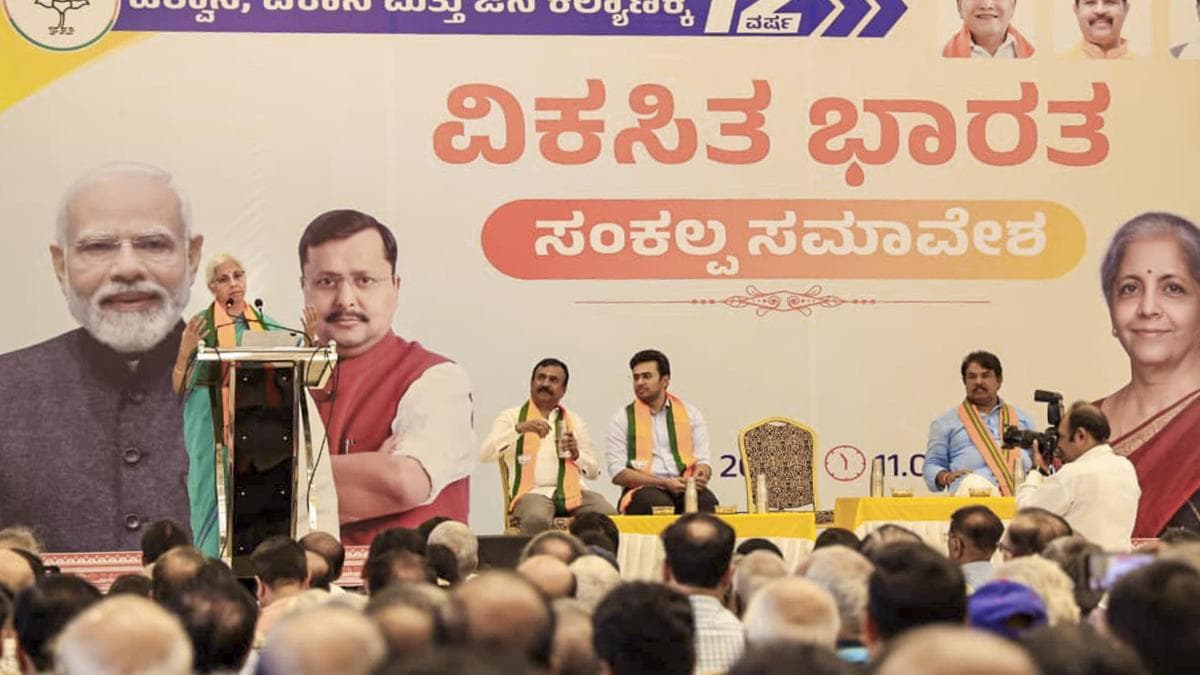
Union Finance Minister Nirmala Sitharaman on Sunday (June 14, 2026) said fluctuations in the rupee against the US dollar are driven by multiple global and domestic factors, including geopolitical uncertainties, foreign capital movements and India's import dependence on crude oil, fertilisers and gold.She underlined that the Reserve Bank of India (RBI) intervenes only to curb excessive volatility and not to maintain a fixed exchange rate.Addressing reporters at Devanahalli near Bengaluru during a programme marking 12 years of Prime Minister Narendra Modi-led NDA government, Ms. Sitharaman said exchange rates were influenced by a range of external developments and market conditions."Whenever there is a severe fluctuation or volatility, the Reserve Bank intervenes in the market not to fix a price. Only to stop any kind of fluctuation. The Reserve Bank comes into picture, stabilises it, and comes out, for which it uses foreign exchange from the Reserve. So it does it sparingly," she said.The Finance Minister said factors such as U.S. Federal Reserve policy decisions, global currency movements and foreign investment outflows affected the rupee."The rupee and its fluctuations are because of various factors: uncertainties outside, the U.S. Fed talking about increasing or decreasing interest rates in their country, the Japanese yen crashing against the dollar and the Korean won crashing. So there are several reasons which determine the exchange rate between countries and currencies," she said.Ms. Sitharaman said foreign institutional and direct investors booking profits and shifting funds due to developments in the U.S. also impacted reserves and currency movements.She added that India's need to import crude oil, fertilisers and gold required substantial dollar payments, making foreign exchange management critical.Highlighting fertiliser subsidies, she said, "Since the time of Covid, we have been giving a bag at ₹300. After Covid, when we imported it from foreign countries, the same quantity, which is one bag, touched ₹3,000, which means per farmer, per bag, we are giving anywhere between ₹2,700 as subsidy."On allegations by the Karnataka Government that the Centre was not providing the state's due share of funds, Ms. Sitharaman said allocations were determined by the Finance Commission and not by the Union government."Who sets the principle? Not PM Modi, not Government of India. There is a Finance Commission which goes around all states and decides on the basis of some metrics. That once decided, for the next five years, come what may, the central government will have to pay the state," she said.Rejecting the argument that states should receive back all the taxes they contribute, she said, "If Bengaluru, Karnataka contribute and I need to get all the money back, the principle doesn't work like that."On the economy, Ms. Sitharaman said official data and global institutions consistently showed India as the fastest-growing major economy."Repeatedly last five, six years, India is the fastest growing economy. And this year, when the GDP numbers came, every sector right from manufacturing to agriculture, service, logistics, transport, every sector has shown substantial growth," she said.On employment, Ms. Sitharaman said unemployment was declining, according to official surveys and pointed to government initiatives such as internships, skilling and AI-based training programmes.On state guarantee schemes, she said welfare promises should be backed by adequate fiscal resources."If your budget has such resources to give, state it in the budget, discuss in the Assembly, and please give. But don't give if you don't have the money and then blame the Centre saying, the Centre is not giving me money," she said.She urged Karnataka to utilise central budget provisions for cold storage and warehousing projects through Farmer Producer Organisations, noting that no proposals had yet been received from the State.Ms. Sitharaman also credited Prime Minis
More than 60,000 business-to-business (B2B) meetings were facilitated by the second edition of travel and trade event Global Travel Market (GTM 2026), as the three-day programme concluded here on Saturday.Around 2,000 domestic buyers and 100 international buyers participated in the mart, which featured 228 stalls representing leading tourism and hospitality stakeholders from across India. The B2B travel and trade exhibition was organised by South Kerala Hoteliers Forum (SKHF), Thiruvananthapuram Chamber of Commerce and Industries (TCCI), Thavass Ventures, and Metro Mart, in association with Kerala Tourism and India Tourism.Minister for Tourism and Culture P.C. Vishnunadh inaugurated GTM 2026 and Transport Minister C.P. John opened the B2B meet. Metro Expedition-GTM Tourism Awards 2026 were also presented during the inaugural ceremony. Andhra Pradesh was bestowed with the prestigious Best Tourism Promotion State Award during the event. Andhra Pradesh Tourism Minister Kandula Durgesh received the award. The next edition of GTM will be hosted in Andhra Pradesh, said the organisers. Published - June 07, 2026 06:58 pm IST

Discussion (0)