
Loading dispatches...
← Return to NewsroomWorld
Iran and Israel say they will pause strikes but warn of retaliation if ceasefire breached again
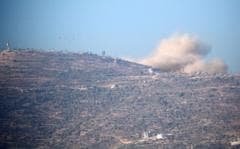
Israel's Prime Minister Benjamin Netanyahu said on Monday that his country was holding fire "at the moment". But he stressed that the struggle against Iran and Hezbollah was "not finished".It came hours after Iran's armed forces said it had stopped operations following the delivery of a "painful response" to Israel. It promised "more severe and crushing measures" if Israel carried out more strikes, including in Lebanon, where Israeli forces are fighting the Iran-backed group Hezbollah.Tehran launched missiles at Israel on Sunday in retaliation for a strike on Beirut.Israel responded in the early hours of Monday morning by targeting what it said were military sites in the Islamic Republic.In a call with the BBC, US President Donald Trump denied that Netanyahu had defied his wishes by launching strikes."No, no. They had already gone. They had already gone. They were already on their way," he said.The White House confirmed that Trump had called Netanyahu to discuss the crisis. An Israeli official said Israel had halted its strikes at his request.Asked how he had persuaded Netanyahu to stop attacking Iran, Trump responded: "All I did is say, 'We have to use sense'. We're very close to signing a very powerful deal, a very good deal."No nuclear weapons, no nothing. You know, we have to use a lot of common sense. It was fine."Trump also said of Netanyahu: "If I tell him to do something, he does it."The president told US news outlet Axios he had told Israel's prime minister he might find himself fighting alone if he went back to war with Iran."I said, 'Bibi, you better be careful, or you will be on your own very soon,'" Axios quoted him as saying.In his televised statement on Monday, Netanyahu said he had told Trump that "Israel has a full right to self-defence, and we are exercising it as required".Sunday's exchange of fire had continued on Monday morning, with Iran launching more missiles towards Jerusalem and central and southern Israel, according to Israeli authorities. The Israel Defence Forces (IDF) said a second wave of air strikes had targeted a petrochemical complex in the south-western Iranian city of Mahshahr, where an Israeli military official said chemicals used for ballistic missiles were produced.Iran's Emergency Organisation chief, Jafar Miadfar, told Tasnim news agency that the strikes injured 14 people in Mahshahr and one in Tehran.Casualties were also reported in Lebanon, where the health ministry said five people had been killed and eight wounded in an Israeli strike on Tyre in southern Lebanon on Monday. The Red Cross said four of its rescuers were among the injured.Hezbollah, meanwhile, said it had fired a rocket barrage at a group of Israeli army vehicles and soldiers in southern Lebanon on Monday morning.Trump publicly told both countries to "immediately stop 'shooting'" because they were jeopardising negotiations between Washington and Tehran on a deal to end the regional war."Israel and Iran... are looking to do an immediate CEASEFIRE! Final negotiations on 'Peace' are proceeding, subject to ignorance or stupidity getting in its way," he wrote on Truth Social.The war began on 28 February, when Israel and the US launched a joint attack on Iran, killing Supreme Leader Ayatollah Ali Khamenei and several other top officials.The hostilities spread quickly across the Middle East, as Iran retaliated by launching missiles and drones at Israel and Gulf Arab states hosting US military facilities. Iran also effectively blocked the crucial Strait of Hormuz waterway, causing a surge in the price of oil.Lebanon was drawn into the conflict on 2 March, when Hezbollah launched rockets into Israel in retaliation for Khamenei's

After escalating strikes, Israel and Iran signal end to attacks The Washington Post Trump Struggled to Rein In Netanyahu’s Strikes on Iran WSJ Trump navigates an Israel and Iran on edge NBC News Israel, Iran return to ceasefire agreement after Trump demands end to 'shooting' Fox News Trump says Netanyahu will have ‘no choice’ but to accept a deal with Iran Financial Times

A projectile streaks through the sky over central Israel during an Iranian missile attack, Sunday, June 7, 2026. Ohad Zwigenberg/AP hide caption toggle caption Ohad Zwigenberg/AP DUBAI, United Arab Emirates (AP) — Israel launched airstrikes early Monday targeting central and western Iran in response to missile fire from Tehran, attacks that threatened to drag the wider Middle East back into a regional war. Monday marked the 100th day of the Iran war, launched Feb. 28 when Israel and the United States killed Supreme Leader Ayatollah Ali Khamenei and other senior Iranian leaders. The war raged until reaching a nominal ceasefire on April 8, but a permanent end to the hostilities have been challenged by Iran's chokehold on the Strait of Hormuz, through which a fifth of all oil and natural gas traded once passed in peacetime, as well as fighting between Israel and the Lebanese Shiite militia Hezbollah. With global energy supplies threatened, Iran still holding a vast stockpile of highly enriched uranium and even Yemen's Houthi rebels apparently getting involved in the fighting Monday, the risks of the war fully erupting again appears to be rising. Israel strikes Iran Iranian state television reported the sound of explosions being heard in Isfahan, Karaj, Tabriz and Tehran, without immediately elaborating. A witness in Tehran described hearing at least one large blast somewhere to the west of the country's capital city. Iran closed the airspace around Tehran's Imam Khomeini International Airport, the country's main airfield, after the Israeli attack. Sirens sounded across Israel on Monday after its military said a missile launched from Yemen targeted the country, without elaborating. Israel's rescue services said there were no reports of casualties or impacts from the launch from Yemen. Yemen is home to the Iranian-backed Houthi rebels. The Houthis have fired missiles at Israel during the Israel-Hamas war and later, but haven't been fully involved in the Iran war. The Houthis did not immediately claim the attack, though it can take them hours or even days to acknowledge their assaults. In Iran, officials offered no details on what had been struck, nor any damage information. Iran's paramilitary Revolutionary Guard said that Israel used air-launched ballistic missiles in its attack Monday morning, without elaborating. The Israeli military at dawn in Iran issued a short statement as the strikes started: "A short while ago, the Israeli Air Force struck military targets belonging to the Iranian terror regime in western and central Iran." It did not elaborate. In Saudi Arabia, missile alert sirens sounded Monday morning in an area home to an air base that hosts U.S. forces. Saudi state media reported the alert around its Al Kharj governorate, home to Prince Sultan Air Base. The alert came after Israel's strikes on Iran. Saudi Arabia shortly after said the missile danger in the area had passed, without elaborating. Trump says 'I call the shots,' not Israel The White House did not respond to messages about the strikes and whether they were done in coordination with the U.S. A senior U.S. official on Sunday said U.S. President Donald Trump had called Israeli Prime Minister Benjamin Netanyahu to urge him not to retaliate immediately for the Iranian missile attack. The official, who spoke on condition of anonymity to describe a private phone call, said that Trump believed he had convinced Netanyahu to wait. Trump "got Bibi to hold off for the time being," the official said. The official would not offer any other details of the call, and there was no immediate comment from Netanyahu's office. For days, negotiations between Iran and the United States over the fragile ceasefire in the war had been stalled by the fighting between Israel and the Lebanese Shiite militia Hezbollah. Israel now occupies southern Lebanon and had moved into areas of the country it hadn't held in a quarter century — leading to fears about them further
Live Updates: Iran Fires Missiles at Israel for First Time Since April Cease-Fire The New York Times Trump tells Axios he will ask Netanyahu not to strike back at Iran Axios Trump says he will press Israel to hold back after Iran retaliates for Beirut attack KSL News Iran Fires Waves of Missiles at Israel After Israeli Airstrike on Beirut WSJ Fragile ceasefire in jeopardy as Iran reportedly fires first missiles at Israel CNBC

NewsFeedIranian media has released video showing missiles being launched towards Israel, while videos captured incoming missiles making impact in northern Israel. Iran says it’s a response to Israel attacking Beirut in violation of a US-brokered ceasefire in Lebanon.Published On 7 Jun 2026
NewsFeedVideos show missiles over Israel as the Israeli military says Iran launched a new wave of attacks. The escalation follows a deadly Israeli strike on Beirut, with Iran warning it would abandon negotiations and return to ‘direct confrontation’.Published On 7 Jun 2026



Discussion (0)