
Loading dispatches...
← Return to Newsroomgeneral
Anthropic blackout episode shows that frontier AI needs global governance

Given the transformative and borderless nature of AI, these complex issues cannot be resolved by any one country acting alone. 3 min readJun 20, 2026 06:50 AM IST First published on: Jun 20, 2026 at 06:50 AM IST The US government’s directive requiring Anthropic to suspend access for foreign nationals to its AI models, Fable 5 and Mythos 5, has sparked a wider debate over the development and deployment of artificial intelligence and raised concerns across the world. Calls for technological sovereignty are growing louder, with national worries increasing about the implications of a single government being able to restrict access to the most advanced AI systems without consultation or transparency. Equally pressing are concerns about the risks associated with deploying such frontier models in the absence of independent oversight and a robust global governance framework. The demand for a credible and robust regulatory framework is also gaining momentum, with even industry leaders making the case for stronger oversight. A few days ago, Anthropic CEO Dario Amodei argued that “it is time to go beyond transparency to more serious and binding regulation of AI”. While the current issue reportedly stems from concerns about the circumvention of existing safeguards, the manner in which the decision has unfolded raises deeper questions. As Anthropic itself noted, the directive “did not provide specific details of its national security concern”. The fundamental question is: Who gets to decide access to frontier AI models? Should such decisions rest with governments, which have previously used chip export controls to restrict access to critical AI hardware, or with executives of private companies, whose decisions may be shaped by commercial and strategic considerations? What is needed is a transparent framework built on clearly defined principles and procedures. In fact, even Amodei has argued that frontier models “should be required to go through technical testing and auditing, and their release should be blocked or reversed as a threat to public safety if they do not meet high standards of safety”. He recommended that testing be carried out “by a qualified third party”.Given the transformative and borderless nature of AI, these complex issues cannot be resolved by any one country acting alone. They must be negotiated at the global level through a governance architecture built on broad consensus and inclusive participation. All stakeholders need a seat at the table. India, with one of the world’s largest AI user bases and vast amounts of data that contribute to the value and capabilities of global AI systems, is a critical stakeholder in this debate. It must play an active role in shaping the international regulatory framework that will govern AI’s future.

Updated: Jun 14, 2026 08:22 AM IST Vehicles zip along the Coastal Road on the Bandra-Worli Sea Link. Meanwhile, Mumbai's dealing with a hot and humid Tuesday afternoon, with haze hanging in the distance. (Express Photo by Amit Chakravarty 05-05-26, Mumbai) The Supreme Court on Thursday effectively removed the final hurdle to the development of the 130-acre public open space along Mumbai’s Coastal Road South, allowing work on the promenade and allied amenities to proceed with certainty while noting that ticketed attractions on up to 15 per cent of the total area. The court directed the Brihanmumbai Municipal Corporation (BMC) to consider Reliance Industries’ master layout plan in accordance with its earlier orders, paving the way for the development of what is expected to become one of Mumbai’s largest waterfront public spaces.Reliance Industries, which was appointed by the BMC to landscape and maintain the reclaimed seafront land under its Corporate Social Responsibility (CSR) initiative, had approached the court after formal approval to its revised layout plan remained pending. The company through advocate Shardul Singh argued that the delay was holding up the project and was against public interest. Reliance stated that while it wrote to BMC on May 18 seeking its in-principle approval for modified Master Layout, its landscaping committee discussed that SC’s approval for commercial or ticketed activities was required. Dismissing Reliance’s application, a bench of Justices Prashant Kumar Mishra and Atul S Chandurkar noted that despite the Landscaping Committee directing that the proposal be placed before higher authorities, “in the absence of the so-called approval by the Supreme Court, the matter has not proceeded further.” The bench ordered: “In view of the above and since there is a tentative approval of the Layout Plan by the BMC, we direct that the Master Layout Plan shall be considered by the BMC without violating this Court’s earlier order dated January 12, 2026.” During the hearing, Reliance informed the court that the vast majority of the reclaimed land — including promenades, gardens, parks, maidans, cycle tracks and jogging trails — would remain freely accessible to the public. Only a limited portion would host ticketed “iconic” attractions, it said, with fees intended to cover operation and maintenance costs. The court took on record Reliance’s assurance of capping the area that could be used for such ticketed attractions at 15 per cent of the total open space.Story continues below this ad Order would enable the development of ancillary amenities: BMC official Speaking to The Indian Express, a senior BMC official said the order would now clear the way for the development of ancillary amenities that had remained in limbo pending judicial clarity. “After the order of the Supreme Court, the issue of ancillary activities and amenities which are being developed alongside the open space will be resolved. These amenities will encompass facilities with minimum access fees,” the official said. The 130-acre stretch, created as part of the Coastal Road South project, is set to become one of Mumbai’s largest new public waterfront spaces. Once developed, it will include parks, gardens, cycle tracks, promenades and recreational amenities along the seafront.Story continues below this ad Concerns about commercialisation of the reclaimed land had previously reached the Supreme Court through a plea alleging the risk of residential and commercial development on the site. In January, the court dismissed those fears, calling the apprehensions “unfounded” and the plea “devoid of any merit.” The court had on January 12 clarified that strategic development around the coastal road “is essential for its beautification and for ecological enhancement for the inhabitants”, but added that “no residential and commercial development for sale or lease of the said property shall be permitted.” It had said the area “ought to be accessib
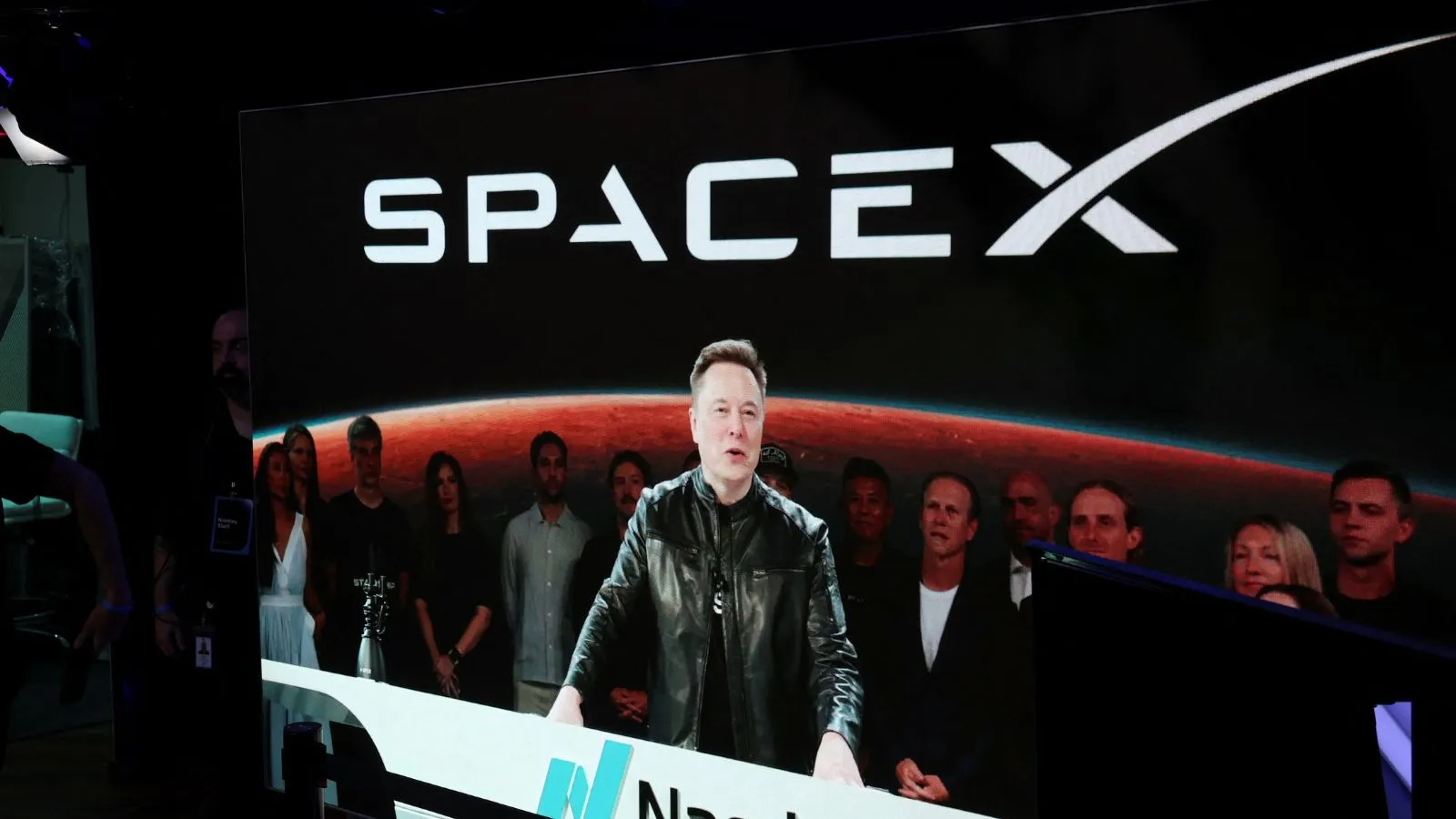
NewsWorldHow SpaceX's blockbuster IPO made Musk world's first trillionaire and what it means The strong debut pushed the company’s valuation to roughly $2.1tn, making it one of the most valuable firms in the world. 4 min readJun 13, 2026 02:55 PM IST First published on: Jun 13, 2026 at 02:54 PM IST Founder, CEO, Chairman, and Chief Engineer of SpaceX, Elon Musk, speaks via videolink on the day of SpaceXs initial public offering (IPO) at the Nasdaq MarketSite in New York City, June 12, 2026. (REUTERS) Elon Musk has become the world’s first trillionaire after SpaceX’s record-breaking stock market debut pushed the rocket maker’s valuation past $2 trillion, underscoring Wall Street’s willingness to reward ambitious technology bets despite limited profitability. The long-anticipated initial public offering (IPO) marked a historic moment for both the aerospace industry and global markets, nearly 25 years after SpaceX was founded as a private company.How did SpaceX’s IPO unfold? SpaceX began trading at $150 a share, significantly above its pre-open price, and quickly rose to as high as $176 before closing at around $160, a jump of more than 19 per cent. The strong debut pushed the company’s valuation to roughly $2.1 tillion, making it one of the most valuable firms in the world. At Nasdaq in New York, executives rang the opening bell as “Rocket Man” played, underscoring the symbolic moment for the company and the wider space industry.Story continues below this ad “It is certainly hard to believe that a little company that started in a warehouse… is now going public with the largest IPO ever,” Musk said at SpaceX headquarters. Why did this make Elon Musk a trillionaire? Musk’s vast stake in SpaceX, alongside his holdings in Tesla and other ventures, meant that the surge in share price dramatically boosted his net worth. According to estimates cited by the BBC and Bloomberg, his wealth crossed $1 trillion, reaching around $1.1 trillion by the end of trading. Musk’s fortune is largely tied to stock holdings rather than cash, meaning it fluctuates with market sentiment.Story continues below this ad Just a few years ago, in 2020, Musk’s net worth stood at about $28 billion. Since then, it has surged alongside the rising valuations of Tesla and SpaceX, despite periods of volatility linked to tech market downturns and political developments. What does ‘one trillion dollars’ actually mean? The scale of Musk’s wealth is difficult to comprehend. One trillion dollars is: 1,000 times one billion More than the GDP of most countries Larger than the annual budgets of many governments Reports note that only a small fraction of Musk’s wealth is held in cash, with most tied up in company shares and assets. Why is SpaceX going public now? Musk has said the IPO is aimed at raising capital to fund ambitious long-term goals, including space exploration and building human settlements beyond Earth.Story continues below this ad “Our mission is to make life multiplanetary… and extend the light of consciousness to the stars,” the company said in its investor prospectus. The listing also comes amid a broader wave of expected IPOs in the artificial intelligence sector, with major firms preparing to enter public markets at high valuations. How strong is SpaceX financially? Despite its massive valuation, SpaceX is not yet profitable. The company reported revenue of about $18.7bn last year, alongside an operating loss of $4.3bn. This highlights a key contrast with established tech giants, which generate significantly higher revenues and profits.Story continues below this ad Still, investor enthusiasm reflects confidence in SpaceX’s long-term potential — from satellite internet services like Starlink to AI ventures and rocket technology. What does this say about global wealth trends? Musk’s rise reflects a broader shift in global wealth, with technology entrepreneurs dominating the ranks of the world’s richest individuals. A decade ag
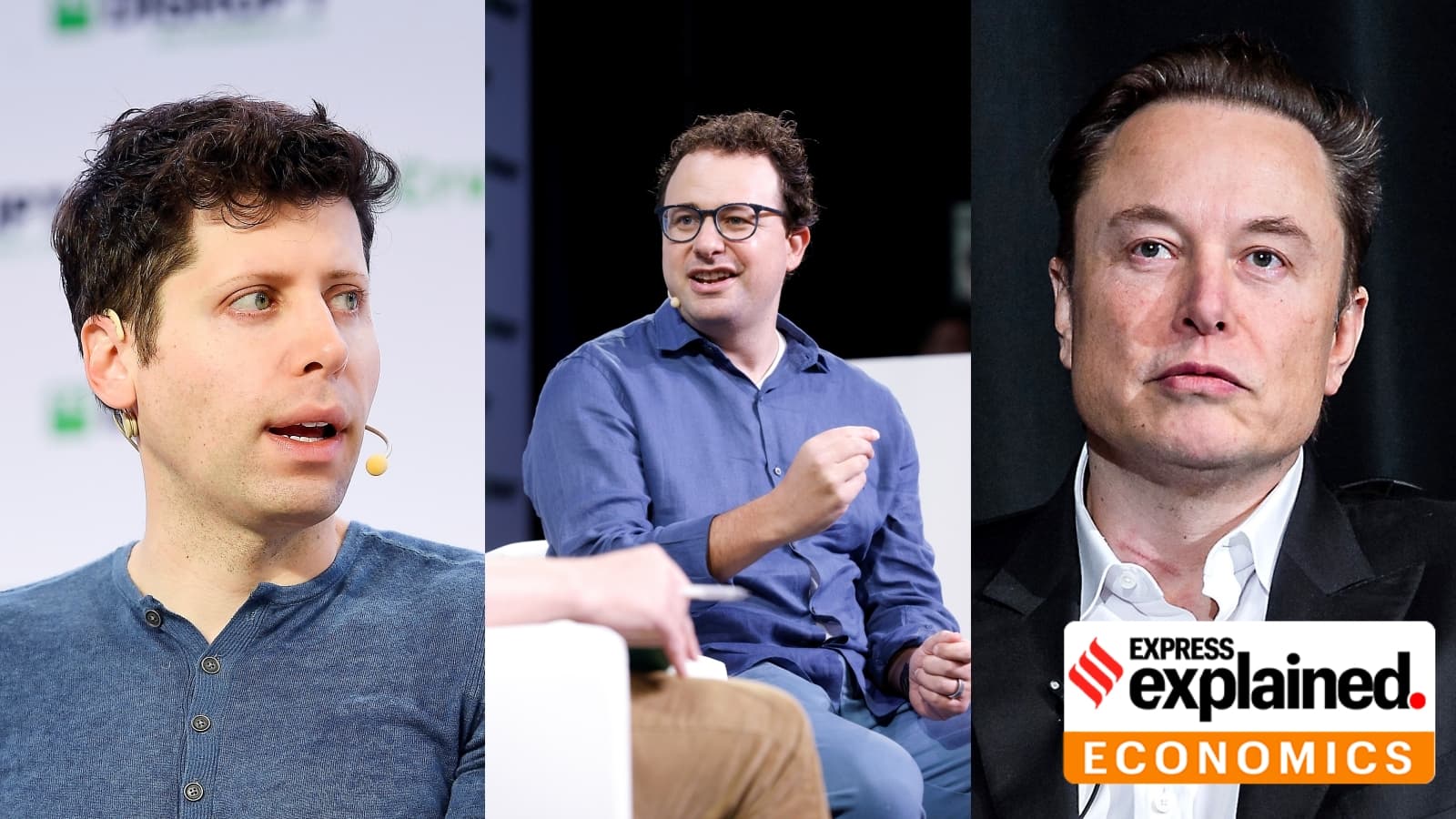
New DelhiJun 10, 2026 06:06 AM IST OpenAI's Sam Altman, Anthropic's Dario Amodei, and SpaceX's Elon Musk. The IPOs are likely to draw intense interest from investors globally who, until now, have largely watched the AI boom from the sidelines. Photo: Wikimedia Commons Within days of each other, two of the world’s most closely watched artificial intelligence (AI) companies in Anthropic and OpenAI have confidentially filed paperwork for public listings in the US, setting the stage for what could be some of the largest and most hotly anticipated technology initial public offerings (IPOs) in history. Elon Musk’s SpaceX is also gearing up for what could be the biggest IPO ever attempted, in terms of valuation. The offerings are likely to draw intense interest from investors globally who, until now, have largely watched the AI boom from the sidelines. Much of the value created by the rise of generative AI has accrued to private investors, venture capital firms, and strategic backers such as big technology companies. Public listings by the companies building the foundational models themselves would offer retail and institutional investors a rare opportunity to directly participate in what many see as the defining technological shift of the decade, even as concerns over a potential bubble around AI remain.Anthropic, fresh off a $65-billion funding round that valued it at roughly $965 billion, has already begun the process, while OpenAI has followed with its own confidential filing and is targeting a valuation that could touch the $1-trillion mark. SpaceX is seeking a valuation of around $1.75 trillion. Yet, alongside the excitement lies a growing debate over whether private market valuations have raced ahead of business fundamentals. With investors pouring unprecedented sums into AI and frontier technology companies, some analysts have cautioned that expectations embedded in current valuations may prove difficult to justify. Here’s why some are cautious around lofty AI-linked valuations, and how Indian investors – who are willing to bet on touted AI gains – can participate in these upcoming IPOs. Concerns around ‘AI-washing’ Analysts at the investment research company Morningstar have valued SpaceX at roughly $780 billion — less than half its IPO target — arguing that investors may be placing overly optimistic bets on future growth and unproven businesses linked to AI. Morningstar has also questioned the economics of some of the company’s AI ambitions and said the market may be getting ahead of fundamentals. If the company achieves the valuation target of about $1.75 trillion, it would surpass even Saudi Aramco’s 2019 debut as the world’s largest IPO.Story continues below this ad Founded in 2002, SpaceX has evolved from a rocket launch startup into one of the world’s most influential technology firms, spanning space transportation, satellite internet, and AI infrastructure. Of the company’s total addressable market, which it pegs at $28.5 trillion, about $26.5 trillion is linked to AI. There are echoes of Tesla in the debate surrounding SpaceX’s valuation. When Tesla went public in 2010, sceptics argued that investors were paying a steep premium for a company that had yet to prove it could scale production or generate sustained profits. Yet Tesla ultimately justified much of that optimism by reshaping the global automotive industry and becoming one of the world’s most valuable companies. The key difference, though, is that Tesla’s valuation debate centred on a tangible product and a clearly identifiable market opportunity. In SpaceX’s case, critics argue that a significant portion of its proposed valuation rests on more speculative assumptions around Starlink’s future growth and the economics of AI-linked businesses. How to invest in SpaceX IPO, other foreign IPOs Indian retail investors can participate in SpaceX’s upcoming IPO, but the process isn’t as straightforward as investing through a demat account in the Indian
NewsWorldOpenAI files for US IPO after Anthropic as AI giants head to public markets The IPOs of Anthropic and OpenAI would crystallize a transformative period for the technology industry and global markets. 5 min readJun 9, 2026 06:48 AM IST First published on: Jun 9, 2026 at 06:48 AM IST Sam Altman at the US District Court in Oakland, Calif. (Photo: AP) ChatGPT maker OpenAI confidentially filed for a US initial public offering recently, the company said on Monday, joining rival Anthropic in a push toward the stock market as investors seek exposure to the artificial intelligence boom. OpenAI did not disclose the size or terms of the offering, and said a timeline has not yet been determined. “It may be a while because there are things we want to do that are likely easier as a private company,” it said in a statement.Reuters had reported that the AI giant is targeting a valuation of up to $1 trillion in a stock market debut that could come as early as September. At that valuation, OpenAI would set the stage for a trio of trillion-dollar-valuation companies debuting rapidly, which together are seen as the most consequential test of investor appetite for high-growth technology stocks in the last 10 years. Elon Musk’s SpaceX was the first off the block, filing for an IPO that would rank as the largest in history if completed, with the company pursuing a $75 billion offering at a $1.75 trillion valuation.Story continues below this ad Anthropic, the company behind the viral coding assistant Claude Code, said on June 1 it had confidentially filed for a US initial public offering, weeks after raising $65 billion in a funding round that valued it at $965 billion. “OpenAI is keeping options open as Anthropic edged ahead with its filing after a monster funding round,” said Michael Ashley Schulman, a partner at Cerity Partners. On prediction markets, where traders wager on the outcome of future events, most participants had expected OpenAI to file for an IPO before Anthropic. THE AI ERA The IPOs of Anthropic and OpenAI would crystallize a transformative period for the technology industry and global markets, with artificial intelligence rapidly emerging as the defining investment theme of the decade.Story continues below this ad OpenAI said earlier this year that it was raising $110 billion at an $840 billion valuation from a roster of heavyweight backers including SoftBank, Amazon and Nvidia.At the time, it also disclosed that ChatGPT had more than 900 million weekly active users and over 50 million consumer subscribers. The IPO filing follows OpenAI renegotiating its partnership with Microsoft, one of its earliest investors, which allowed the AI pioneer to forge new partnerships with firms such as Amazon.com and Alphabet’s Google. The Windows maker’s early investment, totaling $13 billion since 2019, helped pave the way for OpenAI’s rapid rise and powered growth at Microsoft’s Azure cloud-computing business. In March, OpenAI said it was generating $2 billion in monthly revenue and growing roughly four times faster than companies that defined the internet and mobile eras, including Alphabet and Meta.That compares with about $1 billion in quarterly revenue at the end of 2024.Story continues below this ad OpenAI told investors during its most recent fundraising round that it did not expect to be profitable until 2030, according to a source familiar with the matter. CHALLENGERS GAIN MOMENTUM Yet the industry OpenAI launched has quickly become crowded and investors are scrutinizing whether the AI sector’s meteoric rise can be sustained.Anthropic has emerged as one of the biggest rivals, with soaring demand for its Claude AI from software developers to handle their computer programming, and some firms deploying its top-shelf model Mythos to unearth vulnerabilities in their code. While the blockbuster offerings could inject fresh momentum into the US IPO market, some bankers warn they might also soak up capital



Discussion (0)