
Loading dispatches...
← Return to NewsroomWorld
Trump pauses new tariffs on Canada and says countries close to a deal
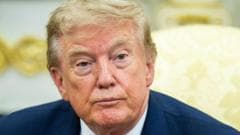
US President Donald Trump said he will delay imposing new tariffs on a wide array of Canadian goods for three days as the countries firm up a trade deal."I have paused the 50% Tariffs against Canada, that were scheduled to kick in tomorrow morning for a three day period, based on the fact that Canada and the U.S.A., subject to the finalization of documents, have a DEAL!" Trump said in a social media post. The announcement came less than two hours before a 50% levy on nearly $20bn (C$28bn) of Canadian imports were set to go in place.The two sides have been at an impasse on several issues, including US tariffs on autos and many Canadian provinces banning American liquor sales.Trump and Prime Minister Mark Carney spoke twice this week, and trade negotiators have been engaged in intense talks since July, after Trump threatened the new levy with a deadline of 19 August."Substantial progress has been made, although there is important work still to be done," Carney said in a letter posted on X.In his post, Trump also said a final trade deal could allow the revival of the Keystone XL pipeline. The oil pipeline, which would connect Alberta to the US, was blocked by both the Obama and Biden administrations.Environmentalists and indigenous groups have long opposed the pipeline but Trump has said multiple times he would like to revive the project, which would carry 830,000 barrels of oil a day."The great Keystone XL Pipeline, long ago killed by Sleepy Joe Biden, may be awoken from the grave!" Trump wrote on Truth Social. "The deal will include comprehensive market access for all American goods, economic security commitments, digital trade alignment", the US Trade Representative posted on X.It will also include "many important provisions that will continue to protect our market and American workers, along with our Canadian partners", it added.The extension is welcome news for Canadian negotiators and for businesses on both sides of the border, who have warned that the new tariffs would be harmful to both countries.Tensions have mounted between the two major trading partners since Trump returned to office in January last year and he unleashed a wide-ranging global programme of tariffs, upending decades of free trade between Canada and the US.The latest tariffs threatened by Trump were to be applied on a range of Canadian imports, including wine, dairy, cement, clothing and hockey equipment.They would have been in addition to existing tariffs the US had already imposed on Canadian steel and aluminium, autos and lumber.Canada has been in pursuit of a deal that would have the US drop or reduce tariffs on these key sectors.The US, meanwhile, has been asking for a number of concessions from Canada, including removing its remaining retaliatory tariffs on American autos and adjusting its dairy quotas to allow greater access for US cheese producers.It has also asked for the ban on US alcohol sales, imposed last year by most Canadian provinces in retaliation to Trump's tariffs, be removed.In the final hours before Wednesday's deadline, negotiators were discussing a deal that would reduce US tariffs on Canadian autos from 25% to 15%, according to a Reuters report citing anonymous sources.But the two countries could not agree on which vehicles would be eligible for tariff reductions, with the US pushing for it to only apply on cars with a high amount of American-made content.Carney will also need buy-in from provincial premiers to reinstate the sale of US alcohol, as liquor sales are controlled by the provinces, not the federal government.Ontario Premier Doug Ford, whose province is hardest hit by US tariffs on autos, said he was open to lifting the liquor ban only if a "fair deal" is reached.On Tuesday, the US Chamber of Commerce pushed for a deal to be reached, saying in a statement that "higher tariffs would damage both economies, drive up costs for US families, further disrupt critical supply chains, and risk the 13 million American jobs that dep

US Agriculture Department says rescinding the 2001 rule will help reduce wildfire risk and return control to local managers.The United States Department of Agriculture (USDA) has filed a proposal to rescind the entirety of the 2001 Roadless Area Conservation Rule, which prohibits road construction and logging on nearly 45 million acres (18 million hectares) of national forest land.Secretary of Agriculture Brooke Rollins submitted the proposal on Tuesday, saying it will mitigate wildfire risk by returning authority to local forest managers, who “know the land best”.Recommended Stories list of 4 itemslist 1 of 4Fires in Spokane, Washington, burn 600 structures, force 60,000 evacuationslist 2 of 4Poll suggests US adults are facing increased strain from extreme heatlist 3 of 4Pilot and crew member die in helicopter crash battling Utah firelist 4 of 4California tackles multiple wildfires as firefighter workforce faces strainend of list“For too long, outdated restrictions have kept tens of millions of forested acres off-limits to the very treatments that improve forest health and reduce wildfire risk to our communities,” Rollins said in a statement. “It’s time to turn the page on the failed roadless rule and return our forests to health and productivity.”The Trump administration and Republican lawmakers say building roads in these areas would make it easier for firefighters to access the land if a wildfire breaks out.“For 25 years, the heavy thumb of Washington, D.C., has hindered Montana’s ability to properly manage wildfire risk and road development on nearly 60 percent of Forest Service land across the Treasure State,” Republican Governor Greg Gianforte of Montana said in a statement.While the areas are referred to as “roadless”, there are thousands of miles of existing roads within the lands with federal, state, and county ownership. About half of these lands are within 1 mile (1.6km) of a road, and 31 percent are within 0.5 miles (800 metres) of a road, according to the National Forest Service.The USDA clarified that it is not forcing timber cutting or road construction.But environmental groups say rescinding the conservation rule will open the door to developments that will increase the risk of wildfire. Fires are four times more likely to start near roads than in roadless forests, according to research from The Wilderness Society.“Roadless forests are where wildlife live,” Taylor McKinnon, southwest director of the Center for Biological Diversity, said in a statement. “They’re home to jaguars, Mexican spotted owls, and ocelots, some of the most iconic animals on the continent. Plowing roads into their habitat will bring human-caused wildfires and disturbances that they don’t need and can’t afford.”The US is experiencing one of its worst wildfire years in the last decade, with 7.3 million acres (3 million hectares) burned in about 49,000 fires through August 17, according to the National Interagency Fire Center.More than 95 percent of the affected areas would be in 10 states: Alaska, Arizona, California, Montana, Nevada, New Mexico, Oregon, Utah, Washington, and Wyoming.In early August, the state of Washington fought a highly destructive wildfire that burned more than 8,000 acres (3,200 hectares) and forced approximately 65,000 people to evacuate.Last month, the Trump administration finalised rollbacks of two regulations affecting the Endangered Species Act. One change requires officials to weigh economic and national security considerations when determining whether an area should be designated as “critical habitat”.The public will have until September 21 to comment on the proposed Roadless Rule.

Josh D'Amaro, CEO, The Disney Company, Chairman attends the press day of 'Disney Adventure World' & 'World Of Frozen' at Disneyland Paris on March 28, 2026 in Paris, France. Aurore Marechal/Getty Images hide caption toggle caption Aurore Marechal/Getty Images The ABC network sued the Federal Communications Commission in federal court Tuesday in a case with major First Amendment implications, arguing that the Trump administration has violated its free speech rights by launching investigations and challenging its broadcast licenses in retaliation for its news coverage, late-night satire and views on talk shows. ABC and its corporate parent, the Walt Disney Co., allege that the FCC has taken these actions to appease President Trump, who has repeatedly called for the network to be stripped of its licenses in response to material which has sparked his ire. The network's lawsuit cites Trump's own social media posts which condemn ABC's news coverage, its talk show The View and late night comedian Jimmy Kimmel — who has frequently mocked the president. The lawsuit starts: "Government censorship is deeply un-American." It goes on to note that, in the words of a recent unanimous U.S. Supreme Court decision involving the National Rifle Association, the government may not "use the power of the State to punish or suppress disfavored expression." "This case concerns the Administration's sustained effort to do just that," the ABC/Disney lawsuit argues. "The Administration has waged a retaliatory campaign against ABC for a single reason: it disapproves of what ABC broadcasts." ABC and Disney own eight local TV stations which beam out the national network's shows and local programming in specific regions. Among them are stations in six of the nation's largest markets, which contribute significantly to ABC's bottom line. They require federal licenses because they rely on the public airwaves. The FCC forced all eight of them to undergo early scrutiny of the renewal process of the licenses, years ahead of schedule. It's an essentially unprecedented move in the modern era. The FCC and its chief, Brendan Carr, did not immediately comment on the suit. The commission has historically acted in a quasi-independent role from presidential administrations, with the president's party holding three seats and the opposing party two. But Trump publicly said before taking office that he saw it as an extension of the executive branch; recent court decisions have reined in the independence of some other semi-autonomous agencies set up by Congress; and Carr has acted as a booster and advocate for Trump's excoriation of the press, including ABC. For his part, Carr has said he is making sure broadcasters operate in the public interest — a legal requirement — and that they don't violate Trump's executive order on diversity, equity and inclusion. But he has also been outspoken in his support for Trump's agenda, including specific criticisms of ABC, Kimmel, "The View" and its journalists. In one instance, he warned that ABC and Disney could "do this the easy way or the hard way" amid the president's call for Kimmel to be pulled off the air. The host was suspended and returned days later after a major public outcry. Ironically, ABC had been the first in a string of major media companies and digital giants to reach settlements with Trump over lawsuits he filed against them as a private citizen. It paid $16 million to settle his defamation case in December 2024, involving remarks by anchor George Stephanopoulos, after Trump had won a return to the White House but before his inauguration. Given Trump's continuing broadsides against Kimmel, its daytime talk show "The View," and its journalists, however, Disney has taken an increasingly assertive stance against the administration. "We're very principled on this," Disney CEO Josh D'Amaro told CNBC's Julia Boorstin last week. "We're going to stand up to what we believe is journalistic and integrity, and we'r

com US-Iran ceasefire set to expire as Trump admin meets with Israel's Netanyahu Fox News The 60-day deadline for an Iran peace deal is expiring. Here’s where things stand. NBC News U.S. and Iran Blow Through Deadline to Agree to a Broad Deal to End War The New York Times CNBC Daily Open: U.S.-Iran ceasefire set to expire CNBC

The Supreme Court denied Trump’s latest request to challenge the $5m sexual abuse and defamation verdict.The United States Supreme Court has denied, for the second time, US President Donald Trump’s appeal of a 2023 civil suit stemming from allegations that he sexually abused writer E Jean Carroll in 1996.The court’s August order list, released on Monday, rejected Trump’s request to reconsider its previous decision in June that denied his appeal of the 2023 verdict, which found him liable for sexually abusing and defaming the former magazine columnist.Recommended Stories list of 3 itemslist 1 of 3E Jean Carroll demands Donald Trump pay $5.8m in damages from 2019 caselist 2 of 3Trump ordered to pay E Jean Carroll $5.8m after failed appeallist 3 of 3Trump appeals $83.3m E Jean Carroll civil verdict to US Supreme Courtend of list“We are pleased that the United States Supreme Court has declined again to hear this case,” Carroll’s attorney Roberta Kaplan said in a statement. “As a result, the jury’s unanimous verdict that Donald Trump sexually assaulted and then defamed E Jean Carroll is now final and cannot be challenged in any court.”The court’s order came with no explanation, which is typical when the justices deny requests for rehearing during a recess. The order denied 33 requests in total.After the Supreme Court declined to hear Trump’s appeal in June, Carroll collected the $5m judgement plus interest. The damages payout was ultimately about $5.8m.Carroll has won two separate defamation suits against Trump.Trump has been engaged in litigation with Carroll, a former advice columnist for Elle magazine, since 2019, when she published an excerpt from her memoir alleging that Trump had raped her in a Bergdorf Goodman department store dressing room in Manhattan in 1996.Trump denied her rape claim, calling her a “nut job” and saying she was “not my type”. A jury awarded Carroll $83.3m for that lawsuit in 2024. Trump is also appealing that judgement to the Supreme Court, arguing that presidential immunity protects statements he made while president.The case that led to the $5m verdict concerned Trump’s statements in 2022, when he called Carroll’s claim a “hoax” and a “con job” in a post on social media.

Trump added that Iran “cannot have a nuclear weapon” and argued that rebuilding its nuclear capabilities would take a long time following previous US strikes.Published On 17 Aug 2026
S. and Iran Blow Through Deadline to Agree to a Broad Deal to End War The New York Times The 60-day deadline for an Iran peace deal is expiring. Here’s where things stand AP News Oil prices rise as Iran rules out interim deal extension, threatens to escalate conflict cnbc.com US-Iran Memorandum of Understanding expires: How and why it fell apart Al Jazeera
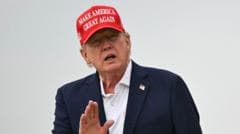
President Donald Trump has threatened to bomb Oman - a US ally - if it "gets in the way" of his administration's own talks with Iran, Fox News reports.A reporter for the network said the US president made the comment during a phone call on Monday, during which he also said the US had a direct backchannel with the Islamic Revolutionary Guard Corps (IRGC).The IRGC later denied it was involved in talks with the US. But Iranian officials said on Monday they were close to finalising a deal with Oman on shipping through the Strait of Hormuz.Meanwhile, the 60-day Memorandum of Understanding (MoU) ends on Monday. The memo was a signed commitment from both the US and Iran for further talks to reach a final agreement. Oman, which says it is a neutral country in this conflict, has suffered a number of strikes from Iran since the conflict broke out. However, it is now playing a role in negotiating with Iran to reopen the strait.Since the US and Israel attacked Iran in February, Tehran has largely blocked the vital waterway - through which about a fifth of the world's oil and liquefied natural gas usually passes. Reopening it has been a key point of discussion.Washington has pursued its own efforts to secure the reopening. Fox reporter Trey Yingst quoted Trump as saying: "If Oman gets in the way, we'll bomb the shit out of them."An IRGC spokesman denied Trump's claim, which was made in the same interview, that the US was involved in backchannel negotiations with the IRGC - which is a major military, political and economic force in Iran.A spokesman told semi-official Iranian news agency Tasnim News: "There are no talks taking place between IRGC officials and the Americans, and this lie by Trump is merely fantasies caused by the delusions and nightmares he has suffered as a result of defeat and desperation in the war."

President Donald Trump gestures as he boards Air Force One at Morristown Airport, Sunday, Aug. 16, 2026, in Morristown, N.J. Julia Demaree Nikhinson/AP hide caption toggle caption Julia Demaree Nikhinson/AP WASHINGTON — President Donald Trump ordered the Pentagon on Sunday to scale back annual joint military exercises with South Korea, saying the ally declined to help with the war against Iran and citing his good relationship with North Korea's Kim Jong Un. Trump said in a social media post that the exercises, which began Monday, are not only costly but "send a signal that is totally inappropriate and hostile" to North Korea, which he said "has been unthreatening and respectful" during his time in the White House. "Therefore, and based on the fact that it is too late to cancel, I have instructed Secretary of War, Pete Hegseth, to substantially reduce the Joint Military Exercises!" Trump wrote. The president added that he recently asked South Korea's president if they would join the U.S. in the "denuclearization" of Iran, "and they said, 'No thanks!'" The move is the latest example of the president appearing to turn against an ally in favor of a leader that previous administrations have cast as an adversary. Trump and others in his administration have also railed against NATO allies over perceived lack of support for his war against Iran, even as they seek to confront an increasingly aggressive Russia in the Baltic region. It is also a sharp turnaround from how his administration has viewed South Korea in recent months. In May, Hegseth praised the longtime ally for its "commitment to increase defense spending" and its "leadership in assuming primary responsibility for the security of the Korean Peninsula" during a meeting at the Pentagon. "It demonstrates alliance burden-sharing that all of America's partners would do well to follow," the defense secretary added. What the US military says about the joint exercises The 11 days of exercises involving 18,000 South Korean soldiers were designed to beef up readiness against North Korean threats. The U.S. military has said the summertime Ulchi Freedom Shield exercises reinforce "the role of the alliance as the linchpin for regional peace and security" and reaffirm "the ironclad commitment between the United States and the Republic of Korea to defend their homelands." The exercises are one of the two main combined drills conducted by the South Korean and U.S. militaries annually, along with their springtime training. U.S. and South Korean forces were expected to practice joint operations in complex scenarios, including a live-fire exercise to test joint precision targeting and maneuver, a wet gap crossing, and distribution of prepositioned military equipment, according to the U.S. military. South Korea's Defense Ministry confirmed that the exercises began on Monday as planned. The joint training started days after North Korea resumed ballistic missile testing activities in defiance of U.N. bans. Trump's decision was sharply criticized by Democratic Sen. Mark Kelly, a former Navy pilot, who said that "hollowing out these joint exercises is shortsighted and a mistake" in a social media post made just hours after the president's own post. Earlier this month, South Korea, the U.S. and Japan detected the launches of two ballistic missiles from North Korea in what were the North's first ballistic weapons testing activities since late June. The missiles landed in the waters off North Korea's east coast. North Korea threatens strong response North Korea has been pushing hard to enlarge its nuclear and missile arsenals since Kim's high-stakes diplomacy with Trump collapsed in 2019. Experts say Kim likely believes a bigger weapons arsenal would increase his chances for wresting more concessions from the U.S. in future negotiations. North Korea on Friday threatened unspecified stern steps against the U.S. and South Korea, describing their military drills as a "a rehearsal for
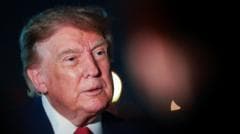
Donald Trump has said the US will "substantially reduce" joint military exercises with South Korea, citing his "very good relationship" with North Korea's leader Kim Jong Un."These exercises are not only costly, with much of these costs paid for by the United States of America (as usual!), but send a signal that is totally inappropriate and hostile," Trump wrote on Truth Social on Sunday evening.Trump noted in his post that South Korea had recently declined to join the US in the "denuclearisation" of Iran.Trump has bucked American foreign policy norms with North Korea's leader, whom he last visited in person in 2019.The US and South Korea are due to start their regular military exercises on Monday.This breaking news story is being updated and more details will be published shortly. Please refresh the page for the fullest version.You can receive Breaking News on a smartphone or tablet via the BBC News App. You can also follow @BBCBreaking on X, external to get the latest alerts.



Discussion (0)