
Loading dispatches...
← Return to NewsroomPolitics
Tiruvallur ammonia gas leak: Death toll rises to five at seafood processing unit with three more women workers succumbing

Few workers who were in critical condition after an ammonia gas leak at a seafood processing factory in Tiruvallur admitted at RGGGH in Chennai on Sunday, June 21, 2026. | Ragu The death toll in the ammonia gas leak incident at a private seafood processing unit in Tiruvallur district climbed to five with three more women workers succumbing in hospital on Monday (June 22, 2026).A total of 67 persons are undergoing treatment and remain under medical observation in various hospitals, according to a media bulletin issued by the Health and Family Welfare Department on Monday (June 22).According to the bulletin, a total of 74 individuals were reported as affected in the incident of which two died on Sunday (June 21). As of 7 a.m. on Monday, three additional fatalities were reported.Of the 67 workers undergoing treatment, 18 were admitted to Venkateshwara Medical College Hospital, 29 to Vels Medical College Hospital, 10 to Government Stanley Medical College Hospital and 10 to Rajiv Gandhi Government General Hospital. Of them, 31 persons were on ventilator support, 11 were in the Intensive Care Unit with oxygen support and one was on non-invasive ventilation support. The remaining 24 workers were reported to be in a stable condition.The Health department continues to closely monitor the situation and ensure the availability of appropriate medical care for all affected persons. It is coordinating with the district authorities and healthcare institutions to facilitate timely treatment, surveillance and response activities.Incident and responseThe ammonia gas leak was reported on Sunday (June 21, 2026) at a private seafood processing and export facility in Kannigaipair/Manjangaranai area near Periyapalayam in Tiruvallur district. The incident is reported to have occurred during routine industrial operations, resulting in the exposure of workers present at the site. Emergency medical response teams, district administration officials, police personnel, fire and rescue services and public health authorities were promptly mobilised to manage the incident and ensure timely medical assistance to those affected.The person primarily presented with symptoms consistent with ammonia inhalation, including breathlessness, irritation of the eyes and respiratory tract, coughing, chest discomfort and varying degrees of respiratory distress. The exact cause of the incident is currently under investigation by the competent authorities, the bulletin said.Elaborating on the public health response, the department said that emergency medical teams and ambulances were mobilised immediately and victims were shifted to nearby government and private hospitals for treatment. Monitoring and assessment of the affected area were undertaken to ensure public safety. Rapid medical assessment and treatment of all exposed persons were taken up.In addition, the department immediately recommended continuous surveillance of exposed workers for delayed respiratory complications, environmental monitoring of the affected premises and review of industrial safety systems and emergency response protocols. It also recommended conduct of occupational health and safety audits of similar facilities in the district. Published - June 22, 2026 09:40 am IST
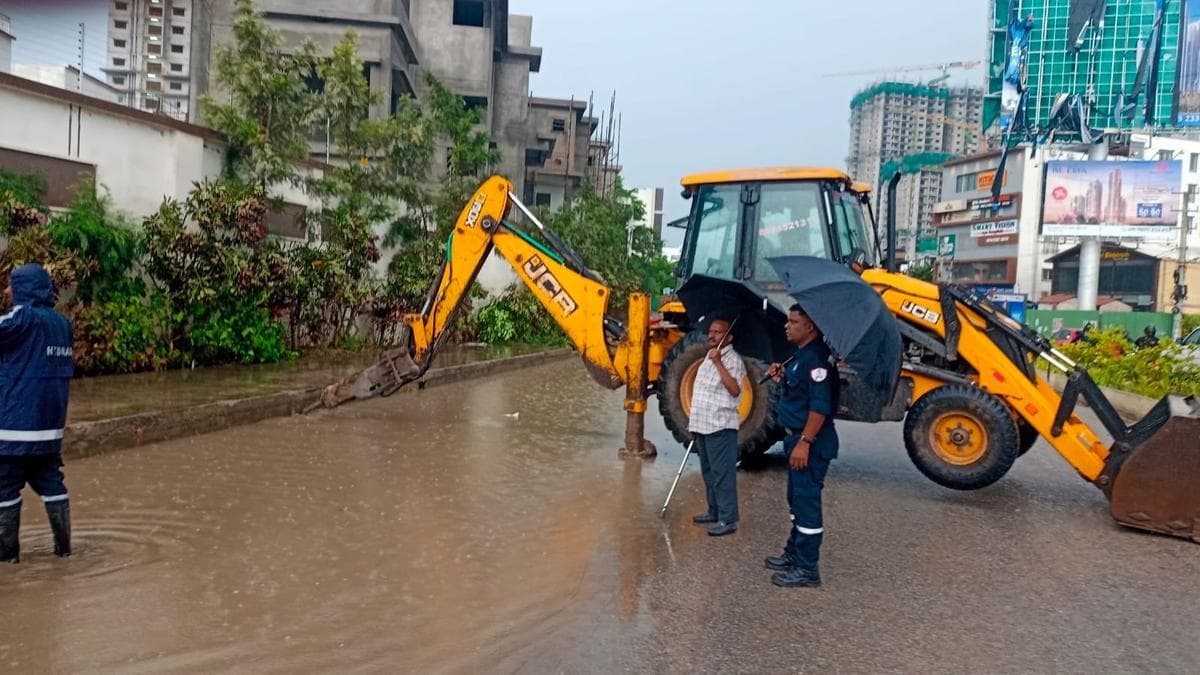
The special teams to handle monsoon emergencies and issues were deployed in all zones of Cyberabad Municipal Corporation | They would take action in cases of flooding or waterlogging, overflowing drains, sanitation issues, fallen trees and emergency incidents.The teams were deployed at vulnerable locations in Kukatpally, Quthbullapur and Serilingampally zones, with designated Engineering and Sanitation officials available for immediate field response, as per a post from CMC’s handle on X on Sunday.Phone numbers of the field officers concerned zone-wise were shared for faster coordination and prompt response during emergencies.🌧️ Monsoon Emergency Response Teams Ready Across CyberabadWith the monsoon season underway, Cyberabad Municipal Corporation has deployed dedicated Engineering and Sanitation Teams at identified waterlogging-prone stretches across all zones to ensure timely response and… pic.twitter.com/CJ5iEdiY2h— Cyberabad Municipal Corporation (@CMC_Offcl) June 14, 2026Worst hit on June 9The Corporation’s roads were among the arterial roads where waterlogging and massive traffic jams lasting for a long time were witnessed when Hyderabad received its first monsoon spell on June 9. Telangana Chief Minister & Municipal Administration and Urban Development Minister A. Revanth Reddy on Sunday (June 14, 2026) expressed dissatisfaction over the traffic snarls and other issues faced by people on June 9. He directed officials of Hyderabad Disaster Response and Asset Protection Agency (HYDRAA), Traffic Police, Municipal Administration, Hyderabad Metropolitan Water Supply and Sewerage Board (HMWSSB) and other departments to be on the field. Published - June 15, 2026 02:56 pm IST

Today marks one year since the tragic accident involving Air India Flight AI-171, a Boeing 787-8 aircraft operating from Ahmedabad to London, which occurred shortly after take-off from Sardar Vallabhbhai Patel International Airport, Ahmedabad, on 12 June 2025. | The final report will be released only after all investigative work has been completed and the required international review and consultation processes have been concluded, it added.“The evidence gathered and the results of various examinations are currently being analysed in a comprehensive and integrated manner,” the AAIB said in a press statement.The final accident report will be published once all investigative work has been completed and the mandatory international review and consultation procedures have been concluded, it added. Separately, the Minister for Civil Aviation said in a post on X that the government is committed “to a thorough and objective determination of the causes of the accident.”“Significant progress has been made in the examination and analysis of aircraft systems, flight recorder data, engine-related components, maintenance and operational records, and other evidence relevant to the investigation,” according to the statement.Comment | The forgotten copilot of Air India flight 171It also said that the investigation team has carried out a detailed examination of all aspects of the accident, including technical, operational, organisational and human factors. The probe has been assisted by accredited representatives, technical experts and specialists from the organisations involved.The UN aviation safety watchdog’s Annex 13 on Aircraft Accident and Incident Investigation says that States must bring out a final report as soon as possible, and if possible, within 12 months, otherwise they must publish an interim statement on each anniversary of the occurrence.A preliminary investigation report into the AI-171 crash found that the aircraft’s fuel control switches had moved to the cut-off position, interrupting fuel supply to the engines moments before the crash.While the report stopped short of determining whether the switch movement was the result of a deliberate action or inadvertently done or a technical malfunction, it included a brief cockpit exchange between the plane’s two pilots that has triggered widespread speculation on the cause of the accident.Pilot associations have condemned the inclusion of the excerpt, arguing that it has contributed to the building of a narrative around pilot involvement before the investigation reached a definitive conclusion.The Federation of Indian Pilots (FIP), along with Pushkar Raj Sabharwal, father of the flight’s commander, Sumeet Sabharwal, have approached the Supreme Court, seeking an independent, judicially monitored investigation into the crash. Published - June 12, 2026 06:51 pm IST
A year after the AI171 plane crash in Ahmedabad claimed 260 lives, officials recalled how, amid an unimaginable situation, the city mounted one of its largest emergency responses, swiftly coordinating medical requirements and mobilising trauma teams.Ahmedabad plane crash: Families of AI 171 crash victims grapple with flight fears, anxietyAs many bodies were charred beyond recognition, officials quickly turned to DNA matching as the only reliable way to identify the deceased, with forensic teams working round-the-clock alongside other experts to ensure dignified handling of the victims. The Ahmedabad Civil Hospital campus overflowed with people, NGOs, and volunteers supporting grieving families, as officials remembered the scene and prayed such a tragedy would never recur.Due to the coordinated efforts of doctors, the Health Department, police, NGOs, relief teams, and the Fire Department, the situation was systematically managed in a short period, Ahmedabad Civil Hospital's medical superintendent Rakesh Joshi told PTI. “Within hours of the crash, Chief Minister Bhupendra Patel, Home Minister Harsh Sanghavi and Health Minister Rushikesh Patel arrived at the hospital and reviewed the arrangements,” he said.On June 12 last year, the London-bound Air India flight AI-171 crashed into the hostel complex of BJ Medical College in the Meghaninagar area moments after taking off from the Sardar Vallabhbhai Patel International Airport, killing 241 persons on board and 19 on the ground, and just one passenger survived.For doctors at the Ahmedabad Civil Hospital, the day had begun like any other. “We never imagined we would witness something like this in our lifetime,” recalled Mr. Joshi, who was in the middle of a complex pediatric surgery when the first alert came in about smoke rising near the hostel area. Within seconds came the shocking confirmation — an Air India international flight had crashed. "I couldn't believe it," he said.What followed was one of the largest emergency medical responses the city had ever seen. Even before victims were brought in, the Civil Hospital activated its mass-casualty protocol. “Messages were sent across doctors’ groups, emergency medicines were arranged, blood banks were alerted, and trauma teams were mobilised,” the official noted.“The first injured person to arrive at the hospital was a gardener working in the hostel complex,” Mr. Joshi said. Within an hour, nearly 71 injured victims suffering from burns, fractures and trauma had reached the hospital. Specialised teams consisting of surgeons, neurosurgeons, physicians, anaesthetists and emergency doctors were immediately formed to ensure critical patients received urgent treatment. “In such situations, managing the golden hour is everything. Our priority was to prevent secondary deaths and save every possible life,” the official said.“Operation theatres were readied while one entire ward was converted into a dedicated mass-casualty unit. Doctors, nurses and paramedical staff worked continuously as patients poured in. Then came the most heartbreaking part,” Mr. Joshi said, “when the charred bodies of victims started arriving.” At that point, the management system shifted into another critical phase — scientific identification and dignified handling of victims.Since many bodies could not be identified visually, DNA matching became the only reliable method. Teams led by forensic and medical experts, including Dr. Dharmesh Patel, began round-the-clock work on DNA collection, labelling and matching with assistance from Forensic Science Laboratory and National Forensic Sciences University experts. “Out of 260 bodies, 254 were identified through the DNA matching system, while six persons were identified by official means,” Mr. Joshi informed.“Meanwhile, to support grieving families, dedicated help centres were established at BJ Medical College’s Kasauti Bhavan. Counselling teams from the psychology department worked continuously to comfort distressed relative

Discussion (0)