
Loading dispatches...
← Return to NewsroomWorld
Deal to end fighting would lead to Hormuz reopening, Iran says
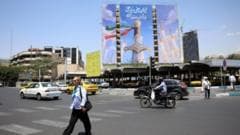
8 minutes agoGary O'Donoghue,Senior North America correspondent, Washington DCandOlivia IrelandReutersA sense of normality has returned to the streets of Tehran since the April ceasefireA deal with the US to end fighting in Iran is close and includes reopening the Strait of Hormuz, Iran's Foreign Minister has said.Seyed Abbas Araghchi told state TV the deal also includes the lifting of a US blockade of Iran, but that talks on Iran's nuclear programme would begin later.US officials have confirmed some of the details of the agreement, saying economic benefits for Iran would depend on Tehran meeting its obligations.The war began with US and Israeli strikes across Iran on 28 February, prompting Iran to attack Israel and US-allied states in the Gulf - as well as effectively closing the Strait of Hormuz, a key shipping route for the world's oil and liquefied natural gas.Getty ImagesTrump says there is "no such thing as dealing in good faith" when it comes to negotiating with the IraniansDespite having agreed a ceasefire in April, the US and Iran have exchanged intermittent fire, including two rounds of tit-for-tat strikes this week. US President Donald Trump said on Thursday that he had cancelled "scheduled attacks" against Iran, because negotiators had "just made a great settlement" - a deal that was likely be to signed imminently. On Friday, Iranian media published some details from the alleged 14-point deal which Trump said had "nothing to do with the terms that were agreed to" and "bears no relation to the truth".A few hours later, Pakistani Prime Minister Shehbaz Sharif, whose country helped mediate the deal, said the Memorandum of Understanding (MOU) between the US and Iran had been agreed and awaited finalising.Iran's Araghchi was quoted in state media saying there are "supporters and opponents" of the latest terms of the deal among Iran's top security body, the Supreme National Security Council.However, he added that a collective decision had not been reached. "For now, we must wait. If approved, the agreement will be signed remotely," he said.Israel is not involved in the talks which are meant to lead to an extension of the ceasefire and the start of negotiations on key issues, including Iran's nuclear programme. For decades, Iran has been accused by Western countries of trying to build a nuclear weapon. It has denied the accusations saying its programme is for peaceful purposes - to generate electricity and for research purposes. In a detailed briefing with journalists on Friday afternoon, US officials said the deal would reopen the Strait of Hormuz, in return for the US lifting its blockade on Iranian shipping.Those steps would come into effect more or less immediately. This would be followed by a 60-day period of negotiation - focusing on Iran's enriched uranium - an essential ingredient to make a nuclear bomb. Officials said that this would result in all that material being destroyed on site and then removed from the country, though the precise mechanism for doing so is still to be worked out.On the economic side, officials stressed there would be no money provided up-front - an apparent rejection of earlier Iranian news reports suggesting some Iranian assets would be unfrozen before substantial negotiations had begun. Instead, US officials said, there would be a staged reintegration of Iran into the global economy, with measures such as the lifting of sanctions and the potential unfreezing of assets happening incrementally.The deal calls on Iran to stop funding proxy groups in the region - a reference to Hezbollah and other Iranian proxies across the Middle East.The US officials emphasised that the MOU was not based on trust or promises, but on "performance" - Iran would only receive economic benefits when it could be verified it had implemented measures it had committed to.Even though there is a sense of cautious optimism from all sides - the US, Iran, Pakistan and Qatar which has also helped with mediation efforts -
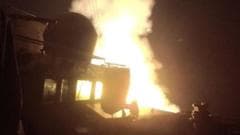
Just nowHarry SekulichandToby MannUS Central CommandThe US and Iran have exchanged strikes across the Middle East for a second consecutive day, further straining an already shaky ceasefire agreed between the two countries in April.US Central Command (Centcom) said it had completed a wave of "self-defense strikes" targeting military, surveillance and radar sites in southern Iran.The attack came hours after President Donald Trump vowed US forces would hit Iran "hard", and that Tehran had taken "too long to make a deal" to permanently end the war.In response, Iran launched a round of strikes targeting US military assets in countries across the region.US military bases in Bahrain and Kuwait came under Iranian fire for a second day in a row, while Iran's Islamic Revolutionary Guard Corps (IRGC) said it fired ballistic missiles at a US command centre in Jordan, according to Iranian state media.Bahrain's interior ministry said its air raid sirens were activated overnight, as Kuwait's Army posted on X that its anti-air defence systems intercepted "hostile aerial targets".Kuwait said it had temporarily closed its airspace due to the Iranian attacks.In the latest flare-up, the IRGC also said it had hit two oil tankers passing through the Strait of Hormuz, Iranian state media reported, although there was no immediate confirmation of the strike. That came after Iranian state media reported that the Strait of Hormuz was "completely closed to all type of vessel". Centcom, however, said "commercial ships are continuing to transit in and out of the Strait of Hormuz".Oil prices rose shortly after the closure of the shipping channel and the apparent attack on the ships was announced.Brent crude oil, seen as the global benchmark, climbed to around $95 a barrel after rising by about 2%.Hours before the US launched its latest attack, Trump had warned: "We hit them hard yesterday and we're going to hit them hard again today."Trump wrote on Truth Social that Iranian leaders have "taken too long to negotiate a deal". US Defence Secretary Pete Hegseth said Iran had been given a chance to make a deal but had not taken it, adding that bombs would be "dropping on key facilities" in the country. The US president added that Iran would be attacked again if no peace deal was secured. Iranian President Masoud Pezeshkian said Iran "will stand firm against any pressure or threat". The Iranian foreign ministry earlier accused the US of "damaging the diplomatic process through the contradictory messages it sends".In April, the US and Iran agreed a ceasefire that was initially meant to last for two weeks. Both sides have since exchanged intermittent fire, without returning to full-scale hostilities.However, recent efforts to broker negotiations between Washington and Tehran have stalled and attacks have ramped up.In a statement on X, UN Secretary General António Guterres said the Middle East was "being pulled deeper into crisis", and recent attacks meant "the ceasefire is more like a lesser-fire"."We should not minimize the risks of lesser fire becoming full fire. All parties must work towards a diplomatic settlement. No more attacks. No more excuses," he said in a statement.



Discussion (0)